This article was automatically translated from the original Turkish version.
Location | Muscat / Oman | ||||||||
|---|---|---|---|---|---|---|---|---|---|
Construction Start Date | 1995 | ||||||||
Opening Date(s) | 2001 (in commemoration of the 30th anniversary of Sultan Qaboos's accession to the throne) | ||||||||
Patron | Sultan Qaboos bin Said of Oman | ||||||||
Architect | Mohammed Saleh Makiya | ||||||||
Interior Design | Edgard Bali | ||||||||
Total Area | 416000 m² (102 dunams) | ||||||||
Capacity | Approximately 20000 people | ||||||||
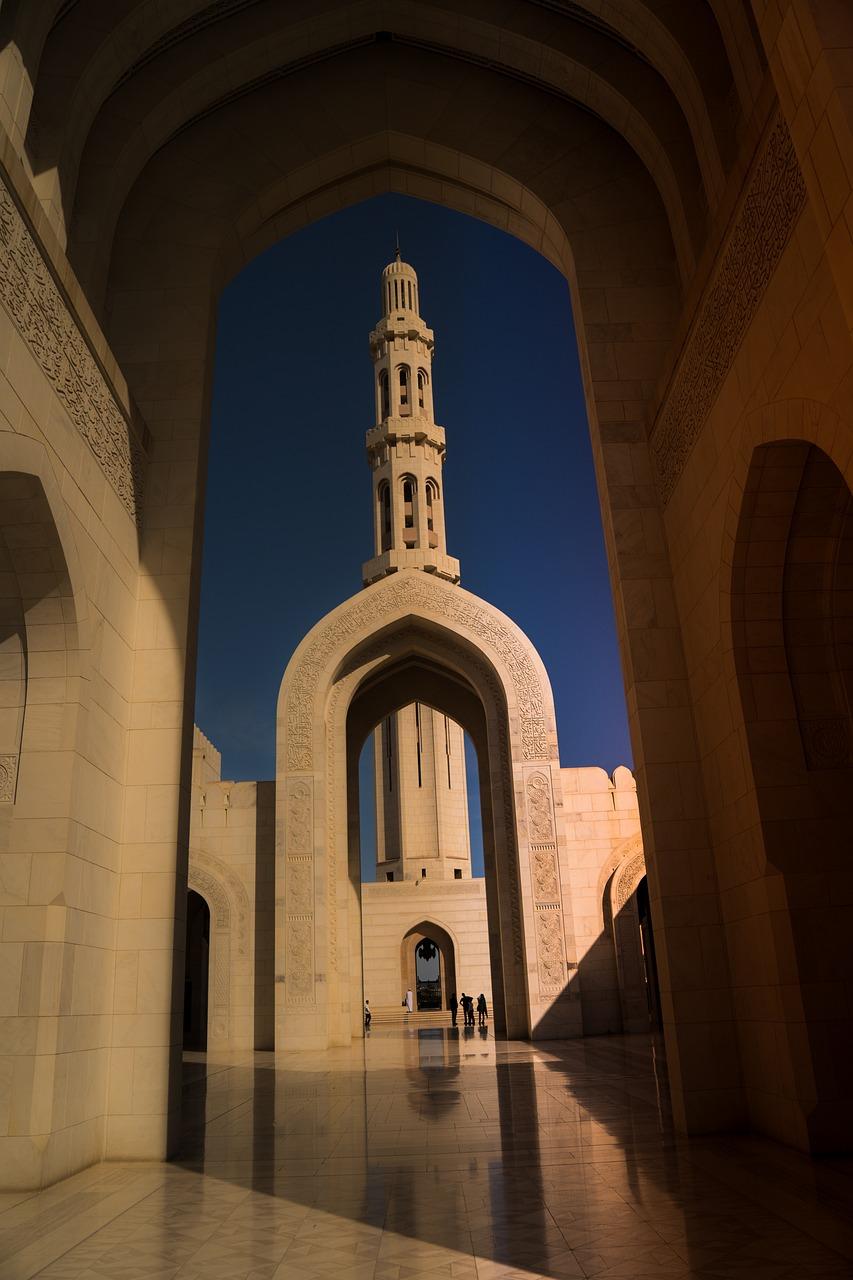
Sultan Qaboos Grand Mosque (Eng. Sultan Qaboos Grand Mosque), located within the boundaries of the Bawshar Governorate in Oman’s capital Muscat, is a place of worship. The mosque is situated along one of Muscat’s main transportation routes and serves as a central structure both physically and functionally within the capital. The building was designed to function as a center for worship, scholarship, and education within the context of Islam.
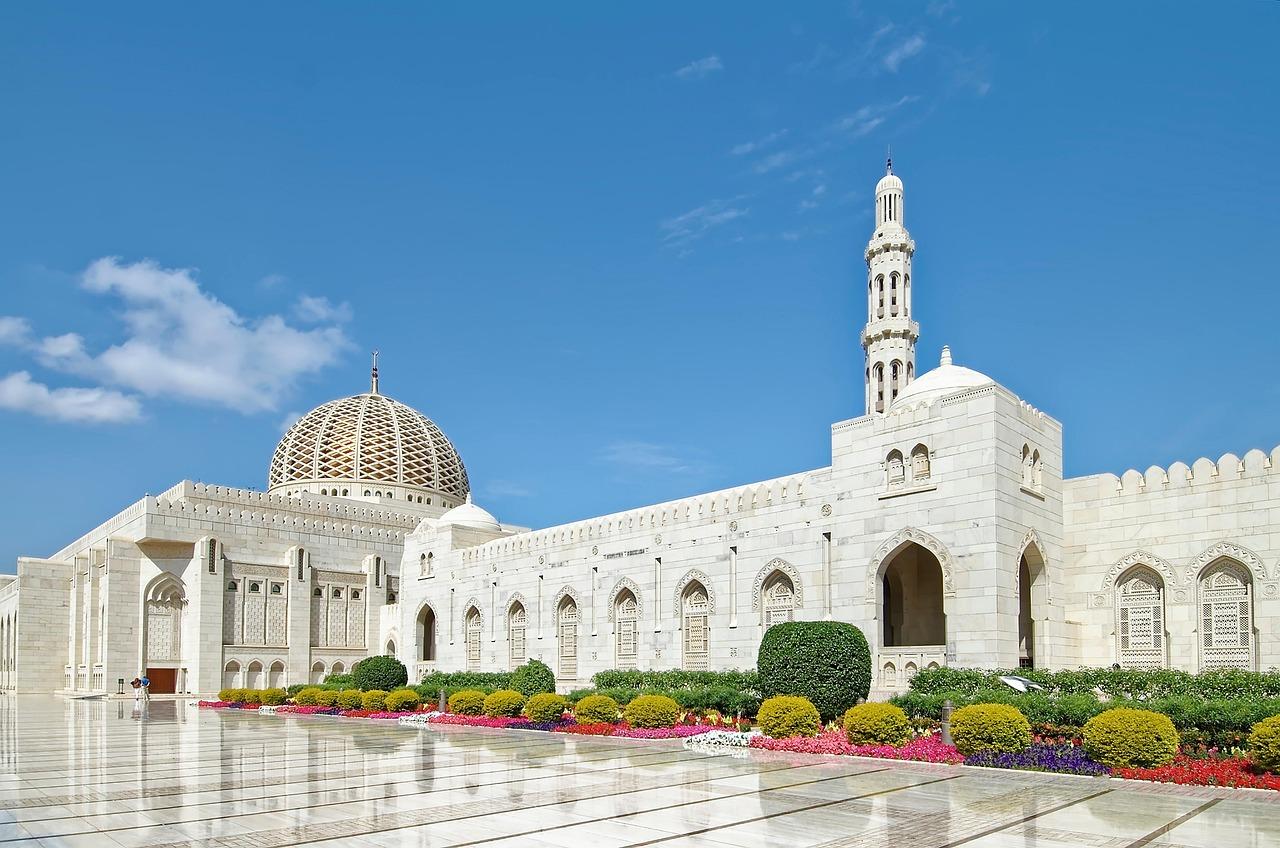
Sultan Qaboos Mosque (Pixabay)
The construction of the mosque was planned to commemorate the 30th anniversary of Sultan Qaboos bin Said’s accession to the throne. Initiated in 1995, the construction process lasted six years and the mosque was opened for service in 2001. An international architectural competition was held to select the design, and the architectural project was led by Iraqi architect Mohammed Saleh Makiya. The interior design was carried out by Edgard Bali.
The structure is situated on a site covering 416,000 square meters, with the mosque complex occupying approximately 40,000 square meters. The main prayer hall has a square plan and features a central dome 50 meters in height. The five minarets defining the mosque’s boundaries are positioned to symbolize the Five Pillars of Islam. One of these minarets stands 91.5 meters tall, while the other four are 45 meters high. The main prayer area (musalla) has a capacity of approximately 6,500 worshippers. An additional 750 worshippers can be accommodated in the section designated for women. When including gardens and outdoor spaces, the total capacity of the mosque reaches approximately 20,000 people.
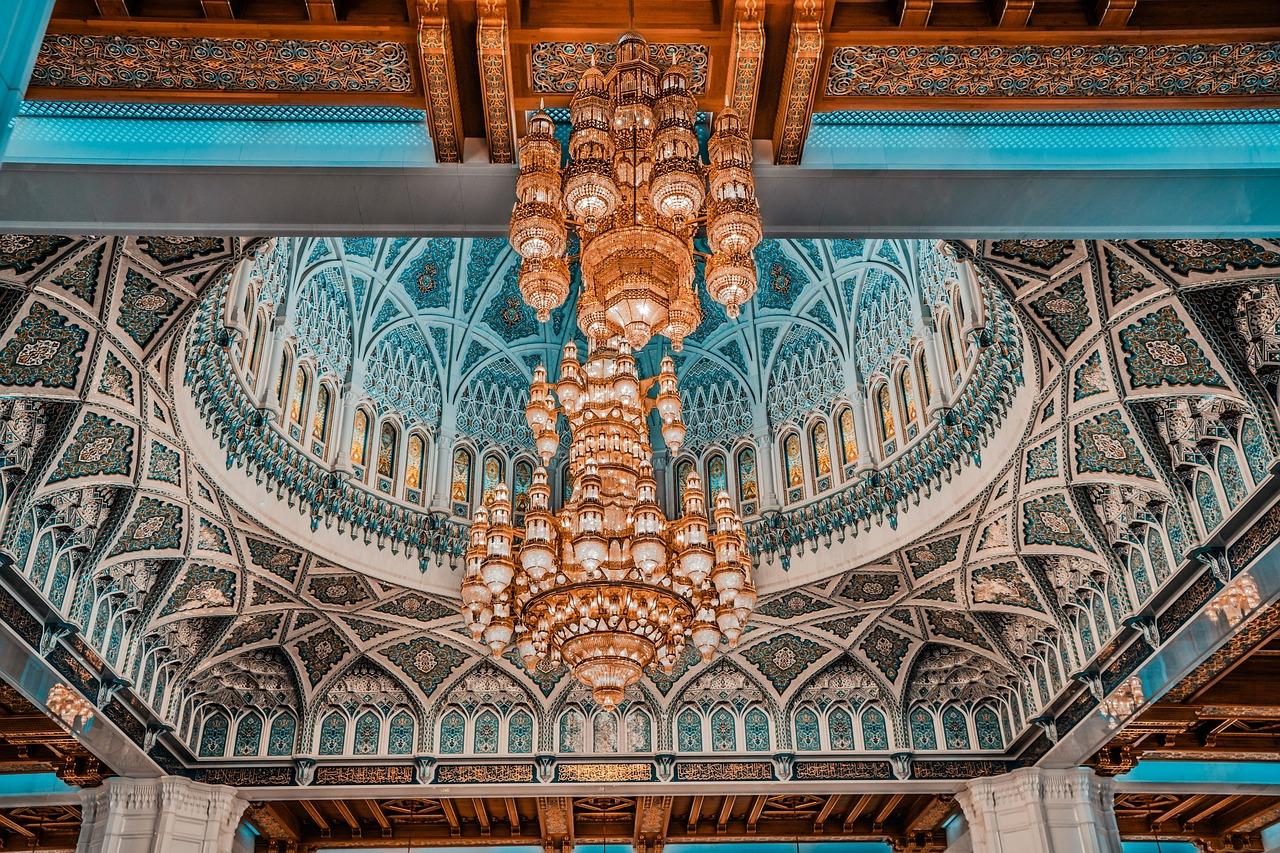
Chandelier (Pixabay)
The interior walls of the mosque are clad in white and dark gray marble. Geometric patterns, leaf motifs, and traditional Omani ceiling decorations adorn the interior space. The structural system includes four main columns, with the dome supported by spherical triangles, pointed arches, and porcelain panels. Quranic verses written in Thuluth script decorate the door embellishments, and stained glass panels are used in certain sections.
The corridors on the north and south sides are each 240 meters long and separate the interior prayer space from other functional areas. These corridors are adorned with decorative elements reflecting various Islamic artistic traditions. The names of Allah are inscribed on the corridor walls in Diwani script, while Islamic geometric frames and calligraphy adorn the arches. The domes above the corridors were inspired by the Bilad Bani Bu Ali Mosque.
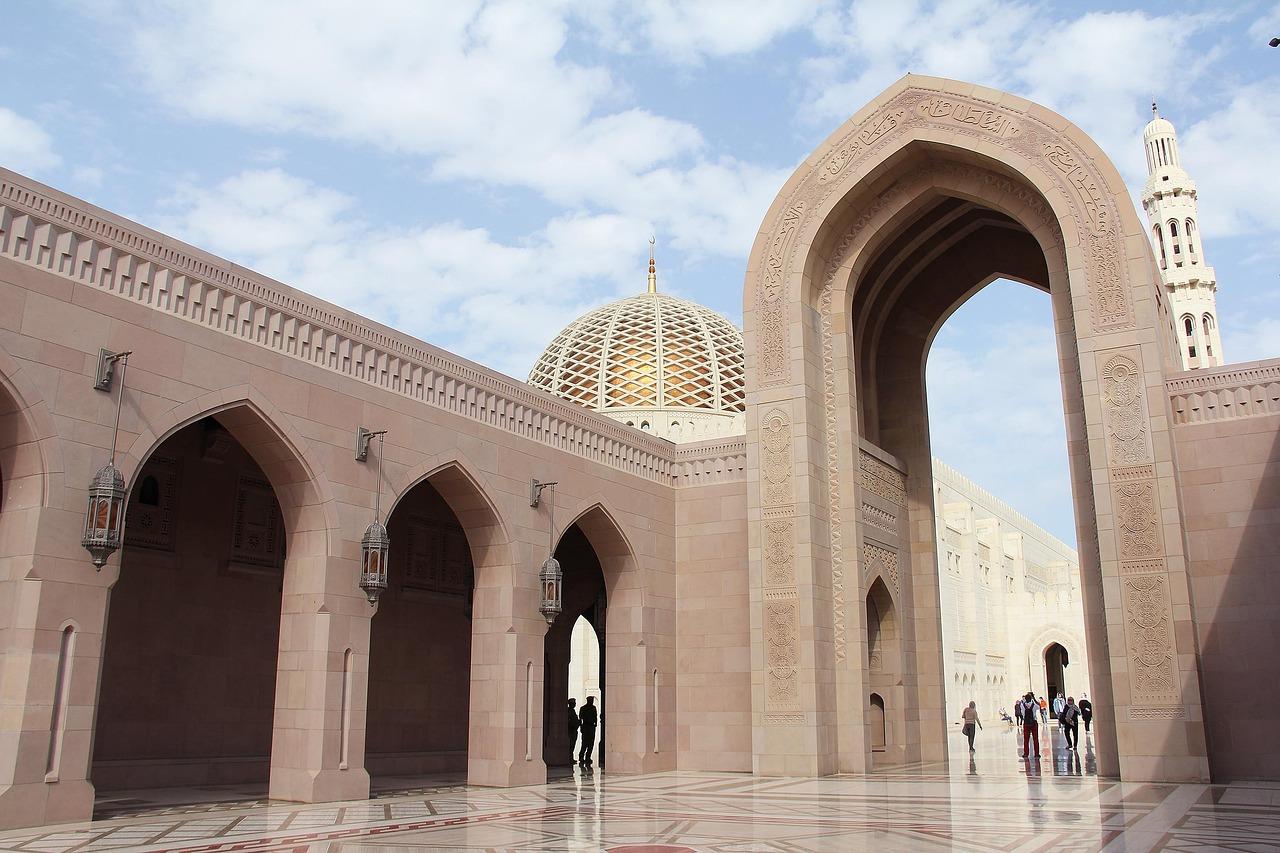
Sultan Qaboos Mosque (Pixabay)
The main prayer hall features a lighting fixture that, upon its inauguration, was recorded as the largest chandelier in the world. This chandelier measures 14 meters in length and weighs 8,500 kilograms. It contains 600,000 Swarovski crystals and is finished with 24-karat gold detailing.
The prayer hall floor is covered by a single-piece handwoven Iranian carpet measuring 4,343 square meters, weighing approximately 21 tons, and composed of 1.7 billion knots. The carpet features 28 different color tones derived from natural and plant-based dyes. It was produced by the Iranian Carpet Company (ICC).
Along the southern corridor, various structures serve the scientific and cultural functions of the mosque. These include a library with a collection of approximately 20,000 books, the Institute of Islamic Sciences, and a 300-seat conference and seminar hall.
The mosque is supported by expansive gardens enclosed by inward-facing courtyards and symmetrically arranged walkways. The surrounding landscape serves as a boundary that distinguishes the mosque from the urban environment.
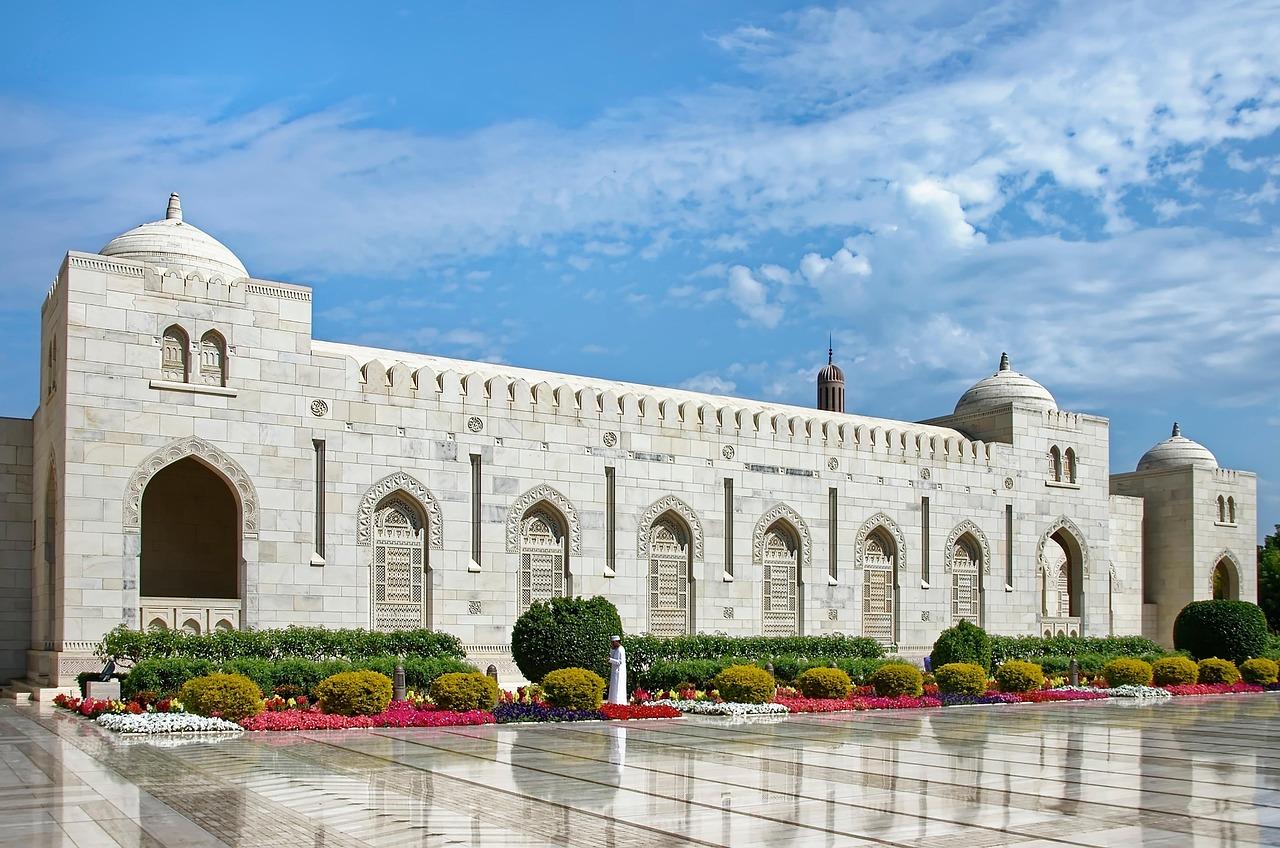
Sultan Qaboos Mosque (Pixabay)
The mosque is one of the places of worship in Oman open to non-Muslim visitors. Visiting hours are limited to 08:30–11:00 daily, except on Fridays. Visitors are expected to wear modest clothing that covers the shoulders and knees. Female visitors are required to wear a headscarf. Consumption of food, sleeping, and use of mobile phones are prohibited within the prayer areas.
The Sultan Qaboos Grand Mosque holds a symbolic position within the context of the Ibadi Islamic tradition in Oman. It also serves as the principal mosque for Friday prayers in Muscat and its surrounding regions. In 2015, The Telegraph newspaper listed it among the “25 most beautiful mosques in the world.”
Batra, Ashish. “Sultan Qaboos Grand Mosque, Muscat: An Iconic Architectural Wonder.” *World Architecture Community.* Accessed August 7, 2025.https://worldarchitecture.org/architecture-news/ehnem/sultan_qaboos_grand_mosque_muscat_an_iconic_architectural_wonder.html
Pixabay. "Sultan Kabus Büyük Camii, Büyük, Cami JPG." Accessed August 7, 2025.https://pixabay.com/tr/photos/sultan-kabus-b%C3%BCy%C3%BCk-camii-b%C3%BCy%C3%BCk-cami-3228103/
Pixabay. "Sultan Kabus Büyük Camii, Umman, Maskat JPG." Accessed August 7, 2025.https://pixabay.com/tr/photos/sultan-kabus-b%C3%BCy%C3%BCk-camii-umman-5963723/
Pixabay. "Sultan Kabus Ulu Camii, Umman, Küçük Hindistan Cevizi Görseli JPG." Accessed August 7, 2025.https://pixabay.com/tr/photos/sultan-kabus-ulu-camii-umman-5963726/
Pixabay. "Umman, Cami Mimarisi, Sultan Kabus Büyük Camii JPG." Accessed August 7, 2025.https://pixabay.com/tr/photos/umman-cami-mimarisi-7210646/
Pixabay. "Umman, Sultan Kabus Büyük Camii, Cami JPG." Accessed August 7, 2025.https://pixabay.com/tr/photos/umman-sultan-kabus-b%C3%BCy%C3%BCk-camii-cami-7210636/
Sultan Qaboos Grand Mosque. "Sultan Qaboos Grand Mosque | جامع السلطان قابوس الأكب." Sultan Qaboos Grand Mosque Website. Accessed August 7, 2025.https://sultanqaboosgrandmosque.com/
Location | Muscat / Oman | ||||||||
|---|---|---|---|---|---|---|---|---|---|
Construction Start Date | 1995 | ||||||||
Opening Date(s) | 2001 (in commemoration of the 30th anniversary of Sultan Qaboos's accession to the throne) | ||||||||
Patron | Sultan Qaboos bin Said of Oman | ||||||||
Architect | Mohammed Saleh Makiya | ||||||||
Interior Design | Edgard Bali | ||||||||
Total Area | 416000 m² (102 dunams) | ||||||||
Capacity | Approximately 20000 people | ||||||||
No Discussion Added Yet
Start discussion for "Sultan Qaboos Grand Mosque" article
History and Construction
Architectural Features
Interior Design and Decorative Elements
Art and Furnishings
Educational and Cultural Units
Visitation Rules
Religious Role and Recognition