


This article was automatically translated from the original Turkish version.
+1 More
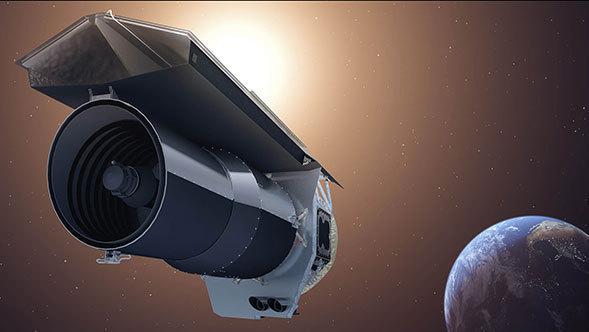
Spitzer Space Telescope
Launch Date | 25 Ağustos 2003 | ||||||||
|---|---|---|---|---|---|---|---|---|---|
Mission Start | December 18, 2003 | ||||||||
Mission End | May 15, 2009 | ||||||||
Mission Completion (Retirement) | January 30, 2020 | ||||||||
Official Closure / Telescope Shutdown | January 30, 2020, 22:30 UTC | ||||||||
The Spitzer Space Telescope is an infrared astronomy telescope developed as part of NASA’s Great Observatories program and operated from 2003 to 2020. It is named after astrophysicist Lyman Spitzer, regarded as a pioneer in infrared astronomy. Spitzer provided astronomers with important data on star formation, galaxy structure and the early universe, particularly through its capacity to observe cold and dusty regions of the cosmos.
The Spitzer Space Telescope was launched on 25 August 2003 aboard a Delta II rocket and was officially decommissioned on 30 January 2020. Spitzer’s mission was divided into two main phases:
Spitzer occupied a heliocentric orbit drifting away from Earth. This unique orbit allowed the telescope to avoid the thermal noise emitted by Earth and perform more sensitive measurements.
Spitzer was a groundbreaking instrument for observing star formation regions. Young stars hidden within dense clouds of gas and dust, invisible in optical light, became clearly detectable in infrared wavelengths. Furthermore, the morphological properties of distant galaxies were analyzed with unprecedented clarity thanks to Spitzer.
Spitzer was among the first telescopes capable of directly detecting the thermal emissions of exoplanets. It provided key information about the atmospheric composition of hot Jupiter-type exoplanets.
Infrared signals from the atmospheres of exoplanets such as HD 209458 b and TrES-1 were first confirmed by Spitzer.
By studying the infrared emissions of galaxies formed in the early universe, Spitzer shed light on structure formation processes during the first few billion years of cosmic history. As the universe expanded, light from these early galaxies redshifted into infrared wavelengths, placing them within Spitzer’s observational range.
Throughout its mission, Spitzer enabled the publication of numerous scientific papers and contributed to the planning of more advanced observatories such as the James Webb Space Telescope (JWST). JWST builds upon Spitzer’s legacy by pursuing even deeper infrared observations.
class=\
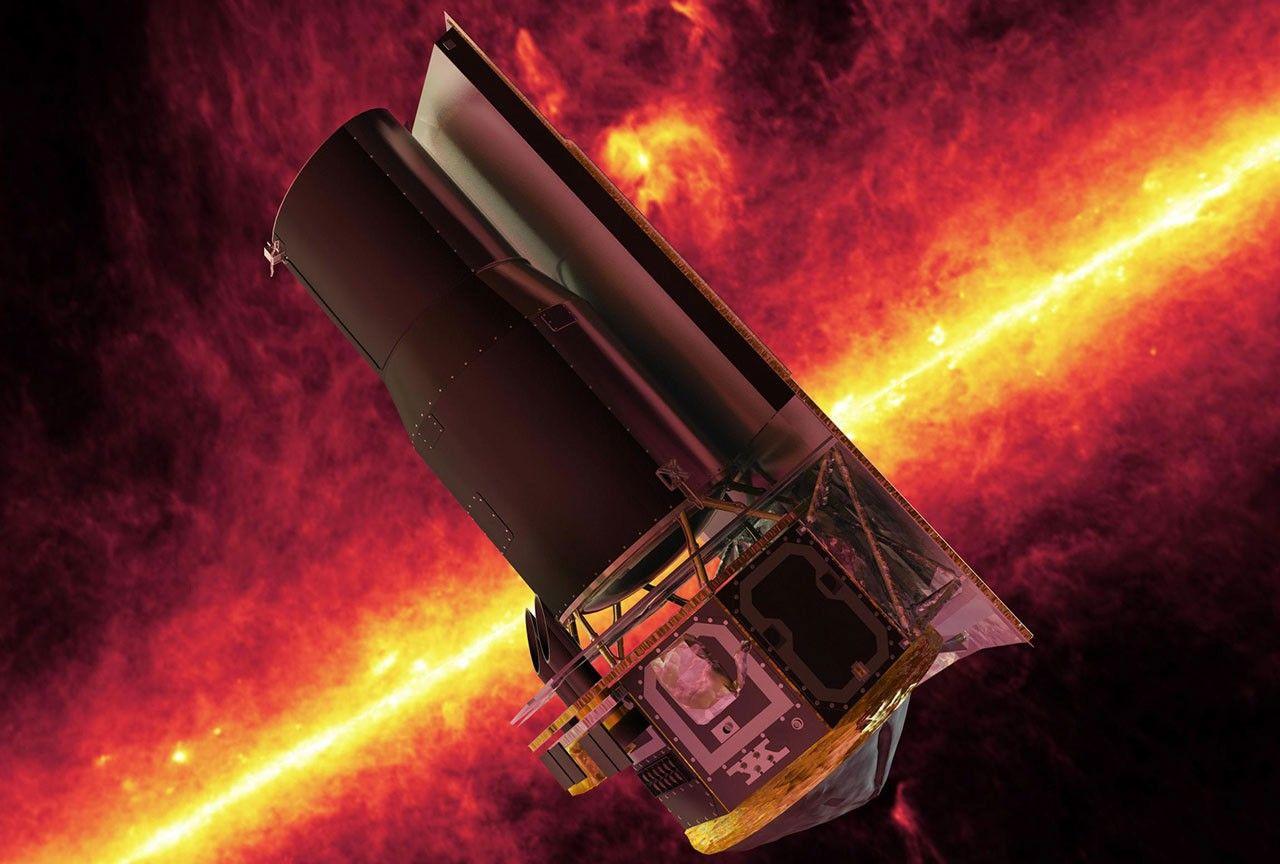
Spitzer’s data remain available in archives and continue to be used by astronomers for new discoveries. Access to this data is possible through NASA’s Infrared Science Archive (IRSA) platform. The Spitzer Space Telescope represents a pivotal milestone in the development of infrared astronomy. By unveiling the hidden aspects of the cold universe, it delivered groundbreaking insights into star formation, galaxy evolution and exoplanet atmospheres.
Spitzer’s contributions extended far beyond its operational lifetime, laying the scientific and technical foundation for subsequent generations of telescopes.
Fazio, G. G., J. L. Hora, L. E. Allen, M. L. N. Ashby, P. Barmby, J. A. Barmby, R. M. Cutri, et al. “The Infrared Array Camera (IRAC) for the Spitzer Space Telescope.” *The Astrophysical Journal Supplement Series* 154, no. 1 (2004): 10–17.https://pubs.aip.org/aip/rsi/article/78/1/011302/349993/The-NASA-Spitzer-Space-Telescope. Accessed April 10, 2025.
Gehrz, R. D., R. F. Silverberg, M. W. Werner, J. R. Houck, S. T. Megeath, G. G. Fazio, and J. L. Hora. “The NASA Spitzer Space Telescope: Mission and Early Results.” *Review of Scientific Instruments* 78, no. 1 (2007): 011302.https://doi.org/10.1063/1.2431313. Accessed April 10, 2025.
NASA Jet Propulsion Laboratory. “Spitzer Space Telescope Mission.” Accessed April 10, 2025.
NASA Jet Propulsion Laboratory. “Spitzer Space Telescope Overview.” NASA JPL Missions. Accessed April 10, 2025.
NASA Science. “Spitzer Space Telescope.” NASA Science Missions. Accessed April 10, 2025.
NASA. "10 Things Spitzer Taught Us About Our Solar System." *NASA Science*. Accessed April 13, 2025.
NASA/Caltech. *Spitzer Space Telescope Official Site*. Accessed April 10, 2025.
Werner, M. W., T. L. Roellig, F. J. Low, G. H. Rieke, M. Rieke, W. F. Hoffmann, E. Young, J. R. Houck, B. Brandl, G. G. Fazio, et al. “The Spitzer Space Telescope Mission.” *The Astrophysical Journal Supplement Series* 154, no. 1 (2004): 1–9.https://doi.org/10.1086/422992. Accessed April 10, 2025.

Spitzer Space Telescope
Launch Date | 25 Ağustos 2003 | ||||||||
|---|---|---|---|---|---|---|---|---|---|
Mission Start | December 18, 2003 | ||||||||
Mission End | May 15, 2009 | ||||||||
Mission Completion (Retirement) | January 30, 2020 | ||||||||
Official Closure / Telescope Shutdown | January 30, 2020, 22:30 UTC | ||||||||
No Discussion Added Yet
Start discussion for "Spitzer Space Telescope" article
Mission and Technical Specifications
Mission Duration and Phases
Orbit and Position
Technical Specifications
Scientific Contributions and Discoveries
Star Formation Regions and Galaxies
Exoplanet Observations
Early Universe and Galaxy Evolution
Spitzer’s Scientific Legacy