


This article was automatically translated from the original Turkish version.

You want to lose weight, you stick to your diet, and perhaps you even go to the gym regularly, yet the scale stubbornly keeps showing the same weight. You wonder where you are going wrong. Here is the answer: sleep deprivation.
Inadequate sleep, now an unavoidable part of modern life, can be the invisible enemy of your weight loss efforts. Today’s individuals have begun stealing sleep between screen-filled nights, demanding work schedules, stress, and social commitments. Yet our bodies—especially our metabolisms—do not ignore this situation.
Research has shown that individuals who regularly sleep less than six hours per night face a significantly increased risk of weight gain. Moreover, this issue is not limited to weight gain alone; sleep deprivation directly sabotages the balance you strive to achieve through diet by disrupting hormones that regulate appetite.
In this article, we will examine in detail how sleep affects metabolism, how it shapes appetite control through hormonal pathways, and why it is at least as important as diet in a healthy weight loss process. Perhaps the reason you are not losing weight is not what is on your plate, but the hours you spend with your head off the pillow.
Sleep and nutrition are two fundamental physiological needs essential for sustaining life. While sleep exerts restorative and regulatory effects on the nervous, immune, endocrine, and metabolic systems, nutrition plays both direct and indirect roles in the functioning of these systems. Recent research has revealed a bidirectional interaction between these two physiological processes.
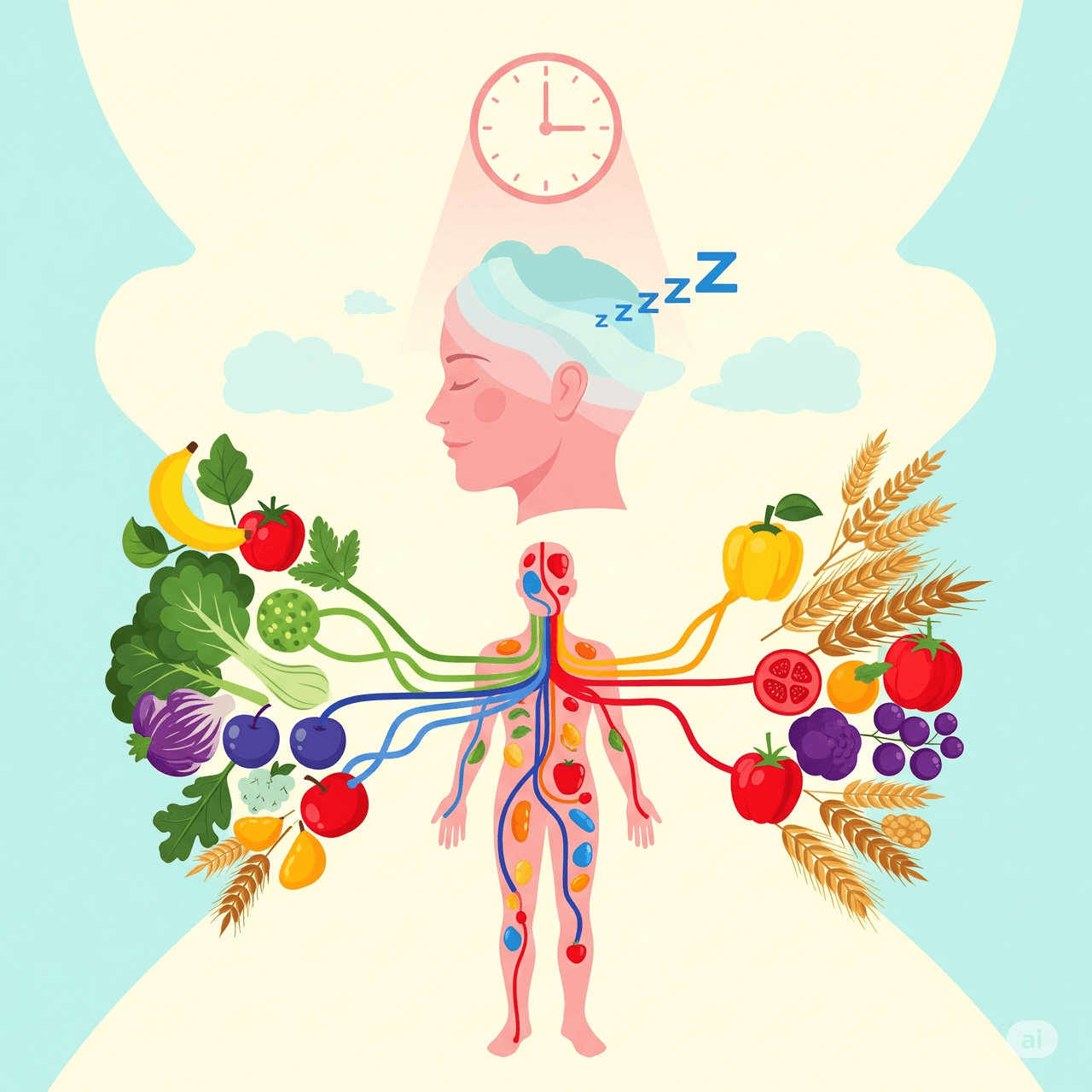
A visual illustrating the connection between sleep and nutrition. (Generated by YZ.)
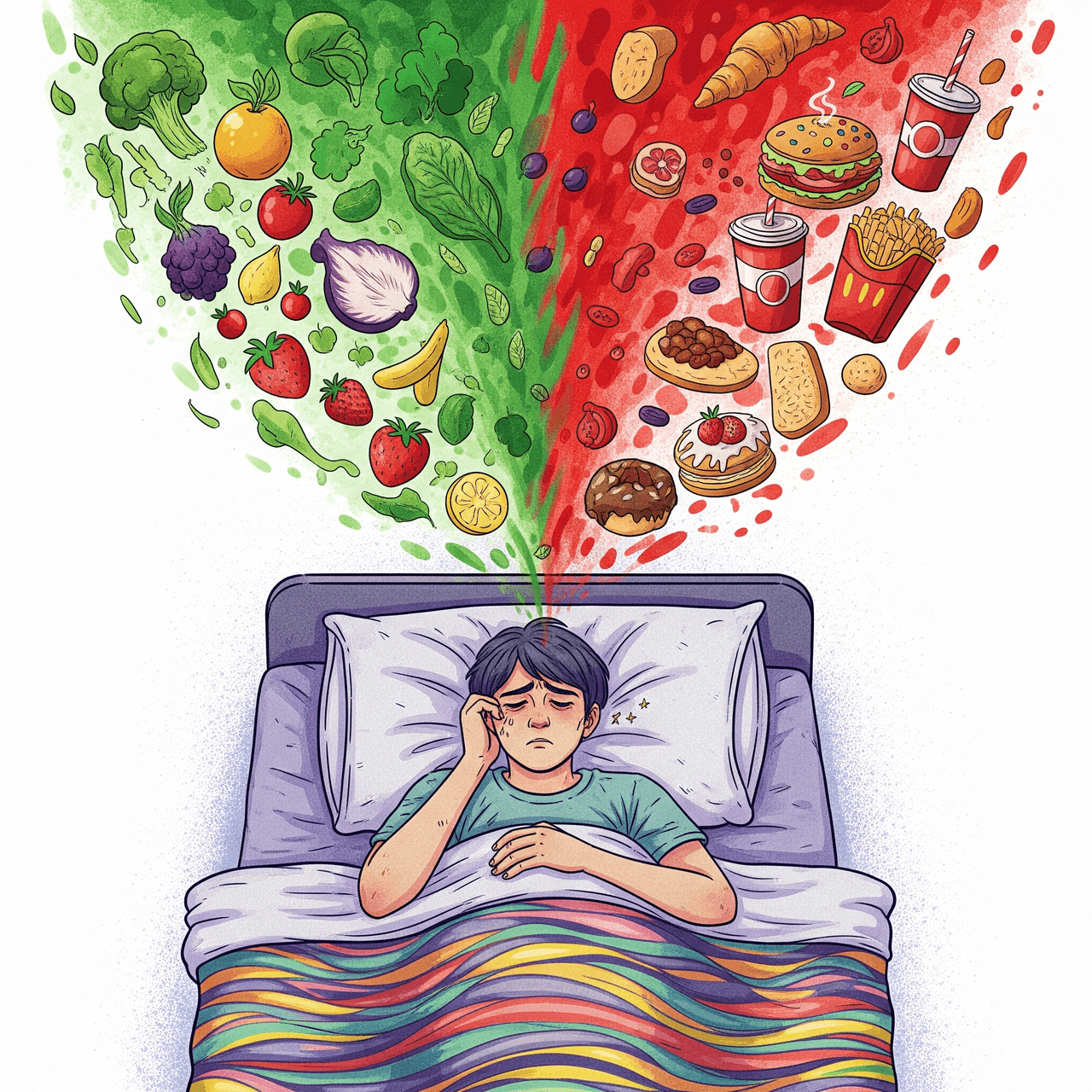
An illustration depicting the relationship between sleep deprivation and nutrition. (Generated by AI.)
A study conducted at the Clinical Research Center and Sleep Laboratory of the University of Chicago investigates the impact of sleep duration on body weight and composition. This experimental research specifically aims to evaluate the role of sleep duration in fat loss and lean body mass under conditions of caloric restriction.
In this study, sleep duration is closely linked to energy metabolism and neuroendocrine responses, and insufficient sleep is thought to hinder fat loss achieved through diet.
Ten overweight, nonsmoking adults (seven men, three women; mean age 41 ± 5 years; BMI 27.4 ± 2.0 kg/m²) participated in the study. Participants were monitored during two separate 14-day periods, during which they either slept 8.5 hours or 5.5 hours per night. In both periods, energy intake was limited to 90% of each individual’s basal metabolic rate. The primary outcome measures were loss of fat mass and lean body mass. Secondary measures included hunger sensation, energy expenditure, respiratory quotient (RQ), and levels of various hormones.
Restricted sleep (5.5 hours) reduced fat loss by 55% compared to adequate sleep (1.4 kg vs. 0.6 kg; p=0.043) while increasing loss of lean body mass by 60% (1.5 kg vs. 2.4 kg; p=0.002). This was accompanied by increased hunger, altered substrate utilization (reduced fat oxidation and increased carbohydrate oxidation), and signs of neuroendocrine adaptation. Additionally, short sleep duration led to increased levels of ghrelin, the hunger hormone, and a decrease in resting metabolic rate.
With reduced sleep duration, hunger increased, energy expenditure decreased, and shifts in substrate utilization were observed. Elevated ghrelin levels may reduce energy expenditure while promoting fat storage and glucose production. These effects may increase the conversion of body proteins into glucose, a potential mechanism explaining the loss of lean body mass.
The study findings demonstrate that sleep duration is critical not only for psychological and cognitive functions but also for preserving body composition and metabolic adaptation. Restricted sleep can reduce the effectiveness of dieting by diminishing fat loss and increasing muscle loss. It may also negatively impact diet sustainability through increased hunger and reduced energy expenditure.
In summary, individuals who sleep only five hours experience slower fat loss and increased muscle loss. In other words, insufficient sleep can undermine your diet.
Quality and sufficient sleep is the best supplement your body needs.
Başpınar, Tuğçe, and Burcu Yeşilkaya. "Beslenme ile Uyku İlişkisi." Fenerbahçe Üniversitesi Sağlık Bilimleri Dergisi 1, no. 2 (2021): 105–116. https://dergipark.org.tr/en/download/article-file/2032903.
Nedeltcheva, Arlet V., Jennifer M. Kilkus, Jacqueline Imperial, Dale A. Schoeller, and Plamen D. Penev. "Insufficient Sleep Undermines Dietary Efforts to Reduce Adiposity." *Annals of Internal Medicine* 153, no. 7 (2010): 435–441. Accessed May 13, 2025. https://www.ncbi.nlm.nih.gov/pmc/articles/PMC2951287/.
The Relationship Between Nutrition and Sleep
Relationship Between Macronutrients and Micronutrients and Sleep
The Interaction Between Insufficient Sleep and Fat Loss Through Diet
Origin and Research Methodology
Findings
Physiological Mechanisms
Conclusion and Evaluation