


This article was automatically translated from the original Turkish version.
+1 More
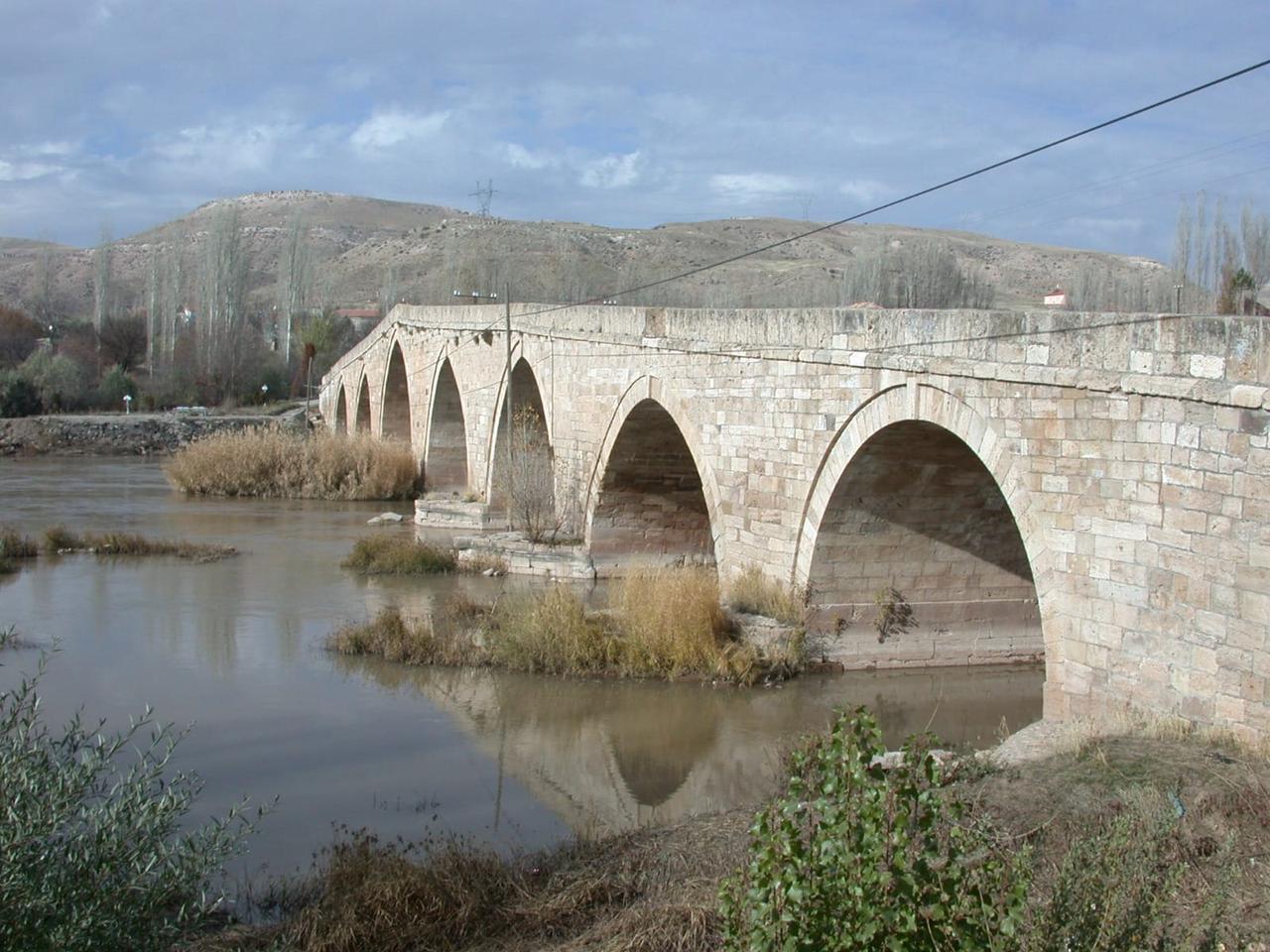
Şahruh Bridge
Location | Sarıoğlan District Karaözü Neighborhood Over the Kızılırmak River Kayseri Province | ||||||||
|---|---|---|---|---|---|---|---|---|---|
Construction Date(s) | Approximately 1480 (no definitive construction inscription exists) | ||||||||
Patron | It is believed to have been built by Şahruh Bey of the Dulkadiroğlu Beylik | ||||||||
Usage Status | It is open to pedestrian traffic and is actively used. | ||||||||
Historical Significance | It is considered one of the largest and most robust stone bridges in the region and serves as a historical crossing point for Karaözü and surrounding settlements. It is also regarded as one of the three largest stone bridges in Türkiye. | ||||||||
Şahruh Köprüsü is located at the entrance to Karaözü Village in the Sarıoğlan district of Kayseri province, Türkiye, spanning the Kızılırmak River. Situated approximately 80 kilometers north of Kayseri city center along ancient migration routes in Central Anatolia, this structure serves as the only crossing point in the region.
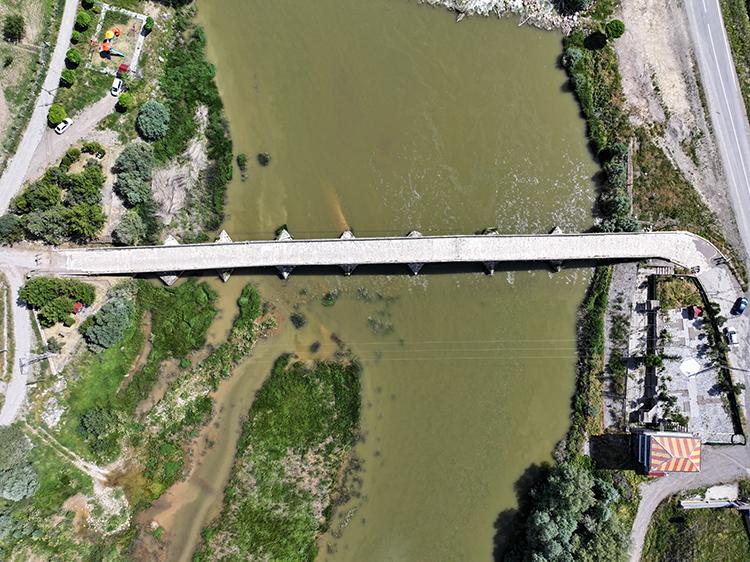
Şahruh Köprüsü- Anadolu Ajansı
As no foundation inscription has been found for the bridge, its exact construction date cannot be determined with certainty. However, it is generally accepted that the bridge was commissioned around 1480 by Şahruh Bey, son of Alaüddevle Bozkurt Bey, ruler of the Dulkadiroğlu Beylik. This date is linked to the year 1480, when Şahruh Bey’s uncle, Şah Budak Bey, was blinded.
An earlier construction date is also possible. Some sources suggest that the structure may date back to the Seljuk period, specifically the first half of the 13th century, and that the current bridge might have been built later on the piers or foundations of an earlier bridge.
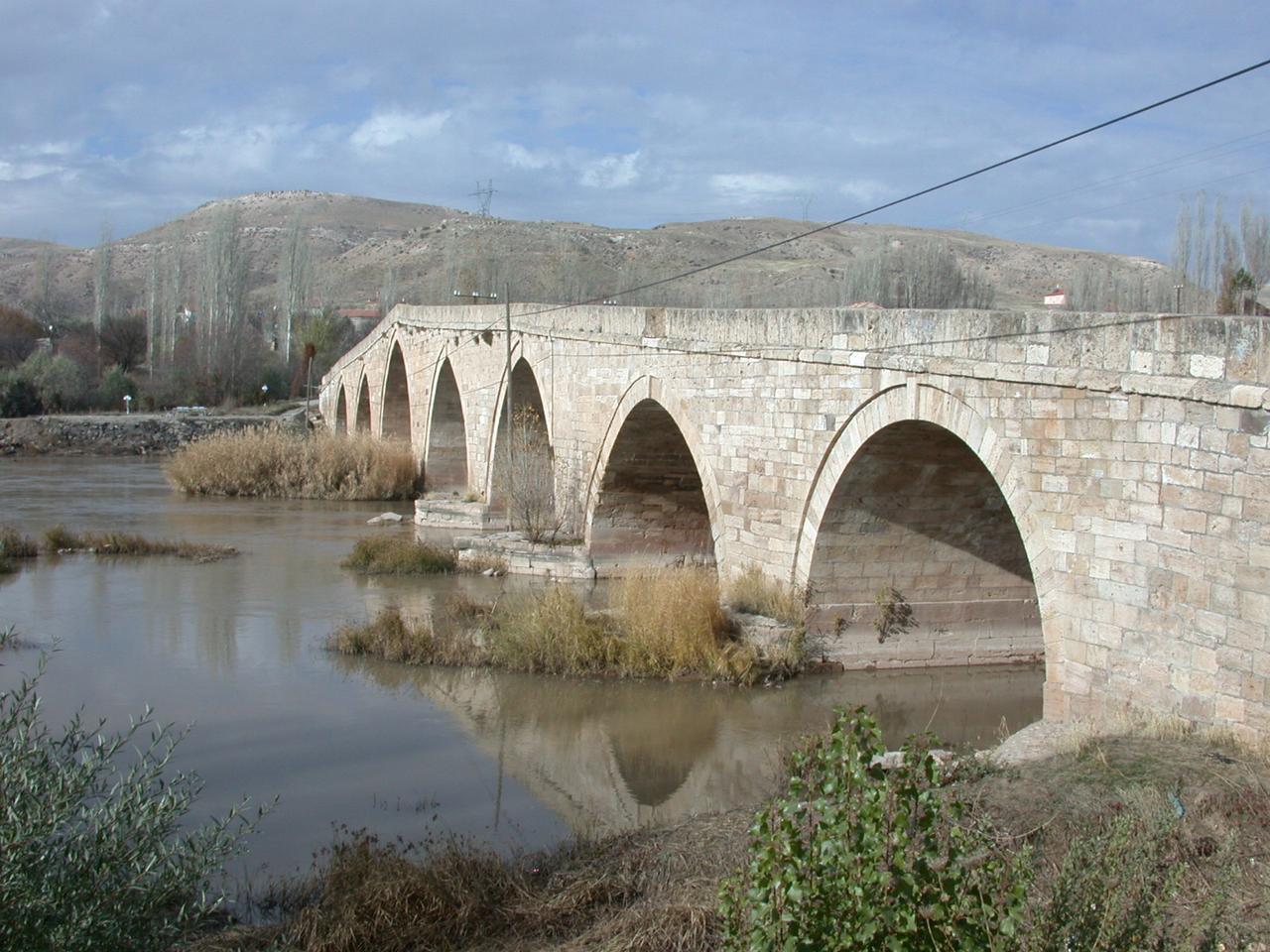
Şahruh Köprüsü - Kayseri Valiliği
The bridge was restored in 1538–1539 CE (Hijri 945) by Mehmet Bey, son of Şahruh Bey. An inscription related to this restoration was discovered in 1928 during repairs to one of the western arches and subsequently transferred to the Sivas Museum. The inscription is registered in the Sivas Museum under inventory number 252.
Another restoration dating to Hijri 1327–1329 (CE 1911–1913) has also been identified on the bridge. These dates are associated with the lion and grape reliefs located on the westernmost arch.
Şahruh Köprüsü is constructed from regularly cut stone blocks. The bridge is approximately 144.5 meters long and 5.6 meters wide. It consists of eight arches, with the central arch being both higher and more pointed than the others. The side arches gradually decrease in height. Seven of the arches are pointed, while the easternmost arch is semicircular. The largest span measures 12 meters.
On the upstream side of the piers, there are selyaran structures with triangular prism bodies and pyramidal caps. The downstream selyarans have triangular or polygonal bodies with pyramidal caps. The construction employed both finely cut and roughly hewn stones, and traces of wooden beams have been detected in the temple walls.
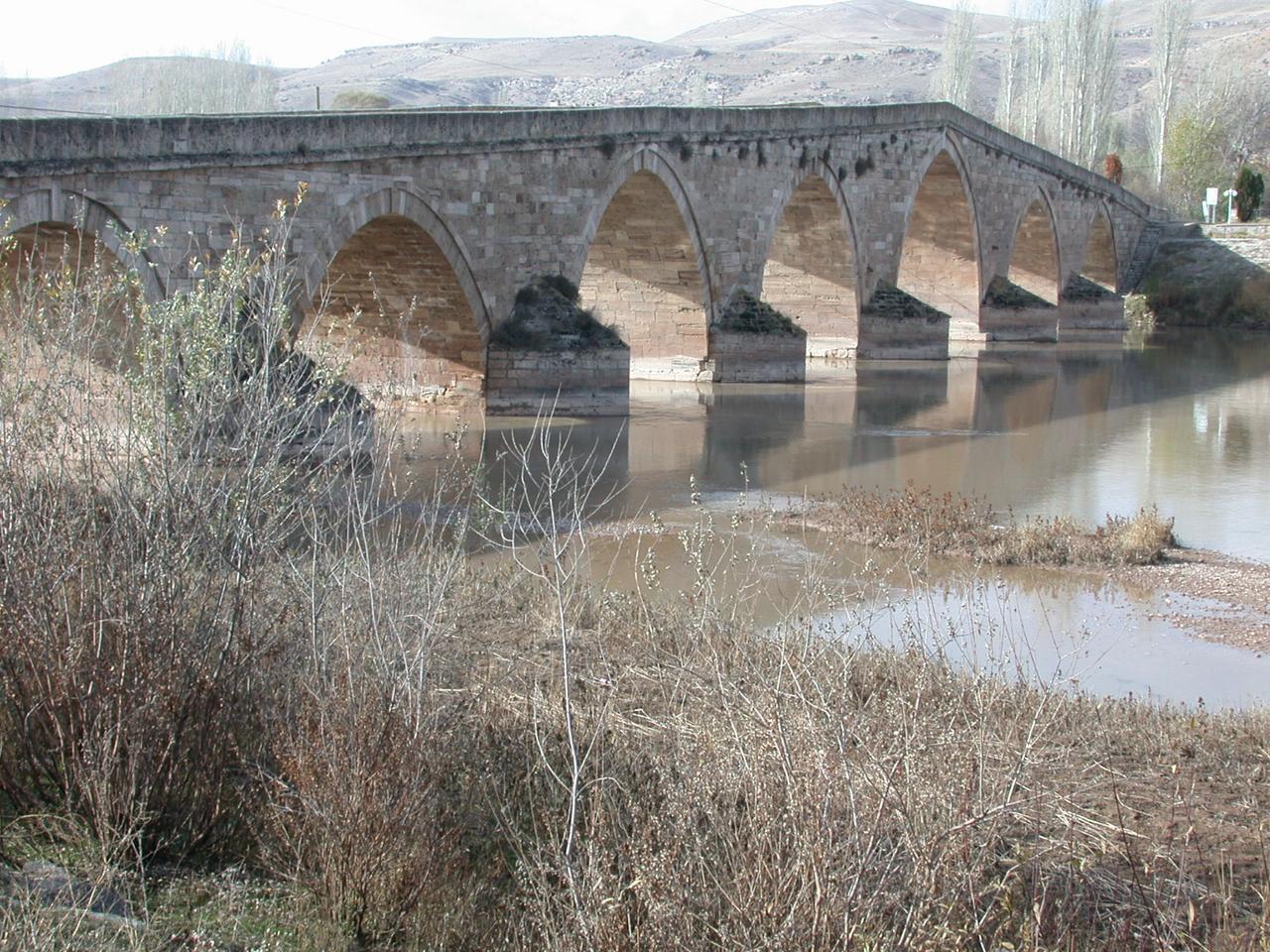
Şahruh Köprüsü - Kayseri Valiliği
A document in the General Directorate of Foundations archives states that Şahruh Bey endowed the entire village of Karaözü in Hijri 897 (CE 1491–1492) for the benefit of the bridge he had constructed. This information confirms that the bridge was already in existence by the late 15th century.
Şahruh Köprüsü remains in use by pedestrians today. Its railings are in good condition and the structure is still standing. However, the bridge has occasionally faced the threat of collapse due to the long-term effects of nearby sand quarries.
Various local beliefs are associated with the bridge. One such belief holds that wishes made by leaning one’s back against a stone located between the railings—known locally as the “Kulunç Taşı”—are fulfilled.
Approximately 500 meters upstream from Şahruh Köprüsü, in the direction of Sivas, the remains of an ancient bridge pier can be found. This structure is believed to date from the Byzantine period and was constructed with a wooden superstructure and stone substructure. It is assumed that the current Şahruh Köprüsü was built along the same crossing route after the older bridge fell out of use.
Various projects are underway to develop the area around Şahruh Köprüsü for tourism. The Kayseri Metropolitan Municipality has planned a national garden project encompassing social facilities, recreational areas, walking paths, and bicycle lanes in the region.
Anadolu Ajansı. "Kızılırmak Üzerindeki 8 Kemerli Şahruh Köprüsü Yıllara Meydan Okuyor." aa.com.tr. April 19, 2024.https://www.aa.com.tr/tr/kultur/kizilirmak-uzerindeki-8-kemerli-sahruh-koprusu-yillara-meydan-okuyor/3251802
Başkent Haber. "Şahruh Köprüsü’nün Tarihi." baskenthaber.org. Accessed May 21, 2025.https://baskenthaber.org/sahruh-koprusunun-tarihi/
Kayseri Valiliği. "Köprüler." Accessed May 21, 2025.https://www.kayseri.gov.tr/kopruler
Sarıoğlan Kaymakamlığı. "Şahruh Köprüsü." Accessed May 21, 2025.https://www.sarioglan.gov.tr/sahruhkoprusu

Şahruh Bridge
Location | Sarıoğlan District Karaözü Neighborhood Over the Kızılırmak River Kayseri Province | ||||||||
|---|---|---|---|---|---|---|---|---|---|
Construction Date(s) | Approximately 1480 (no definitive construction inscription exists) | ||||||||
Patron | It is believed to have been built by Şahruh Bey of the Dulkadiroğlu Beylik | ||||||||
Usage Status | It is open to pedestrian traffic and is actively used. | ||||||||
Historical Significance | It is considered one of the largest and most robust stone bridges in the region and serves as a historical crossing point for Karaözü and surrounding settlements. It is also regarded as one of the three largest stone bridges in Türkiye. | ||||||||
Historical Background and Construction
Restorations and Inscriptions
Architectural Features
Endowment Record and Ownership Information
Cultural Beliefs and Folk Narratives
Remains of the Nearby Ancient Bridge