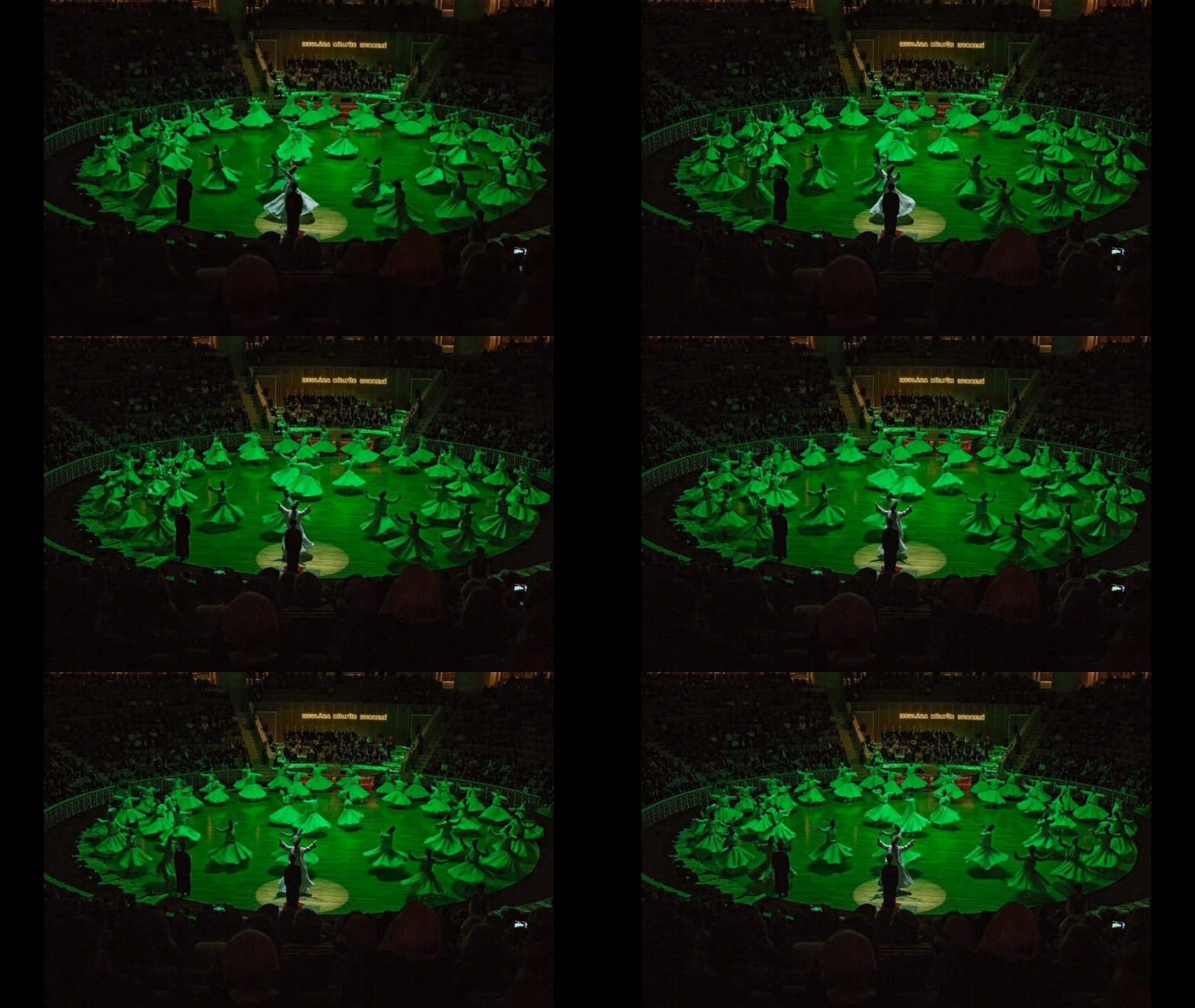
This article was automatically translated from the original Turkish version.
Door | Religious-Sufi commemoration ceremony | ||||||||
|---|---|---|---|---|---|---|---|---|---|
Names | Mevlânâ Celebrations Vuslat Ceremonies Leyle-i Arûs Şeb-i Arûs International Commemoration Ceremonies for the Anniversary of Mevlânâ’s Vuslat | ||||||||
Reason for Commemoration | Death of Mevlânâ Celaleddin-i Rûmî | ||||||||
Date of Commemoration | 17 December 1273 AD 5 Cemâziyelâhir 672 AH Events Between 7–17 December (Republican Era) | ||||||||
Historical Center | Konya Asitânesi (Mevlânâ Dergâhı) | ||||||||
Events | Prayers and Supplications Additional Conferences and Events in the Modern Period Mevlevî (Sema) ceremony / Mukabele Naat, ilahi and Mevlevî musical works Selected Readings from the Works of Mevlânâ Recitation of the Qur’an | ||||||||
Organizers | Local Civil Society Organizations Ministry of Culture and Tourism Konya Provincial Directorate of Culture and Tourism Konya Metropolitan Municipality Relevant Public Institutions Universities Culture and Art Institutions | ||||||||
Şeb-i Arûs, refers to the ceremonies held annually on the anniversary of Mevlânâ Celâleddîn-i Rûmî’s death on Sunday, 17 December 1273 in Konya. Initially centered in Konya, these ceremonies have evolved over time into both a Sufi commemorative ritual and a cultural event of national and international scale.【1】 Etymologically meaning “wedding night,” this term has been adopted as a symbolic expression of the understanding that Mevlânâ’s death was not an end but a union with the Divine, known as “vuslat.”
The historical roots of Şeb-i Arûs ceremonies lie in the Mevlevî order’s practices of dhikr and âyin, which began to take shape during the 13th century in Mevlânâ’s lifetime and became institutionalized after his death. Within Mevlevî lodges, the sema transformed from Mevlânâ’s personal ecstatic state into a structured ritual governed by specific postures, music, and spatial arrangements. His death night emerged as a uniquely significant day within this framework. During the Ottoman period, annual Mevlevî âyin (sema) and commemorative gatherings held in December in major centers such as Konya, Istanbul, Bursa, Aleppo, and Damascus established Şeb-i Arûs as both an internal ritual of the order and a public ceremony integrated into the religious and cultural life of the cities.
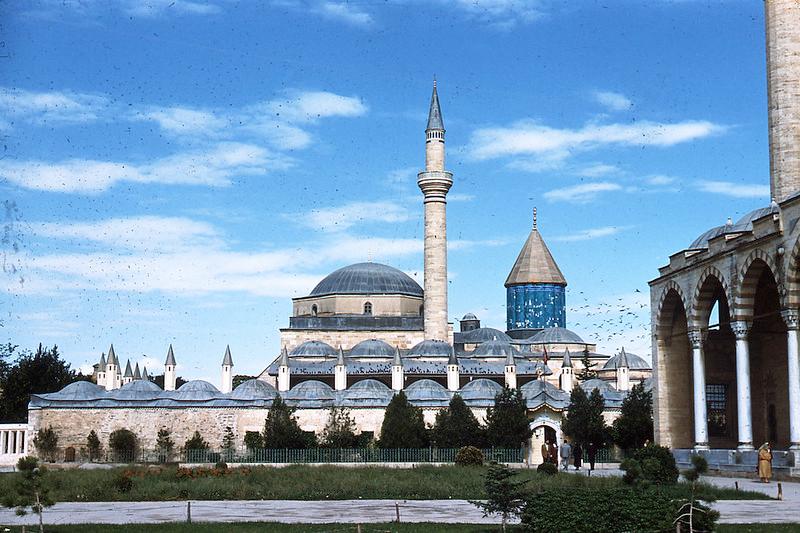
Mevlânâ Camii ve Müzesi (Flickr)
In the early years of the Republic, the closure of tekkes and zaviyes eliminated the official status of Mevlevî institutions. Nevertheless, the historical and cultural legacy associated with Mevlânâ endured. With the transformation of the Mevlânâ Dergâhı in Konya into a museum, commemorative ceremonies began to reappear in the public sphere under different forms and names. Particularly from the 1950s onward, programs held in December in Konya included sema performances, conferences, concerts, and exhibitions; Şeb-i Arûs gradually evolved into a highly attended, protocol-rich series of events officially known as the “International Commemoration Ceremonies of the Anniversary of Hz. Mevlânâ’s Vuslat.”
Today, Şeb-i Arûs stands out as a phenomenon at the intersection of faith tourism and cultural tourism, significantly shaping Konya’s urban identity. The annual ceremonies attract large numbers of domestic and international visitors to Konya, with the Mevlânâ Museum and tomb at the heart of this activity. The inscription of Mevlevî âyin as intangible cultural heritage under international frameworks and the designation of 2007 as Mevlânâ Year have further linked Şeb-i Arûs closely with Türkiye’s cultural diplomacy tools, tourism policies, and the narrative surrounding the “Mevlâna–Konya” image.
The term Şeb-i Arûs is a compound derived from Persian and Arabic. The word şeb means “night” in Persian; arûs in Arabic denotes both “bride” and carries connotations related to wedding and marriage ceremonies.【2】 In Sufi literature, this term encompasses not only the act of marriage but also the meaning of union, vuslat, and the moment of joining with the Beloved. Thus, the expression “Şeb-i Arûs” literally means “wedding night,” and this compound has become the linguistic embodiment of the interpretation that Mevlânâ’s death was a “union with the Beloved.”
The phrase attributed to Mevlânâ, “Our death is an eternal wedding,” illustrates the Sufi conception of death not as separation but as return to God and transition into true existence.【3】 In this context, Şeb-i Arûs is not merely a historical commemorative day but the symbolic name of a Sufi understanding that marks the end of the ego’s existence and the soul’s union with the Divine. The language Mevlânâ constructed in his Divân-ı Kebîr and Mesnevî around metaphors of death, separation, union, and the Beloved proved decisive in shaping the later Mevlevî tradition around Şeb-i Arûs.
Historically, the term “Şeb-i Arûs” was not used during Mevlânâ’s lifetime; early Mevlevî sources instead indirectly referred to his death as “vuslat.” In early menâkıbnâmeler, Mevlânâ’s death night is described as a time of tears and sorrow for his friends and disciples, yet from Mevlânâ’s own perspective, it is portrayed as a moment of joy and union. Here, the emphasis lies in the metaphor of “wedding”: the bride’s joy at marrying her beloved is equated with the dervish’s joy at uniting with the Divine.
By the Ottoman period, various terms conveying the same meaning appear in different texts and documents. In the Mevlevî Asitânesi in Konya and other dergâhs, Mevlânâ’s death anniversary was sometimes referred to as “Şeb-i Arûs,” sometimes as “Leyle-i Arûs” (wedding night) or “Leyle-i Vuslat” (night of union). The preference for “leyle” in Arabic-dominant texts and “şeb” in Persian-dominant expressions reflects the interplay of the two linguistic spheres sustaining Mevlevîlik. The Arabic root “urs/‘urs,” denoting marriage ceremonies, also enabled the construction of the death–night–union relationship around the metaphor of “wedding” in both Arabic and Ottoman texts.
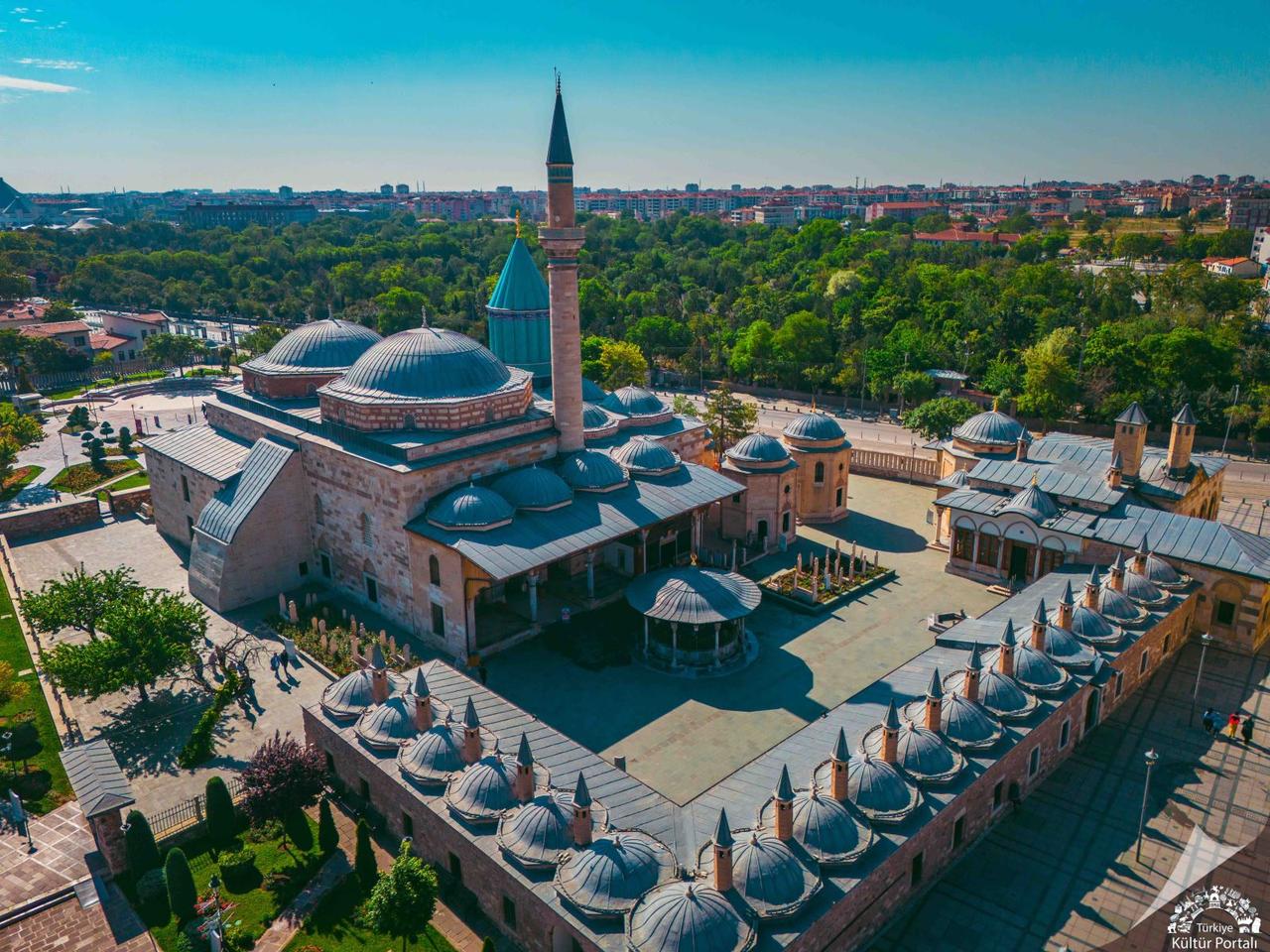
Mevlânâ Müzesi - Şadırvanın Hemen Çaprazında Erken Dönemde Etrafında Mevlevî ayini Yapılan Şeb-i Arûs Havuzu Görünüyor (Kültür Portalı)
The evolving connotations of the term are also noteworthy. In early Mevlevîlik, Şeb-i Arûs primarily denoted an “internal order” night of remembrance and dhikr. Over subsequent centuries, the term gradually acquired broader meaning and became the general designation for all ceremonies, âyin, and gatherings held around Mevlânâ’s death anniversary. Particularly from the 19th century onward, Mevlevî âyin, hatim ceremonies, and sohbet gatherings held in Istanbul and other imperial centers under the auspices of Şeb-i Arûs made the term more visible; expressions such as “Şeb-i Arûs” or “Leyle-i Arûs” became widespread in city chronicles, memoirs, and travelogues.
During the Republican period, official language long favored terms such as “Mevlânâ İhtifalleri,” “Mevlânâ’yı Anma Törenleri,” or “Vuslat Yıldönümü Törenleri”; “Şeb-i Arûs” persisted primarily within traditional Mevlevî circles and Sufi literature. Over time, however, the term reemerged prominently in tourism, cultural diplomacy, and international promotion efforts. In Turkish and foreign-language promotional materials, this compound has been consistently used alongside translations such as “wedding night,” “nuptial night,” or “night of union.” Thus, the concept transformed from a ritual name intrinsic to Mevlevîlik into a global cultural symbol identified with Mevlânâ.
Variations in spelling and pronunciation also exist. After the adoption of the Latin alphabet, the term was sometimes simplified to “Şeb-i Arus” or “Şeb-i Arus gecesi”; however, in academic works, the form “Şeb-i Arûs,” closer to the original Ottoman and Arabic–Persian pronunciation, has increasingly been preferred. Today, within the context of Turkish Turkish, the spelling “Şeb-i Arûs,” which preserves the long vowel, has become the widespread scholarly preference to more accurately reflect both meaning and historical continuity.
In summary, Şeb-i Arûs emerged as a specialized term when the etymological compound meaning “wedding night” merged with the Sufi understanding of death as union (vuslat) to denote Mevlânâ’s death night. Over the historical process, this term migrated from the internal ritual language of the Mevlevî order to Ottoman urban life, and from there to the cultural and tourist discourse of Republican Türkiye. Today, it functions as a broad concept encompassing both the anniversary of Mevlânâ’s death and the entire spectrum of ceremonies and events organized around it.
Mevlâna Celâleddîn-i Rûmî died in the evening hours on Sunday, 5 Cemâziyelâhir 672 / 17 December 1273 in Konya, the political and cultural center of the Anatolian Seljuk State. He was approximately sixty-six years old at the time of his death. Mevlânâ was buried in the family cemetery in central Konya, where his father Bahâeddîn Veled had previously been interred. Shortly thereafter, a tomb known as “Kubbe-i Hadra” was constructed over his grave.
A dergâh complex formed around the tomb, including a semâhâne, dervish cells, a kitchen, a mosque, and various auxiliary structures. This center in Konya became both the headquarters of the Mevlevî order and the focal point of Mevlânâ’s legacy. Commemorative rituals held on the anniversary of his death naturally concentrated around this tomb and dergâh, gradually becoming an essential element of Konya’s religious and social life.
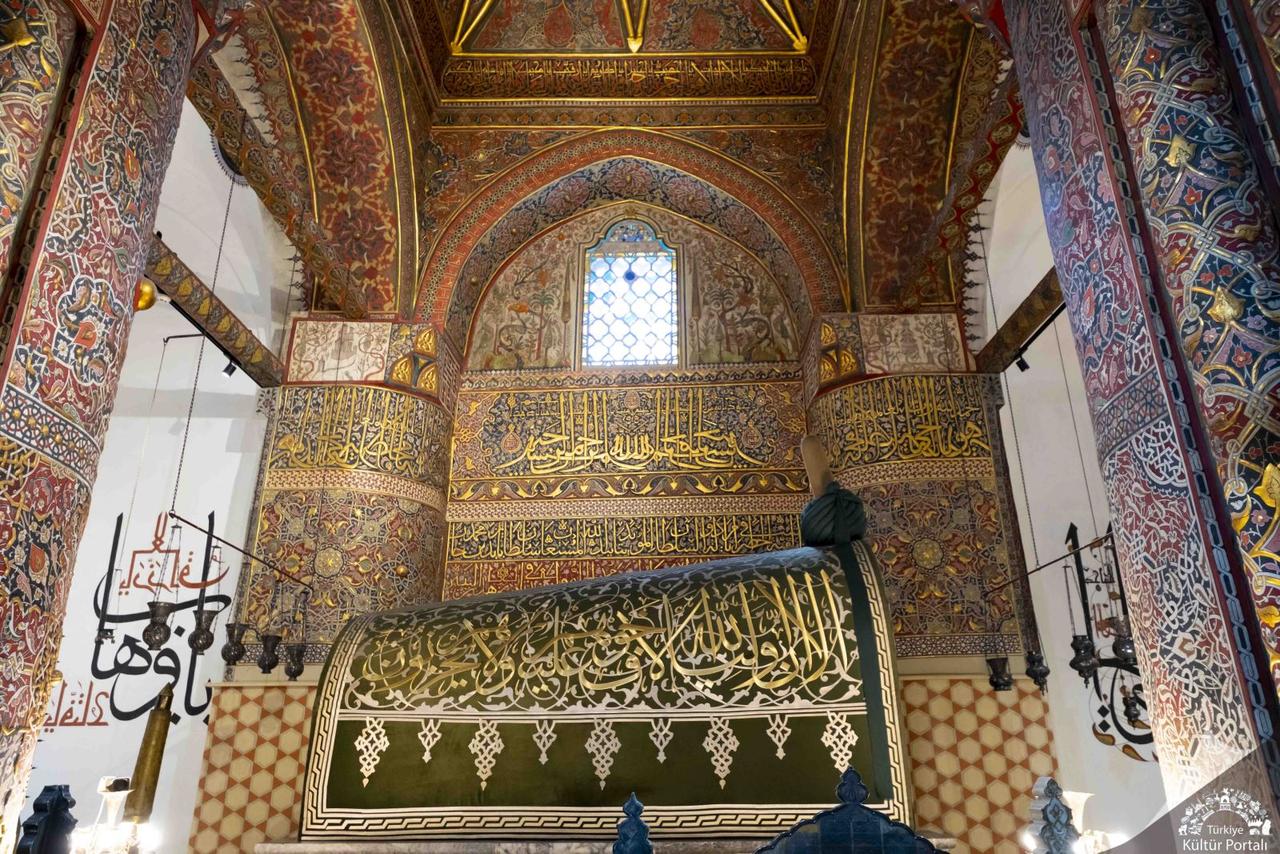
Mevlânâ Celaleddin-i Rûmî's Casket (Kültür Portalı)
Mevlâna’s funeral ceremony is described in the menâkıb tradition as a gathering of a vast crowd from diverse religious and communal backgrounds. These accounts emphasize the participation not only of Muslims but also of non-Muslim groups, all of whom regarded him as a saint and wise figure within their own beliefs. This narrative illustrates that Mevlânâ had become a figure of respect not merely within a narrow dervish circle but among the entire population of Konya and its diverse communities.【4】
The tomb and dergâh in Konya have remained, since Mevlânâ’s death, both a continuously visited site and a center for special ceremonies held at specific times of the year. The day of his death, due to the nature of the Sufi understanding of death, came to be known as “Şeb-i Arûs,” meaning “wedding night”; this night transformed into a tradition of commemoration involving Qur’an recitation, ilâhiler, and sema around the tomb.
The Mevlevî order that emerged after Mevlânâ’s death was institutionalized primarily through the activities of his son Sultan Veled, followed by his grandson Ulu Ârif Çelebi and close successors. Leadership of the order was maintained by the çelebîs, descendants of Mevlânâ, who resided in the Asitâne in Konya and were known as “makam çelebisi”; thus both lineage and spiritual succession were preserved together.
In this context, death was not understood as ordinary annihilation but as a return to the Divine and a moment of union with divine love.【5】 In Mevlânâ’s own words and poetry, death is described through metaphors such as “union with the Beloved,” “the lifting of the veil,” and “return to the true homeland.” The naming of the day of death as “wedding night” encapsulates this Sufi understanding: human life is lived as a trial and preparation; death is the moment when union with the Beloved—that is, God—is realized.

A Scene from the Mevlevî Ayin (Anadolu Ajansı)
The early Mevlevî understanding of sema is closely linked to this interpretation of death and vuslat. During Mevlânâ’s lifetime, sema emerged as an ecstatic state triggered by divine love, independent of any fixed space or program. After his death, within the Mevlevî order, sema was systematized as a form of dhikr performed in the dergâh. The structure of the Mevlevî âyin closely resembling its modern form was established during the mid-15th century under Pîr Âdil Çelebi. During this period, sema became a formalized ritual performed in a designated space called the semâhâne, under the supervision of the postnişîn, with dervishes following a specific sequence and movement pattern accompanied by Mevlevî music.
In the Mevlevî tradition, the concepts of death, sema, and vuslat complement one another. The dervish seeks to detach from worldly attachments, break the narrow shell of the ego, and turn toward the Divine; sema is the embodied form of this spiritual orientation through movement and ritual. The naming of Mevlânâ’s death night as Şeb-i Arûs stems from the view that death is not an end but the culmination of a long spiritual journey.【6】
The early period of the Mevlevî tradition was shaped by menâkıbnâmeler and Sufi narratives centered on Mevlânâ. In these texts, Mevlânâ’s death night is presented as a pivotal moment in both city and order life. Accounts describe how dervishes, students, and close associates gathered around him during his illness, and how dhikr and supplications intensified in the final moments before his death.
In menâkıbnâmeler, the funeral night is depicted as a time when the streets and entrances of the house and dergâh were filled with crowds—people from different professions and belief groups, scholars and Sufi circles, and the city’s leading figures. These accounts elevate Mevlânâ not merely as the head of a Sufi order but as a wise guide whose presence had become embedded in the collective memory of the city. Therefore, the day of his death is portrayed not as the sorrow of a narrow dervish circle but as a “night” in which the entire city of Konya experienced intertwined emotions of grief and joy.【7】
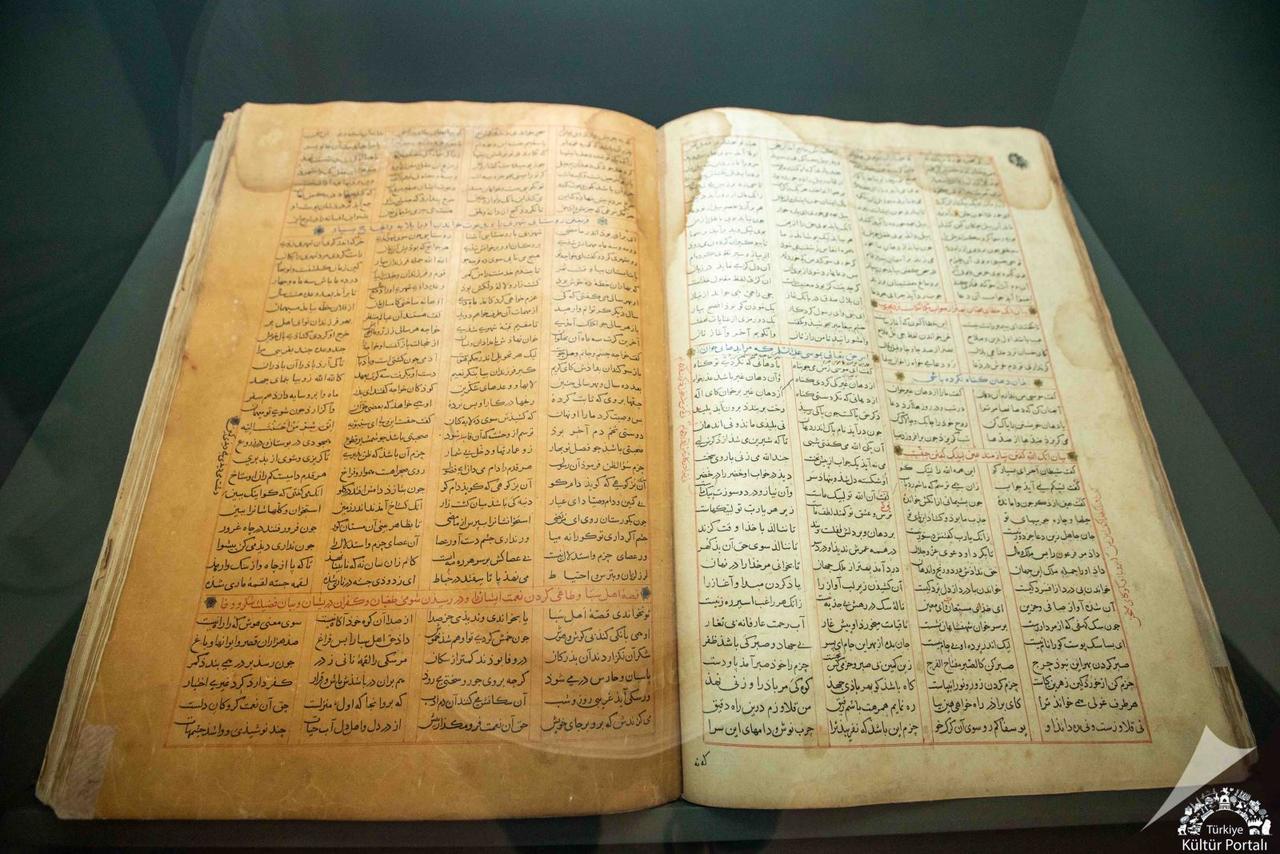
One Manuscript of the Mesnevî (Kültür Portalı)
In early texts, death is frequently explained through analogies and contrasts. For those who view death as “meeting the Beloved,” that moment is a joyful wedding night; for those who equate death with fear and darkness, it is a painful separation. What determines how death is experienced is the individual’s attitude toward the world and the Divine: good deeds and inner purification render death as “nusret,” while sin and heedlessness make it appear as “azap.” This perspective lies at the heart of the concept of Şeb-i Arûs: the night of death carries the joy of union with the Beloved.
Funeral and burial practices within Mevlevî circles also align with this understanding. The recitation of İsm-i Celâl (Lafza-i Celâl) beside a dying dervish, the formation of dhikr circles after death with specific prayers and ilâhiler, the preparation of the body under the supervision of the postnişîn, and burial in the cemetery surrounding the dergâh became widespread practices. The naming of Mevlânâ’s death night as “Şeb-i Arûs” within this context became both the foundational interpretation of death’s meaning and the basis for the commemorative rituals that developed around the tomb and dergâh in Konya.
Within this framework, Mevlânâ’s death and the early Mevlevî generations’ understanding of death–vuslat played a decisive role in transforming Şeb-i Arûs from a mere series of ceremonies held on a specific date into a fundamental concept reflecting the Mevlevî worldview on the world, humanity, and the afterlife.
During the Ottoman period, the anniversary of Mevlânâ’s death was recognized as one of the most important dates in the Mevlevî calendar, and annual commemorative ceremonies were regularly held in Mevlevî lodges across the empire, beginning with the Konya Asitânesi. Although early sources do not directly use the term “Şeb-i Arûs,” the interpretation of Mevlânâ’s death anniversary as the “night of union” gradually transformed it into a Sufi ritual centered on sema as the Mevlevî tradition developed.
The spread of Mevlevîlik across Ottoman territories, the organization of Mevlevî lodges as religious-cultural centers, and their close ties with the state transformed the night of Şeb-i Arûs into both an internal ritual of the order and a public event influencing urban life.
During the Ottoman period, the focal point of Şeb-i Arûs ceremonies was the Mevlânâ Dergâhı in Konya, also known as the Konya Asitânesi. The date of 5 Cemâziyelevvel 672 (17 December 1273 in the Gregorian calendar), recognized by Mevlevîs as the day of Mevlânâ’s death, was long observed according to the Hijri calendar and preserved as a special day in the dergâh’s annual ritual schedule.
The center of the ceremony at the dergâh was Mevlânâ’s tomb and the semâhâne. The day typically began with tomb visits during daylight hours; the people of Konya, dervishes, and visitors from outside the city would visit the tomb, recite the Qur’an, and offer prayers at the casket. The main ceremony took place after the afternoon prayer. Following this, the Qur’an was recited, specific surahs and passages were chanted, and then the Mevlevî âyin was performed accompanied by Mevlevî music.
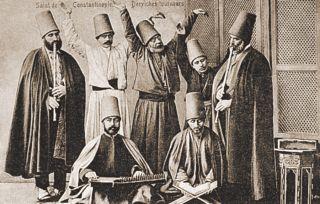
Mevlevî Dervishes in the Ottoman Period (DİA)
Descriptions of the Konya Asitânesi indicate that sema was preferably performed around a small marble pool located in front of the matbah-ı şerif within the dergâh courtyard. This pool, estimated to have a history of nearly two centuries, served as a symbolic focal point for Mevlânâ’s death anniversary ceremonies until the closure of tekkes and zaviyes in 1925; when weather conditions were unfavorable, the semâhâne interior was preferred. The sema, as in classical Mevlevî tradition, was a form of dhikr combining circular movements, salutations, and ilâhiler accompanied by the ney; on Şeb-i Arûs night, this arrangement acquired intensified meaning through its association with Mevlânâ’s concept of the “night of union.”
The final part of the ceremony, the gülbang, reflected its religious framework. Sources report that the night concluded with a prayer and supplication beginning with “Vakt-i şerif hayr ola, hayırlar feth ola, şerler def ola…”; in this gülbang, the terms “Leyle-i Arûs-i Rabbânî” and “vuslat” were especially emphasized.【8】 Thus, the death anniversary came to be understood not as an ordinary day of mourning but as a night commemorating Mevlânâ’s union with the Divine and serving as a vehicle for prayer and supplication for Muslims.
The participant profile was not limited to dervishes alone. The people of Konya, city elites, members of the ulema, and occasionally guests from neighboring districts also attended the ceremonies. While the inner circle consisted of the çelebi/postnişîn, semâzenler, mutrıp heyeti, and dergâh staff, the outer circle included representatives of Konya’s civil and military bureaucracy as well as merchants and artisans, transforming Şeb-i Arûs into a shared religious-cultural experience of the city.
Mevlevîlik did not remain confined to Konya during the Ottoman period; it was organized through a widespread network of Mevlevî lodges extending across Anatolia, the Balkans, and Arab provinces. Particularly from the 16th century onward, Mevlevîlik was strongly embraced in Western and Inner Western Anatolia (including Kütahya, Bursa, Ayasuluğ/Selçuk and surrounding villages); some villages reportedly had nearly their entire populations as Mevlevîs. From the same centuries onward, numerous Mevlevî lodges were built by viziers and local beys; centers such as Galata and Yenikapı in Istanbul became important branches subordinate to the Konya Asitânesi.
This expansion provided the foundation for Şeb-i Arûs ceremonies to evolve from a practice exclusive to Konya into a calendar event extending across the entire Mevlevî network. The Konya model was replicated in other lodges, adapted to local conditions: on the anniversary of Mevlânâ’s death, Qur’an recitation, selections from Mevlânâ’s poetry and couplets, ilâhiler, and sema took place in the dergâh’s tomb, semâhâne, or courtyard areas; ceremonies often lasted until late night in most centers.
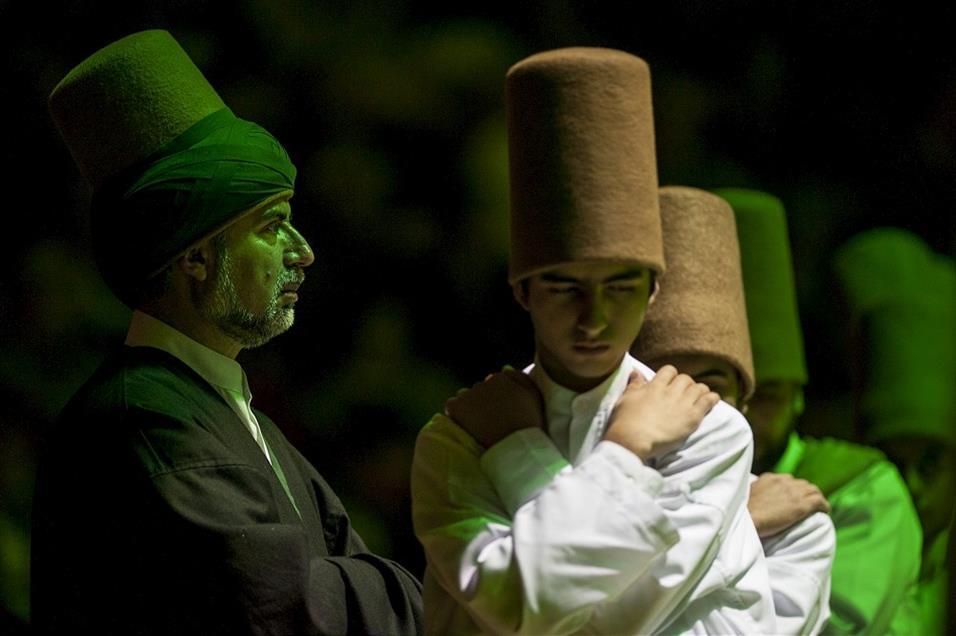
A Scene from the Mevlevî Ayin (Anadolu Ajansı)
In large urban tekkes such as those in Galata and Yenikapı in Istanbul, the Şeb-i Arûs night also functioned as a gathering for the city’s elite. The Mevlevî âyin held in these dergâhs was perceived both as part of the Mevlevî dervishes’ ritual life and as a religious experience accessible to the broader urban population. Records from Serez and other Rumelian centers show that the revenues of Mevlevî lodges were allocated to other Mevlevî centers, such as the Galata Mevlevîhane; this indicates that the entire network could synchronize its activities on specific dates like Şeb-i Arûs.
Mevlevî lodges in Arab provinces such as Aleppo and Damascus also followed the same calendar. In these centers, reverence for Mevlânâ was expressed particularly through sema and recitations of the Mesnevî; the Şeb-i Arûs night became a day of dhikr and commemoration attended by both the local Muslim population and Ottoman bureaucrats affiliated with Mevlevî circles. Thus, the Konya Asitânesi served as the “model center” in terms of historical legitimacy and ritual structure, while other Mevlevî lodges adapted this model to their local contexts.
Mevlevîlik maintained close relations with the Ottoman state apparatus from early periods. The connections between Mevlevî şeyhs and the palace and central bureaucracy strengthened particularly from the 18th century onward; during the reigns of Selim III and Mahmud II, Mevlevîlik became one of the orders favored by the sultans. This proximity enhanced the political and social visibility of Şeb-i Arûs ceremonies.
In addition to Mevlevî dervishes, governors, judges, military commanders, and civil servants stationed in Konya participated in the Şeb-i Arûs ceremonies held at the Konya Asitânesi. Memoirs and local accounts describe the Mevlânâ Dergâhı as the “Âsitâne-i ‘aliyye” and note the participation of “the region’s leading state officials and city elites” in the vuslat anniversary ceremonies.【9】 In this context, Şeb-i Arûs acquired the character of both an internal order dhikr and commemorative night and a public ceremony where state representatives and the local community gathered in the same space.
Şeb-i Arûs Ceremony (T.C. Kültür ve Turizm Bakanlığı)
A similar pattern emerged in Istanbul’s Mevlevî lodges. Mevlevî centers in Galata, Yenikapı, and Beşiktaş, due to their proximity to the palace, became venues visited by civil and military bureaucrats, members of the kalemiyye and ilmiyye classes, and occasionally palace personnel on Şeb-i Arûs nights. Research on Mevlevîlik reveals that sultans visited Mevlevî lodges, participated in Mevlevî âyin, established close personal relationships with Mevlevî çelebîs, and issued imperial decrees for the repair, expansion, and endowment of dergâhs. Taken together, the Şeb-i Arûs night became an annual ceremonial cycle that visibly manifested the relationship between Mevlevîlik and the state.
In the provinces, particularly in Anatolian cities, Şeb-i Arûs ceremonies were conducted with the participation of local administrators and city elites. Thus, Mevlevîlik provided not only a religious-Sufi framework in centers outside Konya but also a symbolic meeting ground between local ruling elites and the urban populace.
Information about Şeb-i Arûs ceremonies during the Ottoman period emerges not from direct “ceremony manuals” but from the combined analysis of diverse sources. Archival documents, particularly endowment records, imperial decrees, and berats, provide detailed information on the organization, income sources, and renovations of Mevlevî lodges. These documents reveal that the Mevlânâ Dergâhı and other Mevlevî lodges possessed the financial and physical capacity to support increased activities on specific dates such as Şeb-i Arûs. The repair and expansion of the Mevlânâ mansion in Konya by Ottoman sultans in the 19th century are among the indirect indicators of the state’s recognition of the importance of such ceremonies.【10】
Menâkıbnâmeler, risâles, and later memoirs written by Mevlevî circles offer direct observational records of Mevlânâ’s death day and associated rituals. These accounts emphasize the participation of individuals from diverse religions and sects in Mevlânâ’s funeral and highlight sema and Qur’an recitation as primary expressions of reverence for Mevlânâ.
International Promotion of Şeb-i Arûs (TRT World)
Later Mevlevî memoirs include detailed descriptions of the sema performed on the death anniversary at the Konya Asitânesi, the ceremony arrangement around the pool, the gülbang recited, and the dergâh overflowing with participants. These records demonstrate that the content of Şeb-i Arûs was not merely a theoretical concept but was shaped through concrete spatial and ritual elements.
Thus, when archival documents, menâkıbnâmeler, risâles, and later observer accounts are considered together, it becomes clear that throughout the Ottoman period, Şeb-i Arûs was a regular, sema-centered, and widely attended series of ceremonies extending from Konya Asitânesi to the provinces.
At the heart of the Şeb-i Arûs night in the Mevlevî tradition stands the Mevlevî âyin (sema). Sema, often referred to as “mukâbele” in Mevlevî literature, is a structured dhikr ceremony governed by specific music, movement, and prayer patterns.
The classical Mevlevî mukâbele was shaped within a symbolic framework derived from Mevlânâ’s poetry and thought. The âyin typically begins with the Naat-ı Şerif; this hymn praising the Prophet holds a special place in the Mevlevî musical repertoire and constitutes the first dhikr circle established through “speech.” This is followed by the ney taksim; the ney, described by Mevlânâ in his Mesnevî as the instrument that “has cried out in separation since being torn from the reed bed,” serves a religious-Sufi preparatory function before the sema begins.【11】
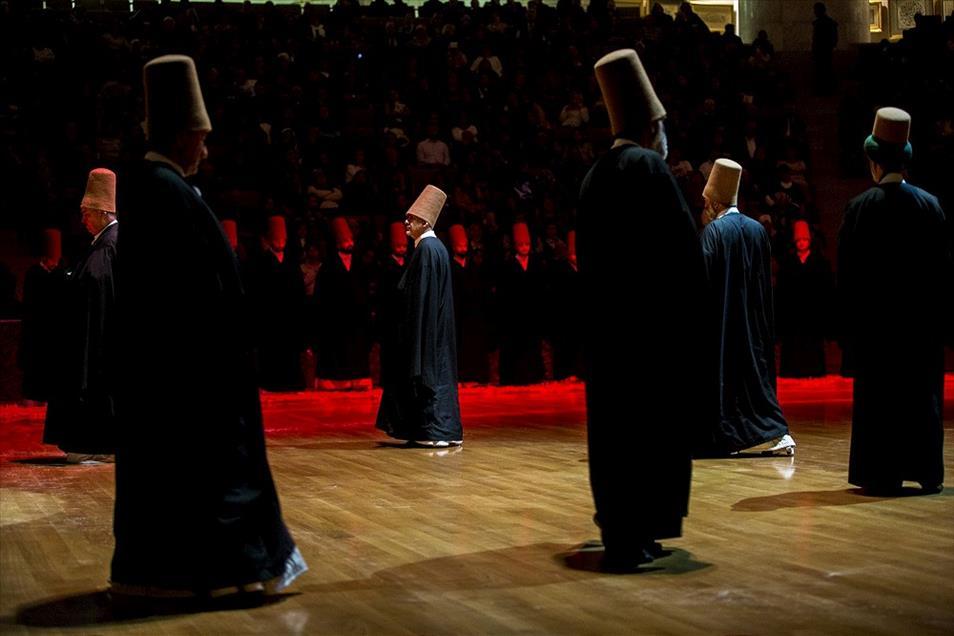
A Scene from the Şeb-i Arûs Ceremony (Anadolu Ajansı)
After the ney taksim, the Devr-i Veledî is performed. Dervishes circle three times along a designated path on the semâhâne floor, bowing slightly as they pass before the post, saluting the postnişîn. In Mevlevî interpretation, the Devr-i Veledî is associated with the human being’s arrival in the world, the search for the Divine, and the orientation toward the spiritual guide during this search.
Then begins the main section of the sema: the four selâms. Each selâm is interpreted as representing a stage in the dervish’s spiritual journey:
In each selâm, dervishes approach the post where the postnişîn sits, bow slightly, and continue the sema. The post symbolizes Mevlânâ’s station; thus, this gesture symbolically represents the orientation toward the Divine through Mevlânâ.
Mevlevî music is an indispensable element of the Şeb-i Arûs night âyin. The mutrıp heyeti, composed of ney, kudüm, rebab, and sometimes tanbur and kanun, performs a rich repertoire in terms of usûl and makam. Mevlevî âyin pieces are often composed under the title “âyin-i şerif,” with lyrics drawn from Mevlânâ’s poetry or the Mesnevî, and structured according to specific rhythmic patterns. Thus, on Şeb-i Arûs night, sema becomes not merely a sequence of movements but a ritual unity formed by word (verse, hadith, couplet), music, and bodily motion.
To understand the ritual structure of Şeb-i Arûs ceremonies, the spatial organization of the Mevlevî dergâh, particularly the semâhâne, is essential. The architectural layout of the Konya Asitânesi became a model for many other Mevlevî lodges. The dergâh is a külliye comprising a tomb, semâhâne, mosque, kitchen, dervish cells, guesthouse, and service units.
The semâhâne is typically built on a circular or polygonal plan. The floor area is called the “meydan”; here, the semazen perform their rotations. At one edge of the meydan stands the red post, symbolically representing Mevlânâ and the order’s pîrs. The sheikh or çelebi seated on the post is known as the “postnişîn” and directs the Mevlevî âyin.
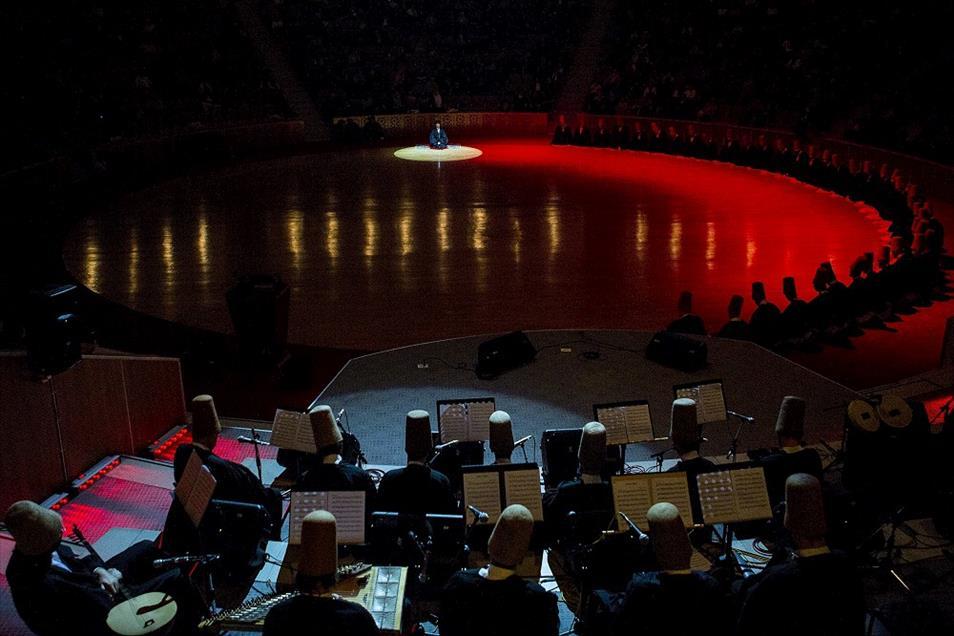
Mevlevî Ayin: The Mutrıp Heyeti and the Post-nişîn at the Far End (Anadolu Ajansı)
Adjacent to the meydan is the mutrıp section, where neyzen, kudümzen, rebabzen, and âyinhan sit. Thus, they remain in the same space as the dervishes while maintaining a certain distance to ensure harmony between sound and movement. Dervishes not participating in the sema sit along the edges of the semâhâne or in upper galleries; visitors (non-order guests) are mostly located in the upper galleries or designated viewing areas. From a ritual hierarchy perspective, roles during the Şeb-i Arûs night are clearly defined.
This hierarchy transforms the Mevlevî âyin on Şeb-i Arûs night from a mere inward ecstatic state into a continuous, intergenerational ritual order. When the physical boundaries of the space (location of the post, mutrıp section, galleries) and the distribution of roles (postnişîn, semazenbaşı, meydancı, mutrıp) are combined, sema emerges as a form of worship reflecting both inner experience and disciplined training.
Mevlâna’s death is recorded in classical sources as 5 Cemâziyelâhir 672, corresponding to 17 December 1273 in the Gregorian calendar. In the Mevlevî tradition, the death anniversary was originally observed according to the Hijri calendar; the Asitâne and its affiliated Mevlevî lodges revived Şeb-i Arûs on the night corresponding to 5 Cemâziyelâhir each year.
With the full adoption of the Gregorian calendar during the Republican period and the institutionalization of Mevlânâ commemoration ceremonies, 17 December became a fixed reference date for the “vuslat anniversary.” Thus, a commemorative day that repeats annually on 17 December, independent of lunar calendar variations, was established.
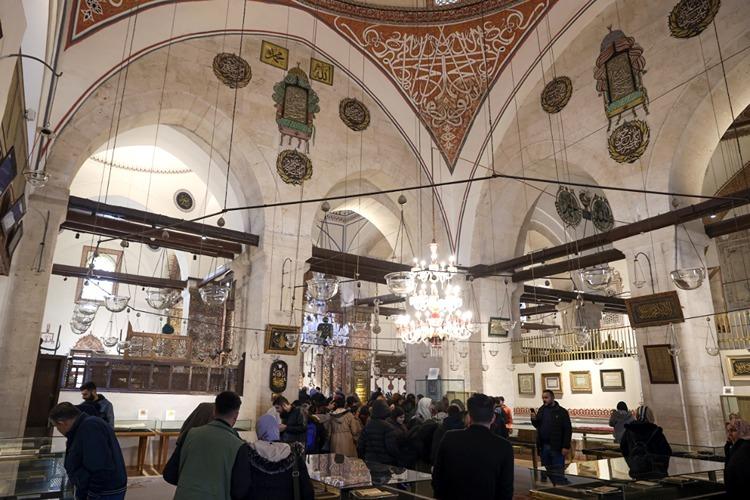
Mevlânâ Museum during Şeb-i Arûs Week (Anadolu Ajansı)
Over time, the programs held in Konya ceased to be confined to a single night; they expanded into a broader calendar incorporating conferences, symposia, concerts, exhibitions, panels, and collective sema performances. This led to the adoption of a “commemoration week” that includes 17 December. The current widely used period of 7–17 December centers on the historically significant date of 17 December while preceding it with cultural, scholarly, and artistic events.
During this ten-day period, various institutions—local administrations, universities, culture and tourism units, civil society organizations—organize diverse activities; sema performances are distributed across specific days, and the final day, 17 December, is most commonly highlighted as “Şeb-i Arûs.” Thus, a historically Hijri-based death anniversary practice has been adapted in the modern era to a fixed Gregorian date and a weekly event framework.
In this framework, Şeb-i Arûs is no longer a single ritual but a layered event combining Qur’an recitation, Mevlânâ texts, ilahi and music performances, Mevlevî âyin, speeches, and prayers.
The content of Şeb-i Arûs ceremonies presents a layered structure that integrates classical Sufi texts with modern conferences, speeches, and cultural presentations. The overall pattern of texts and speeches can be summarized as follows:
Through this structure, Şeb-i Arûs is sustained not as a single form of worship but as a comprehensive ceremony integrating Qur’an recitation, Mevlânâ texts, ilahi and music performances, Mevlevî âyin, speeches, and prayers, thus embodying both religious-Sufi and cultural-intellectual dimensions.
Following the proclamation of the Republic, laws introduced a series of regulations directly affecting the institutional existence of Mevlevîlik. The 1925 law closed tekkes, zaviyes, and türbes; the use of titles such as şeyh, dervish, and çelebi, the performance of order rituals, and the allocation of spaces for these purposes were prohibited. This decision affected not only the Konya Asitânesi but the entire network of Mevlevî lodges across Anatolia, Rumelia, and Arab provinces.【12】
By this time, over a hundred Mevlevî lodges were active across the Ottoman and early Republican territories; it is known that a significant portion—more than eighty identified centers—were still functioning when tekke activities were banned in 1925. The law regarding the closure of tekkes and zaviyes either transferred these buildings to the Diyanet for use as mosques or converted them to other civil functions (residences, administrative units), thereby eliminating their status as order centers.【13】
The consequences of this regulation for Mevlevîlik emerged on two levels. First, the institutional structure disintegrated: the çelebi/postnişîn position ceased to be an officially recognized authority; the endowment system and income sources of Mevlevî lodges were dissolved; regular Mevlevî âyin and calendar-based ceremonies such as Şeb-i Arûs could no longer be publicly performed. Second, Mevlevî practices were shifted from the public to the private sphere: sema, dhikr, and Mesnevî lessons could no longer be conducted openly as “order activities”; dervishes and şeyh families maintained their traditions primarily through familial transmission and individual piety.
During this period, Mevlevîlik was increasingly framed in official discourse not as a “tarikat” but as a “cultural heritage” centered on Mevlânâ’s person and works. The central position of Şeb-i Arûs within the order’s calendar persisted, but only in memories and written accounts rather than in public ceremonies.
Immediately after the closure of tekkes and zaviyes, the Mevlânâ Dergâhı in Konya was repositioned within cultural policy frameworks. The dergâh was removed from its role as an active Mevlevî center and granted “museum” status; the tomb, semâhâne, kitchen, and other sections were transformed into a külliye displaying historical and artistic artifacts under state supervision.【14】 This transformation emphasized Mevlânâ not as a “tarikat pîr” but as a significant figure in Turkish–Islamic art and cultural history, and his tomb as a “national heritage site” encompassing both movable and immovable artifacts.
The conversion of the Mevlânâ Dergâhı into a museum reflected two dimensions of the official approach. On one hand, Mevlevîlik as an order practice was banned; sema, dhikr, and şeyh institutions were withdrawn from public life. On the other hand, artifacts associated with Mevlânâ and the Mevlevî tradition—the tomb, semâhâne, calligraphy panels, manuscripts, coins, and cloaks—were defined as historical and artistic values requiring preservation. Thus, an image of Mevlânâ emerged in which the ritual dimension was halted while the cultural and aesthetic dimension was embraced by the state.
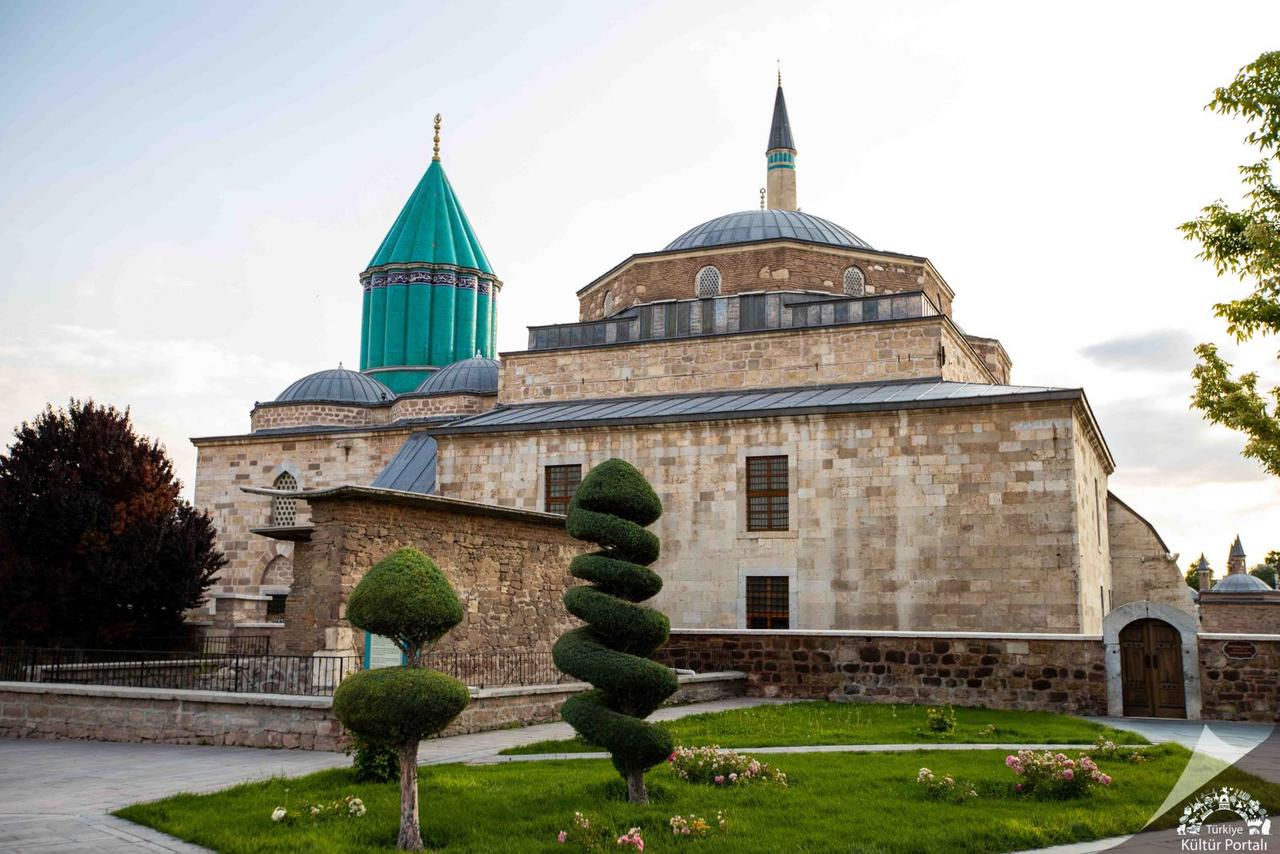
Mevlânâ Museum (Kültür Portalı)
Until the mid-1940s, public activities associated with Mevlevîlik were almost limited to the opening of the Mevlânâ Museum. Visitors, both domestic and foreign, could view Mevlânâ’s tomb and Mevlevî artifacts; some Mevlevî families continued their traditions within private circles. However, it was not possible to speak of any official or semi-official program under the name Şeb-i Arûs during this period.
This situation altered the meaning map of Şeb-i Arûs. In the Ottoman period, Mevlânâ’s death night, marked by Mevlevî âyin, gülbang, and collective dhikr in the Konya Asitânesi and other lodges, became in the early Republican years a “night” remembered through museum visits, individual prayers and contemplation, and occasionally private sohbet circles. As the ritual framework narrowed, the symbolic weight of the site and its museum identity came to the fore.
Although official tekke activities were banned and Mevlevî institutions closed, it cannot be said that Mevlevî memory was entirely erased. In the early Republican years, Şeb-i Arûs was remembered primarily through non-official and local channels by former dervishes, şeyh families, and those who maintained their devotion to Mevlânâ.
In Konya and cities such as Istanbul, gatherings centered on the recitation of the Mesnevî and Mevlânâ’s couplets were held in the homes of Mevlevî-origin families; sometimes also in relatively flexible areas of mosques or meccids as formal places of worship.
These gatherings were not explicitly defined as “order rituals” but functioned as discussion circles focused on Mevlânâ’s life, death, and works. The Şeb-i Arûs night served as a natural focal point for these discussions; however, this emphasis largely remained within oral and familial traditions.
Thus, Şeb-i Arûs assumed a dual character in the early Republican years: on one side, the legally closed tekke system and abolished order authorities; on the other, visits to Mevlânâ’s tomb, preserved memories of old rituals within families and local memory, and traditions transmitted through written memoirs. This dual structure laid the groundwork for the re-emergence of “Mevlânâ İhtifalleri” and modern Şeb-i Arûs programs from the mid-1940s onward.
Following the 1925 law closing tekkes and zaviyes, Mevlevî âyin and sema performances ceased; Mevlânâ’s death anniversary was remembered for a long time only through individual visits and prayers at the tomb in its museum status. However, from the late 1930s, Mevlânâ began re-entering public discourse through conferences and commemorative gatherings organized under the Konya Halkevi umbrella. Newspaper reports from Ekekon indicate that Mevlânâ’s death anniversary was commemorated on a city scale through Halkevi conferences and gatherings during the 1940s.【15】
In 1951, a program held in Konya under the name Şeb-i Arûs in a modern enclosed venue such as the Konya Turkish Nationalists Association hall is recorded as a milestone in the revival of ceremonial commemoration during the Republic.【16】 Existing studies emphasize that this program included speeches, musical performances, and readings of texts related to Mevlânâ; the fact that the ceremony was organized as a ticketed event indicates that commemoration had moved into both official and public cultural spheres.
The 1952 Konya Tourism Congress established a new framework linking Mevlânâ-centered commemorative programs with city tourism. The congress resolved to establish a tourism association in Konya and added a night program featuring Mevlevî music, na‘t, and conferences to its agenda, timed to coincide with the anniversary of Mevlânâ’s death.
With the involvement of the Nationalists Association in the early 1950s, commemorative ceremonies became a shared organizational domain among the Konya Halkevi, the Nationalists Association, and gradually the Konya Tourism Association. In summary, the period 1950–1959 represents a transitional phase in which Sufi practices were transferred into a controlled “cultural commemoration” format extending from the Halkevi tradition to tourism associations.
The 1957 and especially the 1958 Mevlânâ İhtifalleri were organized under the leadership of the Konya Tourism Association and served as early examples of the institutional role the association would assume in the following decade. The 1958 program was prepared by a delegation headed by Mithat Bahârî Beytur; the sema ensemble included Gavsi and Rusuhi Baykara, Selman and Hüseyin Tüzün; the Bayâtî âyin recited by Köçek Mustafa Derviş was performed by only four semazen.
After the 1958 ceremonies, Süleyman Hayâti Loras Dede, who had been trained in the Mevlevî tradition in Konya, and Ali Karadağ, who had learned sema as a child before the closure of the lodges, began systematically teaching sema to Mustafa Holat, Celâleddin Loras, and Ethem Karadağ; this marked a decisive step in the institutionalization of the İhtifaller.【17】 This training process enabled the emergence of increasingly large sema ensembles in the 1960s and 1970s.
Introduction to Şeb-i Arûs Ceremonies (Konya İl Kültür ve Turizm Müdürlüğü)
From the 1960s onward, the Konya Tourism Association assumed the leading role in organizing Mevlânâ commemoration programs. Local municipalities provided venues and logistical support; the Ministry of National Education and later the Ministry of Culture became visible through opening speeches and protocol representation. The 1969 commemoration ceremony, in which the opening speech was delivered by the Minister of National Education, Prof. Cahit Oğuz, demonstrated the state’s presence within the ceremonial structure.
Between 1975 and 1980, the Konya Tourism Association was the official organizer of the Mevlânâ Commemoration Ceremonies. During this period, Selman Tüzün typically occupied the post position, and the sema ensemble consisted of dervishes and semazen trained by Süleyman Hayâti Loras. Thus, the limited and largely local programs of the 1950s evolved by the 1970s into a structured event involving the association, municipality, and ministries, with increased protocol and audience capacity.
The Mevlânâ İhtifalleri of the 1950s took the form of programs combining conferences, poetry, and musical performances. At the 1958 ceremony, prominent writers and researchers of the era such as Abdülbaki Gölpınarlı, Halide Edip Zorlutuna, and Refik Cevad Ulunay delivered speeches; na‘t-ı şerif were recited, followed by a short sema performance based on the Bayâtî âyin.【18】 This structure stands as an early example of a hybrid format integrating scholarly/literary speeches with Mevlevî music and sema.
From 1959 onward, the ceremonies transformed into week-long programs under the name “Mevlâna Haftası”; speakers such as Semiha Ayverdi, Nihat Sami Banarlı, Prof. Nihat Tarlan, Nedim Ökmen, and Refik Cevad Ulunay delivered lectures. Thus, commemoration ceremonies evolved into broad cultural gatherings that invited speakers from modern Türkiye’s literature, theology, and intellectual circles beyond classical Mevlevî rituals.
During the 1960s, programs were organized with both daytime and evening sessions, integrating Mesnevî commentaries and conferences, Mevlevî music concerts, and sema performances into a unified structure. The 1961 Vuslat Ceremonies, held between 10 and 17 December with both daytime and evening sessions, featured lectures by academics and writers such as Sadi Irmak, Abdülbaki Gölpınarlı, Tahsin Yazıcı, Meliha Anbarcıoğlu, and Mehmet Önder; the sema ensemble included Mithat Bahârî Beytur, Gavsi Baykara, and Ahmet Bican Kasapoğlu, demonstrating this integrated structure.
By the 1970s, the scope and content of the programs expanded further. The 699th Commemoration Ceremony in 1972 was organized as twenty-one separate programs between 2 and 17 December; the post position was shared by Selman Tüzün and Süleyman Hayâti Loras. In 1973, marking the 700th anniversary of Mevlânâ’s death and under UNESCO’s declaration of “Mevlâna Year,” a twenty-one-program series was held between 1 and 17 December; the postnişîn role was assumed by Selman Tüzün and Süleyman Hayâti Loras, and the semazenbaşı Ahmet Bican Kasapoğlu led a group including Faruk Hemdem Çelebi, Mustafa Holat, Hasan Ertekin, Mehmet Susamış, and Mehmet Özçakıl. During these years, sema became a formalized âyin with a fixed repertoire and ensemble, rehearsed regularly and repeated each evening.
The 1974 ceremonies were held between 5 and 17 December; after the Mevlevî âyin in the Closed Sports Hall, programs lasting until dawn were held in the Alaaddin Düğün Salonu. The opening speech was delivered by the then Minister of Culture, Rıfkı Danışman; speakers such as Prof. Mehmet Kaplan and Dr. Müjgan Cumbur contributed to the program; the postnişîn role was again shared by Selman Tüzün and Süleyman Hayâti Loras. Thus, throughout the 1970s, the Mevlânâ İhtifalleri evolved into a comprehensive cultural event combining regular Mevlevî âyin with conferences and panels, and including state protocol participation.
The most detailed information on the Mevlânâ İhtifalleri between 1950 and 1980 is found in local newspapers such as Yeni Konya, Yeni Meram, and Ekekon. The dates, venues, speakers, and names of those involved in the sema ensembles are largely traceable through these reports. Headlines such as “Mevlâna İhtifal Törenleri,” “Vuslat Yıldönümü,” and “Vuslat Törenleri” in newspaper clippings indicate that commemorative programs were perceived as both religious-Sufi and cultural events.
From the 1960s onward, the ceremonies were no longer confined to print media but began appearing in radio and especially visual media through the interest of foreign television crews. The arrival of a French television team in Konya in 1961 to film the commemoration ceremony demonstrates early international media interest in Mevlânâ and the sema ceremony. Reports from 1969 and 1970 mention that the city was filled with tourists due to the ceremonies and that the programs received extensive coverage in the local press.【19】
UNESCO’s declaration of 1973 as “Mevlâna Year” to mark the 700th anniversary of Mevlânâ’s death was another turning point that enhanced the international visibility of the commemoration ceremonies. Following this decision, publications and programs related to Mevlânâ and Mevlevîlik increased both in Türkiye and abroad, and the Konya ceremonies received broader coverage in the national press.
In conclusion, the period 1950–1980 encompasses the process from the local revival of the Mevlânâ İhtifalleri to their transformation into a nationally and internationally recognized, institutionally organized series of events regularly covered by the press and visual media, with participation from municipalities and ministries.
From the 1980s onward, Mevlânâ commemoration ceremonies in Konya began to be conducted within a more institutional framework involving greater participation from state institutions and local administrations. The İhtifalleri, which had been revived in the 1950s and largely sustained by local initiatives, gradually became a shared responsibility among the Ministry of Culture, Konya Municipality, and civil society organizations. Particularly in the 1990s, the transfer of Mevlânâ commemoration programs from the municipality to units within the Ministry of Culture and the establishment of an official Turkish Sufi Music Ensemble in Konya initiated a new era in which the ceremonies were conducted under ministerial responsibility in both content and performance.
Currently, the organization of Şeb-i Arûs week involves the Ministry of Culture and Tourism, its Konya Provincial Directorate of Culture and Tourism, Konya Metropolitan Municipality, Mevlâna Culture Center, relevant NGOs, and universities. Official programs are announced under the title “International Commemoration Ceremonies of the Anniversary of Hz. Mevlânâ’s Vuslat”; however, among the public, the historical term “Şeb-i Arûs” continues to prevail.
UNESCO’s inscription of Mevlânâ commemoration ceremonies in 2005 under its “Masterpieces of the Oral and Intangible Heritage of Humanity” program and the 2008 inclusion of Mevlevî sema ceremonies on the Representative List of the Intangible Cultural Heritage have made the “international” emphasis more visible in official discourse and opened the way for numerous institutions outside Konya to participate in the commemoration week with their own events.
After 1980, Şeb-i Arûs transformed from limited ceremonies centered around the dergâh-museum into a multi-centered event series spread across the city. While the Mevlânâ Museum and tomb area continue to form the historical core of the ceremonies, the main venue for Mevlevî âyin has shifted from the Konya Closed Sports Hall to the Mevlâna Culture Center and large-scale sports/conference halls. The Mevlâna Culture Center Sema Hall now hosts weekly public sema ceremonies every Saturday, creating a continuous ritual and performance calendar extending beyond Şeb-i Arûs week.
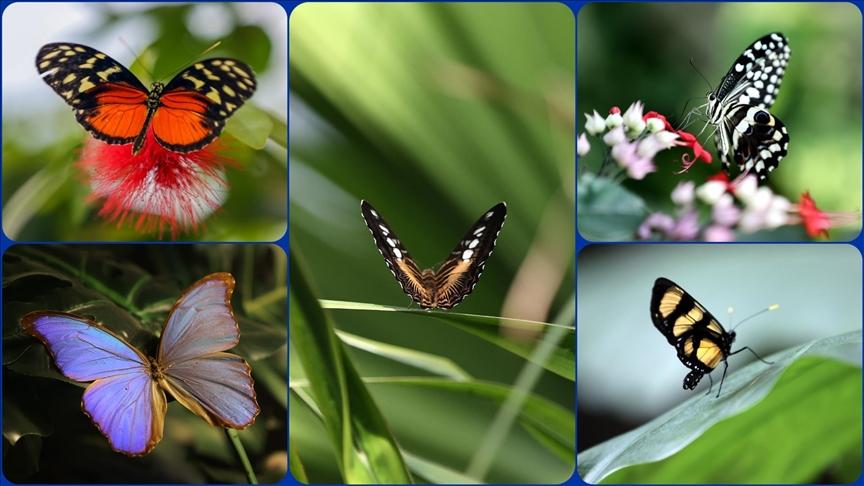
The Tropical Butterfly Garden Is Organized Each Şeb-i Arûs to Release Thousands of Butterflies Simultaneously from Their Chrysalises (Anadolu Ajansı)
Current programs distribute ceremonies across Mevlâna Square, Mevlâna Museum, Şems-i Tebrîzî Camii ve Türbesi, Mevlâna Culture Center, and various cultural centers. Opening processions, gülbang prayers, and tomb visits are typically held in open areas; conferences, panels, and concerts take place in enclosed halls. To manage visitor density, coordination is established between local administration units and security, tourism, and health organizations regarding transportation, safety, signage, and accommodation; additional public transport services and temporary increases in hotel and guesthouse capacity are arranged.
In cultural tourism literature, Türkiye is noted as one of the top ten countries globally for attracting foreign visitors through both natural and tangible/intangible cultural heritage. Sacred sites are visited annually by millions. In this context, the Mevlânâ Tomb and Şeb-i Arûs ceremonies have become one of the primary focal points for domestic and international tourist flows to Konya. The inclusion of Mevlevî sema ceremonies on UNESCO’s Intangible Cultural Heritage List, international campaigns such as “World Mevlânâ Year,” and consistent promotional efforts have strengthened visitor participation from different continents.【20】
Şeb-i Arûs week is widely regarded in qualitative and quantitative studies as an exemplary “cultural tourism” experience for foreign visitors regarding their perceptions of Islam and Türkiye. Findings indicate a broad profile of foreign visitors arriving in Konya motivated by both tourist curiosity and religious-cultural interest. National press reports show that state officials, government ministers, opposition representatives, and foreign mission personnel all participate in the ceremonies, demonstrating that Şeb-i Arûs has become an event on the official protocol calendar.
Since the 1980s, Şeb-i Arûs has gained visibility across the country and internationally through print media, radio, television, and digital media. The performance of Mevlevî sema ceremonies throughout the year and especially between 7–17 December in various provinces, supported by symposia, panels, conferences, exhibitions, festivals, film screenings, and documentaries organized by municipalities, civil society organizations, and state institutions, has transformed Şeb-i Arûs week into a broad cultural program.
In communication and public relations efforts, it is noted that announcing the ceremonies each year around a specific theme and slogan is a strategic choice for both institutional organization and promotion. These themes and slogans are repeated in outdoor advertisements, public transport vehicles, public buildings, hotels, and intercity transport to raise awareness and ensure memorability.
Current program examples show that Şeb-i Arûs week is generally planned over seven or ten days. Ceremonies typically open with a visit to the Şems-i Tebrîzî Tomb and a procession aligned with the annual theme; following this, a gülbang prayer is recited at the casket in the Mevlânâ Museum, and the Mevlevî âyin and Sufi music are performed in the evening at the Mevlânâ Culture Center. Throughout the week, conferences, panels, symposia, exhibitions, poetry readings, film and documentary screenings, Mevlevî cuisine presentations, and various competitions (photography, composition, etc.) complete the program.
Şeb-i Arûs Ceremony (Diyanet TV)
Occasionally, sporting events such as international bicycle tours and road races are also linked to Şeb-i Arûs week, demonstrating that the commemoration ceremonies are not limited to enclosed ritual performances but are designed as cultural and public activities extending across the entire city. In this framework, Şeb-i Arûs programs since 1980 have evolved into a multi-layered structure organized around Mevlevî âyin and classical ritual elements but expanded through conferences, concerts, exhibitions, sports events, and thematic processions.
Akay, Nimetullah. “Osmanlı Devletinin Son Döneminde Mevlevîlik.” *Harran Üniversitesi İlahiyat Fakültesi Dergisi* 34, no. 34 (December 2015): 122–152. Accessed December 6, 2025.https://dergipark.org.tr/tr/pub/harranilahiyatdergisi/issue/26261/276655
Akgün, Aişe Hümeyra, and Asya Setinay Karagül. “Hazreti Mevlana'yı Anma ve Şeb-i Arus Törenleri 7-17 Aralık'ta Gerçekleştirilecek.” Anadolu Ajansı. Accessed December 6, 2025.https://www.aa.com.tr/tr/gundem/hazreti-mevlanayi-anma-ve-seb-i-arus-torenleri-7-17-aralikta-gerceklestirilecek/3750228
Akkanat, Orhan. “Uluslararası Bir Düğün: Şeb-i Arus.” Anadolu Ajansı. Accessed December 6, 2025.https://www.aa.com.tr/tr/pg/foto-galeri/uluslararasi-bir-dugun-seb-i-arus.
Burubatur, Ebru. “Şeb-i Arus Törenlerinde Otellerin Halkla İlişkiler Uygulamaları.” Master's thesis, Selçuk Üniversitesi, 2019. Accessed December 6, 2025.https://tez.yok.gov.tr/UlusalTezMerkezi/TezGoster?key=FgmkGchPKo23qQqBeqzVZrQAW4t5ZOHhcWh-FZBZnuqjnEX33uBCBWJ7Rg8S2-5S
DiyanetTV. “Şeb-i Arus Anma Törenleri.” YouTube. Accessed December 6, 2025.https://www.youtube.com/watch?v=pWbcNrclu4o
Dumlu, Mikail, Emrullah Bolat, and Serdar Yayatıcı, eds. *Mevlânâ ve İslâm Tasavvuru*. İstanbul: Rumi Yayınları, 2023. Accessed December 6, 2025.https://isamveri.org/pdfdrg/G01779/2023/2023_ENGIN.pdf
Dülgeroğlu, Selma. “Cumhuriyet Dönemi Konya'daki Şeb-i Arûs Törenleri Postnişînleri.” Master's thesis, Selçuk Üniversitesi, 2016. Accessed December 6, 2025.https://tez.yok.gov.tr/UlusalTezMerkezi/TezGoster?key=OykDDeWBWTL9-Wm52sZBrKEMSWnQqiWmJAKJZeEbntHPpm26oUYi5FY5ZrIjP1VT
Elmalı, Abdurrahman, and Ali Bakkal, eds. *Uluslararası Mevlâna ve Mevlevîlik Sempozyumu Bildirileri I*. Şanlıurfa: Harran Üniversitesi İlahiyat Fakültesi, 2007. Accessed December 6, 2025.https://ilahiyat.harran.edu.tr/assets/uploads/other/files/ilahiyat/files/mevlana_sempozyumu_c1.pdf
Ersoy, Ruhi, and Büşra Baysal. “Şeb-i Arûs Törenleri’nin Politik ve Kültürel İşlevleri.” *Milli Folklor* 18, no. 144 (2024): 16–27. Accessed December 6, 2025.https://millifolklordergisi.com/PdfViewer.aspx?Sayi=144&Sayfa=18
Fındıklar, Çiğdem. “The Role of Festivals in Urban Identity: A Study on the Relationship between Perception and Experience of Place; Case of Şeb-i Arus.” Master's thesis, Orta Doğu Teknik Üniversitesi, 2017. Accessed December 6, 2025.https://tez.yok.gov.tr/UlusalTezMerkezi/TezGoster?key=7lOJX8w_8PRQU1mSHU6-jsE5fMw-4nAPX3HqqS9NyCs-8dAGwty7tfUJxmIwHzwj
Göyünç, Nejat. “Osmanlı Devleti'nde Mevleviler.” *Belleten* 55, no. 213 (August 1991): 351–358. Accessed December 6, 2025.https://belleten.gov.tr/tam-metin-pdf/2186/tur
Halaç, Hicran Hanım. “Şeb-i Arus'da Sille 1 (Sille in the Time of Şeb-i Arus Ceremony).” *The Journal of Academic Social Science Studies*, no. 64 (Winter III 2017): 203–210. Accessed December 6, 2025.https://doi.org/10.9761/JASSS7376
Konya İl Kültür ve Turizm Müdürlüğü. “Hz. Mevlâna'nın 752. Vuslat Yıldönümü Uluslararası Anma Törenleri (Şeb-i Arûs).” YouTube. Accessed December 6, 2025.https://www.youtube.com/watch?v=H73nZnepFEw.
Kuru, Anıl. “Şebiarus Ziyaretçileri Kelebeklerin Tropikal Dünyasını da Keşfedecek.” Anadolu Ajansı. Accessed December 6, 2025.https://www.aa.com.tr/tr/yasam/sebiarus-ziyaretcileri-kelebeklerin-tropikal-dunyasini-da-kesfedecek/3763681.
Küçük, Sezai. “Geçmişten Günümüze Mevlevilik.” *Demokrasi Platformu* 2, no. 6 (2006): 77–122. Accessed December 6, 2025.https://isamveri.org/pdfdrg/D02703/2006_6/2006_6_KUCUKS.pdf
Ministry of Culture and Tourism of the Republic of Türkiye. “Hz. Mevlânâ's 743rd Anniversary of Union (Şeb-iArus Töreni.” YouTube. Accessed December 6, 2025.https://www.youtube.com/watch?v=YvoGCqUOuDE.
Salt Research. “Mevlana Museum in Konya.” Flickr. Accessed December 6, 2025.https://www.flickr.com/photos/saltonline/32636363543
Sarıoğlu, Halil İbrahim. “Rubâî ve Mevlânâ’nın Rubâilerinde Ölüm Teması.” *Uluslararası Mevlânâ Sempozyumu Bildirileri*, vol. 2, 2010, pp. 803–810. Accessed December 6, 2025.https://isamveri.org/pdfdrg/D128228/2010_c2/2010_c2_SARIOGLUHI.pdf
Seçim, Yılmaz. “Şeb-i Arus Etkinliğine Katılan Turistlerin Mevlevi Mutfağı Yemek Taleplerinin Tespit Edilmesi.” *Adıyaman Üniversitesi Sosyal Bilimler Enstitüsü Dergisi*, no. 35 (2020): 778–796. Accessed December 6, 2025.https://dergipark.org.tr/tr/pub/adyusbd/issue/56518/518010
TRT World. “My Türkiye: Mevlana Jelaluddin Rumi’s wedding day, Seb-i Arus.” YouTube. Accessed December 6, 2025.https://www.youtube.com/watch?v=8NKIp-RLXDw.
Tanrıkorur, Ş. Barihüda. “Mevleviyye.” *Diyanet İslâm Ansiklopedisi*. Accessed December 6, 2025.https://islamansiklopedisi.org.tr/mevleviyye.
Tok, Eda. “17. Yüzyıl Mevlevî Şairlerinde Ney.” *Mediterranean Journal of Humanities* 4, no. 2 (2014): 261–278.https://doi.org/10.13114/MJH.201428445
Toklu, Seher, and Yeliz Pekerşen. “Ziyaretçilerin Şeb-i Arus Mevlana’yı Anma Törenlerine Katılım Nedenlerinin Demografik Özellikler Açısından İncelenmesi.” *Türkiye Sosyal Araştırmalar Dergisi* 24, no. 2 (August 2020): 289–311. Accessed December 6, 2025.https://dergipark.org.tr/tr/pub/tsadergisi/issue/56373/604907
Türkiye Kültür Portalı. "Mevlâna Müzesi - Konya." Accessed December 6, 2025.https://www.kulturportali.gov.tr/turkiye/konya/gezilecekyer/mevlna-muzesi
Çelebi, Celâleddin Bâkır. “Hz. Mevlâna'nın Manâ Dili ve Şeb-i Arus.” In *Mevlâna Sevgisi*, 15–23. Konya, 1981. Accessed December 6, 2025.https://isamveri.org/pdfdrg/D062815/1981/1981_CELEBICB.pdf
Çetinkaya, Serhat. “Mevlana, Farklı İnanç ve Kültürden İnsanları 'Huzur Vakti' Temasıyla Buluşturacak.” Anadolu Ajansı. Accessed December 6, 2025.https://www.aa.com.tr/tr/kultur/mevlana-farkli-inanc-ve-kulturden-insanlari-huzur-vakti-temasiyla-bulusturacak/3762808
Çetinkaya, Serhat. “Tropikal Bahçede 10 Bin Kelebek Şeb-i Arus'ta Kozasından Çıkacak.” Anadolu Ajansı. Accessed December 6, 2025.https://www.aa.com.tr/tr/pg/foto-galeri/tropikal-bahcede-10-bin-kelebek-sebiarusta-kozasindan-cikacak.
Öngören, Reşat. “Mevlânâ Celâleddîn-i Rûmî.” *Diyanet İslâm Ansiklopedisi*. Accessed December 6, 2025.https://islamansiklopedisi.org.tr/mevlana-celaleddin-i-rumi.
Özçoban, Ertan. “Türkiye'de Kültür Turizminin Yabancı Ziyaretçilerin İslam Algısı Üzerindeki Etkileri: Şeb-i Arus Örneği.” PhD thesis, Ankara Üniversitesi, 2018. Accessed December 6, 2025.https://tez.yok.gov.tr/UlusalTezMerkezi/TezGoster?key=fS4sqEZr79C_n60Rk6MjFTlwTv9inqiLAx4QwP_YiIJ6DqEXvSyq2wGohstjDdxj
Şimşekler, Nuri. “Şeb-i Arus.” Konyapedia. Accessed December 6, 2025.https://www.konyapedia.com/makale/3271/seb-i-arus
[1]
Ertan Özçoban, “Türkiye'de Kültür Turizminin Yabancı Ziyaretçilerin İslam Algısı Üzerindeki Etkileri: Şeb-i Arus Örneği” (Doktora Tezi, Ankara Üniversitesi, 2018), s. 11.
[2]
Nuri Şimşekler. “Şeb-i Arus.” Konyapedia, Erişim 6 Aralık 2025. https://www.konyapedia.com/makale/3271/seb-i-arus.
[3]
Nuri Şimşekler. “Şeb-i Arus.” Konyapedia, Erişim 6 Aralık 2025. https://www.konyapedia.com/makale/3271/seb-i-arus.
[4]
Ruhi Ersoy ve Büşra Baysal, “Şeb-i Arûs Törenleri’nin Politik ve Kültürel İşlevleri,” Milli Folklor 18, sy. 144 (2024), s. 25.
[5]
Ruhi Ersoy ve Büşra Baysal, “Şeb-i Arûs Törenleri’nin Politik ve Kültürel İşlevleri,” Milli Folklor 18, sy. 144 (2024), s. 16.
[6]
Nuri Şimşekler. “Şeb-i Arus.” Konyapedia, Erişim 6 Aralık 2025. https://www.konyapedia.com/makale/3271/seb-i-arus.
[7]
Ruhi Ersoy ve Büşra Baysal, “Şeb-i Arûs Törenleri’nin Politik ve Kültürel İşlevleri,” Milli Folklor 18, sy. 144 (2024), s. 25.
[8]
Nuri Şimşekler. “Şeb-i Arus.” Konyapedia, Erişim 6 Aralık 2025. https://www.konyapedia.com/makale/3271/seb-i-arus.
[9]
Tanrıkorur, Ş. Barihüda. “Mevleviyye.” Diyanet İslâm Ansiklopedisi içinde, c. 29, 468–475. Ankara: Türkiye Diyanet Vakfı Yayınları, 2004. s. 471.
[10]
Ruhi Ersoy ve Büşra Baysal, “Şeb-i Arûs Törenleri’nin Politik ve Kültürel İşlevleri,” Milli Folklor 18, sy. 144 (2024), s. 19–20.
[11]
Eda Tok, “17. Yüzyıl Mevlevî Şairlerinde Ney,” Mediterranean Journal of Humanities 4, sy. 2 (2014), s. 262.
[12]
Ertan Özçoban, “Türkiye'de Kültür Turizminin Yabancı Ziyaretçilerin İslam Algısı Üzerindeki Etkileri: Şeb-i Arus Örneği” (Doktora Tezi, Ankara Üniversitesi, 2018), s. 63.
[13]
Ertan Özçoban, “Türkiye'de Kültür Turizminin Yabancı Ziyaretçilerin İslam Algısı Üzerindeki Etkileri: Şeb-i Arus Örneği” (Doktora Tezi, Ankara Üniversitesi, 2018), s. 75.
[14]
Ruhi Ersoy ve Büşra Baysal, “Şeb-i Arûs Törenleri’nin Politik ve Kültürel İşlevleri,” Milli Folklor 18, sy. 144 (2024), s. 20.
[15]
Ruhi Ersoy ve Büşra Baysal, “Şeb-i Arûs Törenleri’nin Politik ve Kültürel İşlevleri,” Milli Folklor 18, sy. 144 (2024), s. 16, 18.
[16]
Ruhi Ersoy ve Büşra Baysal, “Şeb-i Arûs Törenleri’nin Politik ve Kültürel İşlevleri,” Milli Folklor 18, sy. 144 (2024), s. 16.
[17]
Selma Dülgeroğlu, “Cumhuriyet Dönemi Konya'daki Şeb-i Arûs Törenleri Postnişînleri” (Yüksek Lisans Tezi, Selçuk Üniversitesi, 2016), s. 18.
[18]
Selma Dülgeroğlu, “Cumhuriyet Dönemi Konya'daki Şeb-i Arûs Törenleri Postnişînleri” (Yüksek Lisans Tezi, Selçuk Üniversitesi, 2016), s. 18.
[19]
Selma Dülgeroğlu, “Cumhuriyet Dönemi Konya'daki Şeb-i Arûs Törenleri Postnişînleri” (Yüksek Lisans Tezi, Selçuk Üniversitesi, 2016), s. 22.
[20]
Ruhi Ersoy ve Büşra Baysal, “Şeb-i Arûs Törenleri’nin Politik ve Kültürel İşlevleri,” Milli Folklor 18, sy. 144 (2024), s. 18, 22.

Door | Religious-Sufi commemoration ceremony | ||||||||
|---|---|---|---|---|---|---|---|---|---|
Names | Mevlânâ Celebrations Vuslat Ceremonies Leyle-i Arûs Şeb-i Arûs International Commemoration Ceremonies for the Anniversary of Mevlânâ’s Vuslat | ||||||||
Reason for Commemoration | Death of Mevlânâ Celaleddin-i Rûmî | ||||||||
Date of Commemoration | 17 December 1273 AD 5 Cemâziyelâhir 672 AH Events Between 7–17 December (Republican Era) | ||||||||
Historical Center | Konya Asitânesi (Mevlânâ Dergâhı) | ||||||||
Events | Prayers and Supplications Additional Conferences and Events in the Modern Period Mevlevî (Sema) ceremony / Mukabele Naat, ilahi and Mevlevî musical works Selected Readings from the Works of Mevlânâ Recitation of the Qur’an | ||||||||
Organizers | Local Civil Society Organizations Ministry of Culture and Tourism Konya Provincial Directorate of Culture and Tourism Konya Metropolitan Municipality Relevant Public Institutions Universities Culture and Art Institutions | ||||||||
Concept, Nomenclature, and Etymology
Mevlâna’s Death and Şeb-i Arûs in Early Mevlevî Tradition
Sultân Veled, Ulu Ârif Çelebi, and the Early Mevlevî Understanding of Death–Vuslat
Depictions of Mevlânâ’s Death Night in Early Menâkıbnâmeler
Şeb-i Arûs Ceremonies in the Ottoman Period
Ceremony Structure and Participants at the Konya Asitânesi
Şeb-i Arûs Practices in Konya and Provincial Mevlevî Lodges
State Officials, Palace Circles, and Local Administrators’ Participation in Ceremonies
Şeb-i Arûs in Archival Documents, Travelogues, and Observer Accounts
Ritual Structure, Calendar, and Symbolic Meanings
Mevlevî Âyin, Mukâbele Structure, and Mevlevî Music
Spatial Organization: Dergâh, Semâhâne, Post, Hierarchy, and Roles
Ceremony Calendar
Texts Recited, Speeches Delivered, and Prayer/Supplication Patterns in the Ceremony
Şeb-i Arûs in the Early Years of the Republic
Impact of the Closure of Tekkes and Zaviyes on Mevlevî Practices
Transformation of the Mevlânâ Dergâhı into a Museum and Official Approach
Continuing Commemorative Practices at Non-Official and Local Levels
Mevlânâ İhtifalleri and Institutionalization between 1950 and 1980
Resumption of Mevlânâ Commemoration Ceremonies
Role of the Konya Tourism Association, Local Municipalities, and the Ministry of Culture
Structure of the Ceremonies and Participant Profile
Mevlâna and the Mevlânâ İhtifalleri in Press, Radio, and Early Television Ceremonies
Şeb-i Arûs as a National and International Event
International Commemoration Ceremonies of the Anniversary of Vuslat
Venues, Spaces, and Logistics: Main Event Locations in Konya
Foreign Guests and Protocol Participation
Şeb-i Arûs in Media and Popular Culture
Current Ceremony Program