


This article was automatically translated from the original Turkish version.
+1 More
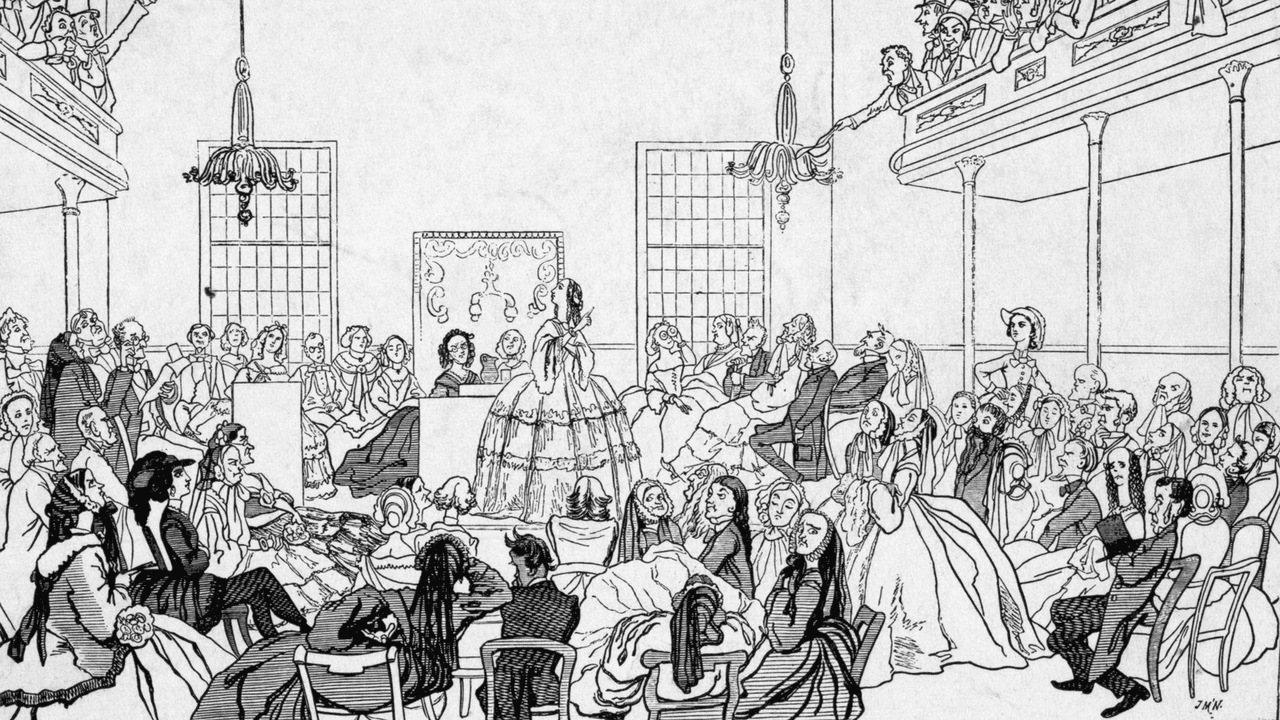
Seneca Falls Declaration
History | 1848-07-19 | ||||||||
|---|---|---|---|---|---|---|---|---|---|
Location | New York Seneca Falls | ||||||||
Summary | One of the turning points of the women's rights movement | ||||||||
19–20 July 1848, the meeting held in Seneca Falls, New York and recognized as the first women’s rights convention in history resulted in a significant document regarded as one of the foundational pillars of the women’s rights movement. This declaration, announced with the support of around 300 participants and signed by 68 women and 32 men, publicly exposed the social legal and religious inequalities faced by women and transformed their fundamental rights and freedoms into a historical text.

Signatories of the Seneca Falls Declaration – Britannica
In the mid-19th century women in the United States were deprived of many fundamental rights including voting property ownership the right to divorce and custody rights such as. The social order of the time defined women primarily within the domestic sphere restricting their voice in the public realm. During this period women’s rights advocates were also actively involved in the abolitionist movement. However the lack of adequate speaking rights granted to female participants even at abolitionist meetings prompted pioneering figures such as Elizabeth Cady Stanton and Lucretia Mott to organize a separate platform for women’s rights.
Thus the meeting held on 19–20 July 1848 in Seneca Falls was convened to bring women’s demands for equality before the public for the first time on a large scale. The most concrete and enduring outcome of this gathering was the drafting of the document known as the “Declaration of Sentiments” (Seneca Falls Declaration).
The Seneca Falls Declaration was inspired by the American Declaration of Independence. The statement “All men and women are created equal” asserted that women must possess the same political legal and social rights as men.
The document included demands for women’s voting rights property rights rights to divorce and custody religious freedom educational rights and the elevation of their social status. The demand for voting rights was among the most radical and attention-grabbing of the era.
The declaration emphasized the inadequacy of women’s legal position arguing that women were disadvantaged in matters such as divorce custody and property ownership. It also highlighted educational inequality and spiritual pressures underscoring that women lacked the authority to make decisions about their own lives.
The original text of the declaration was written in 19th-century English and is in the public domain. Below is a translated excerpt in Turkish:
“We hold these truths to be self-evident: That all men and women are created equal; that they are endowed by their Creator with certain inalienable rights; that among these are life liberty and the pursuit of happiness…”【1】
Following the structure of the Declaration of Independence the remainder of the text lists all the injustices suffered by women as a “list of grievances”. This list directly criticizes the denial of women’s right to vote their legal subordination to men their lack of property rights restrictions on divorce and barriers to education.
The full text in modern English is freely accessible on numerous online archives and on the National Park Service’s Women’s Rights National Historical Park website.
One of the principal authors of the declaration and a leading activist in the abolitionist movement she later became a guiding figure in the women’s rights movement.
A prominent leader in both the women’s rights and abolitionist movements she worked closely with Elizabeth Cady Stanton to organize the Seneca Falls meeting and contributed significant effort to its planning.
The renowned abolitionist and advocate for Black rights Frederick Douglass was among the male attendees at the meeting and actively supported women’s suffrage.
Immediately after the declaration’s publication debates erupted in the press and public opinion. Many newspapers and commentators expressed the view that “to allow women to vote means the collapse of social order.” In the context of the time women’s participation in politics was seen as an extreme idea. Some found the declaration’s demands contrary to the natural order while others interpreted women’s bold claims for public rights as a threat to moral and social norms.
On the other hand supporters of the movement and abolitionists who signed the declaration enthusiastically endorsed it arguing that women’s equality represented an expansion of human rights.
The demands in the declaration particularly the call for women’s suffrage were labeled by the press of the time as “extreme” or “radical.” Nevertheless these criticisms ensured the declaration reached a wide audience and injected new momentum into the discourse on women’s rights.
The Seneca Falls Declaration contributed to an increase in proposed state and regional laws and reforms related to women’s rights. Issues ranging from divorce law to property rights were brought into public debate with the aim of improving women’s status.
Beginning in the 1850s women’s rights conventions modeled after the Seneca Falls meeting were organized across the United States and in various parts of the world. This process moved women’s rights demands from private domestic concerns to national and international platforms.
The emphasis on women’s right to vote in the declaration laid the foundation for a major struggle that lasted from the late 19th century into the early 20th century. In the United States women gained federal voting rights in 1920 with the ratification of the 19th Amendment a triumph that represented the culmination of the long-term efforts ignited by Seneca Falls.
The Seneca Falls Declaration became a pioneering text that influenced women’s equality movements not only in the United States but also worldwide. Women’s rights advocates drew inspiration from this declaration to establish international solidarity networks and voice similar demands in many different countries.【2】
The Seneca Falls Declaration was a groundbreaking document that for the first time approached the inequalities women experienced in both public and private life within a comprehensive framework and committed them to writing. Considering the social and legal conditions of the time the demands in the declaration such as voting rights were seen as highly innovative and courageous. Although these demands were largely rejected or ignored at the time of the declaration’s drafting they played a major role in the subsequent advancement of women’s legal political and social status.
Numerous reforms and legal changes were enacted as a result of the organized demand and awareness wave initiated in Seneca Falls. Thus the declaration is recognized as the first major milestone and historical cornerstone of the modern women’s rights movement.
Britannica. (1998, July 20). *Elizabeth Cady Stanton* [Online]. Accessed https://www.britannica.com/biography/Elizabeth-Cady-Stanton.
Britannica. (1998, July 20). *Seneca Falls Convention* [Online]. Accessed https://www.britannica.com/event/Seneca-Falls-Convention.
Freedman, Estelle B. 2002. No Turning Back: The History of Feminism and the Future of Women. New York: Ballantine Books.
History. (2017, November 10). *Seneca Falls Convention* [Online]. Accessedhttps://www.history.com/topics/womens-history/seneca-falls-convention.
National Park Service. (2023, February 7). *Declaration of Sentiments* [Online]. Accessed https://www.nps.gov/wori/learn/historyculture/declaration-of-sentiments.htm.
[1]
Seneca Falls Bildirisine ait bir metin - National Park Service (NPS)
[2]
Bkz. Freedman, Estelle B. 2002. No Turning Back: The History of Feminism and the Future of Women. New York: Ballantine Books, 67–69.

Seneca Falls Declaration
History | 1848-07-19 | ||||||||
|---|---|---|---|---|---|---|---|---|---|
Location | New York Seneca Falls | ||||||||
Summary | One of the turning points of the women's rights movement | ||||||||
No Discussion Added Yet
Start discussion for "Seneca Falls Declaration" article
Historical Context
Content and Purpose of the Declaration
Reference to the Declaration of Independence
Core Rights Demands
Women’s Legal and Social Status
Text of the Declaration
Key Figures
Elizabeth Cady Stanton
Lucretia Mott
Frederick Douglass
Criticism and Opposing Views
Social and Legal Impact of the Era
Early Reactions
Legal Initiatives:
Long-Term Impact
Other Women’s Rights Conferences
Suffrage Movement and the Suffragette Movement
Global Source of Inspiration