

`equality` Related Article Results

What Is Justice?
Justice means respecting people’s rights and treating everyone equally. It describes an order in which no one’s rights are violated and rules are applied correctly. What Is the Purpose of Justice? Justice enables people to live with security. Where justice exists, individuals trust the rules and know they can protect themselves. Unfairness decreases and friendships increase. The Invisible Power of Justice Justice cannot be touched, but everyone feels its effect. When a teacher grades exams fairl
EN
Fatma Köroğlu
 La
LaLaw on Surnames
Law on Surnames is the law that mandates citizens of Türkiye Cumhuriyeti to adopt a surname in addition to their given names, and regulates the principles concerning the selection, use, and registration of such surnames. It was adopted by the Türkiye Büyük Millet Meclisi on 21 June 1934, published in the Resmî Gazete on 2 July 1934 under number 2741, and came into effect on 2 January 1935. Historical Background and Rationale As part of the cultural revolutions of the Republic, the Law on Surname
EN
Yakup Hilmi Altuntaş
SeSeneca Falls Declaration
19–20 July 1848, the meeting held in Seneca Falls, New York and recognized as the first women’s rights convention in history resulted in a significant document regarded as one of the foundational pillars of the women’s rights movement. This declaration, announced with the support of around 300 participants and signed by 68 women and 32 men, publicly exposed the social legal and religious inequalities faced by women and transformed their fundamental rights and freedoms into a historical text. Sig
ENUlus Emir Aslan
SeSeneca Falls Declaration
On 19–20 July 1848, in Seneca Falls, New York, a meeting was held that is recognized as the first women’s rights convention in history. The resulting document, known as the important, is considered one of the foundational texts of the women’s rights movement. With the support of approximately 300 attendees and signed by 68 women and 32 men, the paper publicly exposed the social, legal, and religious inequalities faced by women and articulated their fundamental right and freedom demands in a form
ENUlus Emir Aslan
LaLaw on Surnames
The Surname Law is the law that mandates citizens of the Republic of Türkiye to adopt a surname in addition to their given names and regulates the principles of selection, use, and registration of such surnames. It was adopted by the Grand National Assembly of Türkiye on 21 June 1934, published in the Official Gazette No. 2741 dated 2 July 1934, and came into effect on 2 January 1935. Mustafa Kemal Atatürk's Population Record (Encyclopedia of Atatürk) " image-alternate="" image-element-format="r
ENYakup Hilmi Altuntaş
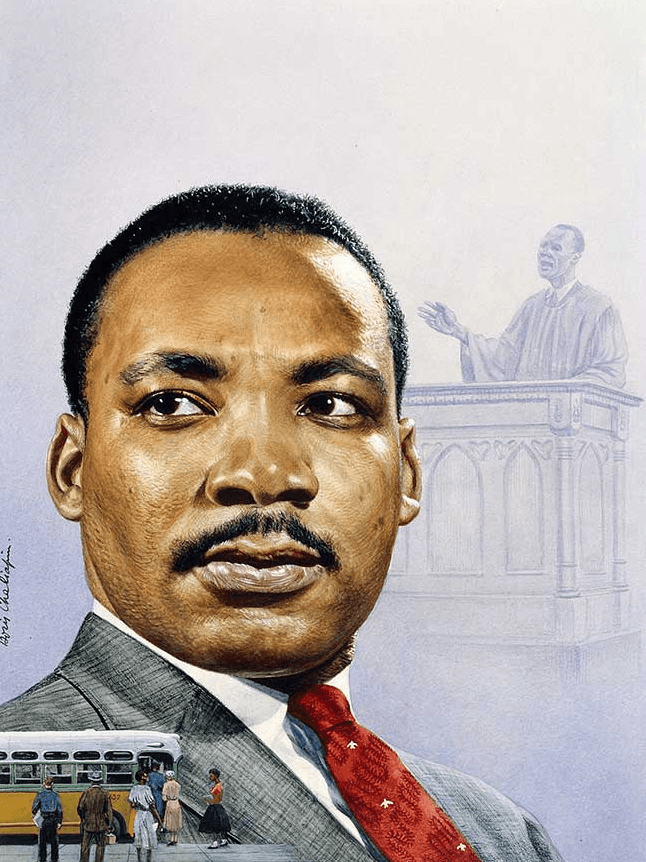
Martin Luther King Jr.
Martin Luther King Jr. was a human rights advocate who lived in the 20th century. He proclaimed not only in United States of America but across the entire world the values of social justice equality and nonviolent resistance. King fought against institutionalized racism through peaceful means and played a pivotal role in the struggle of African Americans to attain their fundamental right and freedoms. His leadership significantly influenced the civil rights movement of his time and contributed t
EN
Meryem Betül Kaya
CrCritical Pedagogy
Critical pedagogy is an approach regarded as an extension of critical theory, which originated with the Frankfurt School. In its broadest sense, it can be understood as an educational critique that engages with educational issues. This approach is fundamentally shaped by questioning and redefining the very nature of education. At its core, it rejects the oppressive and hierarchical relationships between educators and learners that are typically ignored by dominant educational systems, aiming to
ENYunus Emre Yüce

French Revolution
The French Revolution began in France in 1789. The people rose up against the king’s unjust rule. A major transformation was sparked by food shortages, injustice, and inequality. With this revolution, the monarchy ended and a new system was established in which the people could participate in governance. It is a significant event that influenced the entire world. 📅 When and Why Did It Happen? The French Revolution began in 1789 and lasted approximately ten years. At the time, the French populat
EN
Feyzanur Çınar

Ethics in Education
Ethics in Education is the comprehensive set of philosophical and practical principles that guide decision-making and implementation mechanisms throughout all stages of educational processes. In general terms, ethics is defined as a discipline that examines human behavior, the value judgments underlying such behavior, and concepts such as “good-bad” and “right-wrong.” In the context of education, ethics is not merely a theoretical domain of debate but a system of universal standards that regulat
ENElif Aysu Tek

Gender Policies
Gender Policies are a set of strategic arrangements aimed at enabling individuals to participate equally in all areas of social life without being subjected to any stereotypical constraints. Definition and History Conceptually, gender refers to the roles, responsibilities, and expectations imposed by society on women and men. These roles are socially constructed and vary according to culture, space, and time, unlike biological characteristics. Gender equality is based on the principle that diffe
EN
Samet Cemalettin ALKAN