


This article was automatically translated from the original Turkish version.
+1 More
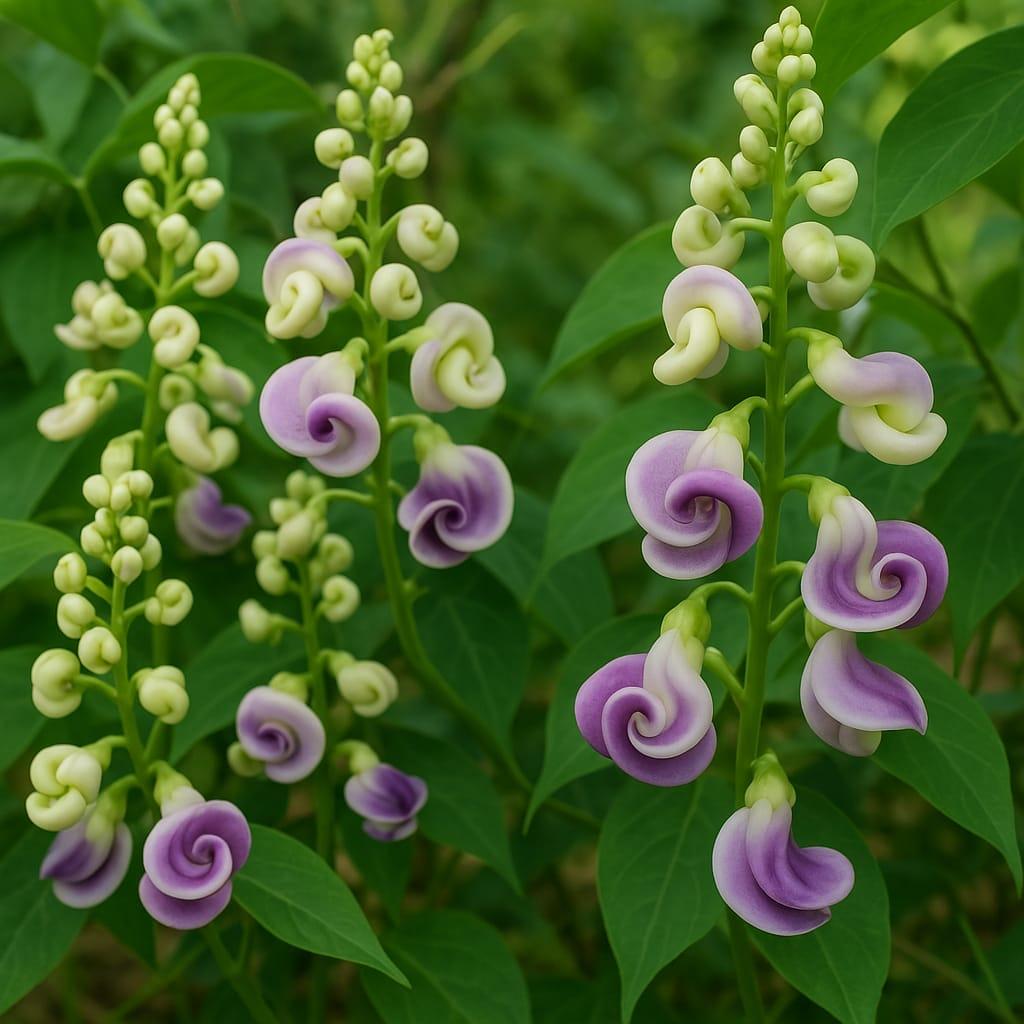
AI-generated Cochliasanthus caracalla
Team(s) | Fabales | ||||||||
|---|---|---|---|---|---|---|---|---|---|
Family(ies) | Fabaceae | ||||||||
Gender | Cochliasanthus | ||||||||
Cochliasanthus caracalla (L.) Trew is a perennial, climbing plant belonging to the Fabaceae family and is particularly noted for its aesthetic flower structure as an ornamental plant. This species holds significant importance not only for its visual appeal in landscape architecture but also for enhancing urban biodiversity and supporting ecosystem services. Today, increasing urbanization leads to the shrinkage of natural areas and threatens biodiversity. In this context, selecting ornamental plants not only for aesthetic value but also for ecological contributions is becoming increasingly important. Cochliasanthus caracalla is one of the value plant species in this regard. Known as “snail vine” or “mantis vine” due to its spiral flowers and pleasant fragrance, this species is native to South America and exhibits vigorous successful growth under warm climatic conditions. In recent years, the species has also become a focus of research in vertical horticulture and sustainable landscape design.
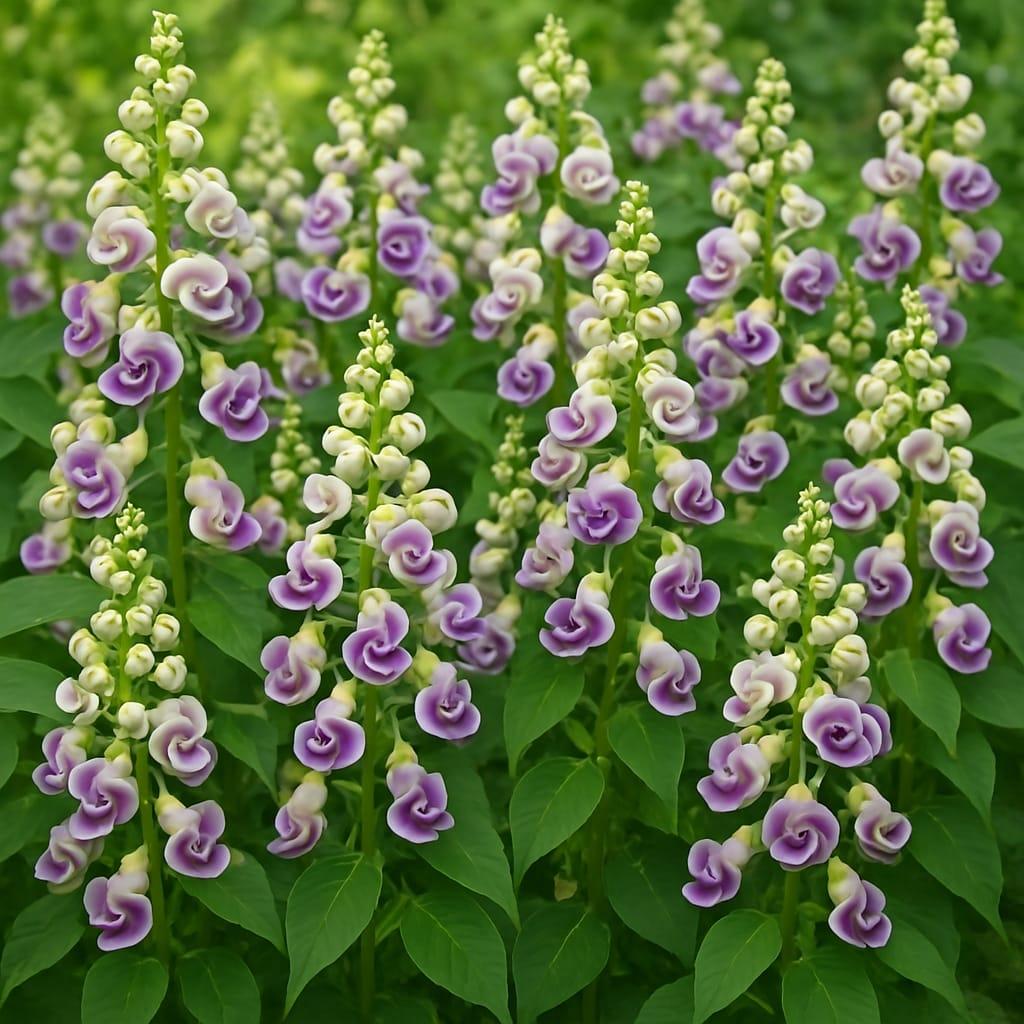
AI-generated community of Cochliasanthus Caracalla
Cochliasanthus caracalla is one of the striking members of the Fabaceae (legume) family. Taxonomically, the plant has been classified under different genera; it has also been referred to as Vigna caracalla. However, phylogenetic and morphological analyses have demonstrated that its classification under the genus Cochliasanthus is more accurate. Molecular biology studies, ribosomal DNA sequence analyses, and comparisons of floral structures have revealed that similarities with the genus Vigna are superficial and that C. caracalla possesses distinct morphological and genetic characteristics as a unique original building. Therefore, its scientific name is accepted as Cochliasanthus caracalla (L.) Trew. This genus occupies a notable position among taxonomists due to its limited number of species and the uniqueness of its floral morphology.
C. caracalla is a fast-growing, perennial climber that can reach heights of 5 to 7 meters under suitable climatic conditions. Its stem is flexible and twining, making it ideal for cultivation on pergolas, cage and wall like structures. The leaves are compound with three leaflets; the leaflets are oval-shaped with smooth margins and pointed tips. Leaf surfaces are glossy green in color and slightly pubescent. The flowers are the most distinctive morphological feature of the plant. Spiral-shaped flowers resembling snail shells display shades of purple, lilac, white, and yellow color. These color transitions vary with the stages of flower maturation. Flowering typically occurs between write end and autumn beginning, and the blooms emit a dense, pleasant smell. This feature attracts pollinators, particularly bee and butterflies. The fruits are typical legumes: flat, thin, and brown colorful; each fruit contains 2 to 6 seeds.
Cochliasanthus caracalla is a noteworthy species not only for its visual aesthetics but also for the ecological services it provides. Primarily, its nectar production supports pollinators, contributing to the maintenance of biodiversity in urban environments. Especially in the current context of declining bee populations, the use of such plants in green infrastructure is of great importance. The plant’s rapid growth, dense foliage, and twining habit make it an effective cover for vertical surfaces. When used on building facades, it can reduce surface temperatures and mitigate the urban heat island effect. Additionally, this twining structure creates microhabitats for fauna such as birds and insects. It may play an indirect role in preventing Soil erosion and contributes to carbon sequestration. Some studies have indicated that plants used in vertical gardens generally reduce environmental stress factors and enhance urban quality of life.
C. caracalla is a highly suitable species for vertical gardening applications. Its growth form allows it to cover large surface areas in limited spaces, providing an advantage for greening walls, fences, or vertical modules in urban environments. Due to its showy flowers, vertical gardens can simultaneously fulfill aesthetic and ecological functions. Plants selected according to principles of sustainable landscape design help reduce environmental impacts while also generating positive psychological effects on humans. C. caracalla is especially valuable in sensory landscape designs due to its fragrant flowers and spiral form. Moreover, its low maintenance requirements make this plant economically sustainable in long landscapes.
Cochliasanthus caracalla should be regarded not only as an ornamental plant but also as a active component of sustainable landscape design, owing to its unique morphological traits and ecological services. Its taxonomic distinctiveness, rarity of floral morphology, and contribution to urban biodiversity constitute compelling reasons for further research. Its increasing use in modern green infrastructure practices such as vertical gardening indicates that this species will find greater application in future city landscapes. With proper siting and maintenance practices, C. caracalla can function not only as a visual element but also as an ecosystem supporter.
Acar, Cengiz, Özdemir, Yasin, and Yılmaz, Mustafa. “Dikey Bahçelerin Kentsel Biyoçeşitliliğe Katkısı.” *European Journal of Science and Technology* 9, no. 2 (2021): 500–510. https://dergipark.org.tr/tr/pub/ejosat/issue/62595/890604.
Aydın, Gülşah. “Dikey Bahçelerin Kentsel Biyoçeşitliliğe Etkisi.” ResearchGate, 2022. https://www.researchgate.net/publication/358230489_Dikey_Bahcelerin_Kentsel_Biyocesitlilige_Etkisi.
Graham, Peter H., and Carroll P. Vance. “Legumes: Importance and Constraints to Greater Use.” *Plant Physiology* 131, no. 3 (2003): 872–877. https://pmc.ncbi.nlm.nih.gov/articles/PMC2701803/.
Yılmaz, Ahmet, and Erdal, Ahmet. “Dikey Bahçelerin Ekolojik İşlevleri Üzerine Bir Değerlendirme.” *Afyon Kocatepe Üniversitesi Fen ve Mühendislik Bilimleri Dergisi* 20, no. 3 (2020): 890–900. https://dergipark.org.tr/tr/pub/akufemubid/issue/56836/634363.

AI-generated Cochliasanthus caracalla
Team(s) | Fabales | ||||||||
|---|---|---|---|---|---|---|---|---|---|
Family(ies) | Fabaceae | ||||||||
Gender | Cochliasanthus | ||||||||
No Discussion Added Yet
Start discussion for "Selluka (Cochliasanthus caracalla)" article
Taxonomic Classification
Morphological Characteristics
Ecological Importance
Use in Vertical Gardening and Landscape Architecture