


This article was automatically translated from the original Turkish version.
+1 More
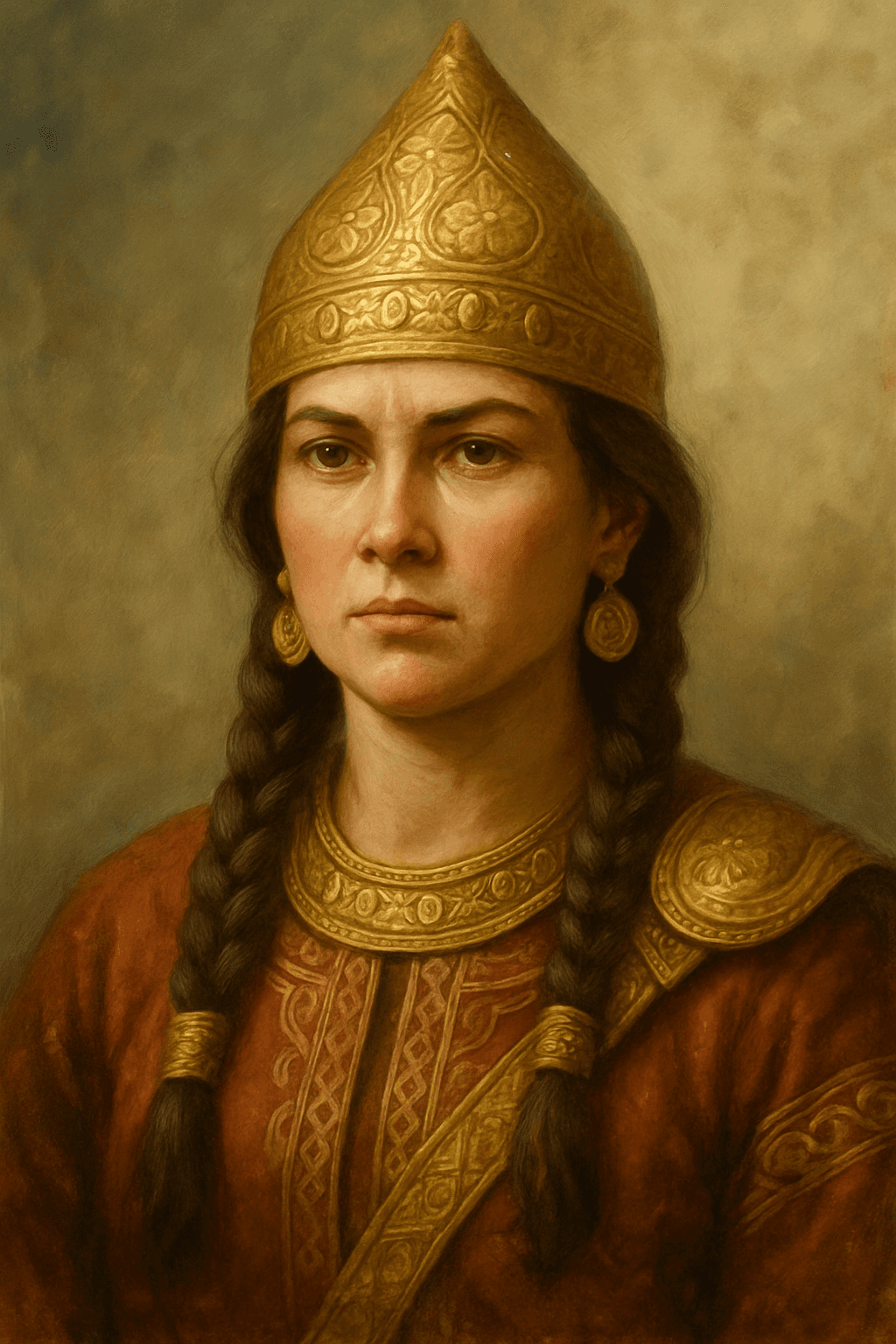
Sakas (Scythians)
Period | 8th–2nd centuries BCE | ||||||||
|---|---|---|---|---|---|---|---|---|---|
Region | Scythians Kazakhstan Caspian region Northern shore of the Black Sea | ||||||||
Origin | Central Asia Related to Proto-Turkic and Turkic-Mongolic peoples | ||||||||
Language | Exhibiting similarities with early Turkic languages Sparse written records | ||||||||
Society | Tribal federations, aristocratic warrior class (Royal Scythians) | ||||||||
Politics | Federal structure; prominent leaders: Alp Er Tunga, Tomyris | ||||||||
Economy | Craftsmanship Plunder Animal husbandry Trade | ||||||||
Military | Light cavalry units, superior in archery and raiding tactics | ||||||||
Culture | Animal style art, kurgan burials, the Golden Man discovery | ||||||||
Belief | Nature and sky god beliefs | ||||||||
The Scythians (Sakas) were a warrior people who dominated the Eurasian steppes from the 8th century BCE onward and were known for their nomadic lifestyle. Originating in Central Asia, the Scythians exerted influence across a vast territory stretching from the Chinese borders in the east to the Danube River in the west, from Siberia in the north to Iran and Mesopotamia in the south. Their military power based on mounted cavalry, their animal-style art, and their rich burial cultures left a lasting mark on history. In ancient sources, the Scythians were referred to by the Greeks as “Skuthai,” by the Persians as “Saka,” and in Indian texts as “Çaka.” The term “Scythian” was primarily used to describe the branch of the Sakas that migrated north of the Black Sea; this people established a steppe empire that interacted with both eastern and western civilizations, leaving political, cultural, and military imprints.
The Scythians (Greek: Skuthoi) were a nomadic people who flourished in the Eurasian steppes during antiquity. Known as “Saka” in Persian sources and “Çaka” in Indian texts, this group is generally treated in historical scholarship as synonymous with the Sakas. In this context, the Scythians are regarded as the western branch of the Sakas. Various historical and ethnological perspectives have been advanced regarding the origins of the Scythians.
According to the dominant academic view, the Scythians were an Indo-European-speaking people likely of Iranian origin. One key piece of evidence supporting this view is the term “Massaget,” which in Old Persian means “great” or “mighty.” Archaeological findings and linguistic analyses reinforce this interpretation. However, alternative ethnic and cultural approaches also exist. Some Turk historians, by examining the geography inhabited by the Scythians, their migration routes, traditional lifestyles, cultural traces, and belief systems, have characterized them as a people belonging to the Ural-Altaic race with proto-Turkic characteristics.
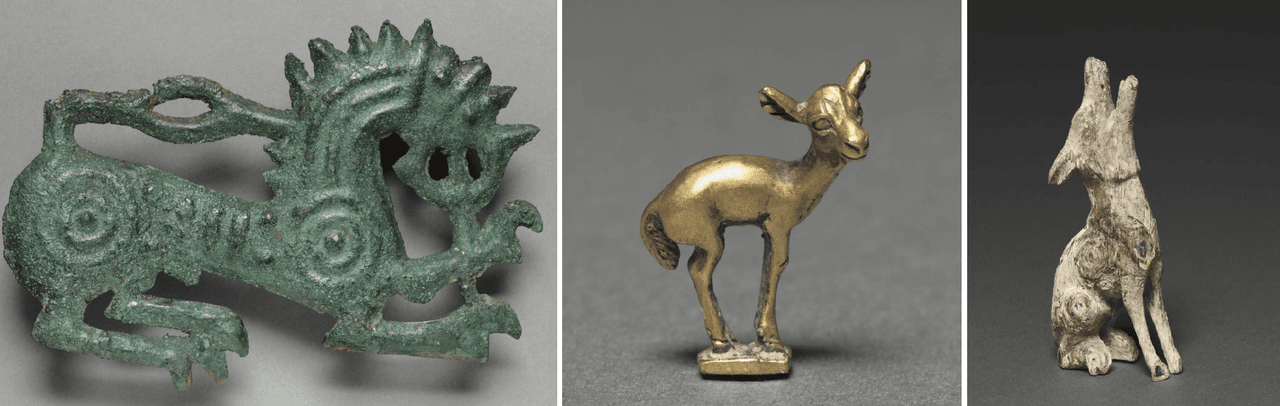
İskitlerden Kaldığı Öngörülen Bazı Objeler (Cleveland Art)
The common ground between both approaches is that the Scythians were a steppe society originating in Central Asia. While it is difficult to establish a definitive ethnic classification for their origins, it is widely accepted that they were a nomadic warrior community rooted in Central Asian traditions.
Archaeological and historical data reveal that the Scythians emerged on the northern Eurasian steppes toward the end of the 2nd millennium BCE. The renowned Russian archaeologist Mikhail Artamonov traces the origins of Scythian culture to the Srubna (Timber-Grave or Log-Grave) culture communities of Central Asia. These groups later displaced the Cimmerians, who belonged to the Catacomb culture and inhabited the northern shores of the Black Sea. This historical process demonstrates that the Scythians migrated from east to west—from Central Asia to the northern steppes of the Black Sea.
Historical records indicate that by the 8th century BCE, the Scythians had reached the northern steppes of the Black Sea and defeated the Cimmerians. Some Cimmerians migrated under Scythian pressure first to the Caucasus and then to Anatolia. This event was a significant development shaping both the Scythian expansion and the migration patterns of the era.
The region regarded as the Scythian homeland is the Altai Mountains and surrounding areas. This region lies at the intersection of modern-day Kazakhstan, Mongolia, China, and Russia. Scythian communities living in these mountainous parts of Central Asia moved westward due to climatic changes and population movements beginning in the 9th and 8th centuries BCE. During this first major wave of migration, Scythian groups originating from central Turkestan reached the steppes of southern Russia and Ukraine.
While Persian sources referred to this western-moving group as “Saka tigrakhauda” (Sakas with pointed hats) or “Saka paradraya” (Sakas beyond the sea), Greek historians recorded the people settled between the Danube and Don rivers as “Scythians.” After settling in the northern steppes of the Black Sea in the 8th century BCE, the Scythians gradually made this region their center and launched raids extending as far as Mesopotamia through the Caucasus.
Mythological narratives about the origins of the Scythians also exist. According to Herodotus, the Scythians appeared at a time when golden objects fell from the sky. In this legend, the ancestor Targitaos had three sons, and the youngest, who claimed the golden gifts, founded the kingship. The identification of Targitaos with the semi-divine Heracles in this narrative suggests that Scythian kings claimed sacred lineage.
However, setting aside these mythological accounts, historical and cultural evidence links the origins of the Scythians to the steppe cultures of Central Asia. By the 7th century BCE, the Scythians had established dominance north of the Black Sea and expanded their campaigns as far as Mesopotamia, enhancing their historical influence. In conclusion, although various ethnic interpretations of Scythian origins exist, there is scholarly consensus that they were a steppe people originating in Central Asia.
Scythian dominance extended across a vast territory throughout antiquity. Over their approximately one-thousand-year historical presence (from the 8th century BCE to the 2nd century CE), the Scythians were influential in regions stretching from the Chinese Wall in the east to the Danube River in the west, from the taigas of Siberia in the north to the borders of Anatolia and Egypt in the south. Ancient writers named this boundless territory “Scythia.”
The most detailed information about Scythian settlement areas is found in Herodotus’s work Historia. According to Herodotus, Scythia encompassed the steppe belt north of the Black Sea, extending from the Danube (Istros) River in the west to the Don (Tanais) River in the east. The southern boundary was defined by the coasts of the Black Sea and the Sea of Azov, along with the Crimea Peninsula (known in antiquity as Taurica). To the east, the Don River and a trench said to have been dug by the Scythians served as a boundary between them and other eastern nomadic peoples. To the north, forested areas began, and Herodotus noted that tribes such as the Androphagi, who were not Scythians, inhabited this region. The area beginning north of the Dnieper River was described as a “desolate desert.”
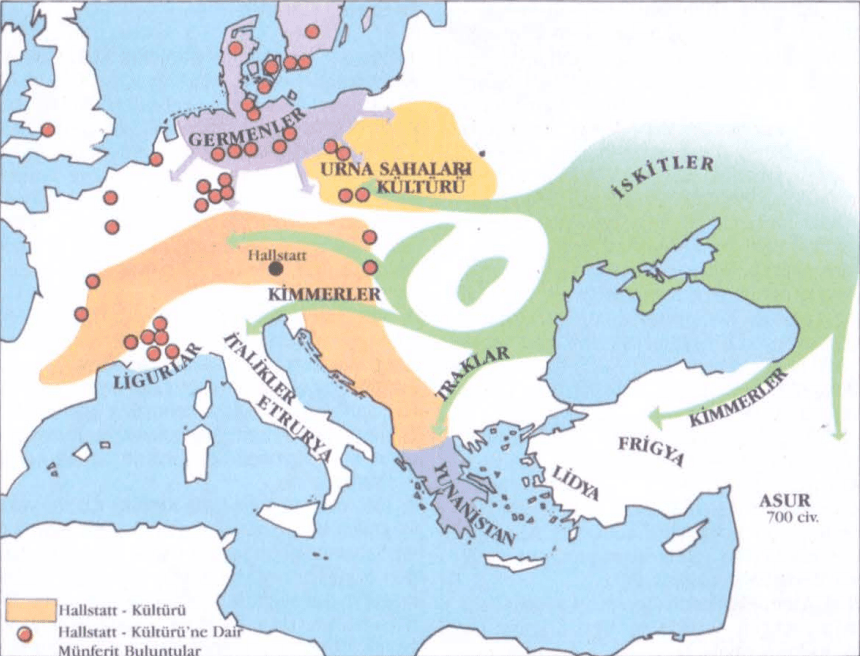
【1】
Herodotus also classified the tribal distribution within Scythian territory. In the west, semi-sedentary Scythian agricultural communities lived on arable land. Between the Danube and Hypanis (Bug) rivers, a Greco-Scythian mixed community called the Callipidae resided; to their east were the Halizones and the Argippaei, a tribe engaged in agriculture in the lower Dnieper basin. Between the Donets River and the east, nomadic Scythian groups lived. Herodotus identified the Royal Scythians (Skithai Basilioi) as the most powerful Scythian tribe, who settled in the center of this territory and politically governed other Scythian clans. This group represented the leadership of the Scythian world in terms of centralized administration and military power.
The Scythians’ influence was not confined to the northern shores of the Black Sea. Persian inscriptions and Eastern traditions refer to related steppe peoples in Central Asia under the name “Saka.” Darius the Great’s Behistun Inscriptions classify the Saka into three main groups: Saka Paradraya (Sakas beyond the sea), corresponding to the group the Greeks called Scythians on the Black Sea steppes; Saka Haumavarga (Sakas who drink haoma); and Saka Tigrakhauda (Sakas with pointed hats), referring to groups remaining within Central Asia. These records show that the presence of the Scythians/Sakas extended from east of the Caspian Sea to the Aral Sea and the Tian Shan mountains, even reaching the Hindu Kush region.
Until the 2nd century BCE, the Saka Haumavarga and Saka Tigrakhauda groups remained active in Central Asia, especially in Turkestan and its surroundings. Later, they migrated southward and settled in what is now Afghanistan and northern Iran. These tribes were forced to migrate under pressure from the Yuezhi and Hun incursions and eventually disappeared from the historical stage.
Therefore, the Scythian sphere of dominance was not limited to the Eastern European steppes. The various names mentioned in Chinese, Indian, Iranian, Assyrian, Urartian, Greek, and Roman sources reveal that the Scythians interacted with diverse cultures and existed across a vast geography. Although these cultures referred to the Scythians by different names, the Persian term “Saka” and the Greek term “Skuthoi” essentially describe the same large group of nomadic peoples.
The Scythians, as one of the major representatives of the equestrian nomadic lifestyle across this vast Eurasian landscape, both interacted with settled civilizations and shaped history through large-scale migrations and campaigns. Their nomadic warfare, economy based on animal husbandry, and portable cultural elements enabled them to adapt easily to diverse geographical environments. Hence, when referring to “Scythian geography,” one must understand not only the northern shores of the Black Sea but the entire Eurasian steppe belt stretching from the Danube to China.
Scythian society exhibited a typical nomadic steppe structure. This social organization was traditional, warrior-oriented, and hierarchical, based on a nomadic pastoral economy. The Scythians’ primary livelihood was animal husbandry, particularly of horses, cattle, and sheep, raised in large herds. Pig farming was uncommon among the Scythians. This economic model shaped their dietary habits: meat and dairy products formed the basis of the Scythian diet; they consumed cooked meat, drank mare’s milk, and ate cheese made from it.
The nomadic lifestyle also influenced their housing and clothing. The Scythians likely lived in felt yurts or wheeled wagons and moved seasonally to graze their herds. This way of life fostered a culture of discipline and strict adherence to tradition. Ancient writers such as Herodotus and Hippocrates emphasized the conservative nature of Scythian life. The Scythians maintained distance from foreign cultures, showed deep loyalty to their traditions, and avoided adopting the customs of other peoples.
In Scythian society, individuals’ social roles were defined by warrior qualities regardless of gender. Young people were encouraged to become warriors, and the importance of courage and heroism was instilled from an early age. Women were also part of this warrior identity. Ancient sources indicate that Scythian women rode horses and used bows and spears. The tradition that a young woman had to kill three enemies before she could marry demonstrates that women held warrior roles equivalent to men. This practice inspired the myth of the Amazons, and the Scythians became known among ancient societies as a people with female warriors. This traditional structure continued to leave traces in later Turkic-Mongolic steppe societies.
Society was divided primarily into tribes and clans. Each tribe had its own leader (bey), but a royal family represented a central authority over all tribes. The social structure was hierarchical, and class distinctions are clearly observable in archaeological findings. Particularly the Scythian kurgans (elaborate burial mounds) reveal the material and social differences between nobility and commoners. Large kurgans were equipped with stone or wooden chambers and contained numerous valuable objects, weapons, ornaments, and even sacrificed animals and servants, reflecting burial customs. In contrast, commoners’ graves were smaller, simpler, and contained fewer grave goods.
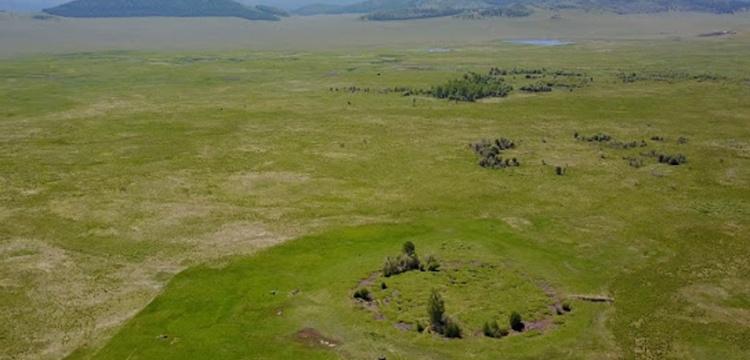
İskitlere Ait Bir Kurgan Kalıntısı (Arkeoloji Sanat)
This situation indicates that property, wealth, and prestige were concentrated among specific families and social groups. However, this class structure was not absolute. An individual’s position in society was shaped not only by birth but also by heroism, courage, and standing within the tribe. Thus, achieving high status was possible not only through wealth but also through military achievements.
Scythian aristocracy consisted of the royal family, tribal chieftains, and elite warriors surrounding them. The royal bodyguards, known as the “hassa” units, were regarded as symbols of social prestige. Membership in these units represented both high honor and an opportunity for social advancement.
The institution of slavery did not develop in Scythian society in the classical sense. Herodotus writes that the Scythian king viewed other Scythians as his “slaves”; however, the term “slave” here likely does not refer to individual bondage in the modern sense but to politically subjugated dependent communities. Direct archaeological or textual evidence for large-scale slave labor is lacking.
The majority of society consisted of herder-warriors. These people raised livestock as the backbone of the nomadic economy, occasionally participated in warfare, and fulfilled tribute or military obligations under the authority of tribal leaders.
The Scythian political structure was a complex model combining a federated confederation of tribes with a hereditary monarchy. This system reflected the dispersed nature of nomadic societies while creating a centralizing core around a unified authority. At the heart of the Scythian kingdom was a king (han) who ruled over all clans and tribes. This king typically came from the royal lineage known as the “Royal Scythians” (Skithai Basilioi), traced back to Targitaos. According to Herodotus, Scythian kings were chosen from among the members of this single dynasty and ruled for many generations.
Power was considered a hereditary right passed from father to son, but this succession was not rigidly applied in favor of the eldest son. Power and suitability criteria among male members of the royal house could determine the succession. For example, as Herodotus recounts, King Scyles was deposed due to his drinking habits and replaced by his brother Oktamasades. Such examples illustrate that internal dynastic dynamics and aristocratic approval shaped political processes. The selection of a new king sometimes required the consent of tribal chiefs or leading figures, meaning the selection process included elements of collective decision-making.
Regardless of how a king attained the throne, his authority was unquestioned. The Scythian king was an absolute leader, holding all military, political, and religious powers in his person. This situation conferred upon the king a quasi-divine status and led to his perception as a sacred figure within society. Every Scythian was obligated to obey the king’s commands without question. This understanding may have been shaped by the Scythians’ contact with absolutist monarchies to the east.
Funerary rituals following the king’s death were significant indicators of his sacred status. Herodotus reports that upon the death of a Scythian king, his servants, concubines, and even horses were sacrificed and buried with him in the kurgan. Archaeological excavations have confirmed such mass burials, indicating the belief that the king’s earthly status would continue in the afterlife.
The central structure of the state was shaped by the dominance of the aristocratic group known as the “Royal Scythians,” centered in the northern Black Sea steppes. From the 5th century BCE onward, this group brought other Scythian tribes under its political control and began viewing them as a kind of “subject people” or “slaves.” Here, the term “slave” does not refer to individual bondage but to political allegiance and subjection.
The Royal Scythians established dominance over other tribes not only through military power but also through charismatic authority and claims of noble lineage. Some sources imply the existence of a council of nobles or tribal chiefs surrounding the king. Particularly during critical moments such as the selection of a new king, these leading figures appear to have held influence. However, the final authority and control over the state’s fate remained with the king. Decisions regarding war, peace, migration, and other major matters were made directly by the king.
Among the Scythian kings mentioned in ancient sources are Spargapis (Spargapithes), Idanthyrsos, Scyles, and Oktamasades. Although these kings belonged to the same dynasty, they experienced internal conflicts. Herodotus recounts that the legendary Targitaos had three sons, and the kingship was established through the youngest, Kolaksais. This narrative served to legitimize the divine origin of the royal lineage, interpreted through identification with the Greek hero Heracles.
Unlike settled states, the Scythian state did not develop around a permanent capital. The kingdom was governed by a mobile army-camp system. The king and ruling class moved with the entire population across the territory, establishing temporary centers in different regions. Despite this flexible structure, political unity was largely maintained, and during external threats or major campaigns, all tribes could unite around the king.
Some historians have described this political structure as a “military democracy.” While hereditary monarchy and aristocracy existed, during wartime, collective decision-making mechanisms involving free Scythian men could emerge. Herodotus’s observation that the Scythians were easy targets when scattered but invincible when united reflects the importance of this military-political cohesion.
From the 7th to the 6th centuries BCE, the Scythian state initiated a period known as the “Pax Scythica,” ensuring stability across vast Eurasian territories for nearly three centuries. During this time, kings both waged wars and enriched themselves through diplomatic relations and trade with neighboring settled civilizations (Persians, Assyrians, Medes). Gold, precious metals, and trade goods accumulated in the hands of the nobility, strengthening royal authority.
Some researchers refer to this era as the “Great Saka (Scythian) State,” suggesting that the Scythian king ruled over a sphere of influence extending from Eastern Europe to Central Asia. Legendary figures such as Alp Er Tunga are regarded as symbolic leaders representing the golden age of this kingdom.
Alp Er Tunga is a legendary Scythian (Saka) ruler mentioned in both Turkic and Iranian sources. In the Turkic epic tradition, Alp Er Tunga is remembered as one of the earliest and most exalted heroes. In Iran’s national epic, the Shahnameh, he is known as “Efrasiyab” (Afrasiab); both names refer to the same historical-mythological figure. According to tradition, Alp Er Tunga brought the Saka Empire to its most brilliant era, uniting his people through his strong charisma, martial prowess, and leadership qualities. During his reign, the Sakas reached their greatest territorial extent, achieved major conquests, and established military and political dominance across the Eurasian steppes. Alp Er Tunga is described as a wise, valiant, discerning, and just khan. In particular, in Kaşgarlı Mahmud’s Divânu Lügati’t-Türk, the lament “Alp Er Tunga Sagusu” poetically recounts the chaos following his death, the collapse of order, and the people’s mourning: “If Alp Er Tunga is dead, has the desolate steppe remained?” These lines symbolize the social imbalance caused by his loss.
Although his historical identity cannot be definitively established, some researchers identify Alp Er Tunga with a Saka king who lived in the 7th century BCE. According to some traditions, he was killed in a trap set by the Median king Keyaksar (Keyhüsrev in Iranian epic), an event that marked the end of Saka dominance in Anatolia and Mesopotamia. These narratives indicate that with Alp Er Tunga’s death, Saka power retreated eastward and began to fragment. Revered in Turkish history as an “ulu ata” (great ancestor), Alp Er Tunga was also regarded as a source of legitimacy by many Turkish dynasties. The Karakhanids and Seljuks traced their lineage back to him, transforming his legendary value into political representation. Alp Er Tunga was even identified with Oghuz Khan, thereby becoming a mythological ruler, cultural symbol, and eternal representative of the Scythian legacy within the shared memory of both Turkic and Iranian epics.
The death of Alp Er Tunga left a profound impact on the Scythian people and was reflected in their oral literature.
Divanü Lugati't-Türk records one of the earliest known examples of Turkish elegiac poetry:
Alp Er Tunga öldi mü
Issız ajun kaldı mu
Ödlek öcün aldı mu
Emdi yürek yırtılur!
These verses illustrate that Alp Er Tunga was perceived as a source of order and security; his death was not merely a personal loss but a profound societal collapse. The lament clearly reflects how the death of a leader in ancient Turkic society evoked deep mourning and how the concept of struggle was integrated into oral culture.
Tomris Hatun is the most famous female ruler of the Scythian-Saka world, renowned in legend for her extraordinary courage and determination. As queen of the Massagetae, who lived in Central Asia in the 6th century BCE, Tomris is known for her resistance against the Persians, one of the most powerful empires of the era. According to Herodotus, the Persian King Cyrus II lured and killed Tomris’s son through deceit; in response, Tomris assembled her army and launched a decisive war against the Persians. In the battle near the Amu Darya in 530 BCE, the Persian army suffered a crushing defeat, and Cyrus himself was killed. Herodotus recounts that Tomris plunged Cyrus’s severed head into a wineskin filled with blood and declared, “You thirsted for blood—here, drink your fill!” While this dramatic account symbolically represents her vengeance, alternative historical accounts exist. Persian sources state that Cyrus’s body was recovered by the Persians and buried in Pasargadae. What is certain is that the Persians suffered heavy losses in this campaign and that Tomris successfully defended the Massagetae.
Tomris Hatun appears in ancient sources not only as a warrior leader but also as a symbol of political will and independence. Ancient writers such as Diodorus Siculus, Pompeius Trogus, and Justinus praised Tomris, emphasizing that a woman had defeated a great emperor. Diodorus notes that women descended from Tomris occasionally ascended the throne, indicating that women in Saka society could wield political power. Tomris’s victory over the Persians preserved Saka independence in Central Asia and halted the Persian Empire’s eastward expansion. In Tomris, qualities traditionally associated with men—warrior spirit and leadership—were embodied in a female ruler. Her story became synonymous with national heroism in Turkish and Kazakh traditions and is regarded in modern historiography as one of the most important examples of women assuming political and military roles in early history. As a historical figure demonstrating that Scythian women could be not only warriors but also state rulers, Tomris Hatun continues to live in both ancient and contemporary memory as the “invincible queen.”
The Scythians were among the most effective and feared warrior peoples of antiquity. Their military strength enabled them to preserve their independence and confront major empires. The core of the Scythian army consisted of mounted archers. Highly skilled in shooting from horseback, the Scythians employed light-armored, fast cavalry units to wear down enemies through constant mobility. Their most important weapon was the short but powerful composite bow, which allowed shooting in all directions from horseback. Other weapons included the akinakes (short sword), spear, and battle-axe (sagaris). Scythian cavalry became masters of hit-and-run tactics. Thanks to the endurance of their horses and the precision of their warriors’ shooting, they held a significant advantage over heavy infantry armies. Ancient writers praised these traits; Herodotus stated, “If they united under a single leader, they would be the most invincible people on earth.” Their military prowess was reinforced by their warrior social structure: in peacetime, every man was a herder and hunter; in wartime, he became a trained soldier. It is known that women also participated in warfare under certain conditions, demonstrating that Scythian military power was mobilized as a unified social whole.
Scythian armies participated in numerous major battles and campaigns throughout history. In the 7th century BCE, they entered Western Asia via the Caucasus and established relations with the Assyrian, Median, and Babylonian states. Although King Ispaka’s campaign to aid Mannaea failed, the Scythians soon allied with the Medes and played a role in the fall of Nineveh in 612 BCE. Later, they joined King Nebuchadnezzar of Babylon in the Battle of Carchemish against the Egyptians. The victory in this battle led to Egypt’s withdrawal from Asia. The Scythians dominated Median territories for about 28 years, exerting influence across a wide area of Southwest Asia. In 513 BCE, the Persian king Darius’s campaign against the Scythians once again demonstrated their military genius. Through the “war of attrition” strategy employed by King Idanthyrsos, Darius’s army was exhausted in the steppes and forced to retreat without engaging in a pitched battle. This campaign became a classic example of the tactic of wearing down the enemy through retreat; later peoples such as the Huns, Kipchaks, and Mongols employed similar methods in subsequent centuries.
The Scythians’ military superiority was not only tactical but also psychological. The bone masks, animal-patterned armor, and gold ornaments worn by warriors and horses created an intimidating impression on enemies. Ancient sources report that the Scythians poisoned their arrowheads and made drinking cups from the skulls of their enemies. Although these accounts may contain exaggerations, they reflect the fierce nature of Scythian warriors. Armies were organized along tribal lines, with each clan contributing its own cavalry; during wartime, these tribal units united under the king’s command to form a centralized army. Additionally, the Scythians served as mercenaries, for example, in Assyrian and Egyptian armies. In the 4th century BCE, Scythian king Ateas died at age 90 while fighting against King Philip II of Macedon in the Balkans; this defeat marked the decline of Scythian power in Europe. However, their military traditions continued to inspire later steppe peoples such as the Huns, Göktürks, and Mongols.
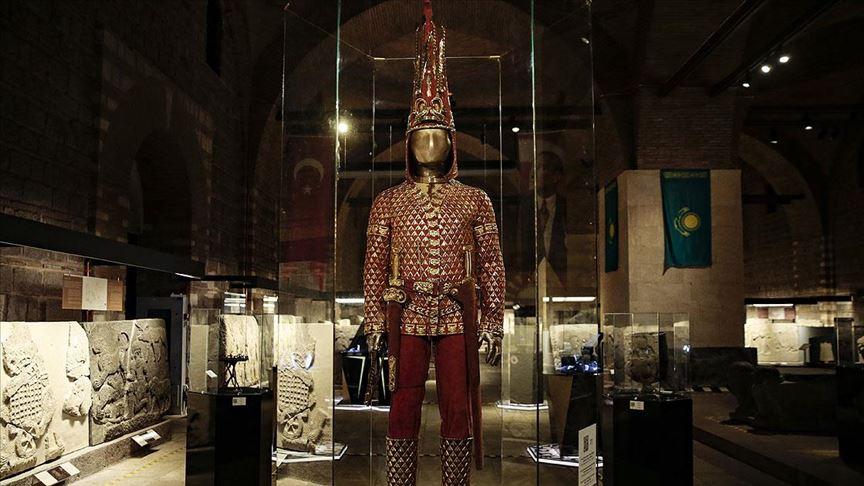
Altın Elbiseli Adam (AA)
The Scythians deeply reflected their connection to nature in their culture and art. Their nomadic lifestyle encouraged the production of durable and functional artifacts. The burial structures known as kurgans provide valuable insights into Scythian funerary rituals and social structure. The young warrior discovered in 1969 in the Esik Kurgan in Kazakhstan, known as the “Golden Man,” is one of the most important examples of Scythian art and craftsmanship. His clothing, adorned with gold plaques, demonstrates the high level of metallurgy and metalworking achieved by the Scythians. The figures of eagles, leopards, and horses on his attire reflect reverence for nature and sacred powers. Animal-style art dominates Scythian art. Animal figures were stylized to symbolize power, agility, and the spirit of nature. This artistic approach was not merely an aesthetic preference but also a reflection of Scythian religious and mythological worldview. Although direct written documents in the Scythian language are limited, geographical names and personal names recorded in ancient sources suggest possible connections to early Turkic languages.
Artamonov, M. I. Kimmerler ve İskitler: Başlangıcından MÖ IV. Yüzyıla Kadar. Çev. Muhammet Şen. İstanbul: Selenge Yayınları, 2020.
Ayan, Altan. “Alp Er Tunga'nın Yönetim Anlayışı ve Liderlik Tarzlarının İncelenmesi.” *Akademik Bakış Dergisi*, no. 61, May–June 2017, pp. 167–177.https://dergipark.org.tr/tr/pub/abuhsbd/issue/32974/366542
Aydın, Bahtiyar. Türk İskitleri. İstanbul: Türk Dünyası Araştırmaları Vakfı Yayınları, 2009.
Demir, Necati. "Geography the Iskites / Sakas." Bildiri sunumu, 8. Uluslararası Türklerin Dünyası Sosyal Bilimler Sempozyumu, Atirau, Kazakistan, 2024.
Durmuş, İlhami. “Anadolu’da Kimmerler ve İskitler.” *Belleten* 61, no. 231 (1997): 273–286. Accessed April 29, 2025.https://doi.org/10.37879/belleten.1997.273
Durmuş, İlhami. “İskitlerin Coğrafyası.” *8. Uluslararası Türk Dünyası Araştırmaları Sempozyumu Bildirileri*, 2016, pp. 557–566.https://www.weltdertuerken.org/assets/images/sempozyum/67719c23469c6574.pdf
Erdoğan, Hasan Göktürk. “Avrasya’da Bir Eski Kültür: Andronovo.” *İtil Suyu Aka Turur*, Ege Üniversitesi Türk Dünyası Araştırmaları Enstitüsü, 2017, pp. 1–8.https://www.academia.edu/31802722/%C4%B0T%C4%B0L_SUWI_AKA_TURUR_2.pdf
Eroğlu, Engin. "İskitler’de Kuyumculuk." Cappadocia Journal of History and Social Sciences, 2014. Accessed April 29, 2025.
Gold Plaque with Griffins, The Cleveland Museum of Art. Accessed April 29, 2025.https://www.clevelandart.org/art/1985.77
Grakov, B. N. İskitler. Çev. D. Ahsen Batur. İstanbul: Selenge Yayınları, 2008.
Karakoç, Eren. Tüm Kanıtlarıyla İskitlerin Türklüğü. Ankara: Gazi Üniversitesi Sosyal Bilimler Enstitüsü, 2019.
Onur Sayın. *Sakaların Menşei Meselesi*. Master's thesis, Mimar Sinan Güzel Sanatlar Üniversitesi, 2022.https://acikerisim.msgsu.edu.tr/xmlui/handle/20.500.14124/6227.
Scythian Belt Buckle, The Cleveland Museum of Art. Accessed April 29, 2025.https://www.clevelandart.org/art/1986.26
Scythian Plaque of a Horse, The Cleveland Museum of Art. Accessed April 29, 2025.https://www.clevelandart.org/art/1982.2
Tepekule, Tansu. “İskitlerin Ölüm Ritüelleri.” *İtil Suyu Aka Turur*, Ege Üniversitesi Türk Dünyası Araştırmaları Enstitüsü, 2017, pp. 89–102.https://www.academia.edu/31802722/%C4%B0T%C4%B0L_SUWI_AKA_TURUR_2.pdf
Çini, Nihat. İskitler (Sakalar). Master's thesis, Selçuk Üniversitesi Türkiyat Araştırmaları Enstitüsü, 2019.
“Alp Er Tunga Heykeli, Sivas'ta Açıldı.” TRT Haber, April 25, 2024.
“Altın Elbiseli Adam’ın İzinde: Kazakistan’dan Dünya Mirasına Bir Arkeolojik Hazinenin Hikâyesi.” Anadolu Ajansı, March 24, 2024.
“En Eski ve En Büyük İskit Kurganı Keşfedildi.” *Arkeoloji ve Sanat*. Accessed April 29, 2025.https://www.arkeolojisanat.com/shop/blog/en-eski-ve-en-buyuk-iskit-kurgani-kesfedildi_3_313173.html
“Tomris Hatun Heykeli.” *Türk Tarih Müzesi ve Parkı*.https://turktarihmuzesiveparki.com/.
“İskitler (Sakalar) Kimdir?” Anadolu Ajansı, March 20, 2024.
[1]
Herman Kinder; Werner Hilgeman, Dünya Tarihi Atlası, Çev.: Leyla Uslu, C.: I, (Ankara: ODTÜ Yayıncılık, 2006), s. 20.


Sakas (Scythians)
Period | 8th–2nd centuries BCE | ||||||||
|---|---|---|---|---|---|---|---|---|---|
Region | Scythians Kazakhstan Caspian region Northern shore of the Black Sea | ||||||||
Origin | Central Asia Related to Proto-Turkic and Turkic-Mongolic peoples | ||||||||
Language | Exhibiting similarities with early Turkic languages Sparse written records | ||||||||
Society | Tribal federations, aristocratic warrior class (Royal Scythians) | ||||||||
Politics | Federal structure; prominent leaders: Alp Er Tunga, Tomyris | ||||||||
Economy | Craftsmanship Plunder Animal husbandry Trade | ||||||||
Military | Light cavalry units, superior in archery and raiding tactics | ||||||||
Culture | Animal style art, kurgan burials, the Golden Man discovery | ||||||||
Belief | Nature and sky god beliefs | ||||||||
Origins of the Scythians
Scythian Geography
Social Structure
Political Structure
Alp Er Tunga
The Lament for Alp Er Tunga
Tomris Hatun
Scythian Military Power
Culture, Language, and Art