This article was automatically translated from the original Turkish version.
Artist | Edvard Munch | ||||||||
|---|---|---|---|---|---|---|---|---|---|
Year of Production | 1893 (First Version) | ||||||||
Size(s) | 73.5 x 91 cm (first version) | ||||||||
Type(s) | Expressionism Symbolism | ||||||||
Material(s) | Pastel Ink Tempera paint Oil paint | ||||||||
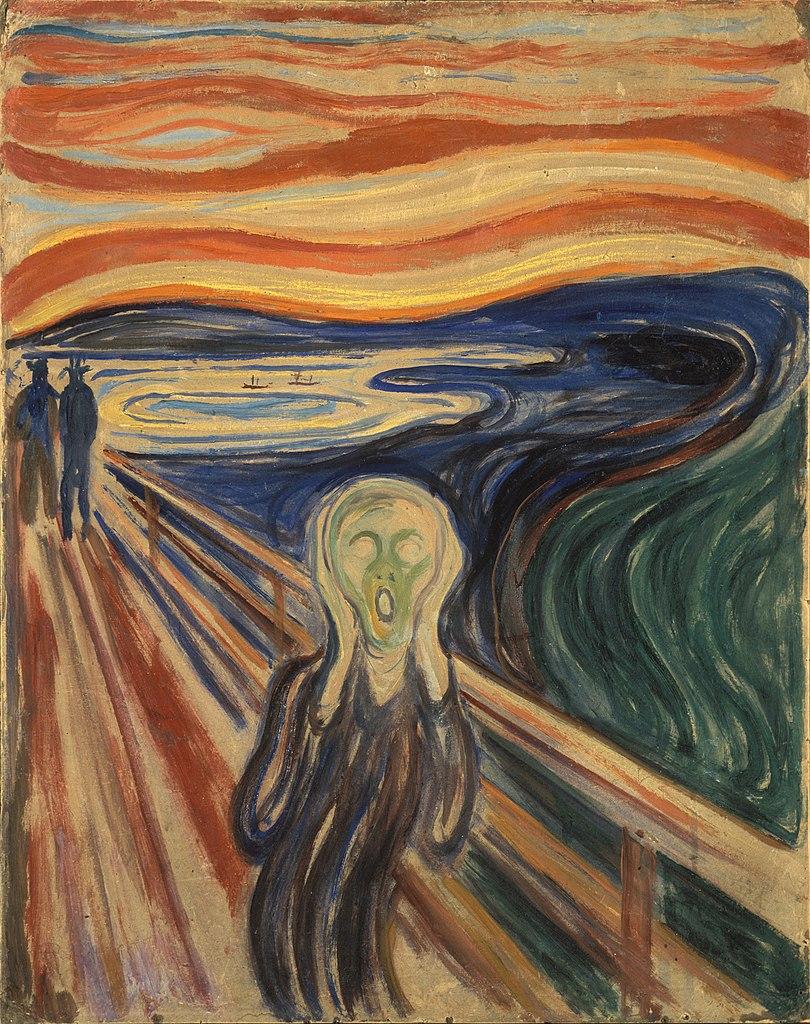
Edvard Munch’s painting “The Scream” is regarded as an original masterpiece in the history of modern art. The composition draws attention through the depiction of the human figure in a form associated with anxiety and distress. The figure’s facial expression, its hands covering its ears, and the landscape in the background have been interpreted together to reveal the emotional intensity of the work from multiple perspectives.
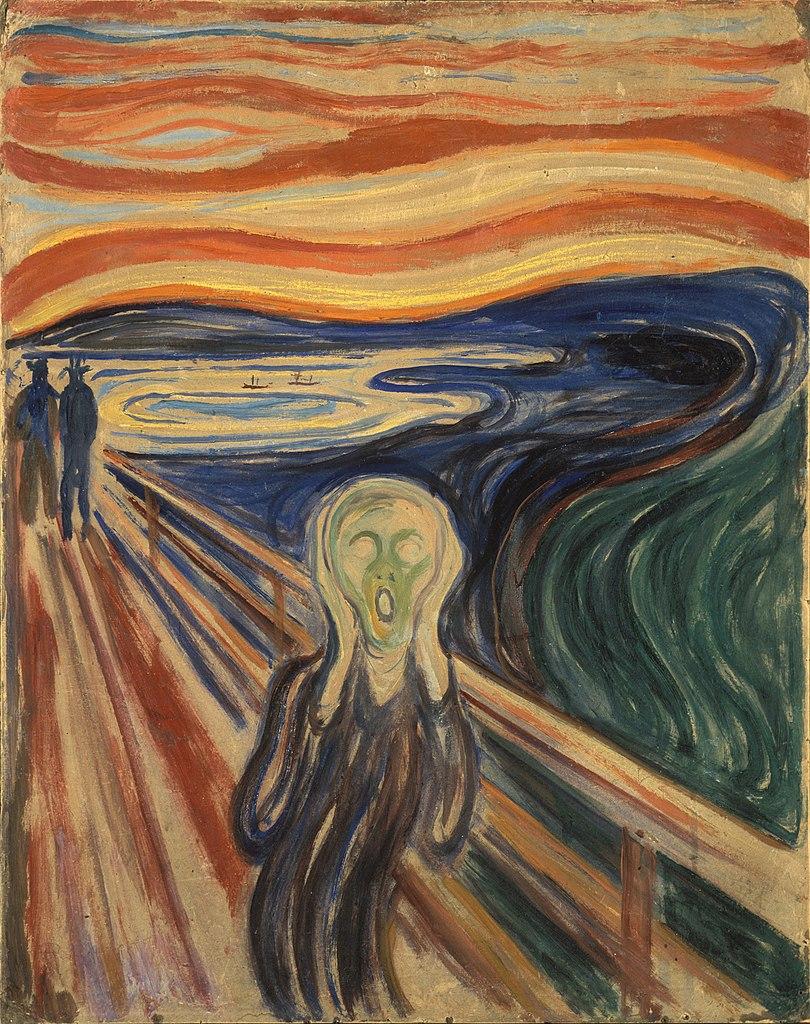
Edvard Munch: The Scream. Tempera and oil on unmounted cardboard (MUNCH)
Munch produced this composition multiple times using different techniques. Among the eight known versions are paintings executed in tempera and oil, pastel drawings, and lithographic prints. Some of these works are preserved at the MUNCH Museum in Oslo. Due to the sensitivity of the materials to light, these pieces are displayed on a rotating basis in the museum.
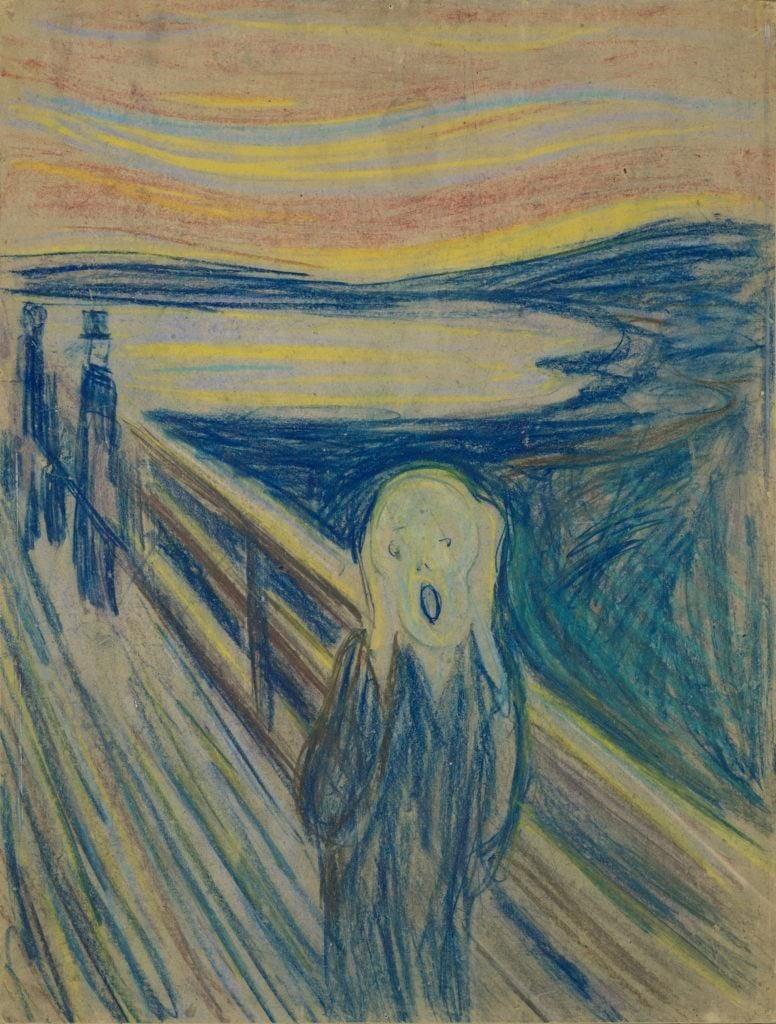
The pastel version of The Scream on display at the Munch Museum in Oslo(British Museum)
The figure in the painting is not defined by gender or identity. This feature has led to interpretations that the figure represents a general emotional state rather than a specific individual. The two figures in the background create a contrast to the central figure’s condition. The sky and natural elements are key visual components that define the atmosphere of the work.
Munch described in his diary the emotional state he experienced during a walk along the Oslo Fjord in 1891. He wrote of feeling “a great scream coming from nature.” This account demonstrates the personal experience underlying the creation of the work. At the same time, the elements in the painting have also been interpreted as expressing a broader spiritual condition beyond a single moment.
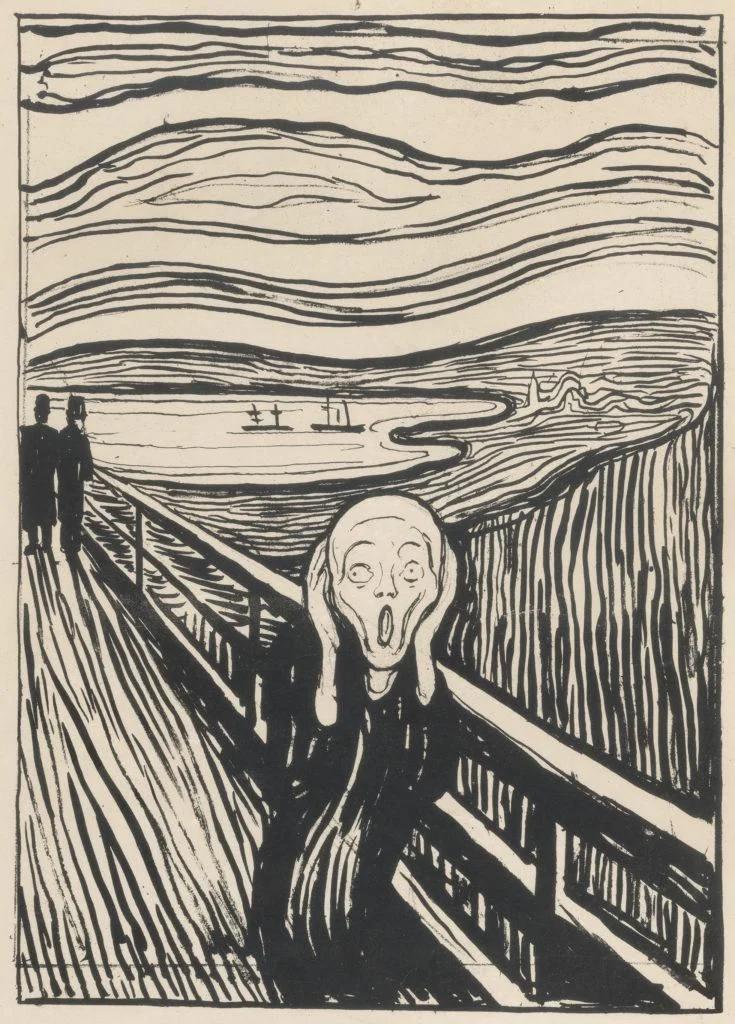
Edvard Munch, The Scream. Lithograph, 1895. Private collection(British Museum)
Since some versions of the work were created on fragile materials such as cardboard and paper, they require protection from light and environmental factors. Museums use specialized climate control systems to ensure the long-term preservation of the pieces and to allow limited public viewing periods.
Since the late 20th century, the motif of The Scream has extended beyond the art world and has been used in various media, caricatures, and digital icons. Additionally, the different versions of the painting gained widespread public attention due to theft incidents in 1994 and 2004.
In Munch’s works, personal experiences and emotions are expressed through various formal elements. The composition titled The Scream is considered one of the key examples reflecting the artist’s approach to spiritual themes.
Why is "The Scream" screaming? - Noah Charney(Ted-Ed)
British Museum. “10 Things You May Not Know About The Scream.” British Museum Blog. Accessed August 6, 2025. https://www.britishmuseum.org/blog/10-things-you-may-not-know-about-scream
Munch Museum. “5 Things You Should Know About The Scream.” Munch.no. Accessed August 6, 2025. https://www.munch.no/en/our-collection/5-things-you-should-know-about-the-scream/
Munch Museum. “The Scream - Where Can I See The Scream?” Munch.no. Accessed August 6, 2025. https://www.munch.no/en/The-Scream/where-can-i-see-the-scream/
Smart History. "Munch: The Scream." Smarthistory.org. Accessed August 6, 2025. https://smarthistory.org/munch-the-scream/
YouTube. "Why is ‘The Scream’ screaming?" TED-Ed, 4:43. April 27, 2017. Accessed August 6, 2025. https://www.youtube.com/watch?v=teJAmgiMVIo

Artist | Edvard Munch | ||||||||
|---|---|---|---|---|---|---|---|---|---|
Year of Production | 1893 (First Version) | ||||||||
Size(s) | 73.5 x 91 cm (first version) | ||||||||
Type(s) | Expressionism Symbolism | ||||||||
Material(s) | Pastel Ink Tempera paint Oil paint | ||||||||
Multiple Versions of The Scream
Composition and Figure
Inspiration and Emotional Depth
Preservation of the Work
Place in Popular Culture
The Artist’s Creative Approach