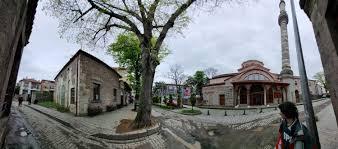
This article was automatically translated from the original Turkish version.
Architecture(s) | Rectangular plan/two-story/open courtyard | ||||||||
|---|---|---|---|---|---|---|---|---|---|
Function(s) | Education/Architecture/Urban history | ||||||||
Construction Date(s) | 18th century | ||||||||
Current Condition | Historical monument/under protection | ||||||||
Location | Trabzon/Ortahisar | ||||||||
Patron | Hacı Pir Efendi | ||||||||
Saraçzade Medresesi is a medrese located in the Ortahisar neighborhood of Trabzon, functioning as an educational structure during the Ottoman period. The building is also known as Hacı Pir Efendi Medresesi. Today, the medrese has been largely destroyed, with only a portion surviving to the present day.
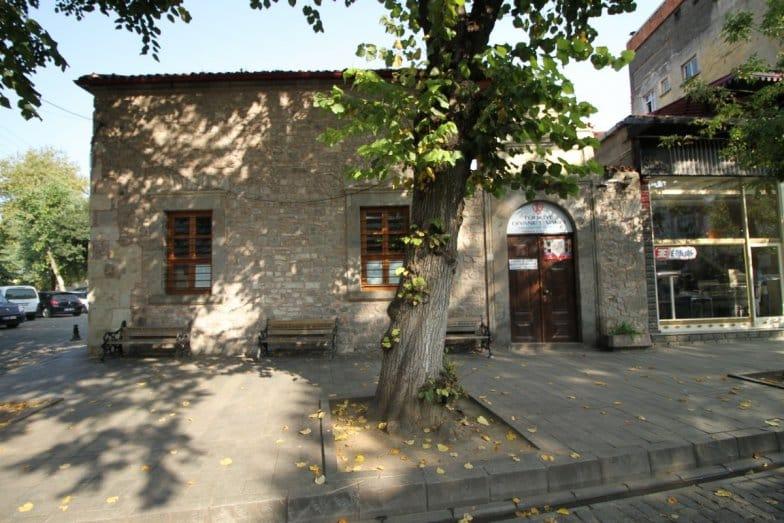
Saraçzade Medresesi (Karadeniz Culture Inventory)
Saraçzade Medresesi was constructed in the 18th century. In the mid-19th century, the medrese was destroyed by a major fire and subsequently rebuilt through the efforts of Hacı Pir Efendi, who served as its müderris.
Archival documents regarding the reconstruction process indicate that the building was constructed together with a mosque and a library, and that the sultan provided financial support during this phase. Records also confirm that the valide sultan contributed to the construction of the mosque.
Although the original plan of the medrese has not survived, some information about its architectural layout has been derived from project drawings preserved in the Ottoman Archives. According to these drawings, the medrese featured a rectangular plan, two stories, an open courtyard, and arcades. The spaces were arranged in a U-shape along three sides of the courtyard.
The entrance to the medrese was located through an opening in the center of the southern wall, and the ground-floor rooms were situated along the south, east, and north sides. The rooms on the north side were designed as shops opening both to the courtyard and to the exterior, intended to generate additional income for the medrese.
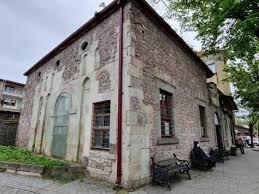
Saraçzade Medresesi (İsamveri)
Only the mosque and the courtyard entrance of the original structure have survived to the present day. The mosque is situated in one corner of the courtyard and features an inscription in talik script on marble on its eastern wall; this inscription sheds light on the post-fire reconstruction of the medrese.
In the currently surviving section of the mosque, the window frames on the eastern facade have been renewed. Additionally, calligraphic decorations have been applied within the interior space. The removal of an addition on the western facade revealed that the wall remnants there belong to an earlier structure.
Archival documents indicate that cut stone and rubble stone were used in the construction of the medrese. The use of these materials within a covered courtyard layout reflects typical Ottoman-era construction techniques.
Saraçzade Medresesi was designed to provide religious and scholarly education within the framework of the classical Ottoman medrese tradition. In accordance with its layout, cells and classrooms were arranged around the courtyard, consistent with the typical teaching and student accommodation system found in medreses. However, detailed descriptions of this medrese’s original plan and architectural features are limited, as such information is based solely on the project drawings preserved in the archives.
Saraçzade Medresesi is currently classified as a cultural heritage site that has been largely destroyed. The structure is categorized as a lost cultural asset, with only the mosque building and the courtyard entrance surviving to the present day. These remaining elements are corroborated by historical documents.
Culture Inventory. "Saraçzade Medresesi, Trabzon." *Kulturenvanteri.com*. Accessed March 27, 2026. https://kulturenvanteri.com/yer/saraczade-medresesi-trabzon/#17.1/41.004841/39.719914
Erdem Dergisi. "Benzer Makaleler: Trabzon’da Günümüze Ulaşmayan Saraçzade / Hacı Pir Medresesi ve Mimarisi." Erdem Dergisi. Accessed March 27, 2026. https://erdem.gov.tr/benzer-makaleler/366
Karadeniz Bölgesi Kültür Envanteri Projesi. "Ortahisar Mescidi / Saraçzade Mescidi." Karadeniz.gov.tr. Accessed March 27, 2026. https://karadeniz.gov.tr/ortahisar-mescidi/
Sanalkent –Karadeniz Teknik University. "Trabzon Tarihi Yapı Envanteri." Sanalkent.ktu.edu.tr. Accessed March 27, 2026. https://sanalkent.ktu.edu.tr/index.php?id=61.13.61.29&by=card
Yazıcı Metin, Nurcan. “Trabzon’da Günümüze Ulaşmayan Saraçzade / Hacı Pir Medresesi ve Mimarisi.” *Erdem Dergisi* 83: 185–212. Accessed March 27, 2026. https://dergipark.org.tr/tr/pub/erdem/article/1224671

Architecture(s) | Rectangular plan/two-story/open courtyard | ||||||||
|---|---|---|---|---|---|---|---|---|---|
Function(s) | Education/Architecture/Urban history | ||||||||
Construction Date(s) | 18th century | ||||||||
Current Condition | Historical monument/under protection | ||||||||
Location | Trabzon/Ortahisar | ||||||||
Patron | Hacı Pir Efendi | ||||||||
No Discussion Added Yet
Start discussion for "Saraçzade Medresesi" article
Historical Background
Architectural Features
Courtyard and Mosque
Building Materials and Construction
Educational and Functional Features
Conservation Status and Current Condition