


This article was automatically translated from the original Turkish version.
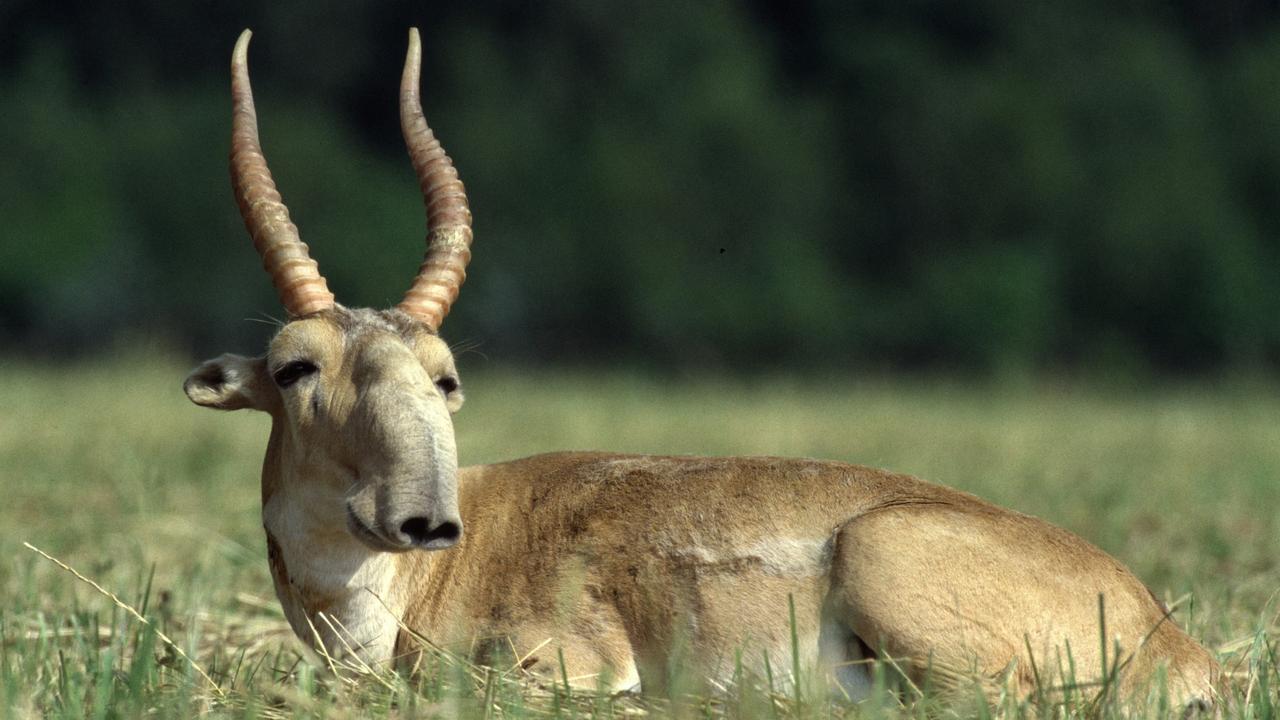
Sayga Antilope
Scientific Name | Saiga tatarica | ||||||||
|---|---|---|---|---|---|---|---|---|---|
Family | Bovidae | ||||||||
Distribution Area | The Central Asian steppes are found especially in Kazakhstan, Turkmenistan, Uzbekistan, Mongolia and some regions of Russia. | ||||||||
Habitat | They usually move in herds. They prefer grasslands and open steppes. | ||||||||
Diet | They feed on grasses and some plants. They are herbivores and generally feed on grasses | ||||||||
Threats | Habitat loss, overhunting and diseases (particularly the 2015 saiga die-offs) threaten the population of the species. | ||||||||
Conservation Status | It is classified as 'Threatened' on the IUCN Red List. | ||||||||
The saiga antelope (Saiga tatarica) is a unique mammal species native to the vast and arid steppes of Asia, currently endangered. Its most striking physical feature is its large, drooping nose resembling a trunk. This nose structure plays an important role in adapting to its environment.
The saiga antelope’s nose filters dusty steppe air to protect its lungs and warms cold air during winter to keep respiratory passages warm. Its light-colored coat, slender legs and short tail are adapted to steppe conditions. Males possess spiral-shaped horns, which make them targets both during mating competition and unfortunately in illegal poaching.
This species is found primarily in the steppes of Kazakhstan, Russia, Uzbekistan, Turkmenistan and Mongolia. These areas are characterized by arid, windy conditions and extreme temperature fluctuations. Approximately 90 percent of the world’s saiga antelopes live in Kazakhstan.
The saiga antelope is a herbivore, feeding on steppe plants, shrubs and various grasses. In this way, it plays a significant role in maintaining the balance of the steppe ecosystem by helping to control vegetation cover.
Saiga antelopes are social animals that live in herds. They undertake migrations of hundreds of kilometers throughout the year to access water and food sources. During these migrations, thousands of individuals moving together create striking scenes for wildlife observers.
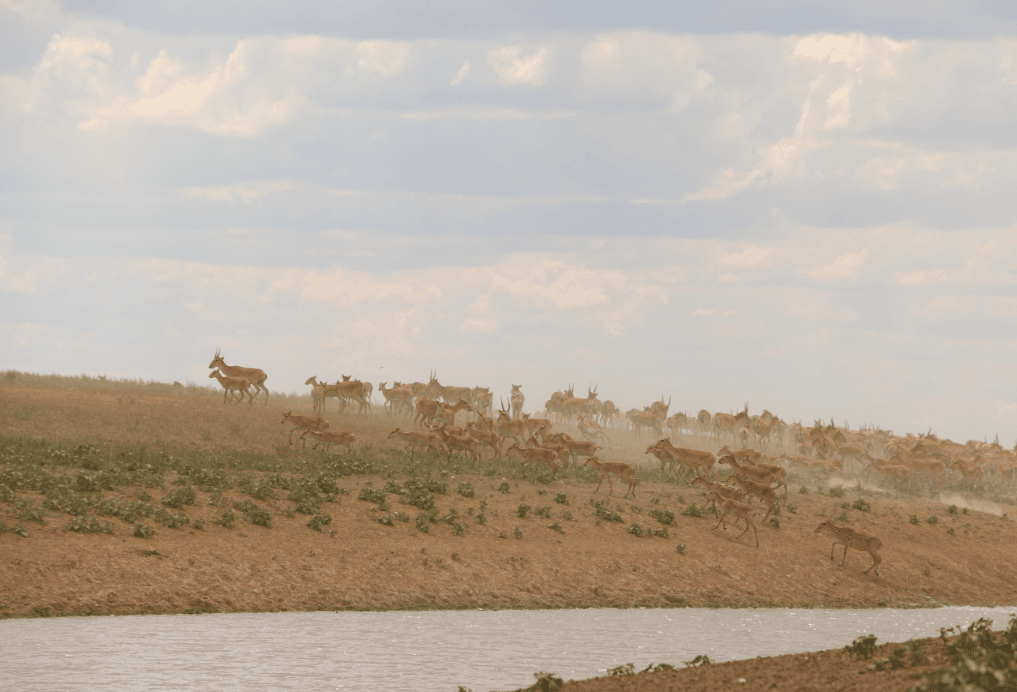
Saiga antelope herd (Source: AA)
Saiga antelopes face numerous threats. The most serious is illegal poaching driven by demand for their horns in traditional Chinese medicine. Additionally, their habitats are shrinking due to expanding agricultural activities, mining and infrastructure projects. Mass die-offs observed in Kazakhstan in 2015 revealed the devastating impact of bacterial infections on this species.
Various conservation initiatives are being carried out at international and local levels. These include establishing protected areas, combating illegal hunting, raising public awareness and conducting scientific research. Kazakhstan, as the primary habitat of the species, plays a pivotal role in these efforts.
The saiga antelope can reach speeds of up to 80 kilometers per hour. The horns of males are used not only for defense but also to attract females. The species is remarkable not only biologically but also culturally.
Fauna & Flora. "Saiga: The World’s Weirdest Antelopes." Accessed April 18, 2025.https://www.fauna-flora.org/species/saiga/.
Mongolia WCS. *Saiga Antelope.* Wildlife Conservation Society – Mongolia, 2025. Accessed April 13, 2025.https://mongolia-wcs-org.translate.goog/wildlife/saiga-antelope.aspx?_x_tr_sl=en&_x_tr_tl=tr&_x_tr_hl=tr&_x_tr_pto=tc
Sayga Travel. "Sayga Nedir?" Accessed April 13, 2025.https://sayga.travel/sayga-nedir/.
TÜBİTAK. "Sayga Antilobu." TÜBİTAK e-Dergi, 2025. Accessed April 12, 2025.https://e-dergi.tubitak.gov.tr/edergi/yazi.pdf%3Bjsessionid%3DV6ebQN7exOQadZp2doaZbMyo?cilt=53&dergiKodu=4&sayfa=82&sayi=1070&yaziid=44562
WWF Mongolia. *Mongolian Saiga.* Accessed April 18, 2025.https://mongolia.panda.org/en/our_work/mongolian_saiga/.

Sayga Antilope
Scientific Name | Saiga tatarica | ||||||||
|---|---|---|---|---|---|---|---|---|---|
Family | Bovidae | ||||||||
Distribution Area | The Central Asian steppes are found especially in Kazakhstan, Turkmenistan, Uzbekistan, Mongolia and some regions of Russia. | ||||||||
Habitat | They usually move in herds. They prefer grasslands and open steppes. | ||||||||
Diet | They feed on grasses and some plants. They are herbivores and generally feed on grasses | ||||||||
Threats | Habitat loss, overhunting and diseases (particularly the 2015 saiga die-offs) threaten the population of the species. | ||||||||
Conservation Status | It is classified as 'Threatened' on the IUCN Red List. | ||||||||
No Discussion Added Yet
Start discussion for "Saiga Antelope (Saiga tatarica)" article
Physical Characteristics and Adaptations
Habitat and Distribution
Diet and Ecological Role
Social Life and Migration
Threats
Conservation Efforts
Interesting Facts