This article was automatically translated from the original Turkish version.
Section | Magnoliophyta (Flowering Plants) | ||||||||
|---|---|---|---|---|---|---|---|---|---|
Class | Magnoliopsida (Dicotyledons) | ||||||||
Team | Caryophyllales | ||||||||
Family | Cactaceae | ||||||||
Genus | Carnegiea | ||||||||
Species | Carnegiea gigantea | ||||||||
Geographic Distribution | Southern Arizona (USA) Southeastern California (USA) State of Sonora (Mexico) | ||||||||
Conservation Status | It is under legal protection in the state of Arizona | ||||||||
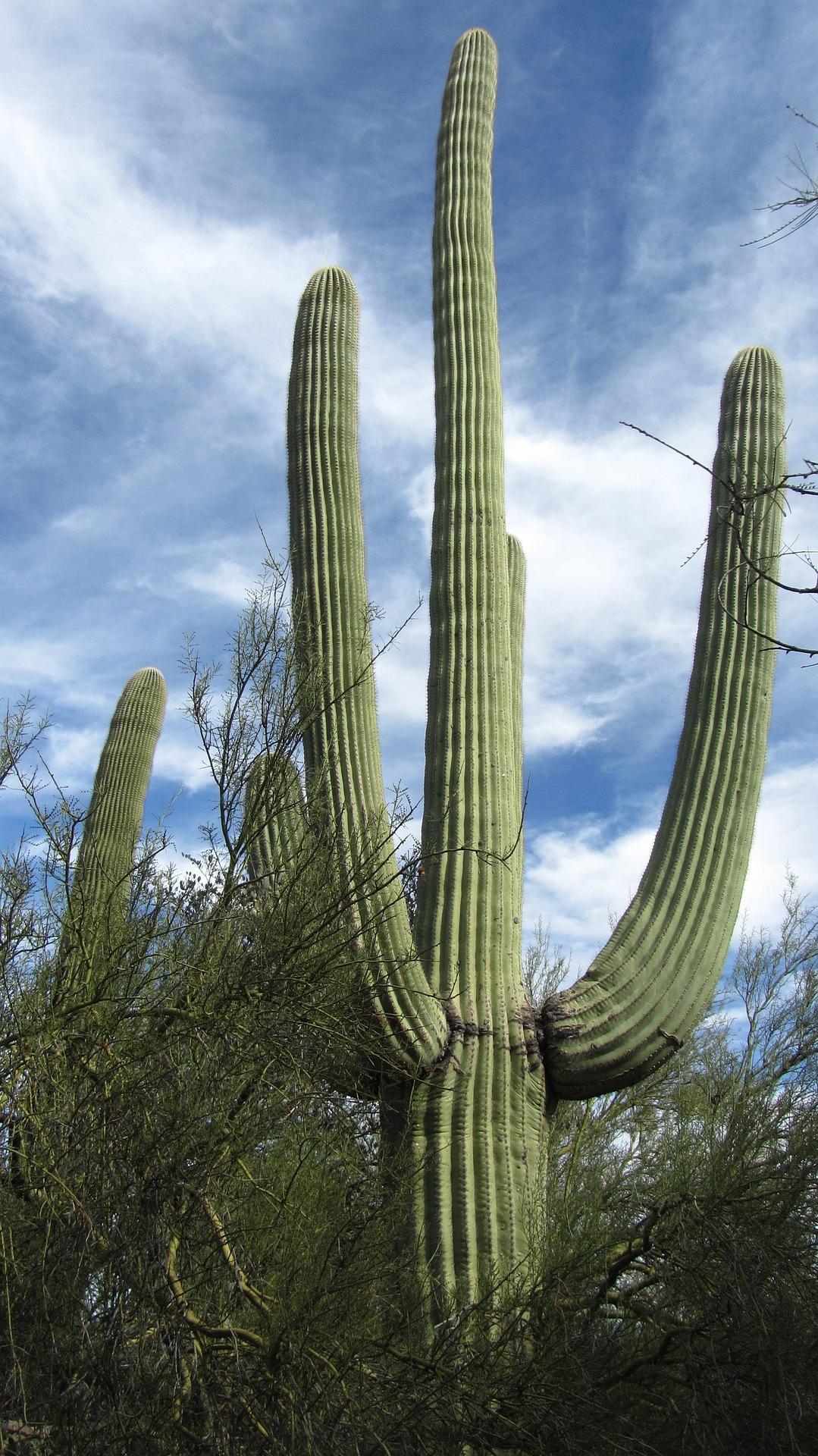
The Saguaro (Carnegiea gigantea) is a monotypic genus within the Cactaceae family, containing only this single species. Recognized as the largest cactus in North America, Carnegiea gigantea is considered a characteristic plant species of the Sonoran Desert and plays a vital role in the region’s ecological structure.
Adult individuals reach heights of 8 to 12 metres and occasionally grow up to 16 metres, with weights extending to 6 tonnes. The plant’s skeletal structure consists of 12 to 24 woody ribs arranged in a circular pattern that provides both strength and flexibility. Modified leaves known as spines, along with flowers and branches, develop from lateral buds called areoles, which can expand the stem diameter to up to 75 cm. The saguaro’s lifespan is generally estimated at 150 to 175 years, though some individuals have been documented to exceed 250 years. Growth rates are largely dependent on summer rainfall and occur vertically through meristematic tissue at the stem apex.【1】
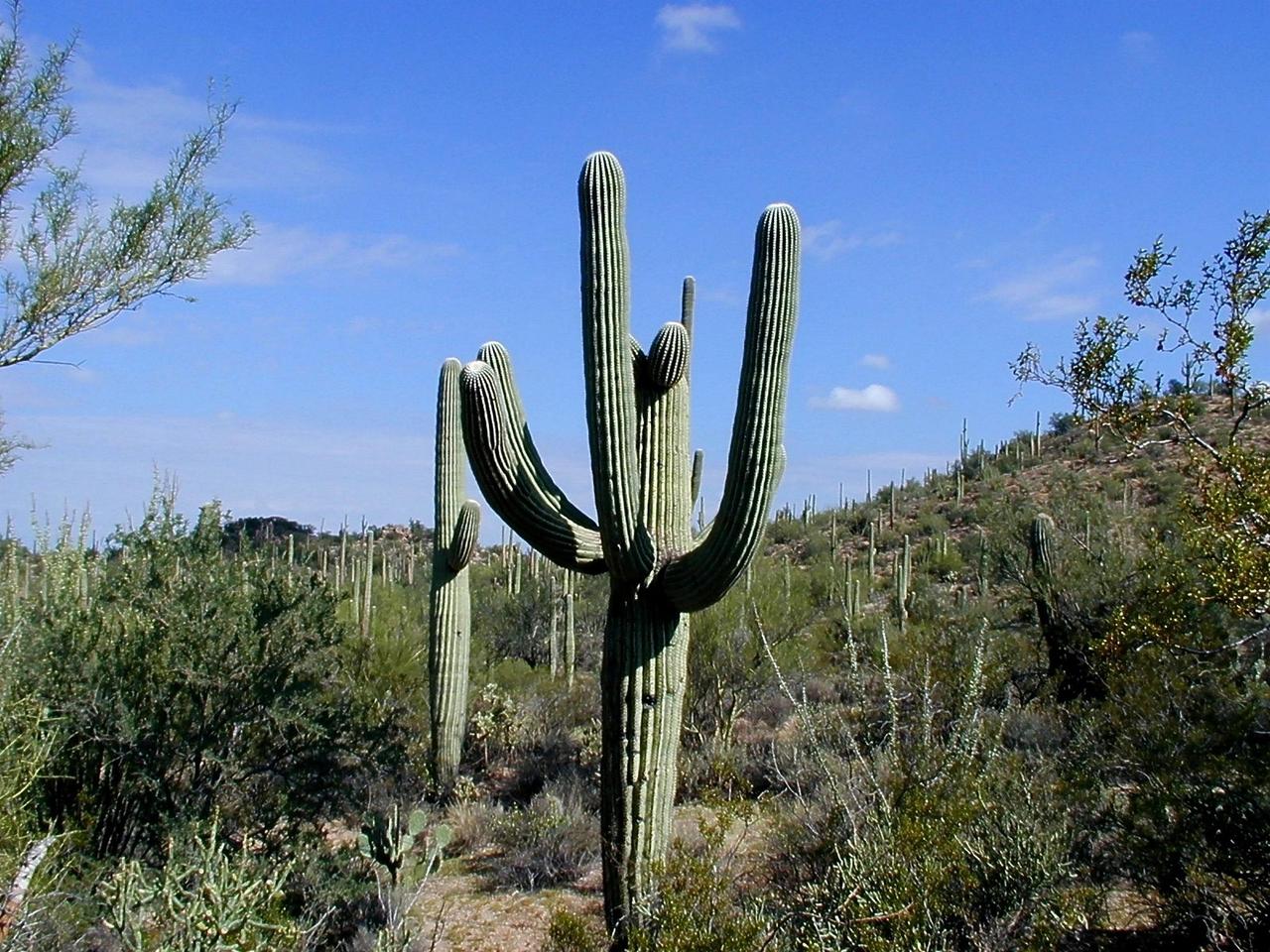
Saguaro (Pixabay)
The natural range of the species is confined to the Sonoran Desert. The northern boundary is determined by the duration and frequency of freezing temperatures, while the western limit is set by insufficient summer rainfall. Geological records indicate that Carnegiea gigantea survived the Pleistocene glacial periods in refugia in southern and central Sonora and rapidly expanded to its current northern limits approximately 11,000 years ago following glacial retreat. The highest population densities are observed in eastern regions where summer rainfall is abundant and nurse plant cover is optimal.
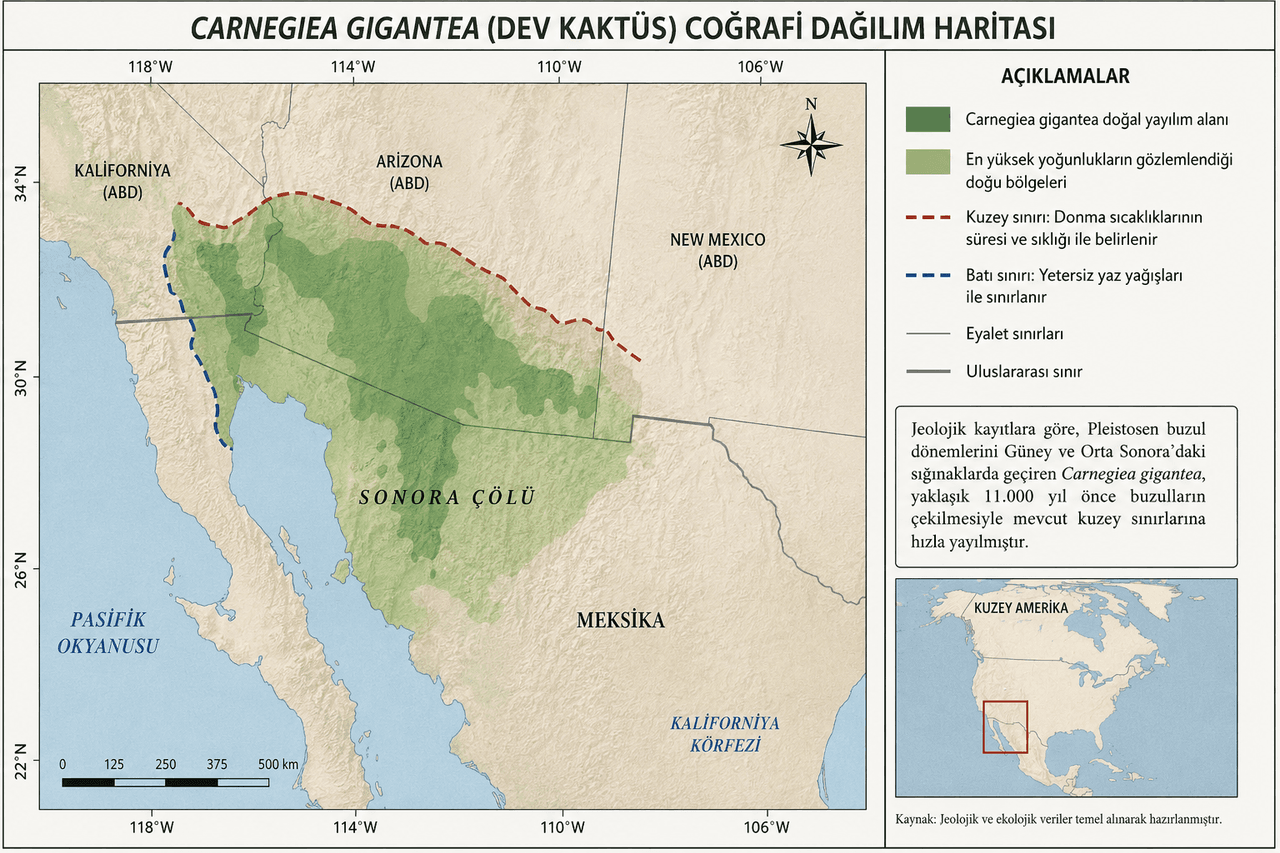
Geographic Distribution of the Saguaro (AI-Generated Image)
Carnegiea gigantea typically reaches sexual maturity between 50 and 100 years of age, when it attains a height of approximately 2 to 3 metres.【2】 Flowering occurs between May and June; waxy white flowers emerge from young areoles at the stem apex and produce large quantities of nectar and pollen. Branching increases reproductive capacity; each new branch raises the number of stem tips, nearly doubling seed production. Unlike other columnar cacti, northern populations have evolved a generalist pollination system involving birds and bees, due to declining bat populations in these areas.
The germination and survival of saguaro seeds are heavily dependent on facilitative interactions due to extreme desert conditions. Less than 0.1 percent of seeds survive; young seedlings face threats from extreme heat, desiccation, frost, and herbivory. To mitigate these challenges, the species typically establishes itself under the canopy of perennial trees or shrubs, benefiting from “nurse plant” protection. These plants raise nighttime temperatures by up to 4 °C in winter and reduce surface temperatures in summer, creating a favorable microclimate.【3】 However, as the cactus grows, its shallow, extensive root system competes with the nurse plant for water; this initially commensal relationship gradually becomes competitive and may ultimately lead to the death of the nurse plant.
Carnegiea gigantea is recognized as a keystone species in the Sonoran Desert. Over a hundred species of birds, mammals, insects, and reptiles rely on it for food, shelter, or nesting sites. Species such as the Gila woodpecker excavate nest cavities in the stem, which are later used by other animals for thermal protection. Additionally, its flowers and fruits, produced at the beginning of summer—the driest season—serve as a critical source of food and water for desert fauna. Even after death, the decaying plant provides habitat for a diverse community of arthropods and enhances soil fertility in the surrounding area.
Drought tolerance is achieved through the CAM photosynthetic pathway, which optimizes gas exchange and minimizes water loss. Spines on the areoles not only deter herbivores but also provide shade, lowering surface temperatures and acting as a thermal barrier that reduces heat loss in winter. Chemically, the species contains tetrahydroisoquinoline alkaloids such as carnegine, gigantine, and salsolidine. These alkaloids impart a bitter taste that reduces herbivory and create a physiological barrier that discourages direct consumption of the plant’s sap.
For indigenous peoples, particularly the Tohono O’odham and Pima nations, the saguaro has held central cultural and economic importance for thousands of years. Fruits are consumed fresh and also processed into syrup, jam, and dried food; seeds are ground into flour as a nutritional source. The most notable use is the fermentation of fruit syrup into a ceremonial wine used in rain rituals. Architecturally, the woody ribs have been used in house construction, fence building, and as splints. Additionally, the hardened callus tissue formed around woodpecker cavities has been utilized by indigenous communities as water containers and cups.
Albuquerque, Fabio, Blas Benito, Miguel Ángel Manuel Rodríguez, and Clinton Gray. "Potential Changes in the Distribution of *Carnegiea gigantea* Under Future Scenarios." *PeerJ* 6 (2018). Accessed June 14, 2026. https://doi.org/10.7717/peerj.5623
Bruhn, Jan G. "Carnegiea gigantea: The Saguaro and Its Uses." Economic Botany 25, no. 3 (1971): 320–29. Accessed June 14, 2026. https://www.jstor.org/stable/4253267
Drezner, Tanya D. "The Keystone Saguaro (*Carnegiea gigantea*, Cactaceae): A Review of Its Ecology, Associations, Reproduction, Limits, and Demographics." *Plant Ecology* 215, no. 6 (2014): 581–95. Accessed June 14, 2026. https://doi.org/10.1007/s11258-014-0326-y
Nobel, Park S. "Morphology, Nurse Plants, and Minimum Apical Temperatures for Young *Carnegiea gigantea*." *Botanical Gazette* 141, no. 2 (1980): 188–91. Accessed June 14, 2026. https://www.jstor.org/stable/2474851
Pixabay. "Kaktüs Saguaro Saguaro Milli Parkı." Pixabay, October 14, 2014. Accessed June 14, 2026. https://pixabay.com/tr/photos/kakt%C3%BCs-saguaro-saguaro-milli-park%C4%B1-534758/
Pixabay. "Saguaro Kaktüs Arizona Çöl Tucson." Pixabay, December 12, 2013. Accessed June 14, 2026. https://pixabay.com/tr/photos/saguaro-kakt%C3%BCs-arizona-%C3%A7%C3%B6l-tucson-232762/
[1]
Jan G. Bruhn, "Carnegiea gigantea: The Saguaro and Its Uses," Economic Botany 25, no. 3 (1971): 324, access date: 14 June 2026, https://www.jstor.org/stable/4253267
[2]
Jan G. Bruhn, "Carnegiea gigantea: The Saguaro and Its Uses," Economic Botany 25, no. 3 (1971): 324, access date: 14 June 2026, https://www.jstor.org/stable/4253267
[3]
Tanya D. Drezner, "The Keystone Saguaro (Carnegiea gigantea, Cactaceae): A Review of Its Ecology, Associations, Reproduction, Limits, and Demographics," Plant Ecology 215, no. 6 (2014): 586, access date: 14 June 2026, https://doi.org/10.1007/s11258-014-0326-y

Section | Magnoliophyta (Flowering Plants) | ||||||||
|---|---|---|---|---|---|---|---|---|---|
Class | Magnoliopsida (Dicotyledons) | ||||||||
Team | Caryophyllales | ||||||||
Family | Cactaceae | ||||||||
Genus | Carnegiea | ||||||||
Species | Carnegiea gigantea | ||||||||
Geographic Distribution | Southern Arizona (USA) Southeastern California (USA) State of Sonora (Mexico) | ||||||||
Conservation Status | It is under legal protection in the state of Arizona | ||||||||
No Discussion Added Yet
Start discussion for "Saguaro Cactus (Carnegiea gigantea)" article
General Morphological Characteristics
Geographic Distribution and Ecological Limitations
Reproductive Biology and Pollination Strategies
Nurse Plant Relationship and Early Life Cycle
Ecological Role: Keystone Species Status
Physiological Adaptations and Chemical Components
Ethnobotanical Significance and Cultural Uses