This article was automatically translated from the original Turkish version.
+1 More
Location | Canada Toronto | ||||||||
|---|---|---|---|---|---|---|---|---|---|
Function | Museum of Art, Culture and Natural History | ||||||||
Opening Date | 1914 | ||||||||
Construction Area | 17.280 m² | ||||||||
Modern Addition | Michael Lee-Chin Crystal | ||||||||
Architect of the Addition | Daniel Libeskind | ||||||||
Completion Date of the Addition | 2007 | ||||||||
Architect (Original Structure) | Darling and Pearson | ||||||||
Collection Content | Artworks, cultural objects, archaeological finds, minerals, fossils and biological specimens | ||||||||
Collection Content | Artworks Cultural objects Archaeological finds Minerals Fossils and biological specimens | ||||||||
Royal Ontario Museum, Canada’s Toronto city is a museum active in the fields of art, culture, and natural history. Opened to the public in 1914, the museum operates as one of Canada’s major cultural institutions through its collections spanning various periods and geographies. The museum comprises approximately 40 galleries and exhibition spaces; its collections consist of artworks, cultural artifacts, archaeological finds, minerals, fossils, and zoological specimens.
The Royal Ontario Museum’s collection structure encompasses diverse disciplines such as archaeology, paleontology, mineralogy, zoology, geology, art history, and cultural heritage. The museum also functions as an institution conducting research, conservation, and fieldwork.
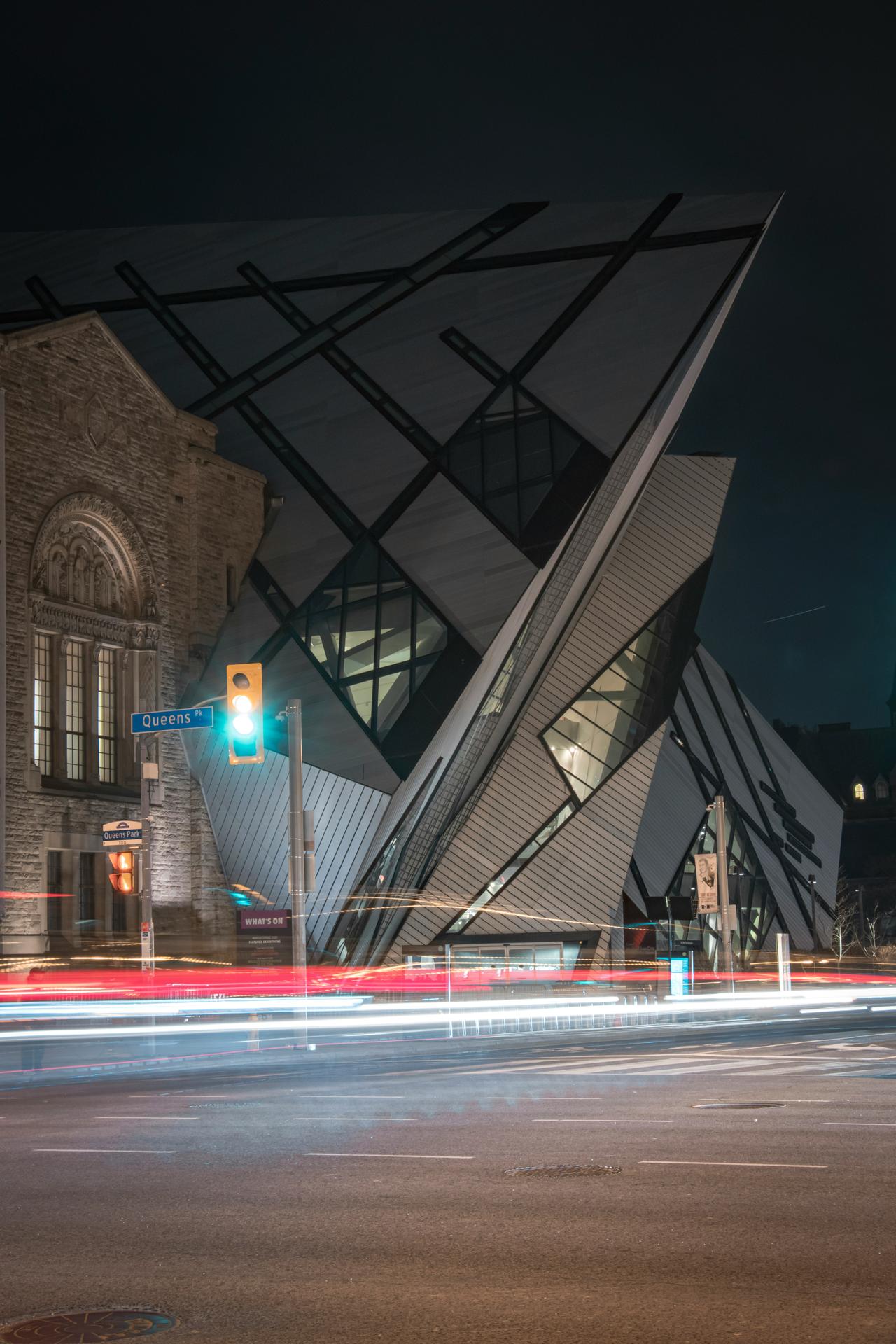
The museum complex consists of a historic building from the early 20th century and a contemporary addition completed in 2007, named the Michael Lee-Chin Crystal. The original structure was designed by the Toronto-based firm Darling and Pearson and constructed using yellow brick and terracotta materials. The Michael Lee-Chin Crystal, designed by Daniel Libeskind, is integrated with the existing historic building through its fragmented geometric form composed of glass, steel, and aluminum surfaces.
The Royal Ontario Museum was established in the early 20th century with the vision of creating an internationally significant museum in Toronto. Its founding process was shaped with financial support from the Government of Ontario and the University of Toronto. The institutional framework gained official status on 16 April 1912 with the passage of the ROM Act by the Ontario Legislature. The museum building was opened to the public on 19 March 1914 by the then Governor General of Canada, the Duke of Connaught.
The original building was designed by the Toronto-based architectural firm Darling and Pearson. Constructed using yellow brick and terracotta, it now forms the western wing of the museum complex. The main entrance is located on Bloor Street West. In its initial phase, the building housed five separate museums dedicated to archaeology, paleontology, mineralogy, zoology, and geology.
By the late 1920s, the expansion of collections and increased staff numbers rendered the existing space inadequate. In response, the first major expansion project was undertaken during the Great Depression. Local building materials were used extensively, and excavation work was carried out manually. A new wing oriented toward Queen’s Park was completed and opened in 1933.
In 1955, museums that had previously operated as separate entities were unified under a single institutional structure. In 1968, the Royal Ontario Museum separated from the University of Toronto and became an independent institution under the administration of the Province of Ontario.
In 1978, a comprehensive renovation program was launched to expand research activities, collection areas, and curatorial work. During this period, new curatorial centers, library spaces, and additional exhibition areas were created. The newly constructed exhibition space, known as the Terrace Galleries, was officially opened in 1984.
In 2007, the Michael Lee-Chin Crystal, designed by Daniel Libeskind, was added to the museum complex. This contemporary addition, composed of glass, aluminum, and steel surfaces, forms a multilayered architectural unity with the existing historic structure.
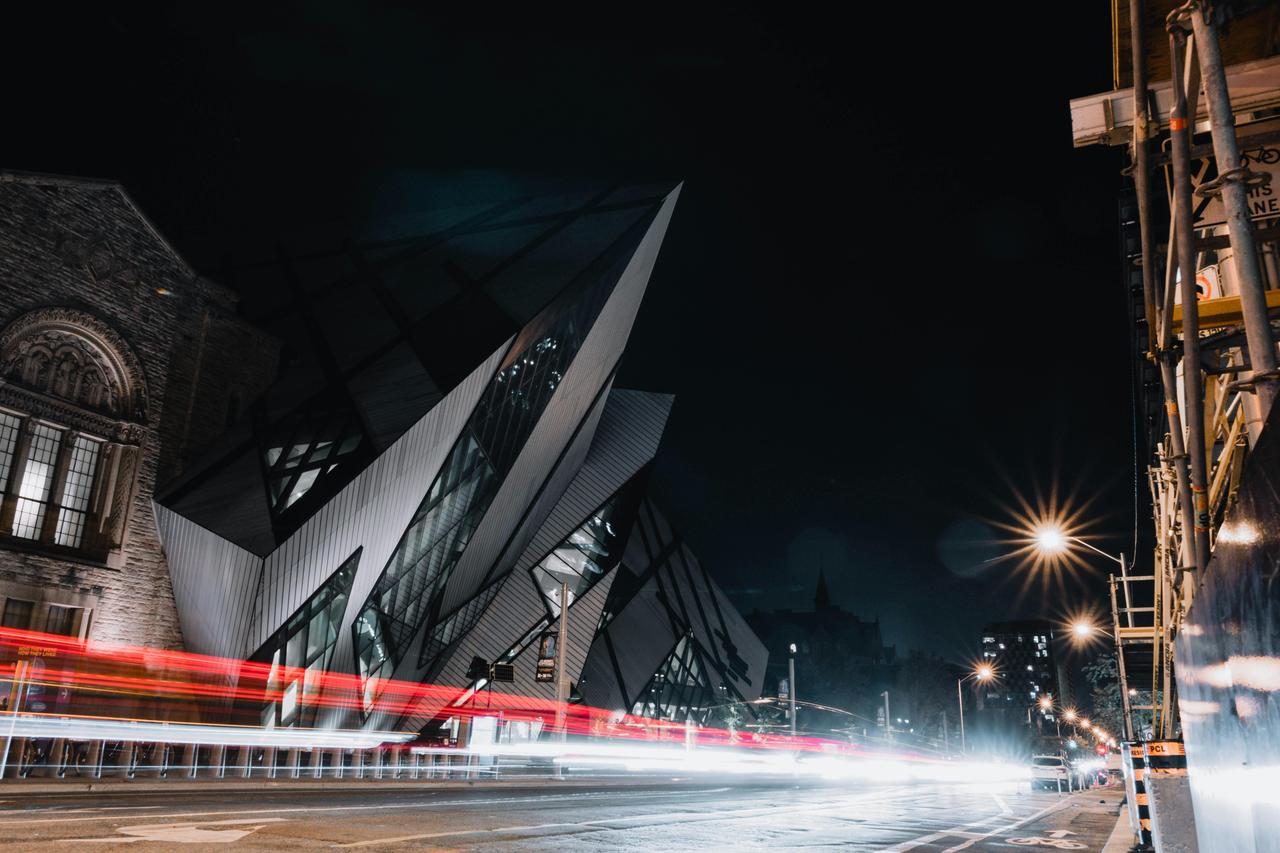
Royal Ontario Müzesi (pexels)
The Michael Lee-Chin Crystal is designed as a contemporary architectural intervention appended to the historic museum mass. Its formal language is derived from crystal specimens in the museum’s mineralogy collection. Daniel Libeskind has noted that the design process drew inspiration from the museum’s mineral collection and a specific crystal specimen studied in Berlin.
The addition is defined by fragmented geometric surfaces composed of glass, aluminum, and steel structural elements. Its formal language is associated with deconstructivist architecture. Sharp, fractured surfaces and prismatic volumes distinctly differentiate it from the existing stone-facaded historic structure.
Following its completion, the Michael Lee-Chin Crystal received several international and national awards:【1】
The museum’s original structures were built using Queenston Limestone and Credit Valley stone. The wings completed in 1914 and 1933 feature solid stone facades.
The Michael Lee-Chin Crystal addition employs a steel structural system with glass surfaces and aluminum cladding elements. The structure is formed by the assembly of multi-faceted geometric components. The contemporary addition’s outer shell consists of inclined surfaces referencing the crystalline form.
Controlled climate systems are implemented in the museum to preserve exhibition spaces. Some display cases in the Royal Ontario Museum operate with independent air supply systems separate from the main gallery environment. This approach is described as part of a conservation strategy to mitigate the effects of relative humidity and temperature fluctuations on the collections.
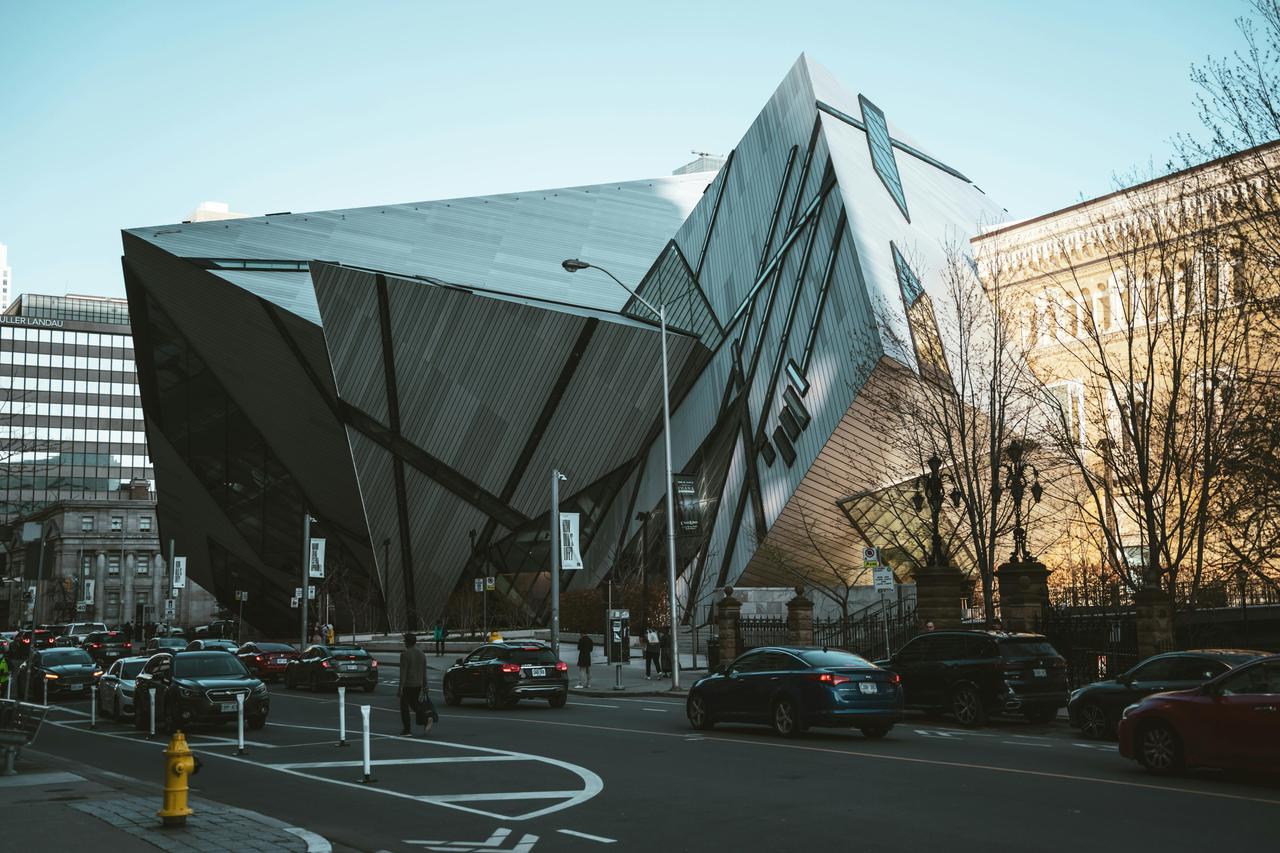
Royal Ontario Müzesi Dış Cephe Görünümü (pexels)
The museum contains galleries organized by different collections. The Teck Suite of Galleries: Earth’s Treasures section features an extensive collection of minerals, rocks, and precious metal specimens. Exhibition spaces are arranged as low-light galleries and rooms. The lighting system is designed to highlight the physical characteristics of the exhibited objects.
The approximately 6,900 ft² gallery area is divided into thematic sections such as mineral formation, chemical properties, meteorites, and geological classification. Galleries are named after individual donors. Additionally, special exhibition areas such as the Canadian Mining Hall of Fame and the Gallery of Gems and Gold are also housed within the museum.
The Royal Ontario Museum holds a collection of approximately one million objects. The collections cover natural history, geology, art history, and cultural heritage. Mining companies, researchers, and university-affiliated scientists have played a significant role in the development of the museum’s mineral collection.
Throughout the 20th century, institutional relationships developed between the museum and Canada’s mining sector. The museum’s geology laboratories conducted research on dating mineral reserves, and these studies were integrated into scientific processes linked to the mining industry.
Daniel Libeskind. “Royal Ontario Museum.” Studio Libeskind. Accessed May 14, 2026.https://libeskind.com/work/royal-ontario-museum/
Hirani, Alizain. “Kent, Şehir, Arabalar, Otomobiller.” Pexels. Accessed May 14, 2026.https://www.pexels.com/tr-tr/fotograf/kent-sehir-arabalar-otomobiller-12905870/
Leung, Patrick. “Yol, Işıklar, Gece, Binalar.” Pexels. Accessed May 14, 2026.https://www.pexels.com/tr-tr/fotograf/yol-isiklar-gece-binalar-9714512/
Padfield, Tim, and Karen Borchersen, ed. *Museum Microclimates: Contributions to the Copenhagen Conference, 19–23 November 2007*. Copenhagen: The National Museum of Denmark, 2007. Accessed May 14, 2026.
Qu, Lianhao. “Time-Lapse Photography of Cars on Road During Night-Time.” Unsplash. Accessed May 14, 2026.https://unsplash.com/photos/time-lapse-photography-of-cars-on-road-during-night-time-RJeaWuYcNWA
Royal Ontario Museum. “About the ROM.” Royal Ontario Museum. Accessed May 14, 2026.https://www.rom.on.ca/about-rom.
Sharp, Camille-Mary. “Architectural and Curatorial Extensions of Extraction at the Royal Ontario Museum.” Journal of the Society for the Study of Architecture in Canada 49, no. 1 (2024): 107–116. Accessed May 14, 2026.https://doi.org/10.7202/1115138ar
[1]
Daniel Libeskind, “Royal Ontario Museum,” Studio Libeskind, Erişim 14 Mayıs 2026, https://libeskind.com/work/royal-ontario-museum/.

Location | Canada Toronto | ||||||||
|---|---|---|---|---|---|---|---|---|---|
Function | Museum of Art, Culture and Natural History | ||||||||
Opening Date | 1914 | ||||||||
Construction Area | 17.280 m² | ||||||||
Modern Addition | Michael Lee-Chin Crystal | ||||||||
Architect of the Addition | Daniel Libeskind | ||||||||
Completion Date of the Addition | 2007 | ||||||||
Architect (Original Structure) | Darling and Pearson | ||||||||
Collection Content | Artworks, cultural objects, archaeological finds, minerals, fossils and biological specimens | ||||||||
Collection Content | Artworks Cultural objects Archaeological finds Minerals Fossils and biological specimens | ||||||||
No Discussion Added Yet
Start discussion for "Royal Ontario Museum" article
History
Design Approach
Construction System and Material Use
Interior Layout
Collection Structure and Institutional Development