


This article was automatically translated from the original Turkish version.
The respiratory system is responsible for taking in oxygen and removing carbon dioxide produced as a result of metabolism. It also plays an important role in maintaining the body’s acid-base balance.
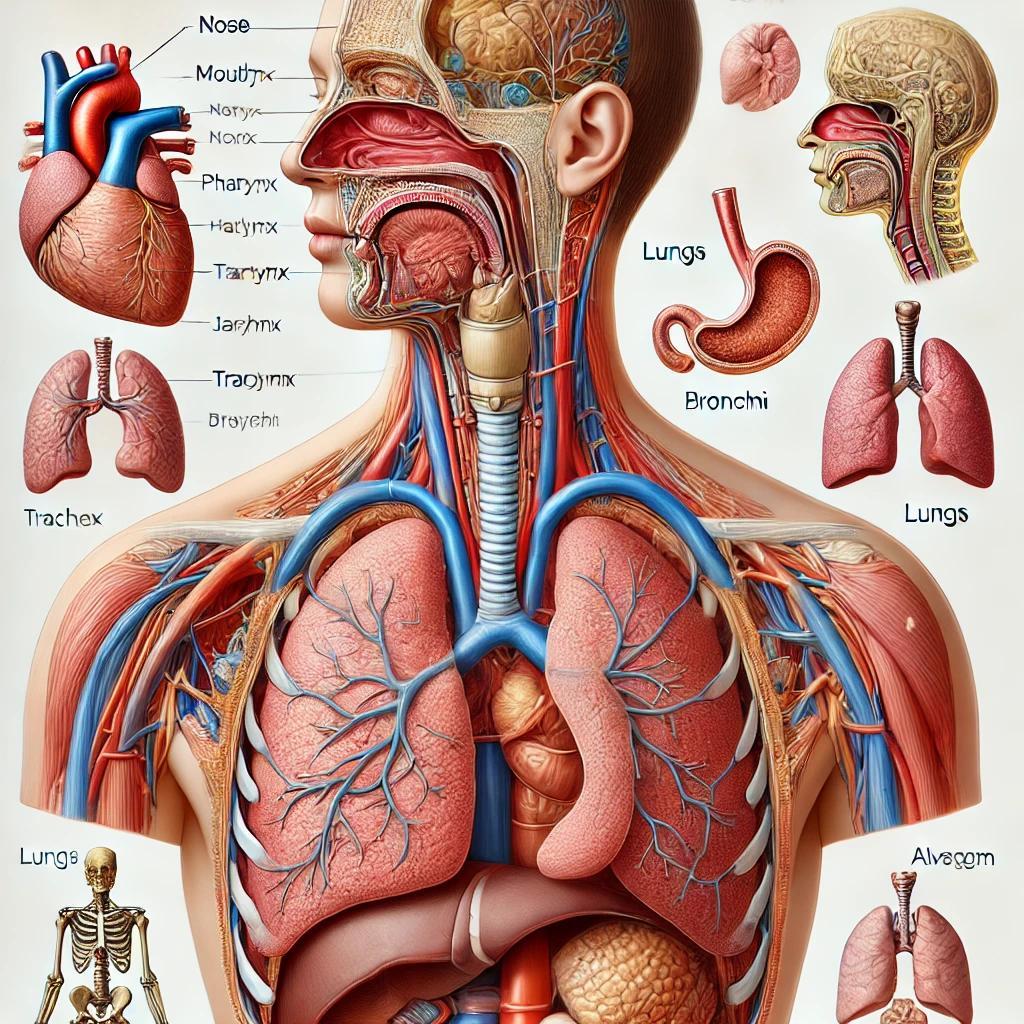
Respiratory system.
The respiratory system is vital for sustaining life. It performs the following key functions:
Oxygen Supply: Delivers oxygen to cells for energy production.
Carbon Dioxide Removal: Assists in the elimination of waste gas produced during metabolism.
Acid-Base Balance: Maintains the pH balance of the blood and supports homeostasis.
Nose and Sinuses: The nose serves as the entry point for air into the body. The mucus layer and hairs inside the nose filter out particles from the air. The sinuses help humidify and warm the inhaled air.
Pharynx and Larynx: The pharynx is the passage through which both food and air travel. The larynx is the region containing the vocal cords and plays a crucial role in breathing.
Trachea: The trachea is a flexible tube that transports air to the lungs. Inside the trachea, hair-like structures called cilia move mucus and trapped foreign particles upward to be cleared.
Bronchi and Bronchioles: The bronchi branch off from the trachea and carry air to each lobe of the lungs. Bronchioles are finer branches that end in alveoli.
Alveoli: These tiny air sacs within the lungs are the primary sites for gas exchange, where oxygen enters the bloodstream and carbon dioxide is expelled. Their thin walls provide an ideal environment for efficient gas exchange.
Lungs: The lungs are the main organs where oxygen is absorbed into the blood and carbon dioxide is expelled. Respiratory movements are facilitated by the diaphragm and the muscles between the ribs.
The respiratory system operates in two main stages:
External Respiration: Occurs in the lungs. Air enters through the nose, travels through the trachea, and reaches the bronchi and bronchioles before arriving at the alveoli. Here, oxygen diffuses from the alveolar walls into the blood, while carbon dioxide is released from the blood into the alveoli to be exhaled.
Internal Respiration: Oxygen carried by the blood is delivered to tissues via arteries and used by cells for energy production. The resulting carbon dioxide is transported back to the lungs via veins and expelled from the alveoli.
Numerous upper and lower respiratory tract diseases affect the respiratory system. Conditions such as the common cold, influenza, pharyngitis, sinusitis, and even sleep apnea are among the many possible disorders. Some serious conditions include:
Britannica. Accessed 2025.Human respiratory system
Cleveland Clinic. Accessed 2025.Respiratory System

Function of the Respiratory System
Components of the Respiratory System
How the Respiratory System Works
Diseases Affecting the Respiratory System
How to Protect the Respiratory System