


This article was automatically translated from the original Turkish version.
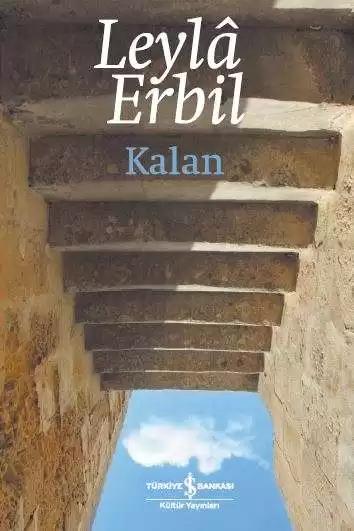
Remaining
Author(s) | Leyla Erbil | ||||||||
|---|---|---|---|---|---|---|---|---|---|
First Edition | 2011 | ||||||||
Publisher(s) | Türkiye İş Bankası Kültür Yayınları | ||||||||
Number of Pages | 239 | ||||||||
Type(s) | Novel | ||||||||
Technical | Postmodern | ||||||||
Leyla Erbil’s 2011 novel Kalan is a postmodern narrative that interrogates existential dilemmas of the individual collective memory and female identity. The novel takes shape through the protagonist Lahzen’s search for selfhood and offers a multilayered critique of social and political reality.
Kalan centers on Lahzen a female writer living in Istanbul’s Fener neighborhood as she confronts her past and society. The narrative progresses from childhood memories to a quest for truth that intertwines with Lahzen’s descent into mental instability. Central themes include Türkiye’s political history social pressures on women relations with minorities suppression of memory and the reconstruction of personal recollection.
The novel breaks from classical narrative structures and establishes a genreless language. Leyla Erbil develops a style that challenges literary boundaries drawing on the unconscious and viewing madness as a creative potential by deliberately disrupting grammar and syntax. The text’s language mirrors the protagonist’s psychological fragmentation through comma-laden exclamations fragmented sentences italicized text extended interior monologues and varied orthographic techniques.
The novel consists of four main sections: “Preliminary Note” “First Chapter” “Second Chapter” and “List of Names”. This structure disrupts traditional linear progression to create a layered织构 interwoven with temporal shifts. The first chapter portrays Lahzen’s childhood and her encounters with social events while the second deepens interior monologues as Lahzen’s inner voice becomes dominant.
The character of Lahzen embodies both an individual female identity and a collective intellectual memory. Erbil grounds the character’s existential inquiries in Søren Kierkegaard’s triad of “aesthetic ethical religious”. However Lahzen approaches Kierkegaard’s religious ideal of self with critical distance aligning more closely with Sartre’s atheist stance. This reflects the character’s belief in the subjectivity of truth and her anguish over the impossibility of attaining it.
The novel is rich with references to Türkiye’s recent history: the September 6–7 Events the September 12 Coup the Dersim Massacre and the May 1 1977 incident. These events become fundamental components of the narrative through the trauma embedded in individual memory. Erbil produces a “writing against forgetting” to revive collective memory. In this sense Kalan is not merely a personal narrative but also a call for societal reckoning.
Kalan stands as one of the strongest examples of the postmodern novel in Turkish literature. While treating the novel’s language as an instrument of truth seeking Erbil presents a narrative that resists social dogmas literary traditions and patriarchal discourse. In the novel genrelessness political discourse feminist consciousness and psychoanalytic depth are intricately interwoven. For these reasons Kalan is regarded as both a novel of individual liberation and a novel of societal confrontation.
Demirtaş, Mustafa. “Metnin Türle İmtihanı: Leylâ Erbil ve Türsüzlüğün Dili.” *Monograf: Edebiyat Eleştirisi Dergisi* 6 (2016): 41–51. Accessed June 19, 2025. https://www.academia.edu/27737406/Metnin_T%C3%BCrle%C4%B0mtihan%C4%B1_Leyl%C3%A2_Erbil_ve_T%C3%BCrs%C3%BCzl%C3%BC%C4%9F%C3%BCn_Dili_Mustafa_Demirta%C5%9F_
Erbil, Leyla. Kalan. 11. bs. İstanbul: Türkiye İş Bankası Kültür Yayınları, 2018.
Erdem, M. Yonca. “Leyla Erbil’in Kalan Romanında Benlik Arayışı.” *Türk Dili* 69, no. 822 (June 2020): 86–91. Accessed June 19, 2025. https://www.academia.edu/48899606/Leyl%C3%A2_Erbilin_Kalan_Roman%C4%B1nda_Benlik_Aray%C4%B1%C5%9F%C4%B1
Kırılmış, İlknur Tatar. “Soren Kierkegaard’ın Varoluş Felsefesinin Postmodern Kurmacadaki Yansıması: Leyla Erbil’in Kalan Romanı.” *Journal of Turkish Language and Literature* 4, no. 4 (2018): 982–1001. Accessed June 19, 2025. https://dergipark.org.tr/tr/pub/littera/issue/40098/454840
Yüce, Harika Karavin. “Leyla Erbil’in Ünlü Romanı Kalan’ın Biçembilimsel Açıdan İncelenmesi.” *International Journal of Languages’ Education and Teaching* 9, no. 1 (2021): 111–129. Accessed June 19, 2025. https://dergipark.org.tr/tr/pub/ijlet/article/1427664
Remaining
Author(s) | Leyla Erbil | ||||||||
|---|---|---|---|---|---|---|---|---|---|
First Edition | 2011 | ||||||||
Publisher(s) | Türkiye İş Bankası Kültür Yayınları | ||||||||
Number of Pages | 239 | ||||||||
Type(s) | Novel | ||||||||
Technical | Postmodern | ||||||||
Subject and Theme
Form and Narrative Features
Fictional Structure
Character and Philosophical Background
Historical and Social Context
Literary and Critical Significance