


This article was automatically translated from the original Turkish version.
Ramazan Helvası is a traditional sweet widely consumed in the Bergama region of Türkiye, also known as Zülbiye. This dessert, commonly served on iftar tables during the month of Ramadan, is prepared using basic ingredients such as flour, sugar, and fat, and is distinguished by its unique texture. Ramazan helvası, as part of Bergama’s cultural heritage, is enjoyed by both locals and visitors.
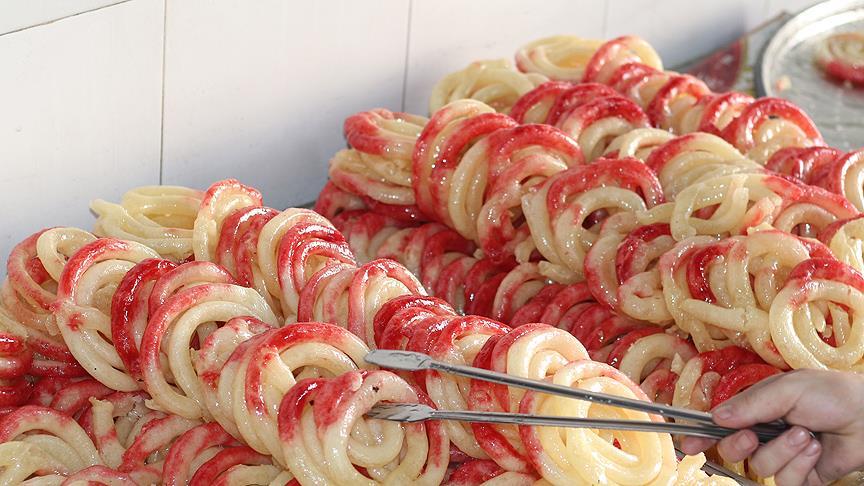
Ramazan Helvası (AA)
The origins of Ramazan helvası trace back to traditional Turkish sweets rooted in Ottoman cuisine. According to legend, a sweetmaker from Bergama who served in the military in Damascus brought back zülbiye upon his return, and over time, through minor refinements, it evolved into the dessert now closely associated with Ramadan. 【1】During this month, helva is preferred as a light and energy-boosting treat.
Ramazan helvası is prepared using a simple yet meticulous recipe. Its basic ingredients include flour, butter, sugar, and water. Some recipes also incorporate milk or grape molasses. The preparation begins by mixing starch, flour, water, and yeast to form a fluid batter, which is then left to rest and ferment overnight in a large container. Once the batter has risen, it is transferred into special molds with multiple exit holes and a piston mechanism. The batter is then extruded through these holes in ring shapes and fried in hot oil until the exterior becomes crisp.
The traditional preparation method involves the following steps:
In Bergama, zülbiye is typically served either shaped in molds or sliced on plates. The dessert has a slightly moist, melt-in-the-mouth texture. To enjoy its best flavor, it should be consumed on the same day it is prepared, before it hardens.
Ramazan helvası in Bergama is more than just a dessert; it carries social and religious significance. It is frequently served on iftar tables throughout Ramadan and strengthens community bonds through the tradition of sharing. This sweet is also offered during local festivals and special occasions, making it an essential part of the region’s gastronomic identity. Moreover, the simplicity and ease of preparation of zülbiye have made it an accessible delicacy for people from all walks of life.
Anadolu Ajansı. "Bergama’nın Ramazan Geleneği: Zülbiye." Accessed May 24, 2025. https://www.aa.com.tr/tr/yasam/bergamanin-ramazan-gelenegi-zulbiye/597393.
Anadolu Ajansı. "Şam'dan İzmir'e Uzanan Lezzet 'Zülbiye' İftar Sofralarını Tatlandırıyor." Accessed March 17, 2026. https://www.aa.com.tr/tr/kultur-sanat/samdan-izmire-uzanan-lezzet-zulbiye-iftar-sofralarini-tatlandiriyor/2210782
Bergama Belediyesi. "Bergama’mızın Önemli Bir Geleneği Ramazan Helvası (Zülbiye) İlgi Çekmeye Devam Ediyor." Accessed May 24, 2025. https://bergama.bel.tr/bergamamizin-onemli-bir-gelenegi-ramazan-helvasi-zulbiye-ilgi-cekmeye-devam-ediyor
Türkiye Turizm Ansiklopedisi. "Bergama Ramazan Helvası." Accessed March 17, 2026. https://turkiyeturizmansiklopedisi.com/bergama-ramazan-helvasi
[1]
Anadolu Ajansı. “Şam’dan İzmir’e Uzanan Lezzet ‘Zülbiye’ İftar Sofralarını Tatlandırıyor.” Erişim 17 Mart 2026. https://www.aa.com.tr/tr/kultur-sanat/samdan-izmire-uzanan-lezzet-zulbiye-iftar-sofralarini-tatlandiriyor/2210782

No Discussion Added Yet
Start discussion for "Ramazan Halva (Zülbiye)" article
History and Origins
Preparation and Ingredients
Cultural Significance and Usage