


This article was automatically translated from the original Turkish version.
Psychosomatic is a term of Greek origin, formed by the combination of “psycho” (soul) and “soma” (body). This concept is used to explain the influence of mental processes on physical health. Psychosomatic illnesses are characterized by the manifestation of emotional stress, trauma, or psychological disorders as physical symptoms. Psychological pressures experienced by an individual can directly affect the somatic (bodily) system and lead to various illnesses.
Psychosomatic illnesses are characterized by the manifestation of emotional stress, trauma, or psychological disorders as physical symptoms. Psychological pressures experienced by an individual can directly affect the somatic (bodily) system and lead to various illnesses. These illnesses often present with physical symptoms such as gastrointestinal problems, skin conditions, headaches, or heart palpitations among others.
The concept of psychosomatic illness extends back to Ancient Greece. Plato emphasized the inseparable connection between mind and body and argued that physical illnesses could originate from psychological causes. Hippocrates, through his “Theory of the Four Humors,” stated that physical health is influenced by mental state and suggested that emotional conditions such as anger and melancholy could lead to specific diseases. Socrates supported a holistic view of health by stating, “It is inappropriate to treat a body without a mind or a mind without a body.” Franz Alexander and Helen Flanders Dunbar, researchers of the 20th century, made significant contributions to psychosomatic medicine and established direct links between specific psychological conditions and physical illnesses.
Psychosomatic illnesses arise when individuals express emotional, psychological, and environmental stress and anxiety through physical symptoms.
Multiple factors contribute to the development of psychosomatic illnesses:
A. Psychological Factors
B. Physiological Factors
C. Environmental Factors
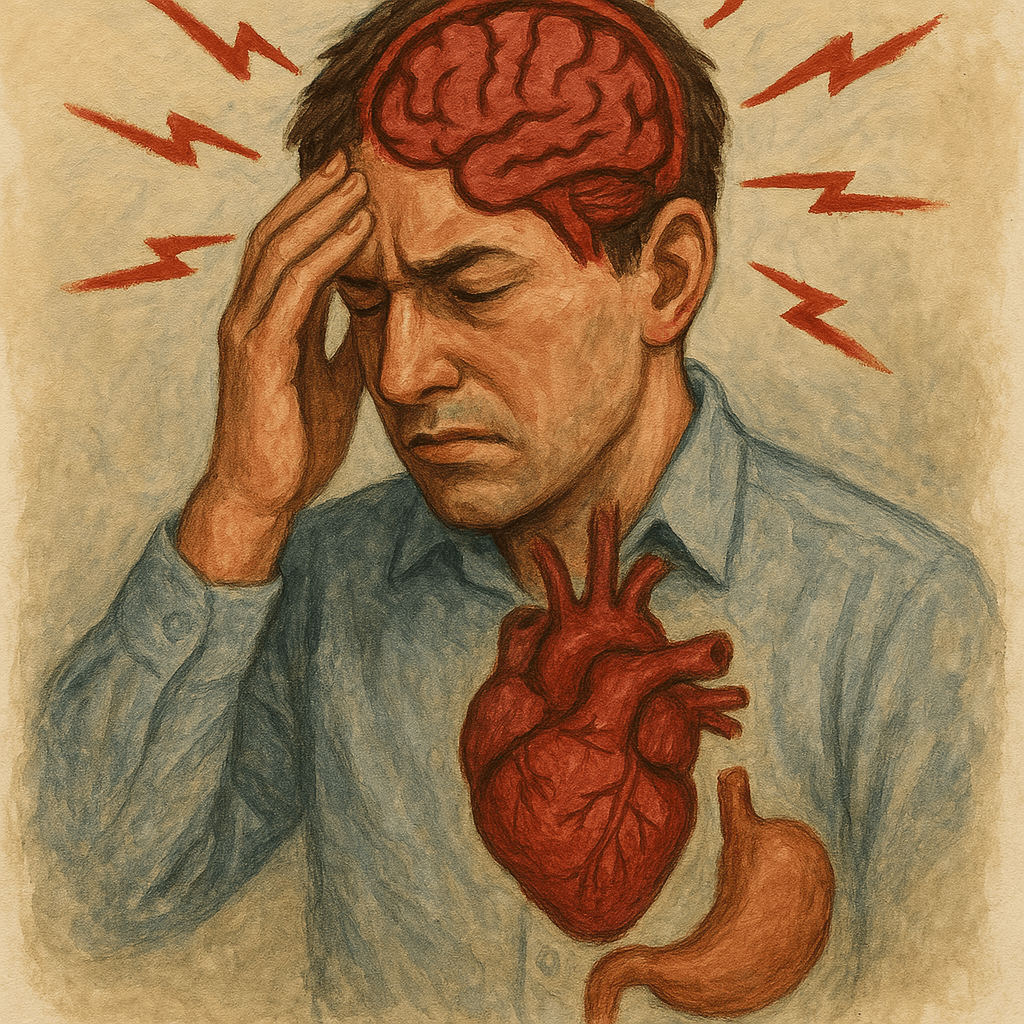
An image illustrating psychosomatic illness. Generated by artificial intelligence.
Psychosomatic illnesses are generally classified according to the affected organ system:
The diagnosis of psychosomatic illnesses requires both medical and psychological evaluations.
The treatment of psychosomatic illnesses must address both physical and psychological aspects together:
Psychotherapy
Medical Treatment
Alternative and Supportive Approaches
Psychosomatic illnesses represent a crucial topic demonstrating the profound connection between mental and physical health. It is well established that stress, trauma, and emotional conflicts can lead to physical diseases. Therefore, a holistic approach to treatment is necessary to preserve both psychological and physical well-being.
Warning: The content contained herein is provided solely for general encyclopedic information purposes. The information presented here must not be used for diagnosis, treatment, or medical advice. Before making any decisions regarding health, you must consult a physician or qualified healthcare professional. The author of this article and KÜRE Encyclopedia assume no responsibility for any consequences arising from the use of this information for diagnostic or therapeutic purposes.
DergiPark. "A Study on the Historical Development of Turkish Music." Accessed April 4, 2025.https://dergipark.org.tr/en/download/article-file/343968
Karslı, E. "Kişilerarası Tarz, Kendilik Algısı, Öfke ve Psikosomatik Bozukluklar." Psikoloji Dergisi 15, no. 3 (2020): 45-60.
Çetin, C., and N. B. Kurt. "Mobbing ve Sonuçlarından Biri: Psikosomatik Belirtiler." Afyon Kocatepe Üniversitesi Sosyal Bilimler Dergisi 18, no. 2 (2016): 29-49.

Historical Development
Characteristics of Psychosomatic Illnesses
Causes of Psychosomatic Illnesses
Classification of Psychosomatic Illnesses
Diagnosis of Psychosomatic Disorders
Treatment Methods