


This article was automatically translated from the original Turkish version.
+2 More
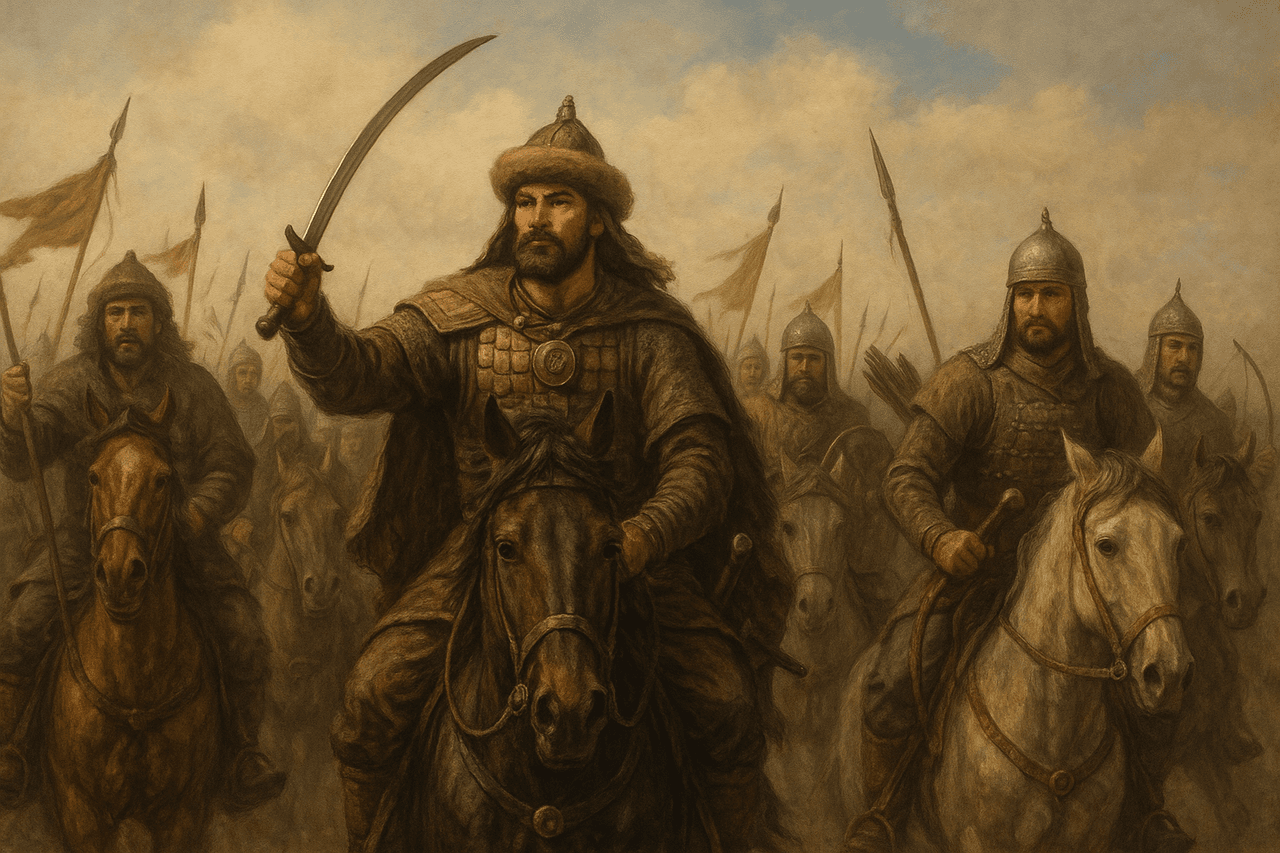
Pre-Islamic Turkish Periods
Turkish Name | Strong - Türeli; First State Name Among the Göktürks | ||||||||
|---|---|---|---|---|---|---|---|---|---|
Homeland | Central Asia – Steppe Culture / Nomadic Life | ||||||||
State | Khaganate Administration / Kut Belief / Kurultay Assembly | ||||||||
Major States | Huns – Mete Khan Uyghurs – Settled Life Written Culture Decimal Military System Göktürks – Orkhon Inscriptions | ||||||||
Religion | Manichaeism–Buddhism Among the Uyghurs Shamanism Sky God | ||||||||
Writing | Göktürk Alphabet, Orkhon Inscriptions | ||||||||
Economy | Agriculture and Trade Among the Uyghurs Animal Husbandry | ||||||||
Art | Animal Style, Fresco, Miniature, Pastoral Elements | ||||||||
Calendar | Turkish Zodiac with 12 Animals | ||||||||
Pre-Islamic Turkic State is a historical-political concept used to describe the political organization, social structure, belief system, and cultural production of the earliest Turkic states that emerged in central Asia. This concept occupies a place in historiography both as a period designation and as an original model of statehood. The pre-Islamic Turkic state was an institutionalized model of statehood formed by the convergence of various Turkic tribes centered in Central Asia, characterized by its political, social, cultural, and religious structures. The system of rule based on lineage, the organizational framework suited to nomadic life, and the political legitimacy derived from belief systems formed the fundamental elements of this state structure. This model contains the origins of many elements that would later guide subsequent Turk-Islamic states.
The major Turkic states established during the pre-Islamic period are as follows:
The first known large Turkic state reached its peak of power during the reign of Mete Han.
Emerging from the division of the Asian Huns, they were the precursor to Turkic groups that migrated into Europe.
Under the leadership of Attila, they exerted pressure on the Western Roman Empire and were influential in Central Europe.
Founded by Bumin Khagan; it was the first state to use the name “Turk” officially.
Founded by Kutluk Khagan (Ilterish); the Orkhon Inscriptions belong to this period.
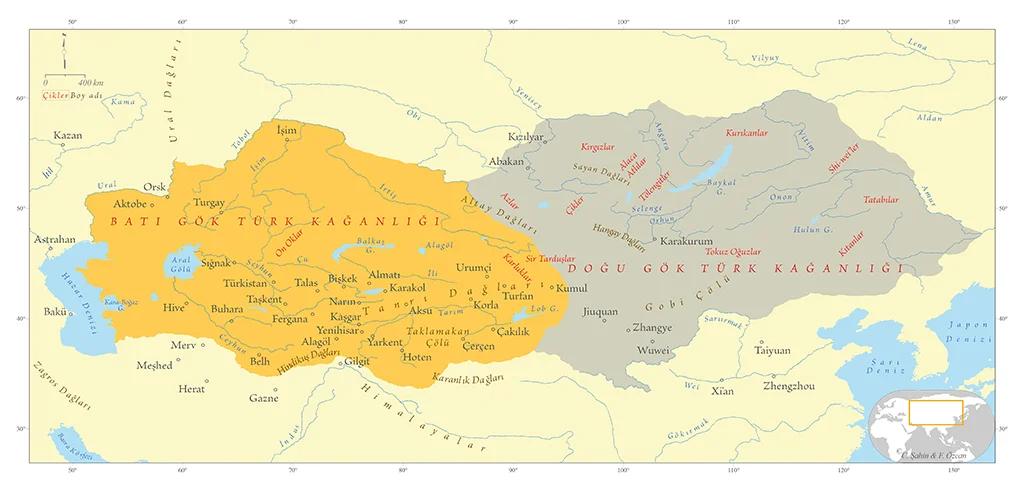
Göktürkler Haritası (Türk Maarif Ansiklopedisi)
Developed under the influence of Manichaeism and Buddhism and became the first Turkic state to adopt a sedentary lifestyle.
Ruled in Central Europe, influenced the Slavs, and waged war against the Franks.
Active in the Caucasus and the northern Black Sea region; adopted Judaism as its official religion.
Paved the way for the foundation of the Karakhanids and played a role in the collapse of the Uyghur Khaganate.
Overthrew the Uyghur Khaganate and established dominance in Central Asia.
Lived in the northern Black Sea region and established relations with the Byzantines.
Spread from the northern Black Sea to Central Europe and eventually merged into the Golden Horde.
Laid the groundwork for the emergence of the Seljuks and other Turkic states of Oghuz origin.
In pre-Islamic Turkic states, political organization was led by a ruler bearing the title of Khagan. The Khagan’s authority was based on the concept of “kut,” believed to be granted by Gök Tanrı (Sky God). Alongside the Khagan, state administration included officials such as Hatun, the kurultay (council of elders), yabgu, shad, tigin, aygucı, buyruk, bitikçi, tamgacı, tudun, and yargucı. The administrative system was based on the “dual organization” principle: the country was divided into eastern and western halves, with the eastern part, the center, governed by the Khagan and the western part typically by the yabgu. The kurultay was a council attended by tribal chieftains and state dignitaries where major political and military decisions were made.
Society had an integrated structure based on a military organization. According to the “army-nation” concept, every individual was considered a soldier from birth. The army was organized according to the “decimal system.” The Khagan was the supreme commander of the army. Among military tactics, the “Turan Tactic,” which involved surrounding and annihilating the enemy, was prominent. The core of the army consisted of mounted units.
The economy of pre-Islamic Turkic societies was primarily based on animal husbandry. Animals such as horses, sheep, and camels were vital for both sustenance and trade. Limited agricultural activities were carried out in winter pastures. During the Uyghur period, with the adoption of a sedentary lifestyle, significant progress was made in agriculture and trade. The Turks established trade relations with states such as China, Iran, and Byzantium due to their strategic position along the Silk Road.
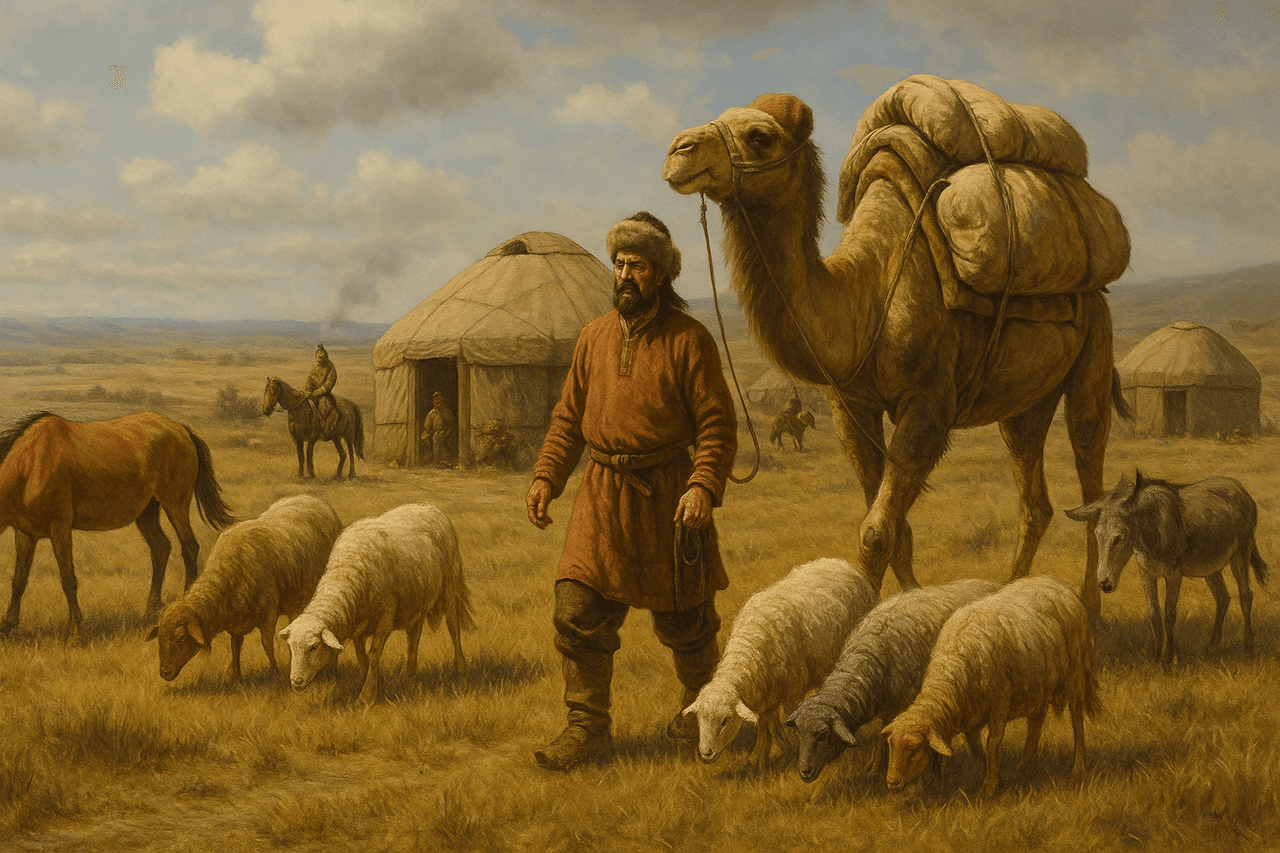
İslam Öncesi Türklerde Ekonomi Tasviri (Yapay Zeka İle Oluşturulmuştur)
The belief in Gök Tanrı formed the core religious framework of pre-Islamic Turks. Ancestor worship, nature spirits, and beliefs in local deities were also significant. Funeral rites were called “yuğ,” and stone monuments known as “balbal” were erected at the graves of the deceased. Religious ceremonies were conducted by spiritual figures known as Kam or Baksı, who were believed to communicate with spirits. The Uyghurs adopted Manichaeism and Buddhism, introducing religious diversity. The Khazars embraced Judaism and the Bulgars adopted Christianity. From the 9th century onward, some tribes began to embrace Islam.
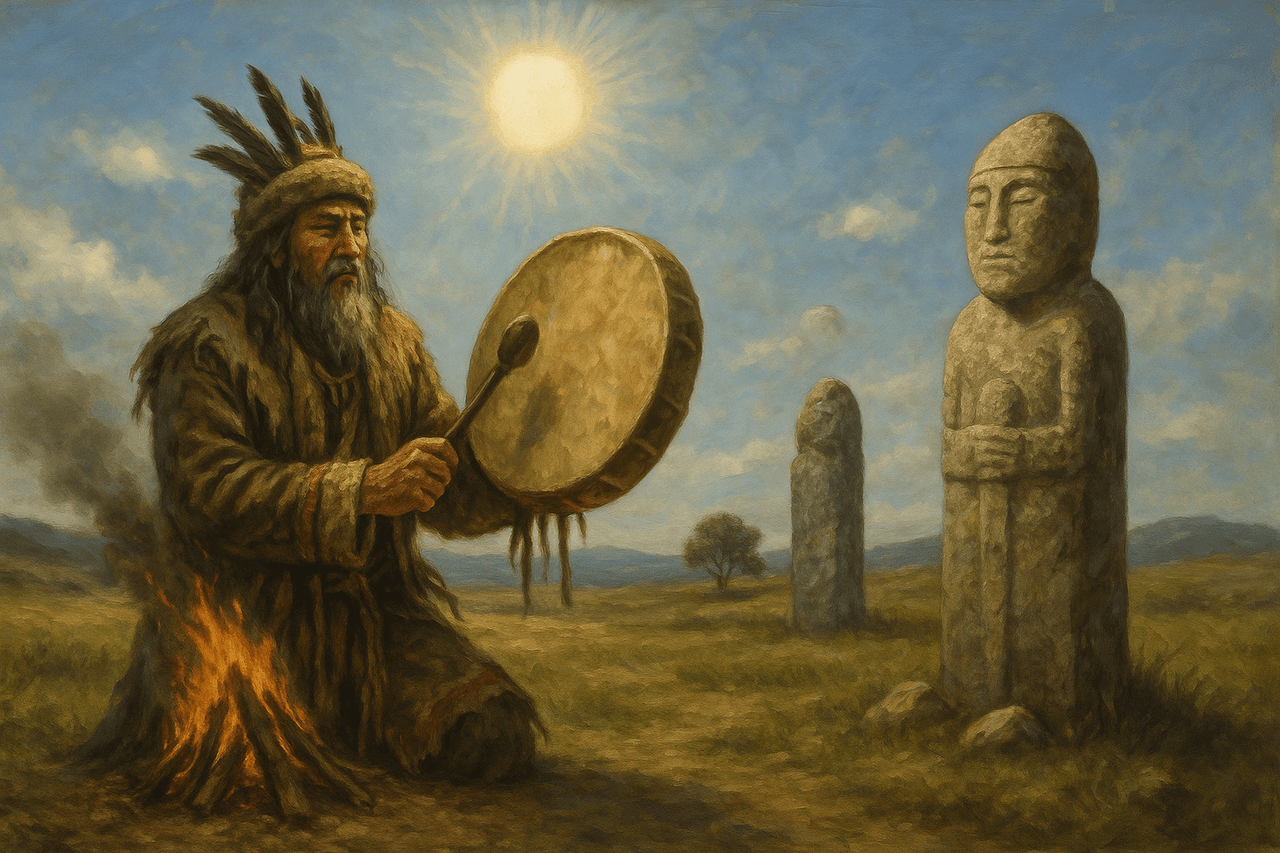
İslam Öncesi Türklerde Bir Şaman Tasviri (Yapay Zeka İle Oluşturulmuştur)
The Orkhon Inscriptions, written in the Göktürk alphabet, are among the oldest written records in Turkic history. These inscriptions were erected in honor of Bilge Khagan, Kül Tigin, and Tonyukuk. The texts provide information on political organization, ethical concepts, and foreign relations. The Uyghurs developed the Uyghur alphabet, inspired by the Sogdian script, and produced texts with Manichaean and Buddhist content. They were also the first Turkic community to print books using woodblock printing. Oral cultural traditions continued through proverbs (sav), elegies (sagu), ceremonial poems (koşuk), and epics. Epics such as Oghuz Khagan, Ergenekon, Türeyiş, and Göç played a vital role in transmitting collective memory and historical consciousness.
Artistic expression developed in accordance with the nomadic lifestyle, and portable art objects became widespread. The animal style was particularly prominent. With the adoption of a sedentary lifestyle, the Uyghurs made advances in architecture and in the fields of fresco painting, miniature art, and bookbinding.
The pre-Islamic Turkic state established a coherent and functional system encompassing political authority, legal order, belief structures, and cultural production. This system continued to exert influence in subsequent periods throughout the historical continuity of the Turkic peoples.
Ahmet Yadı. *İslamiyet Öncesi Türk Tarihinin Kaynakları*. Ondokuz Mayıs Üniversitesi, Accessed May 23, 2025.https://avys.omu.edu.tr/storage/app/public/ahmet.yadi/144947/İslamiyet%20Öncesi%20Türk%20Tarihinin%20Kaynakları.pdf
Demir, Süleyman. “İslamiyet Öncesi Türk Tarihi Üzerine Bazı Tespitler.” *Atatürk Üniversitesi Türkiyat Araştırmaları Dergisi* 60 (2017): 159–176. Accessed May 23, 2025.https://dergipark.org.tr/tr/pub/atdd/issue/42204/511622
Demirtaş, Burcu. “Türk Kültürünün Tarihsel Gelişimi ve Değerleri.” *Uluslararası Sosyal Araştırmalar Dergisi* 12, no. 66 (2019): 1243–1249. Accessed May 23, 2025.https://dergipark.org.tr/en/download/article-file/1376319
Ministry of Culture and Tourism. "Anadolu Öncesi Türk Kültürü." *Kültür Portalı*. Accessed May 23, 2025.https://www.kulturportali.gov.tr/portal/anadolu-oncesi-turk-kulturu
Ministry of Culture and Tourism. "Türk Kültürü." T.C. Kültür ve Turizm Bakanlığı Resmi Web Sitesi. Accessed May 23, 2025.https://www.ktb.gov.tr/TR-96255/turk-kulturu.html
Taşağıl, Ahmet. “Göktürkler.” *Türk Maarif Ansiklopedisi*. Accessed June 14, 2025.https://turkmaarifansiklopedisi.org.tr/gokturkler
Taşağıl, Ahmet. “Türk.” *TDV İslâm Ansiklopedisi*. Accessed June 14, 2025.https://islamansiklopedisi.org.tr/turk#1-turk-soyu-ve-tarihi-ortaya-cikisi-yayilisi-kollari-kurduklari-devletler

Pre-Islamic Turkish Periods
Turkish Name | Strong - Türeli; First State Name Among the Göktürks | ||||||||
|---|---|---|---|---|---|---|---|---|---|
Homeland | Central Asia – Steppe Culture / Nomadic Life | ||||||||
State | Khaganate Administration / Kut Belief / Kurultay Assembly | ||||||||
Major States | Huns – Mete Khan Uyghurs – Settled Life Written Culture Decimal Military System Göktürks – Orkhon Inscriptions | ||||||||
Religion | Manichaeism–Buddhism Among the Uyghurs Shamanism Sky God | ||||||||
Writing | Göktürk Alphabet, Orkhon Inscriptions | ||||||||
Economy | Agriculture and Trade Among the Uyghurs Animal Husbandry | ||||||||
Art | Animal Style, Fresco, Miniature, Pastoral Elements | ||||||||
Calendar | Turkish Zodiac with 12 Animals | ||||||||
No Discussion Added Yet
Start discussion for "Pre-Islamic Turkic State" article
Pre-Islamic Turkic States
1. Asian Huns (220 BC – 216 AD)
2. Western Huns (48 – 216 AD)
3. European Huns (375 – 469)
4. Göktürk Khaganate
5. Uyghur Khaganate (744 – 840)
6. Avar Khaganate (562 – 805)
7. Khazar Khaganate (651 – 965)
8. Bulgar Khaganate
9. Karluk (756 – 940)
10. Kyrgyz (840 – 1207)
11. Pechenegs (9th – 11th centuries)
12. Cumans (Kipchaks) (10th – 13th centuries)
13. Oghuz Yabgu State (8th – 10th centuries)
State Administration
Social and Military Structure
Economic Life
Religious Beliefs and Practices
Writing, Language, and Literature
Art and Architecture