


This article was automatically translated from the original Turkish version.
+2 More
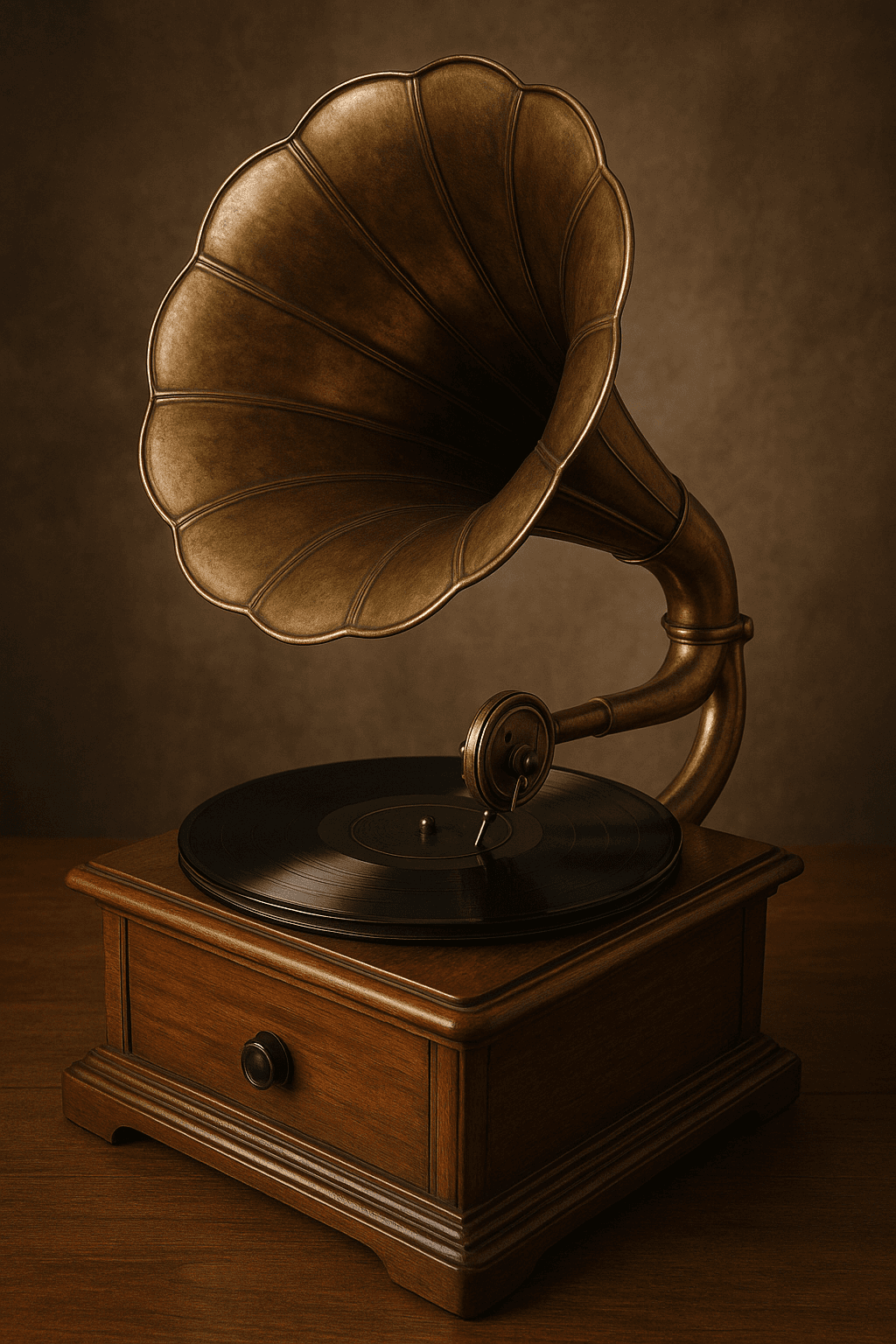
Phonograph
Inventor | Emile Berliner | ||||||||
|---|---|---|---|---|---|---|---|---|---|
Year | 1887 | ||||||||
Principle(s) of Operation | The needle follows the grooves on the disc and transmits vibrations to the speaker via the sound arm | ||||||||
Carrier Medium | Record (typically 78 45 or 33 rpm) | ||||||||
The gramophone is one of the first devices to play sound recordings mechanically. It amplifies sound by tracing the grooves on a disc with a needle. Developed at the end of the 19th century as a significant invention in sound recording and reproduction technology, the gramophone was invented by Emile Berliner and first patented in 1887. Unlike devices such as the phonograph and graphophone, the gramophone operates on the principle of recording sound vibrations in a lateral plane onto a disc. This innovation resulted in more durable recordings and provided a format suitable for mass production, playing a crucial role in the development of the music industry.
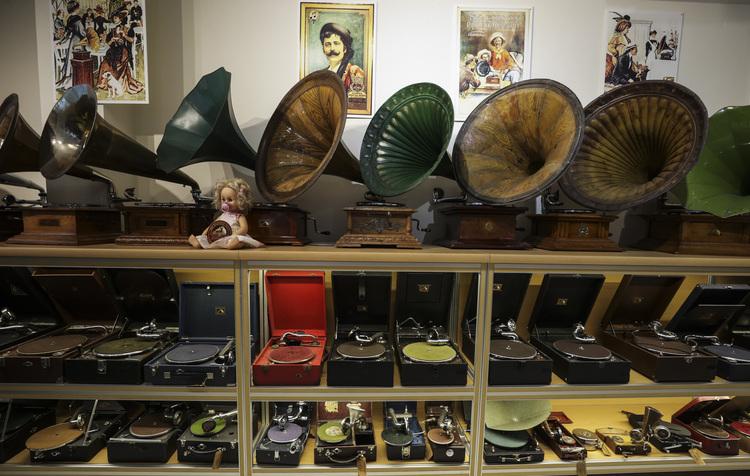
Gramafon (Anadolu Ajansı)
The history of sound recording began in 1877 with the invention of the phonograph by Thomas Edison. The phonograph recorded sound vibrations using a vertical cutting method onto tin-foil-covered cylinders. However, this method resulted in recordings with short lifespans and poor sound quality. To address these issues, Chichester Bell and Charles Tainter developed the graphophone in 1887. The graphophone operated on a principle similar to Edison’s phonograph but aimed to produce more durable recordings using wax-coated cylinders.
Emile Berliner analyzed the shortcomings of the phonograph and graphophone and began developing a different sound recording system. Berliner’s gramophone recorded sound waves using a lateral cutting method onto discs. This method produced longer-lasting and easier-to-manufacture recordings compared to the vertical cutting method. Furthermore, the disc format enabled recordings to be duplicated and mass-produced. This development laid the foundation for music recordings to become commercial products.
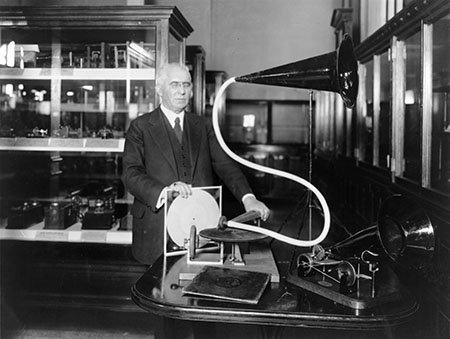
Emile Berliner, ilk gramofon makinesinin bir modeliyle (Science and Media Museum)
The gramophone consists fundamentally of a rotating turntable, a needle, a tonearm, and a speaker. As the disc rotates on the turntable, the needle follows the grooves on its surface. This motion is converted into vibrations transmitted through the tonearm to the speaker, producing sound. Early gramophones were entirely mechanical, but in later periods, sound quality was improved through the use of electric motors and amplifiers.
With the invention of the gramophone, record production accelerated rapidly. The earliest records were discs rotating at 78 revolutions per minute, typically made of shellac. In the 1930s, vinyl, a more flexible and durable material, began to be used. During this period, the diameter and rotational speed of records were standardized. Records rotating at 33 1/3 RPM and 45 RPM made it possible to produce longer musical recordings and contributed to the popularization of music albums.
Starting in the 1920s, electric gramophones were introduced to the market. These devices, equipped with magnetic needles and amplifiers, achieved significant improvements in sound quality. Additionally, gramophones integrated with radios helped music reach broader audiences. In the 1950s and 1960s, portable turntables and automatic record changers became widespread, making gramophone use more convenient.
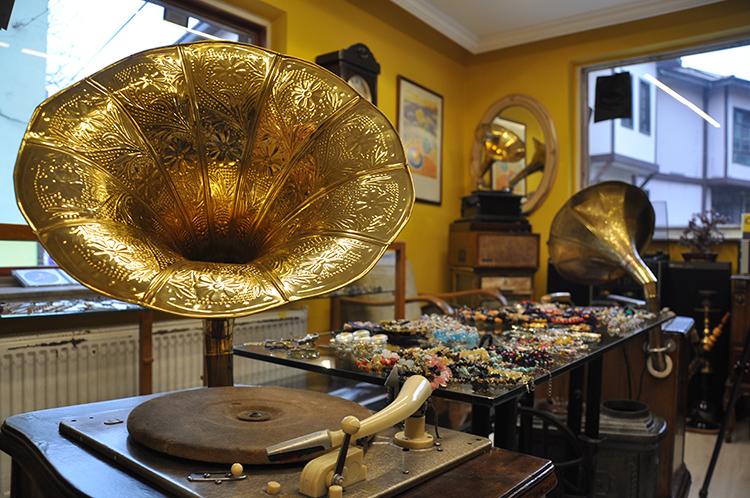
Gramafon (Anadolu Ajansı)
The gramophone was more than just a sound recording device; it fundamentally changed the way people listened to music. Throughout the 20th century, gramophones used in homes and public spaces encouraged the practice of record collecting. Today, despite the widespread adoption of digital music technologies, gramophones continue to attract interest due to their nostalgic and aesthetic value. Moreover, vinyl records maintain their popularity among collectors and music enthusiasts.
Library of Congress. "Gramofon." Library of Congress. Accessed May 15, 2025.https://www.loc.gov/collections/emile-berliner/articles-and-essays/gramophone.
Science and Media Museum. "Making Gramophone Records." Science and Media Museum. Accessed May 15, 2025.https://www.scienceandmediamuseum.org.uk/objects-and-stories/making-gramophone-records.
Özceylan, Günhan. "Antika Dükkanında Eski Gramofonların Ömrünü Uzatıyor." Anadolu Ajansı. Accessed May 15, 2025.https://www.aa.com.tr/tr/yasam/antika-dukkaninda-eski-gramofonlarin-omrunu-uzatiyor/3424385.
Özdener, Eda. "Gramofon Aşığıyla 35 Yılda 165 Parçalık Koleksiyon Oluşturdu." Anadolu Ajansı. Accessed May 15, 2025.https://www.aa.com.tr/tr/yasam/gramofon-askiyla-35-yilda-165-parcalik-koleksiyon-olusturdu/2711440.
Özkan, Berk. "Gramofonla 60 Yıl." Anadolu Ajansı. Accessed May 15, 2025.https://www.aa.com.tr/tr/pg/foto-galeri/gramofonla-60-yil-#!

Phonograph
Inventor | Emile Berliner | ||||||||
|---|---|---|---|---|---|---|---|---|---|
Year | 1887 | ||||||||
Principle(s) of Operation | The needle follows the grooves on the disc and transmits vibrations to the speaker via the sound arm | ||||||||
Carrier Medium | Record (typically 78 45 or 33 rpm) | ||||||||
History, Development, and Technical Features
Early Sound Recording Devices and the Development of the Phonograph
Emile Berliner and the Invention of the Gramophone
Technical Structure and Operating Principle of the Gramophone
Development of the Gramophone and the Record Industry
Electric Gramophones and the Modern Era
Cultural Impact and Contemporary Relevance of the Gramophone