This article was automatically translated from the original Turkish version.
+1 More
Type(s) | Service building / panoramic museum | ||||||||
|---|---|---|---|---|---|---|---|---|---|
Period(s) | 13th century Anatolian Seljuk period (represented period) | ||||||||
Location | Konya / Türkiye | ||||||||
Affiliated Institution | Konya Metropolitan Municipality | ||||||||
Featured Sections | Sema in the bedesten historical structure representations (madrasa-külliye-castle) Seljuk Konya city reenactment Sultan reception scene | ||||||||
Feature(s) | Panoramic historical reenactment area cultural and historical scene constructions representation of Seljuk urban life | ||||||||
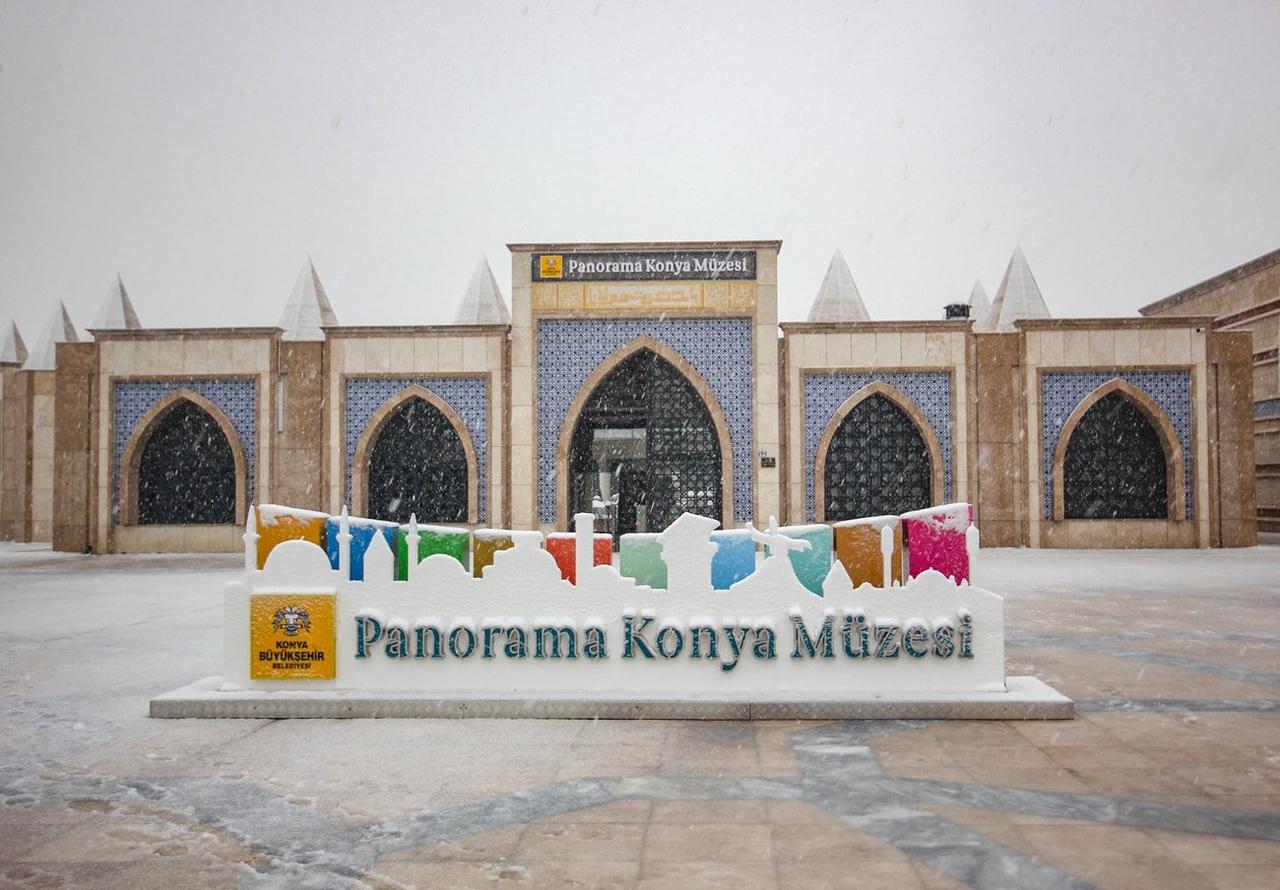
Panorama Konya Museum is a service building that presents in panoramic form the 13th-century history of Konya as the capital of the Anatolian Seljuks and the social, cultural, and intellectual structure of that era. The museum aims to convey the historical identity of Seljuk Konya—as a center of science, art, trade, and Sufism—in a visually and spatially cohesive manner.
Panorama Konya Museum ( Panorama Konya Museum )
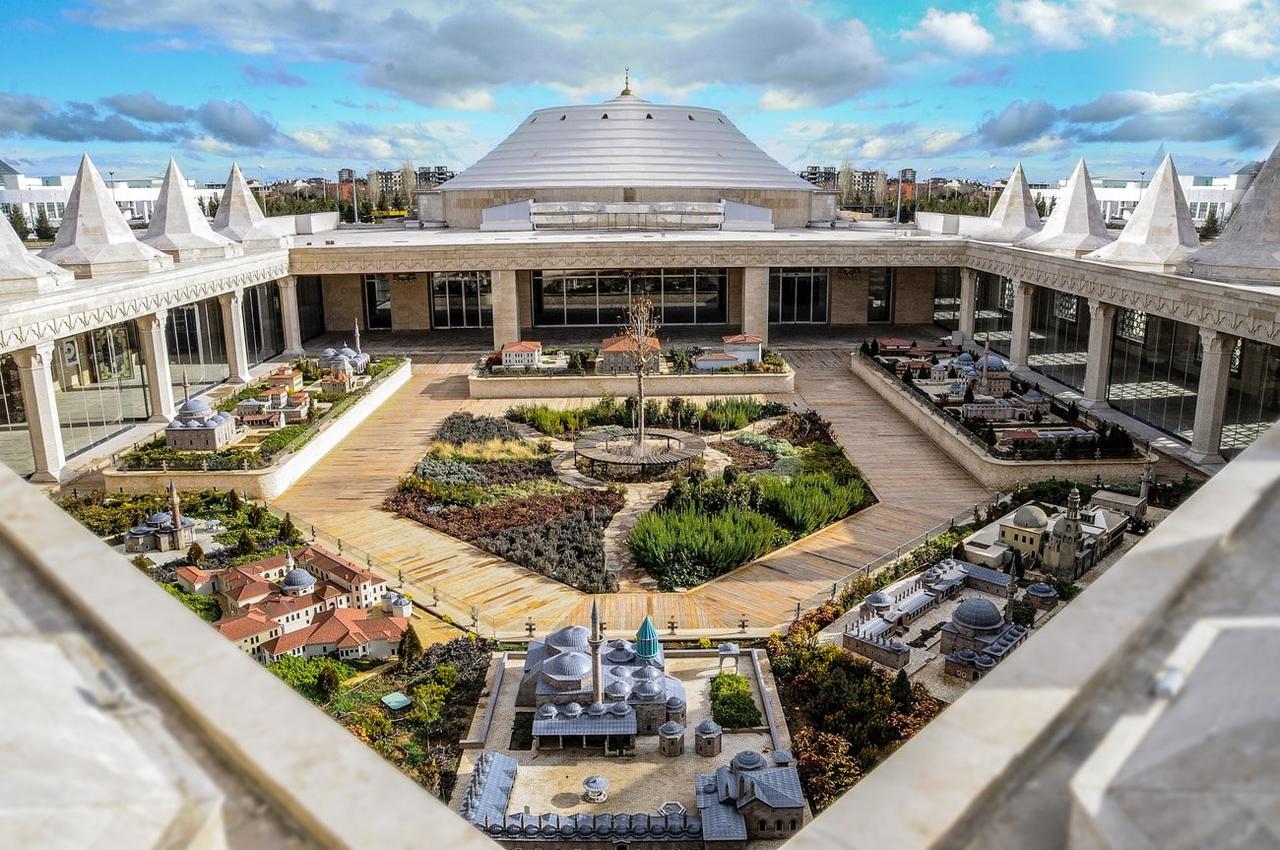
The Panorama Konya Museum was established by the Konya Metropolitan Municipality as a service building to recreate the historical and cultural fabric of 13th-century Anatolian Seljuk Konya through a panoramic narrative. The museum presents Seljuk Konya not merely as an architectural heritage but as a representative space where science, Sufism, trade, and social life were deeply interwoven.
The museum’s narrative emphasizes that during the 13th century, Konya became a city populated by scholars, Sufis, artisans, and merchants arriving from Mawarannahr, Khorasan, and Iran. This migration directly shaped the city’s intellectual and cultural structure, transforming Konya into a center of learning and spiritual knowledge equipped with madrasas, tekkes, and zawiyas. During this period, due to its location along the Silk Road, Konya also became a hub of intense commercial activity.
The narrative also notes that Seljuk sultans constructed hans and caravanserais to ensure the safety and accommodation of caravans, thereby supporting commercial continuity. This infrastructure formed part of the elements that strengthened Konya’s status as both an economic and political center.
The development of Sufism in Konya holds a prominent place in the museum’s narrative. The arrival of Muhyiddîn İbnü’l-Arabî and the spread of the doctrine of wahdat al-wujud deepened the city’s Sufi intellectual tradition. Additionally, figures such as Necmeddîn Dâye, Sadreddîn Konevî, Suhrawardi, Mevlânâ Celâleddîn-i Rûmî, and Bahâeddin Veled are presented as key representatives of Konya’s intellectual and spiritual heritage.
Panorama Konya Museum ( Panorama Konya Museum )
In the Panorama Konya Museum’s narrative, 13th-century Konya is portrayed as a multi-layered social structure and a vibrant zone of cultural interaction. During this period, as the capital of the Anatolian Seljuk State, Konya functioned as a political center while simultaneously becoming a hub of intense intellectual and Sufi production.
The narrative highlights that the migration of scholars, Sufis, artisans, and merchants from Mawarannahr, Khorasan, and Iran into Anatolia during the Mongol invasions was a defining factor in shaping Konya’s demographic and cultural composition. As a result, Konya became a center where knowledge and cultural traditions from diverse regions converged.
The museum’s narrative further emphasizes Konya’s position along the Silk Road as a major commercial hub. This status enabled the city to develop not only as a political and intellectual center but also as a secure and prosperous trading city. The hans and caravanserais built by the Seljuk sultans for the accommodation and protection of caravans are presented as institutional pillars of this commercial infrastructure.
The influence of Sufism on the social and cultural fabric is also prominently featured. In particular, the arrival of Muhyiddîn İbnü’l-Arabî and the dissemination of the doctrine of wahdat al-wujud are identified as key elements shaping Konya’s intellectual atmosphere. Additionally, figures such as Necmeddîn Dâye, Sadreddîn Konevî, and Mevlânâ Celâleddîn-i Rûmî represent the city’s intellectual and Sufi life.
Panorama Konya Museum ( Panorama Konya Museum )
The educational and spiritual environment shaped by madrasas, tekkes, and zawiyas is presented as one of the fundamental components of the era’s social structure. These institutions served as centers for both intellectual production and Sufi training, ensuring the cultural continuity of Konya.
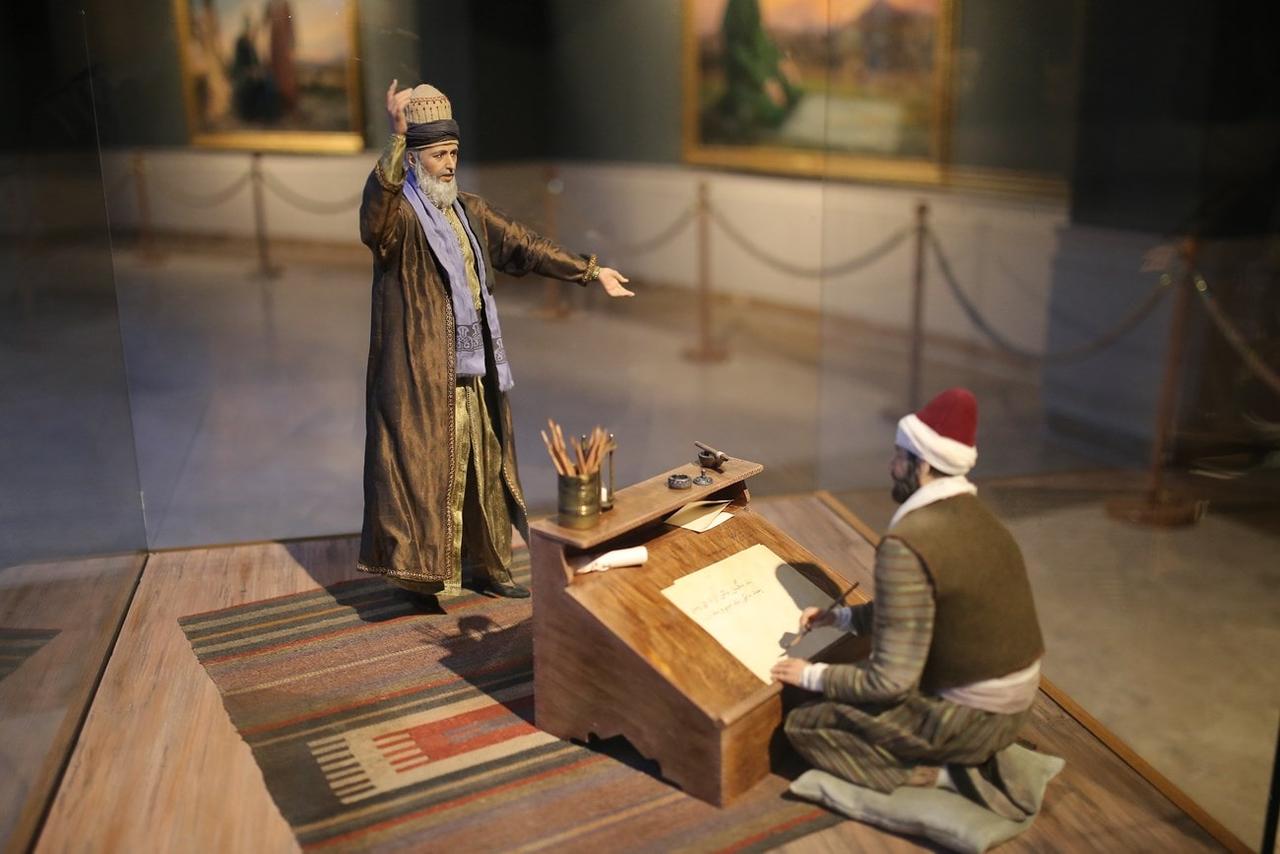
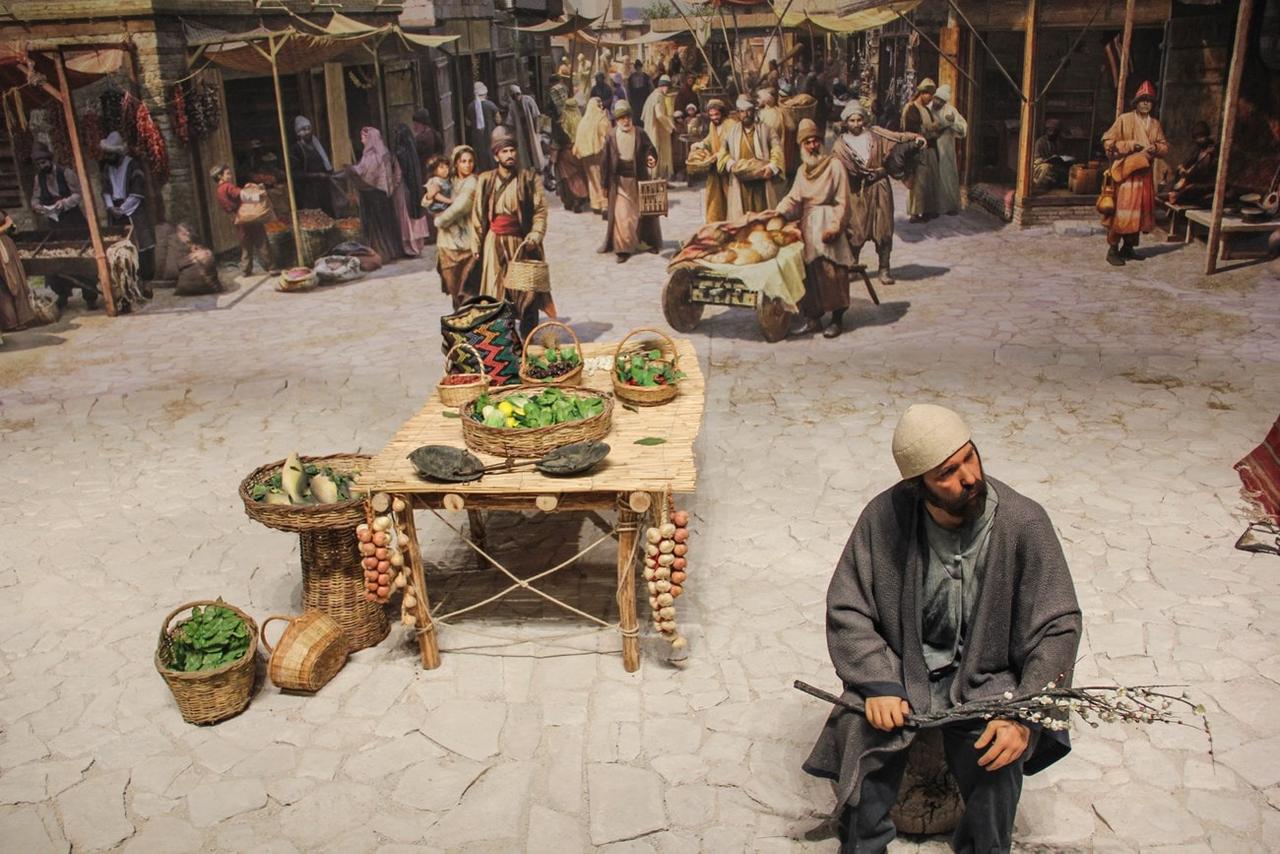
In the Panorama Konya Museum, Seljuk Konya is brought to life through scenes constructed around specific historical events and cultural practices. These scenes aim to present the social life, religious atmosphere, and urban organization of the period in a visually unified manner.
The scene titled “Sema in the Bedesten” in the museum’s narrative represents the emergence of Mevlânâ’s sema practice in various urban settings. According to the narrative, sema is not presented as a fixed ritual but as an expression arising from an inner state of spiritual attraction. It is recounted that Mevlânâ performed sema in the marketplace, at home, and in teaching spaces, particularly moved by the sounds and rhythms of daily life—such as the hammering of a craftsman or the calls of street vendors. In this way, sema is portrayed as a Sufi experience deeply interwoven with the everyday life of Konya.
Another scene in the panorama depicts the new sultan being welcomed by the people of Konya as he emerges from the inner citadel atop Alaaddin Hill. This scene is set during the accession of Sultan II. Izzeddin Keykavus. The sultan’s reception by the people alongside his guards symbolizes the direct relationship between the ruler and the city and the visible manifestation of legitimacy through social acceptance.
Panorama Konya Museum ( Panorama Konya Museum )
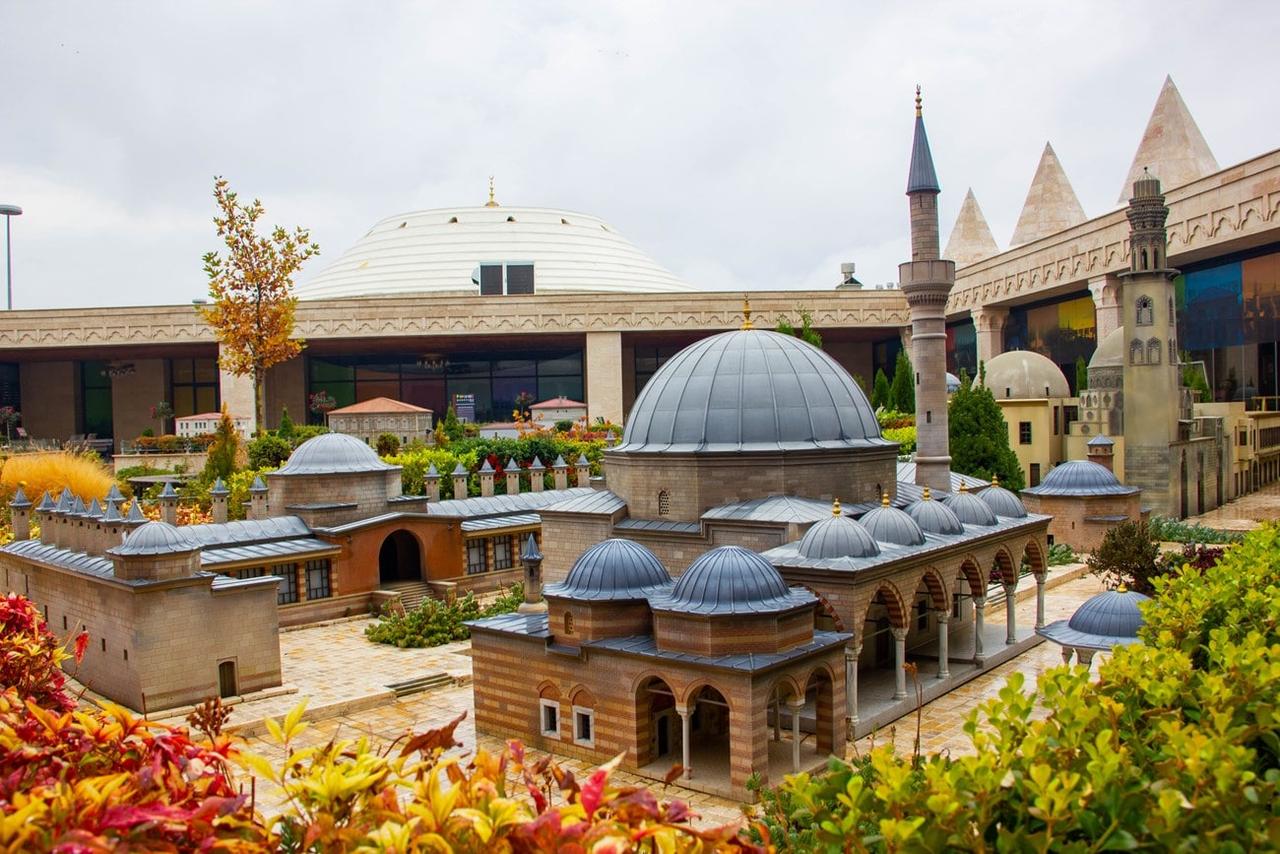
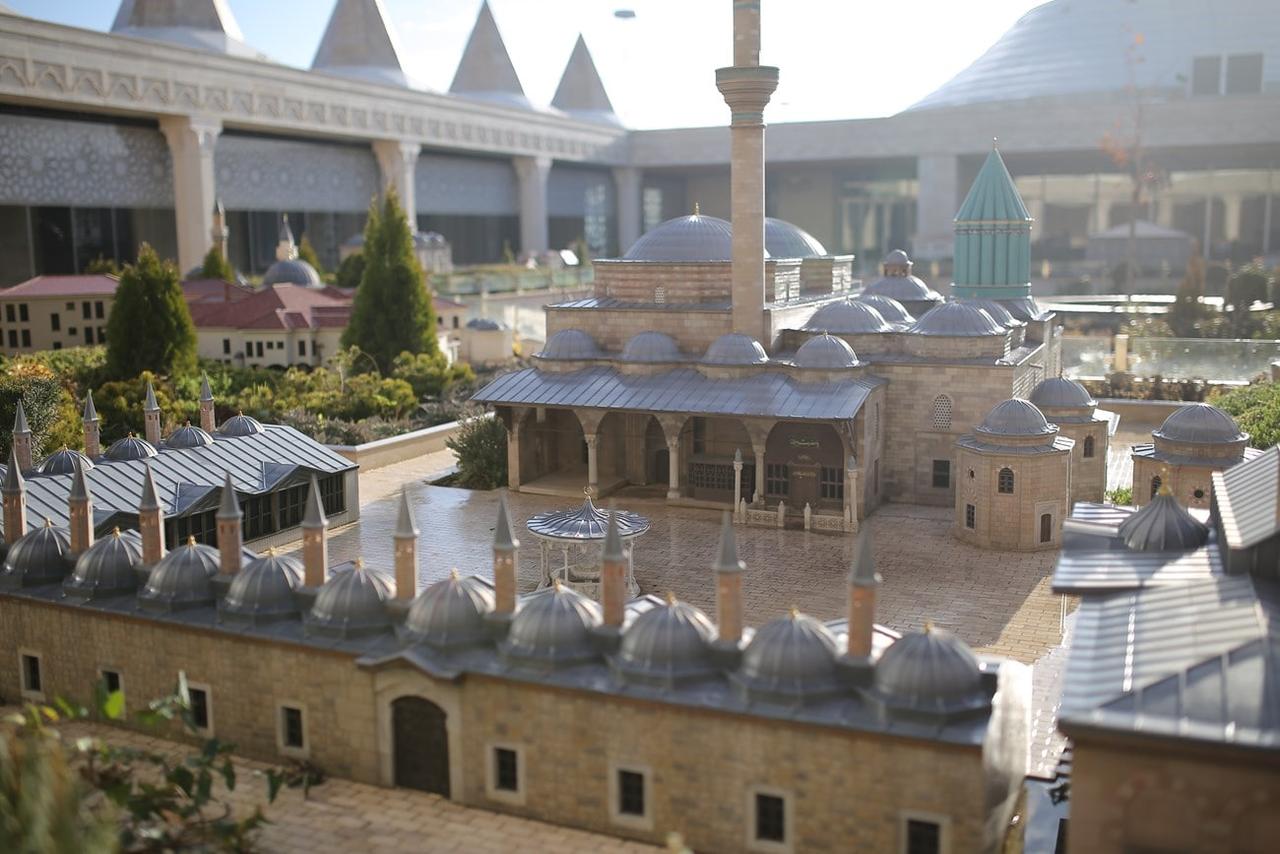
In the Panorama Konya Museum, 13th-century Seljuk Konya is not only depicted through event scenes but also through representations of the period’s key architectural structures. These buildings serve as integral elements of the panorama’s narrative, reflecting the city’s educational, religious, political, and urban fabric as a whole.
The İplikçi Madrasa (Altun-Aba Madrasa) featured in the panorama narrative is presented as one of the central institutions of scholarly life during the Seljuk period. In 13th-century Konya, the madrasa is depicted as a space for religious education and intellectual discourse. The narrative emphasizes that with the arrival of Mevlânâ Celâleddîn-i Rûmî’s family, such madrasas became essential components of the city’s intellectual and Sufi environment.
Sırçalı Madrasa is presented in the panorama as a characteristic example of Seljuk educational architecture, distinguished by its tile decorations and spatial design. The building is described as an “open courtyard madrasa” that functioned primarily as a center for legal education. Its tile and calligraphic ornamentation are highlighted as aesthetic expressions of Seljuk artistic sensibility.
Panorama Konya Museum ( Panorama Konya Museum )
The Karatay Madrasa is presented in the panorama narrative as one of the most important examples of Seljuk educational institutions. Built by Celaleddin Karatay, the structure is associated not only with religious instruction but also with scientific disciplines such as astronomy. Today used as a museum, the building is represented as a center where Seljuk tile art is displayed in rich abundance.
In the panorama’s narrative, Alaaddin Hill and its surroundings are presented as the political and urban center of Seljuk Konya. The Alaaddin Külliyesi, comprising a mosque, palace, and inner citadel, is shown as forming the seat of governance. Konya Castle and its walls represent the city’s defensive system, described as a multi-layered fortification shaped by interventions from the Byzantines, Seljuks, and Ottomans across different periods.
In the panorama, the Güdük Minare is presented as one of the rare surviving examples of Seljuk architecture. Its single-tiered structure and compact form give it a distinctive architectural character. The Hatuniye Mosque and its surrounding complex signify the külliye structure of the Seljuk period, in which religious and social functions were integrated.
The Eflâtun Mosque is presented in the panorama narrative as a structure that acquired multiple functions over time. Once a church, later converted into a mosque, and subsequently repurposed for other uses, this building illustrates Konya’s layered historical fabric and serves as a space bearing traces of diverse faiths.
Konya Büyükşehir Municipality. "Panorama Konya Museum." Konya Metropolitan Municipality. Accessed April 29, 2026. https://www.konya.bel.tr/hizmet-binalari-ve-sosyal-tesisler/panorama-konya-muzesi
Konya Panorama Museum. "Hakkında." Accessed April 29, 2026. https://panorama.konya.bel.tr/hakkinda.php
Yetiş, Zekeriya, Çiğdem Arıcan, and Ahmet Büyükşalvacı. “Turist Rehberinin Bakış Açısından Konya Müzesi Panoraması.” *Rekreasyon ve Turizm Araştırmaları Dergisi* 8, no. 2 (2021): 185–209. Accessed April 29, 2026. https://www.researchgate.net/publication/352911644_Panorama_Konya_Museum_from_The_Tourist_Guides_Point_of_View


Type(s) | Service building / panoramic museum | ||||||||
|---|---|---|---|---|---|---|---|---|---|
Period(s) | 13th century Anatolian Seljuk period (represented period) | ||||||||
Location | Konya / Türkiye | ||||||||
Affiliated Institution | Konya Metropolitan Municipality | ||||||||
Featured Sections | Sema in the bedesten historical structure representations (madrasa-külliye-castle) Seljuk Konya city reenactment Sultan reception scene | ||||||||
Feature(s) | Panoramic historical reenactment area cultural and historical scene constructions representation of Seljuk urban life | ||||||||
No Discussion Added Yet
Start discussion for "Panorama Konya Museum" article
General Features and Founding Purpose of the Museum
The Social and Cultural Structure of Seljuk Konya in the Panorama Narrative
Representative Scenes in the Panorama Konya Museum
Sema in the Bedesten
The Sultan’s Welcome Scene
Representation of Historical Structures in the Panorama Konya Museum
İplikçi (Altun-Aba) Madrasa
Sırçalı Madrasa
Karatay Madrasa
Alaaddin Külliyesi and Konya Castle
Güdük Minare and Hatuniye Mosque
Eflâtun Mosque