


This article was automatically translated from the original Turkish version.
In Türkiye, numerous aromatic Lamiaceae family plants are identified and used as “kekik,” but those containing thymol/carvacrol-type essential oils are specifically recognized as kekik. It is generally a plant that grows naturally in grassland field edges, warm and sunny rocky areas. In Türkiye, this plant, which has been used for a long time and is exported, has benefits in many fields such as medicine and gastronomy. It is found abundantly in the Aegean and Mediterranean Regions and can be consumed in various forms such as tea, spice, and oil.
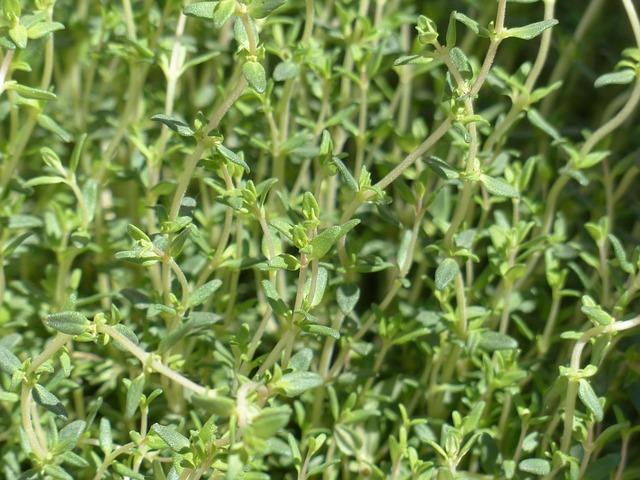
Kekik- Pixabay
Kekik grows naturally in the Aegean and Mediterranean Regions and is known locally by regional names such as “İzmir kekik,” “Peynir kekik,” “Taş kekik,” and “Bilyalı kekik.” It thrives on grassland field edges, forest borders, and atop ant hills. Due to its preference for sunlight and heat, it also proliferates in rocky and mountainous areas with high soil temperatures.
In Türkiye, Origanum onites, generally known as “İzmir kekik,” belongs to the Origanum genus and has a wide distribution, particularly in the southern and western parts of the country. It thrives best in warm areas with a Mediterranean climate. This heat-loving plant is also tolerant of cold.
Kekik is a significant plant in Türkiye that has been exported for many years. Due to its high essential oil content and Türkiye’s ability to supply a large portion of the world’s kekik demand, it is an economically important plant. According to data up to 2007, 80 percent of exported kekik was of the Origanum type. In 2007, Türkiye’s raw kekik exports amounted to approximately 6,000 tons, valued at 15 million US dollars. The main countries importing kekik are the USA, Canada, France, Poland, and the United Kingdom. Both vegetative and generative propagation of Origanum species is possible, and they can be easily cultivated from seed. In Türkiye, kekik production reached 14,724 tons in 2016.
Some uses of kekik include:
Kekik is one of Türkiye’s most important medicinal plants, with the following medical applications:
• Pregnant women and individuals with goiter are advised not to use it.
• It should not be boiled to prevent loss of thymol oil.
• Excessive internal use of kekik oil may increase thyroid gland activity.
No known side effects have been reported when used within the recommended dosage.
Bahtiyarca Bağdat, Reyhan. “Tıbbi ve Aromatik Bitkilerin Kullanım Alanları, Tıbbi Adaçayı (Salvia Officinalis L.) ve Ülkemizde Kekik Adıyla Bilinen Türlerin Yetiştirme Teknikleri”. Tarla Bitkileri Merkez Araştırma Enstitüsü Dergisi 15, no. 1-2 (June 2006): 19–28. Accessed February 10, 2025.Accessed Adresi
Batıray, Songül. "Konya Ekolojik Şartlarında Yetiştirilen İzmir Kekiğinde (Origanum onites L.) Farklı Dozlarda Uygulanan Azot ve Organik Gübrelerin Verim ve Kalite Özellikleri Üzerine Etkisi." Master's thesis, Selçuk Üniversitesi, 2009. Accessed February 10, 2025.Accessed Adresi
Baıramıan Danalou, Roghaiyeh, & Özer, Hakan. "Farklı Orijinli Sater (Satureja hortensis L.) Genotiplerinin Erzurum Koşullarında Tarımsal Performanslarının Belirlenmesi." Bursa Uludağ Üniversitesi Ziraat Fakültesi Dergisi 36, no. 2, 2022: 301-315. Accessed February 10, 2025.Accessed Adresi.
Gülgün, Bahriye, Dağıstanlı Celal, and Erden, Aktaş. "Tıbbi Ve Aromatik Bitki Olarak da Kullanılan Bazı Süs Bitkileri Ve Kullanım Alanları." Ziraat Mühendisliği Dergisi, no. 353 (2009): 22–27. Accessed February 10, 2025.Accessed Adresi
Köten, Mehmet, and Mustafa Satouf. “Farklı Formülasyonlarda Kahvaltılık Zahter Üretimi ve Bazı Kalite Özelliklerinin Belirlenmesi”. Gıda 44, no. 3 (Mayıs 2019): 513-22. Accessed February 10, 2025.Accessed Adresi
Pixabay. "Kekik." Accessed February 10, 2025.https://pixabay.com/tr/photos/search/kekik/

AREAS OF GROWTH IN TÜRKİYE
COMMERCIAL IMPORTANCE AND PRODUCTION
USES
MEDICAL PROPERTIES
CAUTIONS