


This article was automatically translated from the original Turkish version.
+1 More
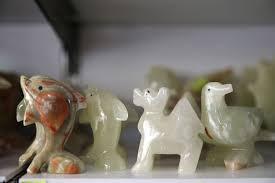
Onyx Stone
Mineralogical Classification | Calcite (CaCO₃) based | ||||||||
|---|---|---|---|---|---|---|---|---|---|
Geological Type | Banded travertine | ||||||||
Porosity | Low | ||||||||
Density | ~2.63 g/cm³ | ||||||||
Luster | Highly suitable for polishing | ||||||||
Color | Greenish, yellowish, brownish, amber yellow, grayish bands | ||||||||
Main Reserve Regions | Nevşehir Aksaray Kırşehir Bolu Manisa | ||||||||
Application Area | Decorative Object Production Ornamental Stone and Jewelry Making Souvenirs | ||||||||
Onyx stone is a type of travertine of calcite (CaCO₃) origin, characterized by a banded appearance and ornamental qualities. Although geologically classified within travertine formations, it differs due to its colorful banding and potential for decorative use. Its colored appearance results from the precipitation of calcium carbonate carried by cold bicarbonate-rich groundwater as it emerges to the surface, within environments containing various metal ions such as iron and manganese. During this process, different accumulated minerals form successive bands in the stone in shades of greenish, yellowish, brownish, and grayish hues. Band thicknesses can vary from a few centimeters up to 75 cm.
Onyx typically forms in veins or lens-shaped structures, which may range in thickness from a few centimeters to 75 cm. Structurally, it exhibits low porosity, excellent polishability, and high aesthetic value. These properties make onyx stone suitable for the production of decorative items and jewelry. In folk usage, this stone is sometimes referred to as “veined agate” or “water marble.”
Approximately 1,307,000 m³ of onyx stone reserves have been identified across Türkiye. The majority of these reserves (76.51%) are located within the boundaries of Manisa Province, particularly around the village of Saraycık in the Demirci district. The second largest reserve group is found in Bolu Province (22.95%). Other reserves are distributed in smaller proportions across various other provinces. Onyx production in Türkiye rose during the 1980s; however, domestic production has since declined due to the influx of inexpensive products from China and Pakistan.
Kırşehir Province is also a significant center where onyx stones appear in banded travertine form. The main formation areas in this province include Terme (central Kırşehir), Avcı (Mucur, Kırşehir), and Bekdik (Aksaray). In these regions, banded travertine formations occur as veins or lenses within travertine layers extending up to 10–50 meters in width and 1.5 kilometers in length.
The “Kırşehir Onyx” gained regional recognition as a product name during the 1980s and developed a recognized brand status within Türkiye. At that time, dozens of workshops operated in Kırşehir. Processed onyx products were utilized in the giftware and jewelry sectors. Today, only two small-scale workshops continue operations, sourcing their raw materials from neighboring provinces.
The Terme and Bekdik areas are no longer used for stone production, as they are now utilized for geothermal energy generation, physical therapy, thermal tourism, and greenhouse farming. The Avcı (Mucur) area retains production potential but is currently inactive.
Onyx stones extracted from the Avcı area are suitable for decorative use due to their distinct physical and mechanical properties. The density of these stones is 2.63 g/cm³, indicating a compact and durable structure. Samples exhibit banded veins in white, yellow, and amber-yellow tones. With low porosity, these stones respond exceptionally well to polishing and surface treatments. Additionally, their ease of workability makes them among the preferred natural stones for jewelry and decorative item production.
Nevşehir Province is an important center for traditional crafts within the framework of intangible cultural heritage. Onyx stone craftsmanship is practiced in the regions of Ürgüp, Avanos, Uçhisar, and Göreme. Additionally, in the district of Hacıbektaş, 69-year-old stone master Besim Badem processes approximately 30 tons of onyx stone annually, producing thousands of decorative items and jewelry. These products are sold in local souvenir shops.
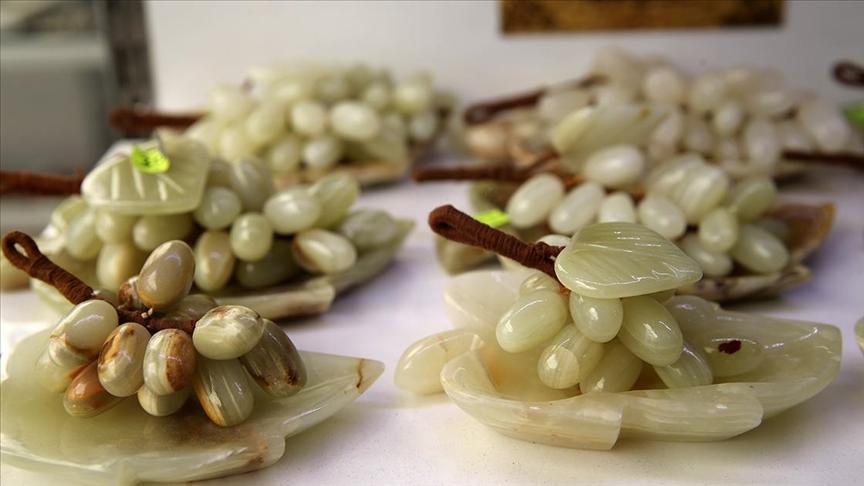
İşlenmiş Oniks Taşları (Anadolu Ajansı)
Onyx stone craftsmanship in Kırşehir was first initiated in 1949 within the framework of the Kırşehir Male Arts Institute. Today, stone processing activities consist of the following stages:
Products made from onyx stone possess both visual and functional qualities due to their natural aesthetics, colorful banded structure, and polishable surface. These products can generally be categorized into two main groups: giftware and jewelry.
Within the giftware category, prominent items include animal and fruit figures, liqueur and coffee sets, incense burners, candy dishes, trays, bowls, nameplates, and keychains. These items attract interest for both their decorative and functional aspects. Symbolic animals such as elephants, eagles, and owls are commonly chosen for figurative products, while fruit shapes like apples, pears, and grapes are frequently used.
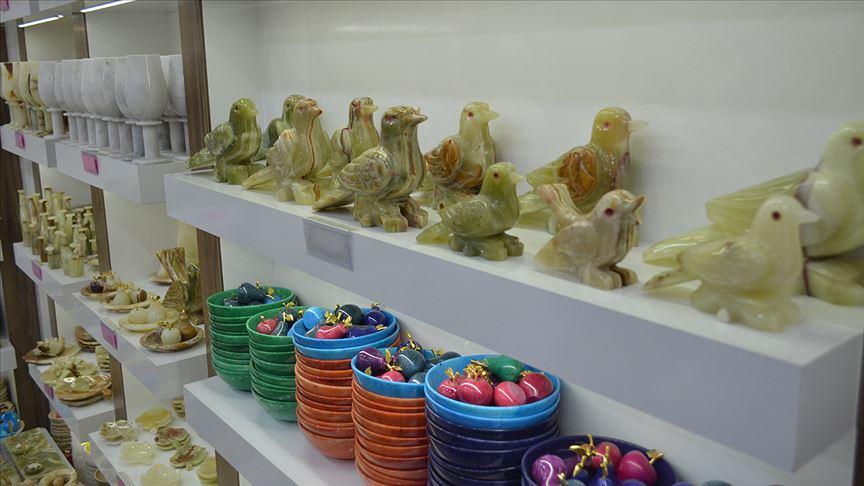
Oniks Taşından Yapılmış Hediyelik Eşyalar (Anadolu Ajansı)
In the jewelry category, products include necklaces, bracelets, bangles, earrings, rings, brooches, and prayer beads. The polished surface and semi-translucent texture of onyx add aesthetic value to these items, making them popular among enthusiasts of natural stone jewelry. These products are sold primarily in tourist areas, local craft markets, and souvenir shops, and are regarded as representative examples of the region’s cultural craftsmanship.
Akbudak, İlkay Kaydu, Başıbüyük, Zeynel, Ekincioğlu, Gökhan, and Ekdur, Engin. "KIRŞEHİR VE AKSARAY BÖLGESİ BANTLI TRAVERTEN OLUŞUMLARININ SÜSTAŞI OLARAK KULLANIMI." *Uluslararası Disiplinlerarası ve Kültürlerarası Sanat*, (2023): 1–12. Accessed May 15, 2025.https://dergipark.org.tr/en/download/article-file/3482099
Anadolu Ajansı. "Nevşehirli usta yılda 30 ton oniks taşını takı ve süs eşyasına dönüştürüyor." Accessed May 15, 2025.https://www.aa.com.tr/tr/yasam/nevsehirli-usta-yilda-30-ton-oniks-tasini-taki-ve-sus-esyasina-donusturuyor/2943468
Anadolu Ajansı. "Oniks taşı ustaları zamana direniyor." Accessed May 27, 2025.https://www.aa.com.tr/tr/yasam/oniks-tasi-ustalari-zamana-direniyor/1473221
Kaya, Kenan, and Budak, Ayşe. "Somut Olmayan Kültürel Mirasın Aktarımında Turizm Acentelerinin Rolü: Nevşehir Örneği." Master's thesis, Nevşehir Hacı Bektaş Veli Üniversitesi, 2021. Accessed May 15, 2025.http://acikerisim.nevsehir.edu.tr/handle/20.500.11787/6419
Köylü, Bülent. "Kırşehir ilinin kültürel değerlerinin resim sanatı ile yorumlanması." Master's thesis, Kırşehir Ahi Evran Üniversitesi, 2020. Accessed May 15, 2025.https://search.proquest.com/openview/528c22b2b6177bd9b57416320e30f59e/1?pq-origsite=gscholar&cbl=2026366&diss=y
Şahin, Güven, and Balcı Akova, Süheyla. “Türkiye'nin Coğrafi İşaret Niteliğindeki Jeolojik Değerleri.” *Asia Minor Studies* 7, no. 2 (2019): 335–354. Accessed May 15, 2025.https://dergipark.org.tr/en/download/article-file/780200

Onyx Stone
Mineralogical Classification | Calcite (CaCO₃) based | ||||||||
|---|---|---|---|---|---|---|---|---|---|
Geological Type | Banded travertine | ||||||||
Porosity | Low | ||||||||
Density | ~2.63 g/cm³ | ||||||||
Luster | Highly suitable for polishing | ||||||||
Color | Greenish, yellowish, brownish, amber yellow, grayish bands | ||||||||
Main Reserve Regions | Nevşehir Aksaray Kırşehir Bolu Manisa | ||||||||
Application Area | Decorative Object Production Ornamental Stone and Jewelry Making Souvenirs | ||||||||
Onyx Deposits in Türkiye
Kırşehir Onyx
Onyx Craftsmanship in Nevşehir
Processing of Onyx Stone
Product Types