


This article was automatically translated from the original Turkish version.
+1 More
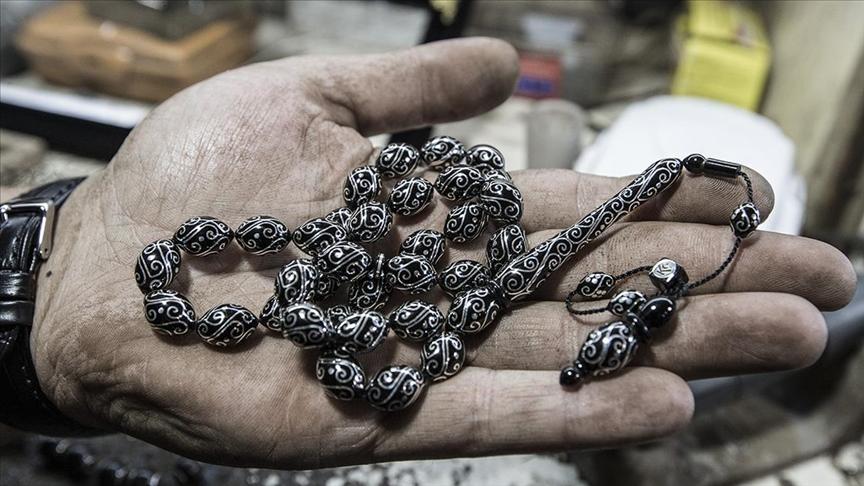
Oltu Stone
Mining Location | Erzurum Oltu | ||||||||
|---|---|---|---|---|---|---|---|---|---|
Other Name | Black Amber | ||||||||
Color | Usually black | ||||||||
Hardness | Mors 3 | ||||||||
Specific Gravity | 1.26 | ||||||||
Registration | 2015 Geographic Indication Mark (Oltu TSO) | ||||||||
Oltu Stone is a valuable mineral extracted from the Oltu district of Erzurum and also known as "Black Amber." This stone forms as lens-shaped layers within marl beds 70–80 cm thick, found in Neogene-aged sedimentary formations. These lenses, composed of marl and clay, have fractured due to tectonic movements. Oltu Stone is typically black in color but can occasionally appear in brown, gray, or greenish tones. When first extracted, the stone is soft but hardens upon exposure to air. This ease of working makes it uniquely suited for the production of ornamental items.
One of the most distinctive features of Oltu Stone is its structure: it is soft when extracted from underground but hardens upon contact with air. Thanks to this property, it can be easily shaped and carved by skilled artisans. Oltu Stone becomes electrically charged through friction and attracts light objects. For this reason, it has been attributed mystical significance throughout history and regarded in some cultures as a protective amulet against the evil eye. It has a Mohs hardness of 3 and a specific gravity of 1.26.
Chemically, Oltu Stone contains 77.95% carbon and has a calorific value of 8,064 kcal/kg. Its crystalline structure is amorphous, and its chemical formula is denoted as C (carbon). When exposed to air, it ignites and burns, and it also becomes electrically charged through friction. The smoke produced during combustion was historically used in ink production. Additionally, the high luster the stone achieves when polished is one of the main reasons it is preferred for jewelry and accessory manufacturing.
Oltu Stone is extracted by hand from small underground mines known as "galleries." After extraction, the stone is stored underground to prevent premature hardening. When ready for use, it is carefully removed from the soil and meticulously worked by artisans. Extraction is labor-intensive and typically done by hand. Stones taken from gallery mines are carefully protected to avoid surface cracking and exposure to air.
To achieve a smooth surface, the stone undergoes polishing. This process uses polishing machines along with materials such as wood charcoal, chalk, oil, and cloth. During polishing, the surface is smoothed and its natural luster is revealed. Polished Oltu Stone acquires an aesthetic appearance.
During processing, foreign materials and cracks within the stone are skillfully removed. Oltu Stone is fractured and carved into small prismatic shapes using chisels on wooden logs, with great care taken to minimize waste. Polishing is generally carried out using polishing machines, resulting in a surface of exceptional shine.
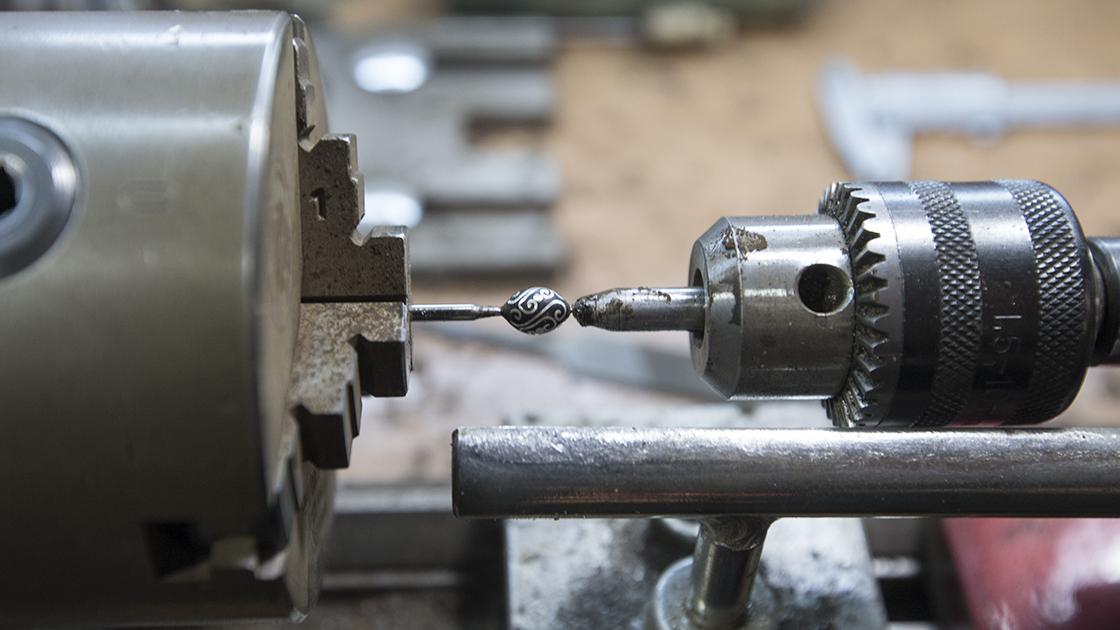
Oltu Taşı işlemesi (Anadolu Ajansı)
Oltu Stone is widely used in the production of prayer beads, jewelry, and ornamental items. In particular, its smooth and glossy texture makes it ideal for prayer bead manufacturing. Prayer beads made from Oltu Stone offer ease of handling and a pleasant tactile sensation. It is also commonly used in necklaces, rings, earrings, bracelets, and other decorative objects. Additionally, it is carved with traditional Anatolian motifs to produce artistic pieces and souvenirs. This stone, unique to Erzurum, is both a source of livelihood for the local population and a cultural symbol.
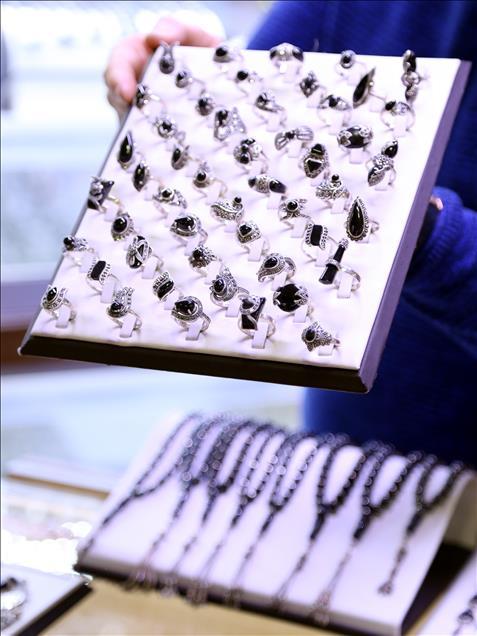
Oltu Taşı yüzük (Anadolu Ajansı)
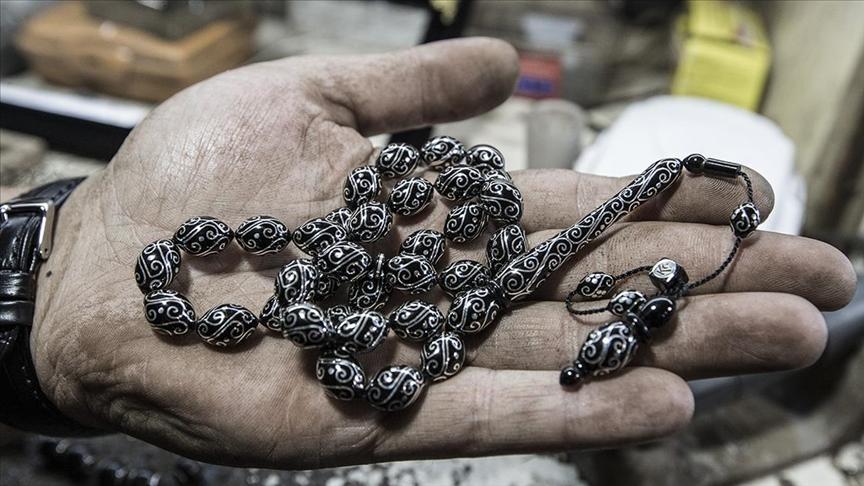
Oltu Taşı tespih (Anadolu Ajansı)
On 27 November 2015, Oltu Stone was officially registered as a "Geographical Indication." The registration, carried out by the Erzurum Oltu Chamber of Commerce and Industry, defines the geographical boundaries of the stone as the Oltu district of Erzurum Province. This designation guarantees that Oltu Stone can only be extracted from this region and that its original characteristics are preserved. The geographical indication ensures product quality and secures fair compensation for producers. Regular inspections are conducted under the coordination of the Erzurum Chamber of Commerce and Industry, with contributions from the Oltu Vocational School of Atatürk University.
Erzurum Sevdası Dergisi. "Oltu Taşı." Erzurum Sevdası Dergisi, August 10, 2024. Accessed May 19, 2025.https://erzurumsevdasi.com/2024/08/10/oltu-tasi/
Erzurum Valiliği. "Oltu Taşı: Erzurum'un Eşsiz Doğal Hazinesi." Accessed May 19, 2025.http://www.erzurum.gov.tr/oltu-tasi-erzurumun-essiz-dogal-hazinesi2
Erzurum Valiliği. "Oltu Taşı: Erzurum'un Eşsiz Doğal Hazinesi." Erzurum Valiliği Resmi Web Sitesi. Accessed May 19, 2025.https://www.erzurum.gov.tr/oltu-tasi-erzurumun-essiz-dogal-hazinesi2.
Karakaya, Hilmi Tunahan. "Erzurumlu Nakkaşın Oltu Taşından İşlediği Tespihler Yurt Dışından da İlgi Görüyor." Anadolu Ajansı, Accessed May 19, 2025.https://www.aa.com.tr/tr/yasam/erzurumlu-nakkasin-oltu-tasindan-isledigi-tespihler-yurt-disindan-da-ilgi-goruyor/2362529.
Okur, Yunus. “Oltu taşı sevgililer için şekillendirildi.” Anadolu Ajansı. Accessed May 19, 2025.https://www.aa.com.tr/tr/pg/foto-galeri/oltu-tasi-sevgililer-icin-sekillendirildi/0/195594#!
Oltu Kaymakamlığı. "Oltu Taşı." Oltu Kaymakamlığı Resmî Web Sitesi. Accessed May 19, 2025.https://www.oltu.gov.tr/oltu-tasi.
Turk Patent and Trademark Office. "Oltu Taşı." Turk Patent and Trademark Office. Accessed May 19, 2025.https://ci.turkpatent.gov.tr/cografi-isaretler/detay/38063.

Oltu Stone
Mining Location | Erzurum Oltu | ||||||||
|---|---|---|---|---|---|---|---|---|---|
Other Name | Black Amber | ||||||||
Color | Usually black | ||||||||
Hardness | Mors 3 | ||||||||
Specific Gravity | 1.26 | ||||||||
Registration | 2015 Geographic Indication Mark (Oltu TSO) | ||||||||
Physical and Chemical Properties
Extraction and Processing
Applications
Geographical Indication and Protection