


This article was automatically translated from the original Turkish version.
Okapi (Okapia johnstoni) is a rare and unique mammal species found in the central regions of Africa, particularly in the Democratic Republic of the Congo. Although its appearance suggests a close relationship with the giraffe, its body structure resembles a mix of deer and zebra. Okapis live in forested areas and are of great importance in terms of biological diversity.
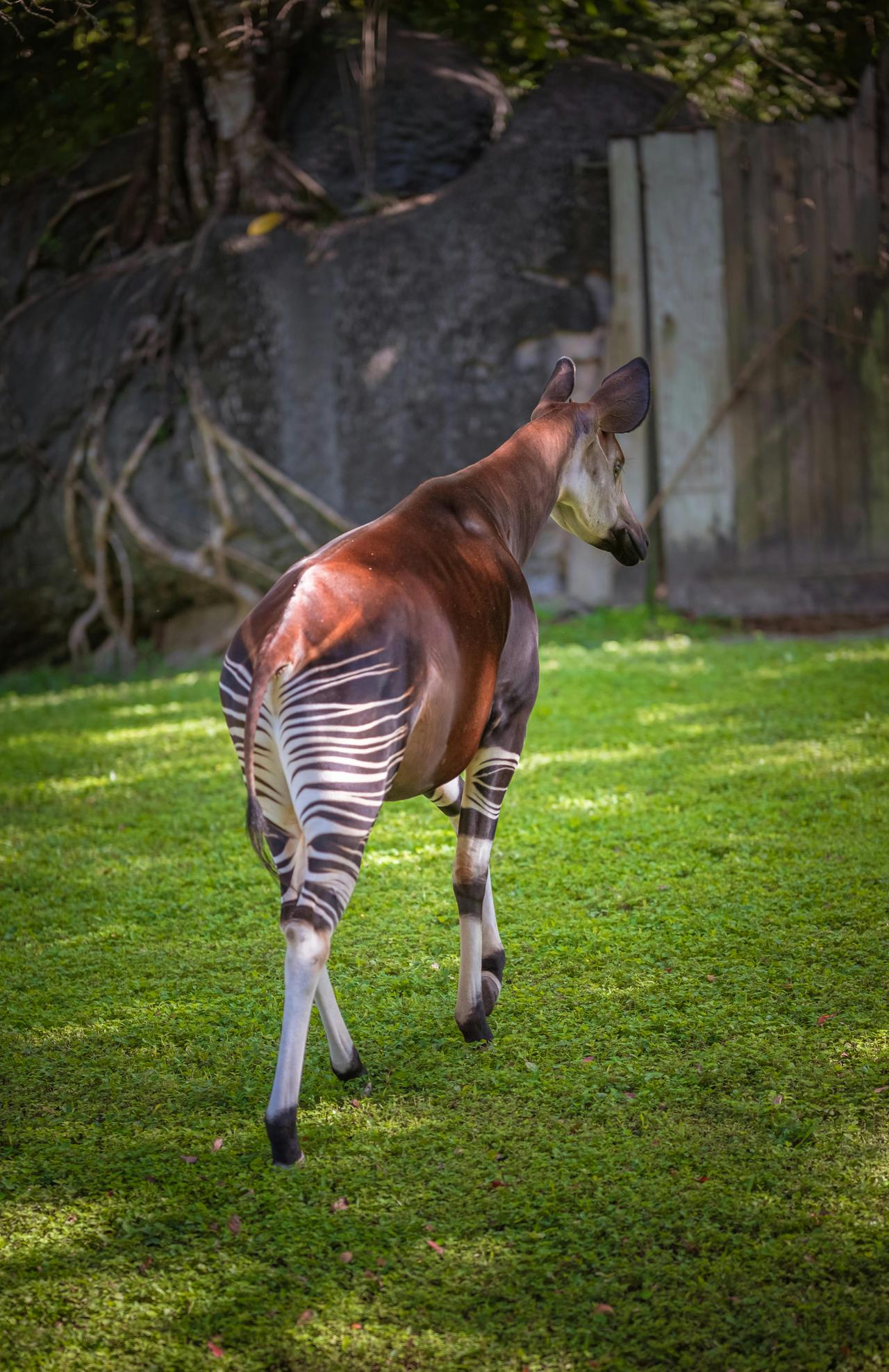
Okapi. (Pexels)
Okapis measure approximately 1.5 to 2 meters in length and weigh between 250 and 350 kilograms. Although their necks are long, they are not as prominently elongated as those of giraffes. Their most striking features are the black-and-white striped patterns on their hind legs. These patterns help young okapis follow their mothers through the dense forest. Their short, velvety fur is dark brown and water-repellent.
Okapis are found only in the tropical rainforests of Central Africa, particularly in the Ituri Forest around the Congo River. They prefer solitary lives and conceal themselves in areas with dense vegetation. This secluded habitat is the reason they remained undiscovered by the Western world for a long time.
Okapis are generally solitary animals. They come together only during the mating season. They exhibit territorial behavior, marking their areas with urine and secretions. They spend most of the day foraging for food, consuming leaves, shoots, and fruits. Thanks to their exceptional hearing, they can detect danger early and flee.
Okapis are herbivorous. Their primary diet consists of leaves, shoots, fruits, and fungi. They regularly visit natural salt licks to meet their calcium and salt requirements. Their long, flexible tongues enable them to pluck leaves from high branches.
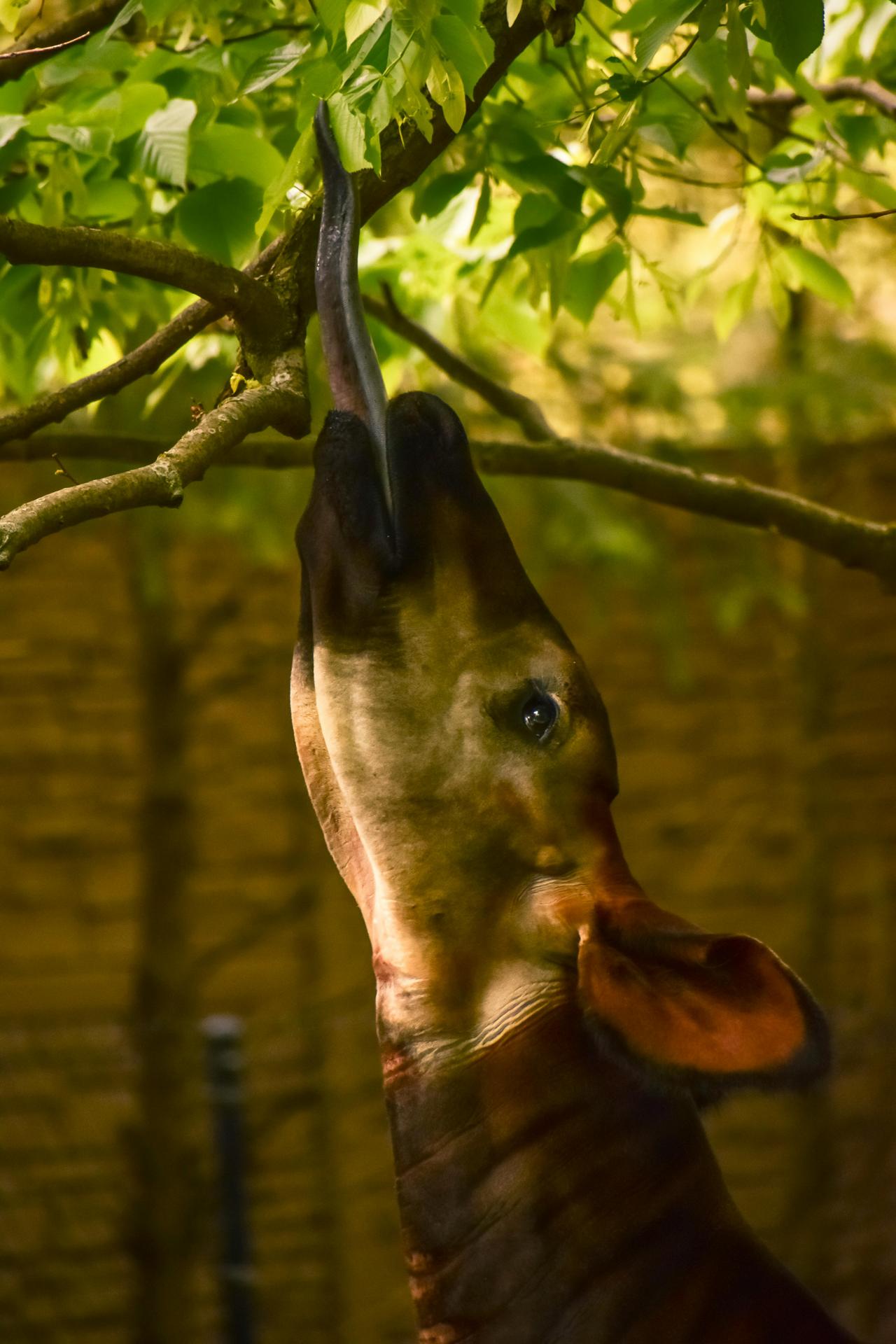
Beslenen Okapi. (Pexels)
Female okapis give birth to a single calf after a long gestation period of about 14 to 16 months. Calves are relatively well-developed at birth and can stand shortly after being born. The mother leaves her calf in a safe hiding place and returns frequently to nurse it.
Okapis are a threatened species due to habitat loss, illegal hunting, and armed conflict. They are listed as Endangered by the IUCN. Conservation initiatives such as the Okapi Wildlife Reserve in the Ituri Forest are critical to the survival of this species.
Okapis hold an important place in the cultures of local communities. Some indigenous tribes regard the okapi as a sacred animal. In the scientific world, its existence was long regarded as a legend until it was formally described in 1901.
Okapi Conservation Project. “The Okapi.” Okapi Conservation Project. Accessed May 9, 2025.https://www.okapiconservation.org/the-okapi.
Okapi Conservation Project. “The Reserve.” Okapi Conservation Project. Accessed May 9, 2025.https://www.okapiconservation.org/the-reserve.
Pexels. "Aminaller," photograph, Accessed May 8, 2025,https://www.pexels.com/tr-tr/fotograf/aminaller-29192036/.
Pexels. "Gıda, Yemek, Yiyecek, Doğa," photograph, Accessed May 8, 2025,https://www.pexels.com/tr-tr/fotograf/gida-yemek-yiyecek-doga-8026850/.

Physical Characteristics
Habitat and Distribution
Behavior and Social Structure
Feeding Habits
Reproduction and Young
Threats and Conservation Efforts
Relationships with Humans