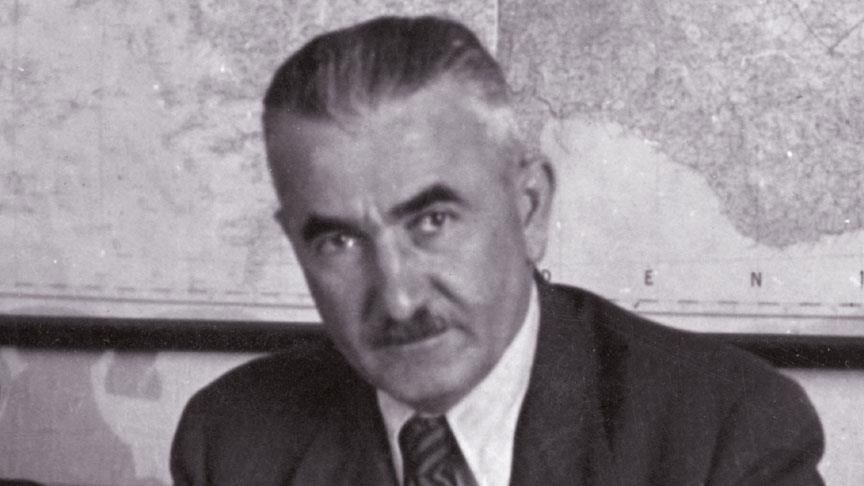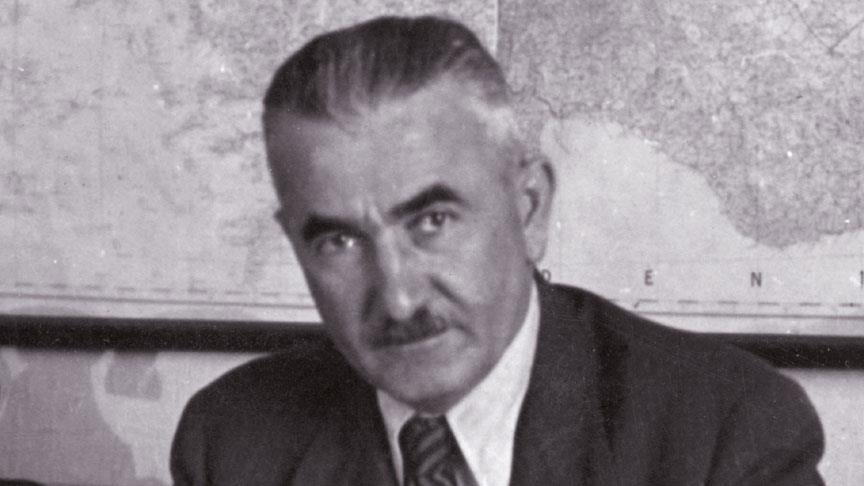

Birth | 1881, Manastır | ||||||||
|---|---|---|---|---|---|---|---|---|---|
Death | 2 March 1949, İstanbul – Sütlüce Explosion | ||||||||
Profession | Industrialist Entrepreneur Soldier | ||||||||
Rank | Lieutenant Colonel (retired), Commander of the Caucasian Islamic Army | ||||||||
Notable Positions | Volunteer officer of the Italo-Turkish War Eastern Front officer (Sarıkamış Operation) Commander of the Caucasian Islamic Army (1918) Commander of African Groups (1915–1918) | ||||||||
Award | Independence Medal Ottoman and German medals | ||||||||
Industrial Activities | Sütlüce Metal Goods and Weapons Factory (1938) Zeytinburnu Iron Goods Factory (1933) Karaburun Mercury Mine | ||||||||
Production Areas | Pistol, grenade, aircraft bomb, shell, ammunition, metal goods | ||||||||
Export Sales | Production for Egypt, Pakistan, Syria and Palestine fronts | ||||||||
Burial | Edirnekapı Martyrdom | ||||||||
Remembrance | Symbolic name in Türkiye–Azerbaijan relations | ||||||||
Nuri Killigil (Nuri Pasha), a military officer and industrialist, was born in 1890 in Manastır and active in military, political, and industrial spheres from the late Ottoman period through the Republic era. In his military career, he participated in the Libyan War, the Balkan Wars, World War I, and commanded the Caucasian Islamic Army. During the National Struggle, he served on the Eastern Front; in the Republic period, he established factories in Zeytinburnu and Sütlüce to produce weapons, ammunition, and various military equipment. He died on 2 March 1949 in a blast at his Sütlüce factory; as his body was never fully recovered, his death was officially recorded as resulting from the explosion.
The Documentary on Nuri Killigil (TVNET)
Nuri Killigil’s family was of Gagauz Turkish origin. The Gagauz are a Turkic group historically identified as predominantly Orthodox Christian. The family’s lineage traces back to a Gagauz yemenici.
According to genealogical accounts, this yemenici, who lived in Crimea and was Christian, supplied materials to the Crimean Khanate. After marrying a woman from the palace circle, he converted to Islam. This individual is recognized as the first Muslim ancestor of the Killigil family, and all subsequent migrations are traced through this core family.
Information regarding the Gagauz origins demonstrates that the Killigil family was connected, both ethnically and culturally, to the Christian-Gagauz branch of the Turkish world before embracing Islam and integrating into Muslim Turkish communities.
The Killigil family’s migration began in Crimea. Their residence in Crimea was disrupted as Russian influence expanded. After Russia’s occupation of Crimea, the family was forced to leave the northern shores of the Black Sea and migrated to the town of Kilya at the mouth of the Danube River.
Kilya, a strategic port settlement at the Danube’s delta, provided livelihoods through yemenicilik and weaving. The family resided there for a period, sustaining themselves through these crafts.
Subsequently, due to Russia’s occupation of Romania and changing political-military conditions in the region, the family was compelled to migrate again. This second migration led them directly to Abana in the Kastamonu sanjak on the Anatolian coast of the Black Sea.
In Abana, the family engaged in weaving, yemenicilik, and seafaring, continuing their movement along a route from Crimea to Kilya and then to Abana. The surname Killigil reflects this history: during their time in Kilya, the family was given the nisba “Killi/Killioğlu,” which later evolved into “Killigil.”
Nuri Killigil’s father was Hacı Ahmet Bey, and his mother was Ayşe Hanım. The previous generation included his grandfather Hafız Kamil Bey and grandmother Hasene Hanım. The children of Hafız Kamil Bey and Hasene Hanım were:
Of these children, Hacı Ahmet Bey would later become the father of Nuri and his siblings.
The children of Hacı Ahmet Bey and his wife Ayşe Hanım were:
Thus, the Killigil family formed a dynamic structure active in both military and civilian spheres: on one side, the siblings of Hafız Kamil Bey (Halil, Hacı Ahmet, and others); on the other, the children of Hacı Ahmet and Ayşe (Enver, Nuri, and siblings). Enver and Nuri became prominent in the military sphere, while Halil (Kut) gained recognition in both military and political domains.
The Killigil family genealogy along the line from Crimea to Anatolia includes the following names:
This lineage traces the known male line of the family from the Crimea and Kilya periods. The nisbas “Killi” and “Killioğlu” refer to their residence in Kilya at the Danube mouth. The titles “Hacı” and “Hafız” denote religious devotion and social standing within the family lineage.
The generation following Hafız Kamil Bey dispersed into various roles during the late Ottoman period. Halil (Kut) Bey pursued a military career and served on multiple fronts; Hacı Ahmet Bey served in engineering and public works, particularly within the Nafıa organization. This assignment was decisive in the family’s relocation to Manastır.
This documented genealogy reveals a family line originating in Crimea, passing through Kilya and Abana in the Balkans, and ultimately returning to Istanbul.
Official population records list Nuri Killigil’s birthplace as Istanbul (Dersaadet) and his birthdate as 5 May 1890. The registration being in Beşiktaş confirms it was recorded in Istanbul.
However, examination of the family’s residence and assignment records reveals that his actual birthplace was Manastır. His father, Hacı Ahmet Bey, was assigned to Manastır in 1887 by the Nafıa organization, and the family began residing there from that date.
His elder brother Enver Bey received his education at the Manastır Military Rüştiye and İdadi; his sister Mediha was born in Manastır in 1894. It is clear the family resided in Manastır during these years. The accepted birth year of 1890 coincides with the family’s stay in Manastır.
Therefore, although the population record lists Istanbul as the birthplace, consideration of family life and assignment records confirms that Nuri Killigil was in fact born in Manastır. The registration in Istanbul likely followed the practice of recording birthplace according to the father’s official residence at the time.
Nuri Killigil’s childhood years were spent in Manastır. The family’s residence in the city since 1887 shaped his early environment. At the time, Manastır was a significant Ottoman center both militarily and administratively, housing institutions such as military rüştiye and idadi schools. Nuri Killigil received his primary and secondary military education in Manastır.
His elder brother Enver Bey also studied at the Manastır Military Rüştiye and İdadi, meaning both brothers began their military education in the same city. The family’s life in Manastır unfolded within a dense military-administrative atmosphere, encompassing both civilian and military school environments.
Nuri Killigil’s childhood was shaped by the streets of Manastır, its schools, and his father’s professional circle. When he later moved to Istanbul to attend Kuleli Military High School, his Manastır years concluded. These years formed the first phase of his life, encompassing both family relationships and his initial exposure to military discipline and education.
Nuri Killigil’s formal education began in Manastır. He completed his primary schooling there and then continued with secondary military education. He completed both primary and secondary military education in Manastır, progressing through the rüştiye and idadi levels with a military orientation.
At the time, Manastır had both rüştiye and idadi military schools. Nuri completed these military education stages during his childhood and early youth, preparing him to enter higher military academies in Istanbul. His education in Manastır formed the foundational phase of his later military studies at Kuleli Military High School and the War Academy.
After completing his primary and secondary military education in Manastır, Nuri Killigil entered Kuleli Military High School in 1903. From this date, he continued his education in Istanbul. According to the chronology, his studies at Kuleli lasted from 1903 to 1906.
Kuleli Military High School was a secondary-level institution designed to prepare students for the War Academy, offering a curriculum combining military and general cultural subjects. Nuri completed a three-year program and met the requirements to advance to the War Academy upon graduation.
During this period, he received secondary-level military education following his earlier training in Manastır, completing the classical educational path expected of a military aspirant. His time at Kuleli served as the direct preparatory stage for entry into the War Academy.
After graduating from Kuleli Military High School, Nuri Killigil entered the War Academy (Mekteb-i Harbiye) in 1906. He spent three years at the academy and graduated on 26 August 1909. His name on the graduation record was listed as “Mustafa Nuri Efendi bin Ahmet Deraliye.” His graduation rank was Piyade Mülâzım-ı Sani (Second Lieutenant).
Taken together, his entry and graduation dates indicate an educational period from 1906 to 1909. During these three years, Nuri followed the military and technical courses of the War Academy curriculum. His class ranking was recorded as fourth. The courses included:
Scores for these courses were recorded in a comprehensive list reflecting his overall academic performance at the War Academy.
His graduation date, 26 August 1909, marked the end of his student life and the beginning of his officer career. With his graduation rank and official record, Nuri Killigil was formally registered as a Second Lieutenant in the Ottoman Army.
Nuri Killigil’s military assignment schedule began immediately after his graduation from the War Academy. His first assignment was to the 3rd Army Headquarters. This marked his transition from academic training to active service.
The key dates during this period are as follows:
These dates outline the initial phase of his official service, beginning with his graduation. His educational life, spanning from his entry into Kuleli in 1903 to his graduation from the War Academy in 1909, constituted an uninterrupted military training period; by the end of 1909, he had already begun active duty as an officer.
After graduating from the War Academy with the rank of Piyade Mülâzım-ı Sani, Nuri Killigil was assigned to the 3rd Army. This assignment placed him within the 3rd Army’s structure stationed in Rumelia, integrating him into its officer corps.
Following his assignment, he was posted to a unit under the 3rd Army and began duty on 9 January 1910 in the 3rd Battalion, 3rd Company, 71st Regiment. Thus, he transitioned from headquarters duty to active service as a company commander in an infantry regiment. This role marked his first direct involvement in troop deployment, training, and internal service operations.
His duty location was within the 3rd Army’s operational area, and his service was conducted within the infantry branch. The official assignment records clearly list his unit as the 3rd Army, 71st Regiment, 3rd Battalion, and 3rd Company.
The next phase in Nuri Killigil’s service record shows his return to Istanbul and transfer to a palace-centered unit. After his service with the 3rd Army, he was assigned on 12 October 1910 to the Sultan’s Infantry Guard Company.
The Sultan’s Guard Company was a protective unit stationed near the palace. Through this assignment, Nuri Killigil left the 3rd Army units in Rumelia and joined a military structure directly linked to the palace. His duties were carried out within the infantry officer cadre of this unit.
This assignment appears as the second military step following his service with the 3rd Army in official records. The date and unit name are clearly specified in the assignment log.
Nuri Killigil’s military life during this period was directly connected to his family members’ positions. His father’s brother, Halil (Kut) Bey, was a senior officer in the Ottoman Army during the same years. It is known that Halil Bey was involved in the organization and management of the Sultan’s Guard Company and held a command position within it. Nuri’s assignment to this unit resulted from serving under his uncle’s command.
His elder brother, Enver Bey, was an ascending officer in the Ottoman Army during this period, holding various assignments. Before the Libyan War, he served as a military attaché in Berlin and later moved to Libya. Nuri Killigil maintained familial ties with Enver Bey both during his service with the 3rd Army and while serving in the Sultan’s Guard Company.
Thus, during his military service from 1909 to 1911, Nuri was connected through family ties to both his uncle Halil (Kut) Bey’s command circle and his brother Enver Bey’s military cadre. The command structures of his units became intertwined with his family genealogy during this period.
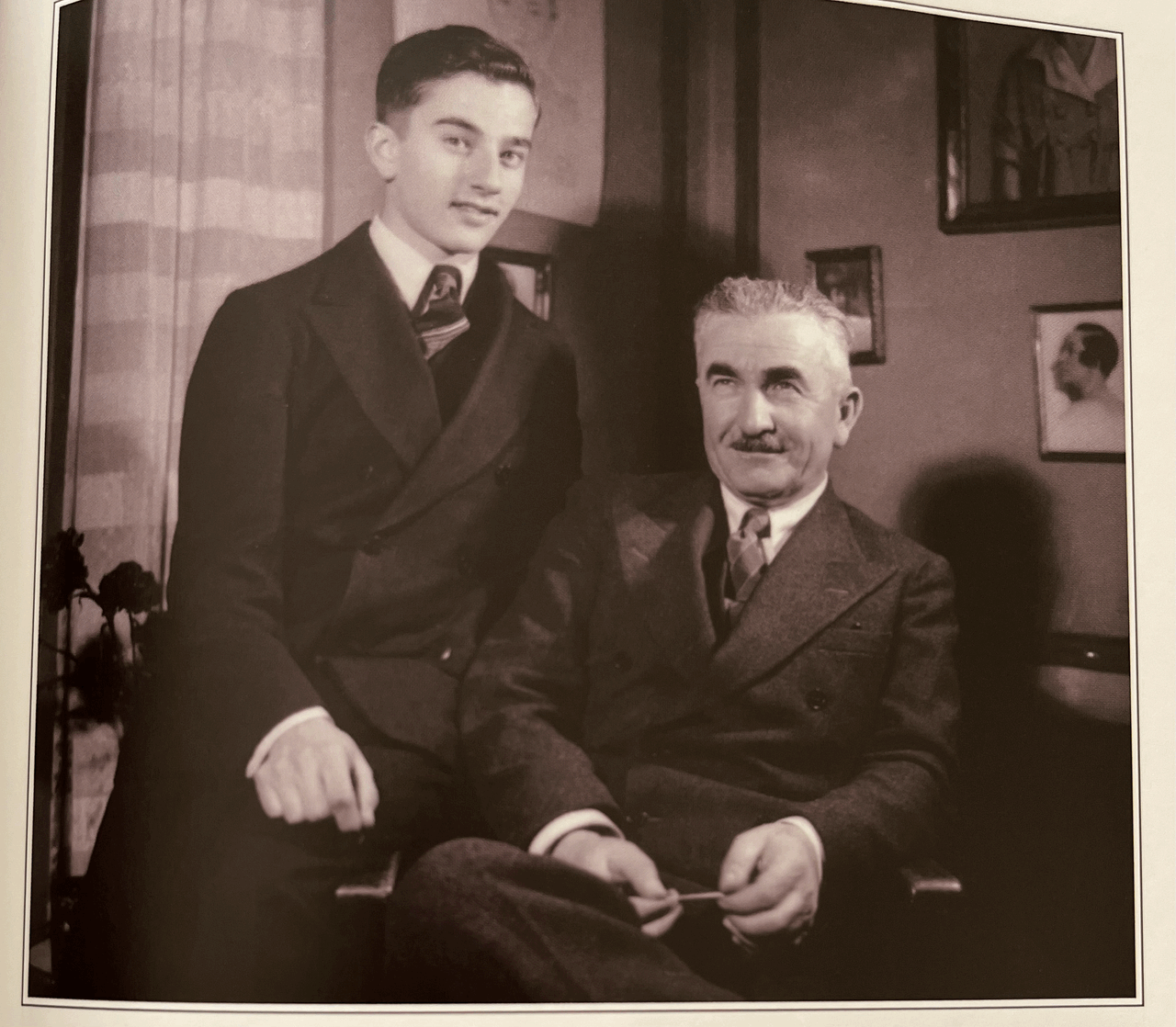
Nuri Pasha and His Nephew Ali Enver Bey (Atilla Oral Archive)
After the 31 March Incident, Istanbul’s palace security was reorganized, and new guard units were established around the Sultan. Within this reorganization, the Sultan’s Infantry Guard Company became one of the units formed to protect the palace and the Sultan’s immediate surroundings.
Nuri Killigil’s assignment on 12 October 1910 coincided with the implementation of this reorganization. Thus, he began serving in the Sultan’s Infantry Guard Company, part of the new palace guard structure established after the 31 March Incident.
In this context, Nuri Killigil’s duties involved performing guard and internal service tasks in the palace area, participating in ceremonial and official receptions as part of the Sultan’s retinue, and operating within the framework of security and protocol. His military service from 1909 to 1911 continued from his earlier field service in the 3rd Army with this palace guard assignment.
Throughout the 19th century, the North African coast was gradually detached from Ottoman sovereignty under European expansionist policies. France seized Algeria in 1830 and Tunisia in 1881, reducing the Ottoman Empire’s territorial holdings in the region known as the “Western Provinces.” After these developments, Tripolitania became the Ottoman Empire’s last major province in North Africa.
Italy’s late completion of political unification, following other European powers’ acquisition of colonial territories, led it to seek a territorial foothold in the Mediterranean. Tripolitania and Benghazi became targets of Italian influence. Although the Ottoman Empire maintained administrative control over Tripolitania, the region’s distance from the center and limited maritime access rendered it militarily weak.
At the beginning of the 20th century, Italy made various demands on the Ottoman Empire to secure privileges and establish economic and political influence in Tripolitania. When these demands were rejected, tensions escalated, and Italy accelerated preparations for the invasion of Tripolitania.
Following the concentration of the Italian navy in the Mediterranean, war was declared on 29 September 1911, and shortly thereafter, landing operations began along the coasts of Tripoli and Benghazi. Port and coastal cities such as Tripoli, Derna, Benghazi, and Tobruk were bombarded by artillery, followed by troop landings.
The Ottoman Empire, having lost naval dominance over the Bosporus and the Mediterranean, could not send regular army units to Tripolitania by sea. Only small groups of volunteer officers and limited personnel were transported overland and via third countries. Consequently, the military structure of the war was shaped primarily by local forces and volunteer officers rather than regular units.
At the outbreak of the Libyan War, Nuri Bey was serving as an officer in the Sultan’s retinue. While his elder brother Enver Bey was on leave in Berlin, news arrived of the bombardments of Tripoli and Preveze. Upon hearing this, Enver Bey returned to Istanbul, Halil Bey began preparations to go to Tripolitania, and Nuri Bey decided to travel to Tripolitania as well.
Nuri Bey requested permission from the Sultan to join the war zone. Upon receiving approval, he began preparations to depart as a volunteer officer.
In his first attempt, Nuri Bey, along with Halil Bey and Ali (Çetinkaya), departed Istanbul on 15 November 1911 by boarding the Orient Express to Paris. The journey took them from Istanbul through the Balkans into continental Europe and then to Paris. After a brief stay in Paris, they traveled to Marseille and then to Tunis.
This route was chosen because direct sea access to Tripolitania was impossible. The goal was to cross into Tripolitania via Tunis, but the first attempt failed, and they were unable to enter Tripolitanian territory. After this failure, the group returned to Paris.
In his second attempt, Nuri Bey again used the Marseille–Tunis route. On 15 December 1911, he traveled alone, taking a steamer from Marseille to Tunis and then crossing the desert route into Tripolitania. This journey was facilitated by local guides and regional connections, traversing border areas and migration paths.
After entering the Tripolitania region, Nuri Bey advanced into the desert and reached locations where Ottoman officers had gathered. On 10 January 1912, he arrived in Aziziye, where he remained for a period and joined the front organization. Aziziye was a center where volunteer officers and local forces assembled.
After Aziziye, he was sent on 15 January 1912 to the Margab Headquarters under the Homs Front, joining units under Halil Bey’s command. Margab was the central headquarters of the Homs Front, serving as a strategic location for defense and offensive operations between the coast and inland areas.
Throughout his service in Tripolitania, Nuri Bey operated in various fronts across the eastern and central regions of Tripolitania. These included:
He operated alongside local forces against Italian units. These activities included positional battles, raids, defensive arrangements, protection of supply routes, and efforts to halt enemy advances from coastal areas toward inland regions.
The Libyan War was largely conducted by volunteer officers and local forces due to the Ottoman Empire’s inability to deploy regular units by sea. Officers who departed independently from Istanbul and various garrisons reached Tripolitania via different routes and were placed in command of units formed from the local population.
Nuri Bey was part of this volunteer movement, reaching Tripolitania through his own initiative and with the Sultan’s permission. After crossing the desert route via Tunis, he established contact with local tribes and clans and served in their headquarters.
In the region, local tribes residing around Tripoli, Derna, Benghazi, Tobruk, Homs, and Misrata were organized as mujahid units during the war. Volunteer officers were responsible for commanding, organizing, and implementing defense and offensive plans for these units. Nuri Bey’s duties at the Margab Headquarters were part of this broader structure.
The Libyan War ended with the Treaty of Ouchy, signed on 15 October 1912, between the Ottoman Empire and Italy. Under this treaty, the Ottoman Empire relinquished its de facto control over Tripolitania and Benghazi, while its religious authority as Caliph was guaranteed to continue.
After the treaty’s signing, orders were issued for volunteer officers and Ottoman personnel in Tripolitania to return home, and Nuri Bey departed the war zone for Istanbul. Thus, his first front experience, spanning from late 1911 to the autumn of 1912, concluded, and he entered the next phase of his career involving the Balkan Wars and military-diplomatic assignments.
After returning from Libya, the Balkan Wars began, and the Ottoman Army entered war with the Balkan Alliance states. At this time, Nuri Bey was reassigned to a unit for continental service. During the Balkan War, particularly during the First and Second Battles of Çatalca, he served in units organized to defend Istanbul.
During this period, Nuri Bey was assigned to a unit stationed in Selimiye, Istanbul, and positioned along the Çatalca defense line against Bulgarian forces. Official records indicate he served in the 1st Corps, 6th Regiment, 1st Battalion, 3rd Company. The Çatalca line was a defensive barrier established to prevent Balkan forces from approaching Istanbul, and the units stationed along it were deployed for the direct defense of the capital.
During this period, Nuri Bey participated in tasks such as preparing defensive positions, organizing defense lines, managing movements between forward and rear lines, and deploying units into battle formations. During the Çatalca battles, corps units endured intense artillery and infantry fire from defensive positions, and Nuri Bey continued his duties throughout these phases.
After early retreats in the Balkan Wars, the Çatalca line became the last major defensive position held by the Ottoman Army. Units assigned to defend this line, including Nuri Bey’s regiment and battalion, played a crucial role in its defense. This service represented his second phase of military experience, following his Libyan front experience, now participating in conventional warfare within the Rumelian theater.
After the Balkan Wars, the Ottoman Empire entered a process of reorganizing its military and diplomatic relations with European states. As part of this, certain officers were appointed to military attaché and deputy attaché positions at Ottoman embassies in European capitals. Nuri Bey was among those appointed.
His rank was first promoted, and then he was assigned abroad. On 6 November 1913, he was promoted to Major (Yüzbaşı), and on the same date, he was appointed as Deputy Military Attaché in Rome. This assignment placed him within the military representation cadre of the Ottoman Embassy in Italy’s capital. During his time in Rome, he monitored the structure, organization, and military developments of the Italian Army while participating in military contacts conducted under the embassy’s activities.
After his service in Rome, Nuri Bey’s second foreign assignment was in the territories of the Austro-Hungarian Empire. On 15 June 1914, he was appointed as Deputy Military Attaché at the Ottoman Embassy in Vienna. In this role, he served as the assistant to the Ottoman military attaché in the capital of Austria-Hungary.
During his service in Vienna, political and military tensions in Europe were rising, and the path toward World War I was accelerating. While serving within the embassy’s military cadre, Nuri Bey closely monitored developments in European military movements and interstate balances. Thus, his military career, which began with field service during the Balkan Wars, continued with military-diplomatic representation roles in Rome and Vienna.
Nuri Bey’s foreign service period ended shortly before the outbreak of World War I. While still serving in Vienna, he was recalled to the center as part of new organizational reforms within the Ottoman military structure.
On 15 August 1914, he was appointed as Aide-de-Camp at the Ministry of War. The position of Aide-de-Camp at the Ministry of War was a role within the central military administration, directly under the Minister of War. With this appointment, Nuri Bey returned to Istanbul and began working within the Ministry of War, the center of centralized decision-making and command.
At this time, the Ottoman Empire was about to enter World War I, and military deployment and administration would be largely managed through the Ministry of War. Nuri Bey’s role as aide-de-camp placed him directly in contact with the central apparatus and prepared him for future front-line assignments and special missions.
The period from 1912 to 1914 marked a phase in Nuri Bey’s military career, transitioning from his field service in Libya and the Balkans to military-diplomatic representation in European capitals and finally to his role as aide-de-camp at the Ministry of War, bridging the front and the center, the field and diplomacy.
At the outbreak of World War I, the Ottoman Empire planned an operation targeting the Suez Canal, assigning the 4th Army Command to Cemal Pasha. Cemal Pasha arrived in Damascus in early December 1914 and began preparations for the Canal Operation, aiming to surprise British forces near Ismailia and incite unrest in Egypt.
Minister of War Enver Pasha, seeking to divide British forces and reduce pressure on the Canal, proposed opening a second front along Egypt’s western border. He planned to have Senussi leader Sheikh Ahmed launch an attack on Egypt via Sollum. However, Sheikh Ahmed and his cousin Seyid Idris opposed this offensive idea.
To overcome this resistance and centralize command over regional forces, Enver Pasha appointed his brother, Captain Nuri Bey, as commander of the forces in Africa. Nuri Bey’s mission was to convince Sheikh Ahmed to launch an offensive toward Egypt and to bring all forces in Tripolitania under his command. At the time of this appointment, Nuri Bey was serving as Aide-de-Camp at the Ministry of War in Istanbul since 15 August 1914.
Upon his assignment to Africa, Nuri Bey landed on the Defne coast between Tobruk and Sollum in February 1915 via a Greek smuggling vessel. He was accompanied by Major Cafer el-Askerî and several other officers. Thus, he formally entered the field to command military operations in Tripolitania and Egypt’s western border, beginning his Libya-centered duties that would last throughout World War I.
With Nuri Bey’s arrival in Tripolitania and Benghazi, the existing command structure in the region was reorganized. Previously, Tripolitania’s governor, Süleyman el-Baruni, exercised authority over local mujahid forces and administrative structures, but under the new arrangement, he came under direct relations with Nuri Bey.
Shortly afterward, a new command structure was established under the name African Groups Command, and Nuri Pasha was placed at its head. The Chief of Staff, Yarbay Abdurrahman Nafiz Gürman, who had previously served as an advisor to the governor, now became Chief of Staff of the African Groups Command under Nuri Pasha, and the governor came under the command of the African Groups Command.
Under this structure, the forces stationed in the region were organized into Sudan, Fizan, Benghazi, and Tripolitania Groups. These groups included regular units, mujahid detachments, and mixed (regular–mujahid) units. Support units established workshops for ammunition and gunpowder production, arms repair, and uniform manufacturing. Civilian personnel such as Pertev Tevfik and Egyptian Abdurrahman Azam were included in the headquarters support staff.
As Commander of the African Groups, Nuri Pasha commanded Ottoman and local forces in Tripolitania, Benghazi, Sudan, and Fizan. With the governor now under his command, Nuri Pasha assumed both military authority and administrative responsibility. Thus, throughout World War I, the Ottoman and local forces in Tripolitania operated under a unified command structure under his authority.
The initial phase of operations on the Tripolitania front began with actions against the British along Egypt’s western border. Following Enver Pasha’s orders, Nuri Pasha attempted to persuade Sheikh Ahmed to launch an offensive toward Egypt and prepared attacks against British forces in coordination with Senussi forces.
Under this framework, various movements were carried out along the Benghazi, Tobruk, Sollum, and Egypt border areas, with particular focus on targeting British units near Sollum. Nuri Pasha’s preparations at points such as Inzali and Cidabiye aimed to contain British forces within Egypt and limit their reinforcement to the Canal region.
However, insufficient logistical support and the vast, harsh terrain weakened operations along the Tripolitania–Egypt border. Plans were made to send money and supplies to the region via German submarines, but due to maritime conditions and other factors, these shipments could not be consistently maintained, causing operations to slow at times.
Nuri Pasha’s offensives toward Egypt ultimately led to the British recapturing Sollum. British forces pushed back Nuri Pasha’s and the Senussi forces from Egyptian territory, after which Seyid Idris emerged as a key figure, engaging in negotiations with the British and Italians, and a new political balance emerged along the Tripolitania–Benghazi front.
After the Egypt–Sollum operations, Nuri Pasha’s activities focused primarily on Italian-occupied territories. Italian forces were stationed in three groups along the Tripolitania coastline around Homs, Tripoli, and Zuwarah. In response, Tripolitanian mujahids were positioned opposite these fortified positions, while simultaneously facing conflicts with the Senussis in the Sirt region, placing them in a two-front situation.
With Nuri Pasha’s arrival in the western region, land warfare against the Italians intensified in Tripolitania. A headquarters structure centered in Misrata conducted reconnaissance and offensive preparations against Italian positions around Homs. During reconnaissance missions near the Homs front, Italian positions were closely observed, and observation towers and defensive arrangements were noted.
Between April 1917 and January 1918, under Nuri Pasha’s command, units operating alongside local tribes conducted various battles against Italian forces within Tripolitania. During this same period, these forces also engaged in clashes with British units in Sudan and French units along the borders of Tunisia, Algeria, and Niger.
Throughout this period, clashes between the Italian occupation line and inland areas occurred as part of the activities of local mujahid forces and units under the African Groups Command, targeting Italian fortifications around coastal centers.
Nuri Pasha was decorated with various orders and medals for his duties in Tripolitania and Benghazi during World War I.
On 29 July 1916, he was awarded the Iron Cross, First Class, by the German Emperor. On 22 November 1916 (9 Teşrinisani 1332), he was honored by the Ottoman Sultan with the Ottoman Gold Medal of Merit.
Promotions also occurred during this period: Nuri, whose original rank was Major, was promoted to Lieutenant Colonel (Binbaşı) on 24 December 1916 (11 Kânunuevvel 1332), and on 28 February 1917 (15 February 1332), he was granted a one-year seniority.
After returning to Istanbul, Nuri Pasha was further honored on 6 February 1334 (1918) with the Third Class Sworded Osmanî Order.
These promotions and decorations represent the official military recognition of his duties on the Tripolitania front during World War I.
Over time, disagreements emerged within the African Groups Command headquarters. Differences in opinion arose between Nuri Pasha and the Chief of Staff, Yarbay Abdurrahman Nafiz Gürman, particularly regarding the management of relations with Senussi leaders and how to handle tribal balances in Tripolitania.
Seyid Idris’s distant attitude toward the Ottoman administration, the rivalry between Seyid Ahmed and Seyid Idris, and independence claims in Tripolitania and Benghazi created a complex situation. Nuri Pasha planned to act in coordination with Seyid Ahmed, bring the Tripolitania governor under his command, and establish a coordinated structure with Senussi forces. This approach generated tensions with Ramazan Bey and certain tribal leaders.
After evaluations in the center, it was concluded that this situation negatively affected the overall balance in the region. The Supreme Command decided to make changes in the African Groups Command. Accordingly, Nuri Pasha was relieved of his command, and Sultan Murad’s grandson, Şehzade Osman Fuat, was appointed as the new Commander of the African Groups.
Approximately five months after the departure of Chief of Staff Yarbay Abdurrahman Nafiz Gürman, Nuri Pasha left Tripolitania in early January 1918 via a German submarine, returning to Istanbul via the Misrata–Pola route.
After his return to Istanbul, he was appointed to the Caucasian Islamic Army Command as part of the upcoming Caucasus campaign in the final phase of World War I. Thus, his duties in Tripolitania and Benghazi from 1914 to 1918 ended, and a new front and phase of his military career began.
Following the Bolshevik Revolution in Russia in 1917, Russian army units began withdrawing from the front, and military and political authority in the Caucasus largely collapsed. With the withdrawal of Russian forces, the Transcaucasian Commissariat and later the Transcaucasian Seym, formed by Georgian, Armenian, and Azerbaijani elements, attempted to fill the power vacuum, but internal disagreements quickly emerged.
The Treaty of Brest–Litovsk, signed on 3 March 1918, enabled the Ottoman Empire to regain Kars, Ardahan, and Batum, which it had lost in 1878, and established the legal basis for Ottoman military advances into the Caucasus. Cities were gradually surrendered; the power balance in the Caucasus changed fundamentally.
During this period, the Baku Soviet (led by Stepan Shaumyan), composed of Bolsheviks and Armenian Dashnaks, was established in Baku. In March 1918, the Baku Massacre (March Events) occurred against Azerbaijani Turks, resulting in the deaths of thousands. This deepened the authority crisis in the region and led the Azerbaijani government to request military assistance from the Ottoman Empire.
In response to the request for assistance from Azerbaijan, the Ottoman Empire decided to appoint a commander for the forces to be sent to the Caucasus. The assignment was given to Nuri Bey, who had previously commanded in Tripolitania and Benghazi.
The appointment was formalized by a decree issued by Sultan VI. Mehmed Vahdeddin, granting Nuri Bey the title of Commander of the Caucasian Islamic Army. This army was planned to consist of both Ottoman units and newly formed local Azerbaijani units. After the appointment, Nuri Bey was granted extensive military authority, and the organization of forces to be sent to the Caucasus was entrusted to him.
After his appointment, Nuri Pasha first went to Mosul, where he prepared the units to accompany him. The units departing from Mosul traveled through Hakkâri–Van into the interior of Iran, then followed the Hoy–Dilman–Jolfa route to reach the Caucasus borders.
During this journey, geographical conditions became difficult; the units undertook long marches through the mountainous regions of Iran. Subsequently, the Nakhchivan–Ordubad route was crossed, and Nuri Pasha and his units reached Ganja. Ganja, the capital of Azerbaijan at the time, was chosen as the first headquarters location for organizing Ottoman forces.
After arriving in Ganja, Nuri Pasha began organizing the Caucasian Islamic Army. The army consisted of two main components:
During this period, the army’s needs—weapons, ammunition, logistical supplies, and provisions—were provided by the Ottoman Empire, while the organization and training of local forces were conducted by Nuri Pasha and his staff.
The Caucasian Islamic Army began its military campaign toward Baku eastward from Ganja.
The first clashes occurred along the Gökçay line. Due to the strong defensive positions of the Bolshevik–Armenian forces, the operation involved intense fighting.
In Salyan, it was necessary to cross the river and surrounding marshlands; progress in this region was sustained with the support of local elements.
After breaking resistance at Aksu, the advance continued toward Kürdemir. Control over both railway and road networks around Kürdemir provided a significant strategic advantage for the advance toward Baku.
Şamahı, one of the cities severely damaged during the March Events, was a stronghold of Bolshevik–Dashnak forces. The Caucasian Islamic Army captured Şamahı, recognizing it as a key center for controlling this front.
Each of these operations constituted a stage in the army’s advance toward Baku, with each phase involving difficult terrain, logistical challenges, and fierce enemy resistance.
The First Baku Offensive was the first major operation by the Caucasian Islamic Army to reach the gates of Baku. At this time, the city was still under the control of the Baku Soviet and Armenian Dashnaks. Due to the strong defensive line, the city could not be captured, and the army withdrew to reorganize.
The Second Baku Offensive was conducted after the entry of British forces under General Dunsterville into Baku. This period marked the most intense battles fought by the Caucasian Islamic Army. Although British-supported Baku defenses hindered the army’s advance, the second offensive was systematically executed, resulting in the complete encirclement of the city.
On 15 September 1918, the Caucasian Islamic Army entered Baku. The defending forces were forced to retreat, and control of Baku was transferred to the Azerbaijani government.
The capture of Baku altered the power balance in the Caucasus, opening the way for the Azerbaijani National Government to move its capital to Baku. After the capture, Nuri Pasha focused on military order and security in the city, ensuring the deployment of Caucasian Islamic Army units within Baku.
After the capture of Baku, the Caucasian Islamic Army continued its operations in Karabakh and Dagestan. During this period, part of the army was directed to western Azerbaijan to conduct operations aimed at restoring order and neutralizing various armed elements in Karabakh.
Similarly, upon requests for assistance from local governments in Dagestan, Nuri Pasha dispatched units to the region, and Caucasian Islamic Army units were seen in various cities of Dagestan. These activities were carried out to achieve military and political stability in the region after the capture of Baku.
The activities of the Caucasian Islamic Army hold an important place in Azerbaijani history. With the capture of Baku, the army enabled the Azerbaijani National Government to relocate its capital, establishing a period of military and administrative cooperation between Ottoman administration and the Azerbaijani government.
Through headquarters established in Ganja and Baku, the Azerbaijani army was supported in its organization, local security forces were restructured, and military training and administrative organization were implemented.
The presence of the Caucasian Islamic Army in the Caucasus lasted until November 1918; after the Armistice of Mudros, Ottoman units withdrew from the region, and the Caucasian Islamic Army officially completed its mission.
After the Mudros Armistice, Nuri Pasha left the Caucasus and arrived
Anadolu Ajansı. "Nuri Killigil Paşa’nın Mezarı Onarıldı." Anadolu Ajansı. Accessed December 1, 2025.
Anadolu Ajansı. "Türk Savunma Sanayisinin Öncülerinden Nuri Killigil’in Vefatının 76. Yılı." Anadolu Ajansı. Accessed December 1, 2025.
Anadolu Ajansı. "Yerli ve Millî Silah Sanayisinin Temellerini Atan İsim: Nuri Killigil Paşa." Anadolu Ajansı. Accessed December 1, 2025.
Demir, İsmail. "Transformation of the Turkish Defense Industry: The Story and Rationale of the Great Rise." Insight Turkey 22, no. 3 (2020): 17–40. Accessed December 1, 2025.
Karaköse, Nejdet. "Birinci Dünya Savaşı’nda Trablusgarp Cephesi ve Afrika Grupları Komutanı Nuri Paşa (Killigil)." Tarihin Peşinde – Uluslararası Tarih ve Sosyal Araştırmalar Dergisi 6 (2011): 251–282. Accessed December 1, 2025.
Kurt, Enes, and Yasin Şehitoğlu. "Erken Cumhuriyet Dönemi Türk Savunma Sanayi Fabrikaları (1923–1950)." Yıldız Sosyal Bilimler Enstitüsü Dergisi 7, no. 1 (August 2023): 39–48. Accessed December 1, 2025.
Oral, Atilla. Enver Paşa’nın Kardeşi Nuri Killigil. Istanbul: Demkar Yayinevi, 2016.
Sürmeli, Serpil. "Nuri (Killigil) Paşa’nın Trablusgarp Savaşı Hatıraları." Atatürk Dergisi 1, no. 1 (March 2016): 137–170. Accessed December 1, 2025.
T.C. İletişim Başkanlığı. "Nuri Killigil’in Hayallerini Tek Tek Gerçekleştiriyoruz." YouTube video. Accessed December 1, 2025.
TVNET. "Nuri Killigil: Türk Silah ve Savunma Sanayii Girişimcisi (Belgesel)." YouTube video. Accessed December 1, 2025.
Ural, Selçuk. "Nuri Killigil." Türk Dünyası Ansiklopedisi. Accessed December 1, 2025.
Yalçın, Osman. "Cumhuriyet Dönemi Türk Hava Harp Sanayinde Devlet Girişimleri." Demokrasi Platformu 12, no. 38 (2023): 86–134. Accessed December 1, 2025.
Yalçın, Osman. "Cumhuriyet Dönemi Türk Hava Harp Sanayinde Özel Girişimleri." Demokrasi Platformu 13, no. 40 (2024): 76–123. Accessed December 1, 2025.
Yenen, A. A. "Nuri Killigil." In 1914–1918 Online: International Encyclopedia of the First World War, edited by Ute Daniel et al. Berlin: Freie Universität Berlin, 2019. doi:10.15463/ie1418.11350. Accessed December 1, 2025.
Özlü, Hüsnü. "The Foundation and Development of Turkey’s Defense Industry in the Context of National Security Strategy." PERCEPTIONS: Journal of International Affairs 26, no. 2 (January 2022): 216–240. Accessed December 1, 2025.

Birth | 1881, Manastır | ||||||||
|---|---|---|---|---|---|---|---|---|---|
Death | 2 March 1949, İstanbul – Sütlüce Explosion | ||||||||
Profession | Industrialist Entrepreneur Soldier | ||||||||
Rank | Lieutenant Colonel (retired), Commander of the Caucasian Islamic Army | ||||||||
Notable Positions | Volunteer officer of the Italo-Turkish War Eastern Front officer (Sarıkamış Operation) Commander of the Caucasian Islamic Army (1918) Commander of African Groups (1915–1918) | ||||||||
Award | Independence Medal Ottoman and German medals | ||||||||
Industrial Activities | Sütlüce Metal Goods and Weapons Factory (1938) Zeytinburnu Iron Goods Factory (1933) Karaburun Mercury Mine | ||||||||
Production Areas | Pistol, grenade, aircraft bomb, shell, ammunition, metal goods | ||||||||
Export Sales | Production for Egypt, Pakistan, Syria and Palestine fronts | ||||||||
Burial | Edirnekapı Martyrdom | ||||||||
Remembrance | Symbolic name in Türkiye–Azerbaijan relations | ||||||||
Family Origins, Lineage, and Childhood Years
Gagauz Origins
Migration Path: Crimea–Kilya–Abana
Father Hacı Ahmet Bey, Mother Ayşe Hanım, and Siblings
Details of the Family Genealogy
Dispute Over Birthplace: Manastır–Istanbul Records
Childhood Years in Manastır
Educational Life
Rüştiye and İdadi Period in Manastır
Kuleli Military High School
Entry into the War Academy and Graduation in 1909
Transition from Education to First Assignments
First Military Period (1909–1911)
Service in the 3rd Army
Assignment to the Sultan’s Guard Company
Relationships with Halil Pasha and Enver Pasha
Context of the Sultan’s Guard After the 31 March Incident
Activities Prior to the Libyan War
Historical Background of Libya
Causes, Development, and Declaration of the War
Departure for the Libyan Front
Istanbul–Paris–Marseille–Tunis Route and Attempts to Reach Tripolitania
Duties on the Front
Volunteer Officer Movement and Local Forces on the Front
Treaty of Ouchy and Return to Istanbul
Balkan Wars and Diplomatic Assignments (1912–1914)
Participation in the Çatalca Battles
Military Attaché Posts in Rome and Vienna
Position of Aide-de-Camp at the Ministry of War
Activities in Libya and Benghazi during World War I (1914–1918)
Outbreak of War and Assignment to Libya
Authority of the African Groups Command
Operation Against the British in Egypt–Sollum
Struggle Against the Italians
Promotions and Awards Received
Disagreements within the Headquarters and Recall to Istanbul
Command of the Caucasian Islamic Army (1918)
Bolshevik Revolution, Brest–Litovsk, and the Situation in the Caucasus
Appointment as Commander and Sultan’s Decree
Journey from Mosul to Ganja
Army Organization: Ottoman Units and Local Forces
Military Operations: Gökçay–Salyan–Aksu–Kürdemir–Şamahı
Gökçay Operation
Salyan Region
Aksu and Kürdemir
Şamahı
First and Second Baku Offensives
Capture of Baku (15 September 1918)
Operations in Karabakh and Dagestan
Impact of the Caucasian Islamic Army in Azerbaijan
Post-Mudros Period and British Captivity (1918–1919)
Arrest in Batum