

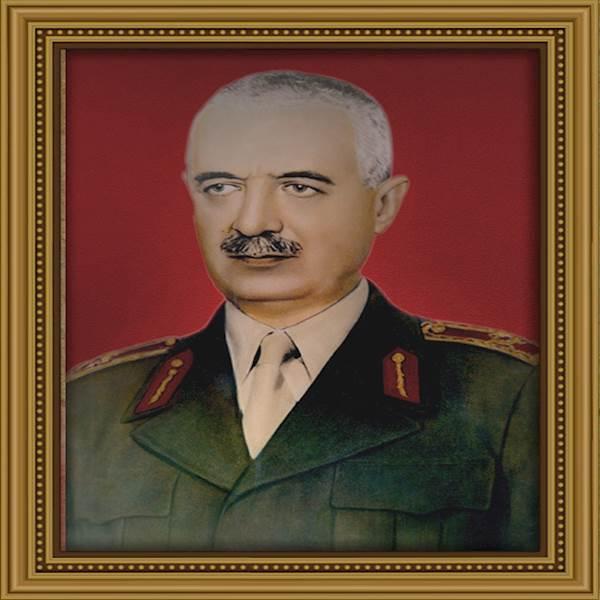

Abdurrahman Nafiz Gürman
Date of Birth | 1882 (according to some sources, 1886, 1887) | ||||||||
|---|---|---|---|---|---|---|---|---|---|
Place of Birth | Bodrum (in other sources Akhisar/Izmir) | ||||||||
Date of Death | 6 February 1966 | ||||||||
Place of Death | Istanbul | ||||||||
Rank | General of the Army | ||||||||
Position(s) | Division and Corps Commander Chief of the General Staff | ||||||||
Wars | Libya, Balkan, First World, War of Independence | ||||||||
Award(s) | War Medal etc. Independence Medal | ||||||||
Burial Place | State Cemetery, Ankara | ||||||||
Works | Defense of Scutari (2 volumes), Infantry Training, etc. | ||||||||
Abdurrahman Nafiz Gürman, who served as the fifth Chief of the General Staff of the Turkish Armed Forces, held significant positions during a military career spanning more than half a century, from the final years of the Ottoman Empire through the foundation and early years of the Republic of Türkiye. He actively participated in the Tripolitania War, the Balkan Wars, World War I, and the Turkish War of Independence, and held high-ranking posts during the Republican era including army command and the Chief of the General Staff. He gained experience both in the field and in headquarters, and also contributed to military education and publishing.
Abdurrahman Nafiz Gürman was born in Bodrum in 1882 (according to some sources, in Akhisar in 1886 or İzmir in 1887). His father was Mehmed Nafiz Bey and his mother was Hatice Hanım. After completing his primary education, he attended Üsküdar Military Secondary School and Bursa Military High School. He entered the War School in 1901 and graduated on 22 August 1903 with the rank of second lieutenant. He completed the War Academy in 1906 as an outstanding captain.
Between 1903 and 1918, Gürman served in various capacities within the Ottoman Army. During the Balkan Wars, he commanded and served as a staff officer on the Scutari Front. He authored a work based on his observations from this period. In World War I, he held important positions including Chief of Staff of the 26th Division on the Gallipoli Front and within the Anafartalar Group. Subsequently, he was sent to the Tripolitania region where he served as an advisor and chief of staff.
In 1919, in accordance with the Armistice of Mudros, he surrendered to the Allied Powers. He was first taken prisoner by the French and then transferred to Italian custody, being sent to Naples. His captivity ended on 8 October 1919. In 1920, he returned to Anatolia and joined the National Struggle.
After serving on the Southern Front in 1921, he was appointed commander of the 1st Division. He participated in the Battle of Sakarya and the Great Offensive. In 1922, he became Chief of Staff of the Thrace Command and subsequently Commander of the Istanbul Central Command. He was promoted to major general in 1926, lieutenant general in 1930, and general in 1940. During this period, he held various commands including army corps commands, the position of Undersecretary of the Ministry of National Defense, and commander of the Second Army.
On 8 June 1949, he was appointed Chief of the General Staff. However, following the Democratic Party’s victory in the 1950 general elections and subsequent changes in the upper echelons of the military, he was removed from office on 6 June 1950 and appointed as a member of the Supreme Military Council. He retired on 6 July 1950.
He ran as a parliamentary candidate in the 1954 and 1957 elections but was not elected. Following the 27 May 1960 coup, he was appointed as a quota member of the Constituent Assembly. He served on the National Defense Commission.
Abdurrahman Nafiz Gürman authored numerous works related to military education. He gained recognition for his books on the Defense of Scutari, infantry tactics, and French military doctrines. These publications remain significant for both military training and operational analysis of the period.
He died on 6 February 1966 at the Istanbul Kasımpaşa State Hospital. His body was initially buried at Zincirlikuyu Cemetery and was later transferred to the State Cemetery on 29 November 1988. Gürman was awarded the War Medal, the Independence Medal, and various foreign orders and decorations.
Birbudak, Togay Seçkin. “Abdurrahman Nafiz Gürman (1887-1966).” Atatürk Ansiklopedisi. Accessed June 18, 2025. https://ataturkansiklopedisi.gov.tr/detay/86/Abdurrahman-Nafiz-G%C3%BCrman-(1887-1966)
Ministry of National Defense of the Republic of Türkiye. "Abdurrahman Nafiz Gürman."MSB Devlet State Elders. Accessed June 18, 2025. https://www.msb.gov.tr/DevletBuyuklerimizDetay/abdurrahman-nafiz-gurman
T.C. Ministry of National Defense Archives. "Abdurrahman Nafiz Gürman."ATA Arşiv Information System. Accessed June 18, 2025. https://ata.msb.gov.tr/Genel/icerik/abdurrahman-nafiz-gurman
Abdurrahman Nafiz Gürman
Date of Birth | 1882 (according to some sources, 1886, 1887) | ||||||||
|---|---|---|---|---|---|---|---|---|---|
Place of Birth | Bodrum (in other sources Akhisar/Izmir) | ||||||||
Date of Death | 6 February 1966 | ||||||||
Place of Death | Istanbul | ||||||||
Rank | General of the Army | ||||||||
Position(s) | Division and Corps Commander Chief of the General Staff | ||||||||
Wars | Libya, Balkan, First World, War of Independence | ||||||||
Award(s) | War Medal etc. Independence Medal | ||||||||
Burial Place | State Cemetery, Ankara | ||||||||
Works | Defense of Scutari (2 volumes), Infantry Training, etc. | ||||||||
No Discussion Added Yet
Start discussion for "Abdurrahman Nafiz Gürman" article
Early Life and Education
Service in the Ottoman Army and Combat Experience
Prisonership and Aftermath
War of Independence and Republican Era
Term as Chief of the General Staff
Political Activities and Constituent Assembly
Publications and Military Writings
Death and Legacy