This article was automatically translated from the original Turkish version.
+1 More
Founder / Founding Institution | It was established by the Meclis-i Muvakkat, planned under the will of Sultan Abdülmecid, in Bab-ı Ali | ||||||||
|---|---|---|---|---|---|---|---|---|---|
Website | The historical campus has been transferred to the National Defense University The institution has no current website because it was closed by Presidential Decree No. 669 dated 31 July 2016 | ||||||||
Boarding Status | Throughout its history, the institution has provided boarding education | ||||||||
Location | Istanbul / Üsküdar (between the neighborhoods of Çengelköy and Vaniköy) | ||||||||
School Type | Military secondary education institution | ||||||||
Year of Establishment | 21 September 1845 | ||||||||
School Name | Kuleli Military High School | ||||||||
Previous Names of the School | Dersaadet Askerî İdadisi Kuleli High School Mekteb-i Fünun-u İdadiye | ||||||||
Period of Establishment | Sultan Abdülmecid Era | ||||||||
Date of Closure | 31 July 2016 | ||||||||
Reason for Closure | Presidential Decree No. 669 | ||||||||
Current Status | National Defense University campus | ||||||||
Period of Operation | 171 years (1845–2016) | ||||||||
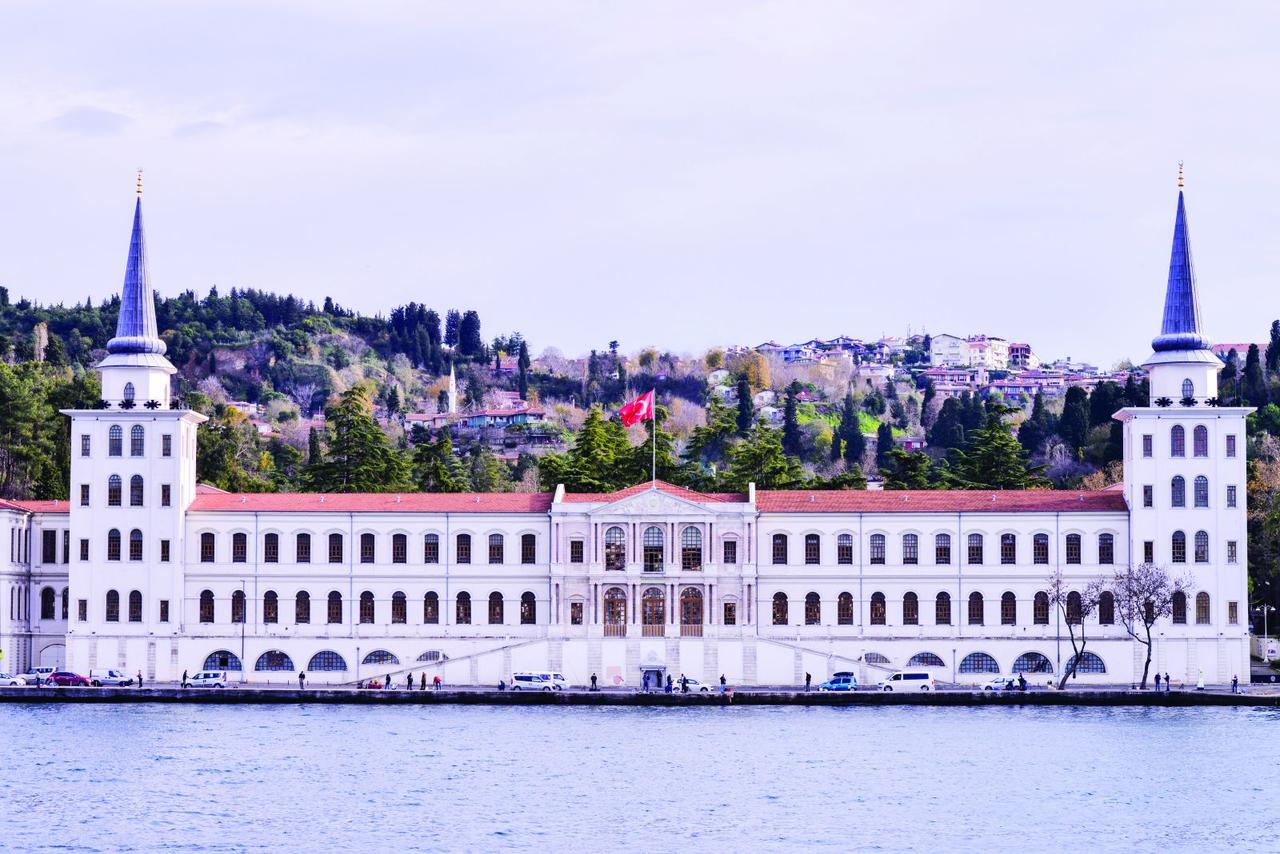
Kuleli Askerî Lisesi is a historic military educational institution located on the Çengelköy shoreline in the Üsküdar district of Istanbul, established to train officers for the Turkish Armed Forces and to provide qualified students for the Army War College. Its foundations were laid on 21 September 1845 during the reign of Sultan Abdülmecid under the name "Mekteb-i Fünun-u İdadiye" in the Dolmabahçe Çinili Köşk.【1】
Kuleli Askeri Lisesi (National Defense University)
The institution was closed by Presidential Decree No. 669 issued after the 15 July 2016 coup attempt, and its campus was incorporated into the National Defense University.【2】
The area where Kuleli Askerî Lisesi is located was known during the reign of Fatih Sultan Mehmed as "Papaz Koruluğu" and housed a monastery. Following the abolition of the Janissary Corps in the reign of Mahmud II (1826–1839), a stone barracks was constructed in 1828 for the cavalry of the newly formed Asâkir-i Mansûre-i Muhammediyye army.【3】The Mekteb-i Fünun-u İdadiye, established in 1845, provided education in the Maçka and Harbiye barracks between 1846 and 1872, and moved to the present-day Kuleli Barracks in 1872.【4】
Throughout its history, the school experienced temporary relocations due to various wars. During the 1877–1878 Russo-Turkish War, when the barracks was converted into a hospital, education continued in the Mekteb-i Harbiye building in Pangaltı, and students returned to Kuleli in 1879. During the Balkan Wars, when the barracks was again converted into a hospital, students were relocated to buildings near the Adile Sultan Sarayı and Beylerbeyi Sarayı.【5】
After World War I, during the Allied occupation of Istanbul (1920), the vacated barracks was briefly used as an Armenian orphanage, while the school was relocated to buildings near Kağıthane and Maçka. Following the victory of the National Struggle, the barracks was returned to Turkish authorities on 6 October 1923.【6】
During the Republic era, under the 1924 Tevhid-i Tedrisat Law, the school was temporarily converted into a civilian high school named "Kuleli Lisesi," but in 1925 it reverted to its military status and adopted the name "Kuleli Askerî Lisesi." During World War II, as a security measure due to German advances into the Balkans, the school was relocated to Konya in May 1941, while the barracks served as a 1,000-bed military hospital. The school returned to its historic campus in Istanbul on 18 August 1947.【7】
Kuleli Askerî Lisesi operated as a secondary educational institution under the National Education Laws and programs. Administratively, it was governed by a military structure and fell under the supervision of army marshals and the Directorate of Military Schools since its founding. Its primary purpose was to train officer candidates for the Turkish Armed Forces and to supply qualified students to the Army War College. After its closure, its physical infrastructure was transferred to the National Defense University under the Ministry of National Defense.【8】
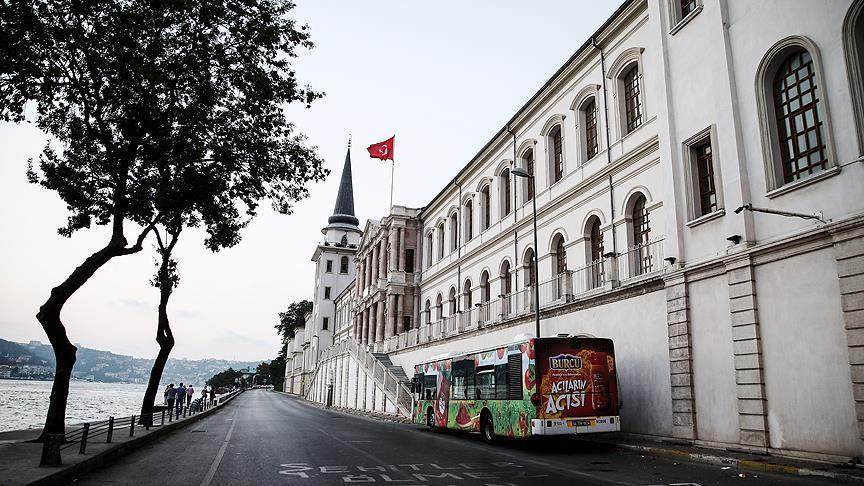
Kuleli Askeri Lisesi (Anadolu Ajansı)
The school’s educational system was originally planned as a five-year program. In its early years, the curriculum focused primarily on Arabic, Persian, religious sciences, and mathematics (arithmetic and geometry); over time, the emphasis shifted toward natural sciences and military subjects.【9】
Between 1873 and 1875, the curriculum was expanded to include "Hikmet-i Askeriye" (Military Philosophy) and "Kimya-yı Askeriye" (Military Chemistry). French was initially the mandatory foreign language, and later English, German, and for a period Russian, were also taught.【10】
Admission criteria evolved over time. According to the 1845 regulations, candidates had to be between 12 and 17 years of age, have verifiable lineage, and be deemed morally upright and talented. Initially, graduates of rüşdiye schools were admitted; in the modern era, students were selected through competitive examinations among Turkish children who had completed middle school.【11】Health examinations and security investigations formed the basis of enrollment procedures.【12】
Kuleli Barracks is a rectangular building reflecting classical Ottoman barracks architecture. After the original wooden barracks burned down in 1844–1845, it was rebuilt in stone with an attached hospital building. Between 1861 and 1876, Sultan Abdülaziz reconstructed the barracks in accordance with its original design. The imperial cipher of Sultan Abdülaziz is displayed above the gate facing the sea. In addition to the main building, the campus includes a hospital building constructed by Sultan Abdülhamid II and now used as a medical facility (Yukarı Mektep), and a 1845-era manege building. Two five-story towers stand at opposite corners of the barracks.【13】
The school was administered by a commanding officer holding the rank of Lieutenant Colonel, supported by various officers. Teaching staff included both civilian teachers with university degrees and military instructors (officer-teachers). Notable individuals who served as school commander include Kaymakam Vehip Bey, Lieutenant Colonel Ragıp Altan, and Lieutenant Colonel M. Adil Peköz. Mustafa Kemal Atatürk’s history teacher in Manastır, Mehmet Tevfik (Bilge) Efendi, also served as a teacher at the school.【14】
Kuleli Askerî Lisesi hosted students from across a wide geographic area who aimed to serve the Turkish military with loyalty. A significant number of students were children of parents serving in security forces or the military. Among its graduates are Chiefs of the General Staff, Force Commanders, statesmen, and national heroes such as Kazım Karabekir.【15】
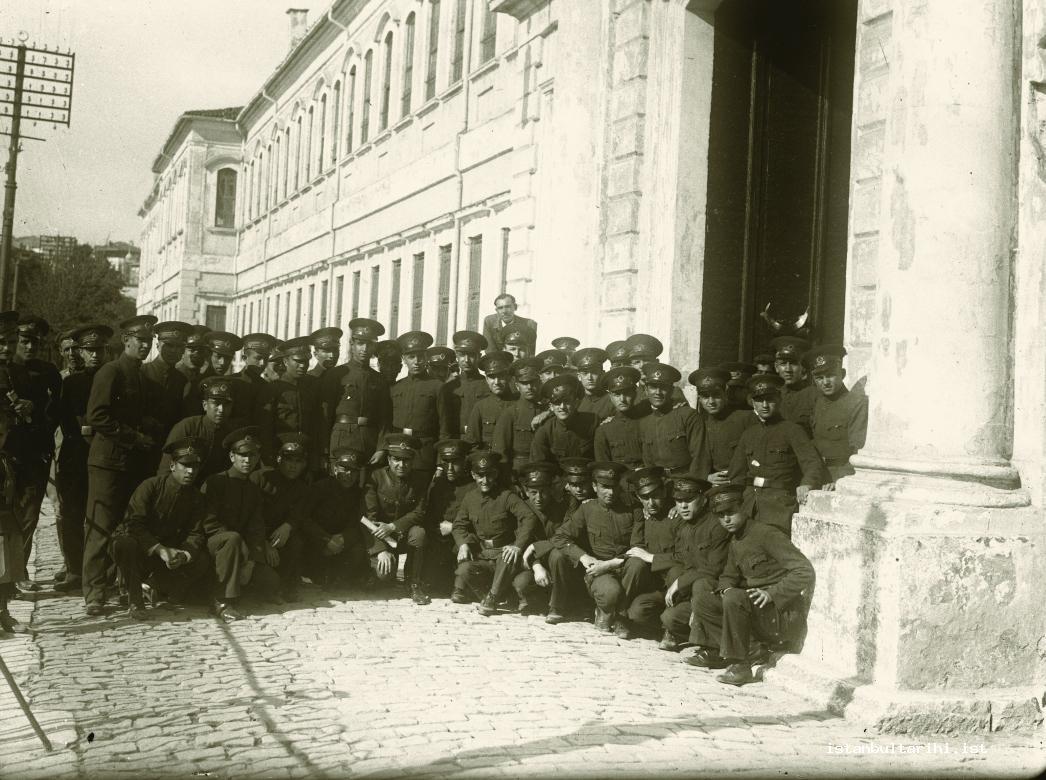
Kuleli Askeri Lisesi Öğrencileri (Büyük İstanbul Tarihi)
Various activities were organized to promote students’ physical and cultural development. Gymnastics was introduced into the curriculum in the 1860s, and swimming instruction was encouraged due to the barracks’ proximity to the sea. Artistic subjects such as drawing, music, and handicrafts were included to develop students’ social skills. During the command of Vehip Bey, the dining system was modernized, and individual kitchen utensils were provided to students to instill proper conduct and etiquette.【16】
In its early years, projects were implemented to bring Harbiye and İdadi schools up to European standards, including recruiting foreign expert teachers and sending successful officers abroad for education. In 1928, foreign experts such as German citizen Hans Barnay Müller were appointed to strengthen foreign language instruction.【17】
During the coup attempt on the night of 15 July 2016, Kuleli Askerî Lisesi was used as one of the central locations in Istanbul for the uprising. Under the command of former colonels Mürsel Çıkrıkçı and Muammer Aygar, military personnel and some students left the campus to attempt to seize control of strategic points in Çengelköy, Vaniköy, and Beykoz. During this period, the Çengelköy Police Center was occupied and civilians were assaulted. As a result of the clashes, eight civilians—Burak Cantürk, Fatih Dalgıç, Gökhan Esen, Halil Kantarcı, Kader Sivri, Murat Akdemir, Mustafa Cambaz, and Osman Yılmaz—lost their lives.【18】
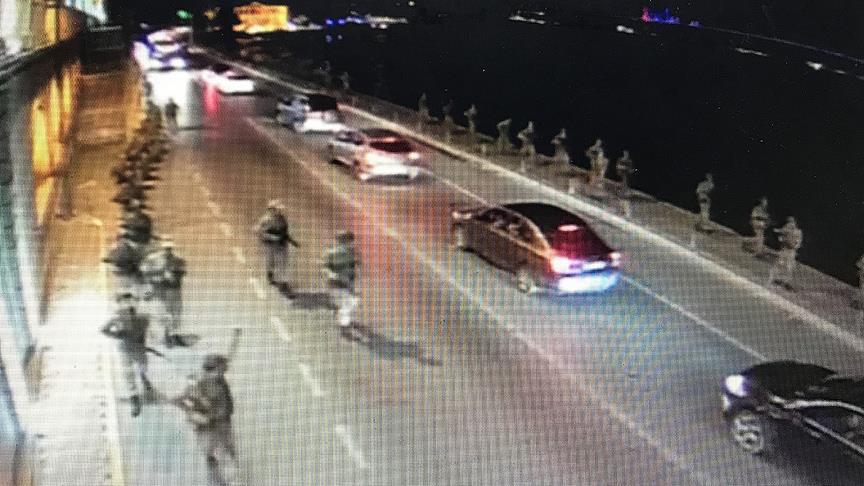
15 Temmuz Darbe Gecesi (Anadolu Ajansı)
The 1,318-page indictment prepared by the Istanbul Chief Public Prosecutor’s Office for Terrorism and Organized Crime regarding the events of 15 July 2016 at Kuleli Askerî Lisesi and the subsequent judicial proceedings was accepted by the Istanbul 32nd Heavy Criminal Court on 17 April 2018, initiating the trial. This comprehensive document details the events in Çengelköy, Vaniköy, and Beykoz during the coup attempt, including the attempted seizure of the Çengelköy Police Center. The indictment names 103 suspects, including 39 commissioned officers and 9 military students; during the trial, the files of 14 former police officers accused of aiding the coup plotters were merged into this case, raising the total number of defendants to 117.【19】
In the indictment, Burak Cantürk, Fatih Dalgıç, Gökhan Esen, Halil Kantarcı, Kader Sivri, Murat Akdemir, Mustafa Cambaz, and Osman Yılmaz are listed as "killed." Additionally, 16 victims and 195 complainants were identified. According to the document, 135 civilians and law enforcement personnel were subjected to attempted murder, 62 of whom were injured by firearms, and 33 civilians had their freedom restricted. Furthermore, five public buildings—including the Çengelköy Police Center—sustained damage, and 46 individuals suffered damage to their vehicles or workplaces.【20】
The indictment also revealed concrete evidence of organizational structures within the institution. During searches of the office of former Colonel Mehmet Karabekmez, documents such as the "Professional Groups Schedule" and the "List of Students Whose Fathers Are Military Personnel," each page stamped with official seals, were seized. These lists classified students based on their fathers’ affiliations with the FETÖ/PDY, and favorable notations were recorded next to certain names. According to the indictment, which incorporates security investigation data from the MIT, 54 military students were found to have first-degree relatives linked to the terrorist organization. Additionally, the indictment notes that the number of students admitted between 2011 and 2015 who had negative security investigations increased over time, and that in 2014, a parent’s application to BİMER stated that "many children had been prepared by the cemaat and placed into the school."【21】
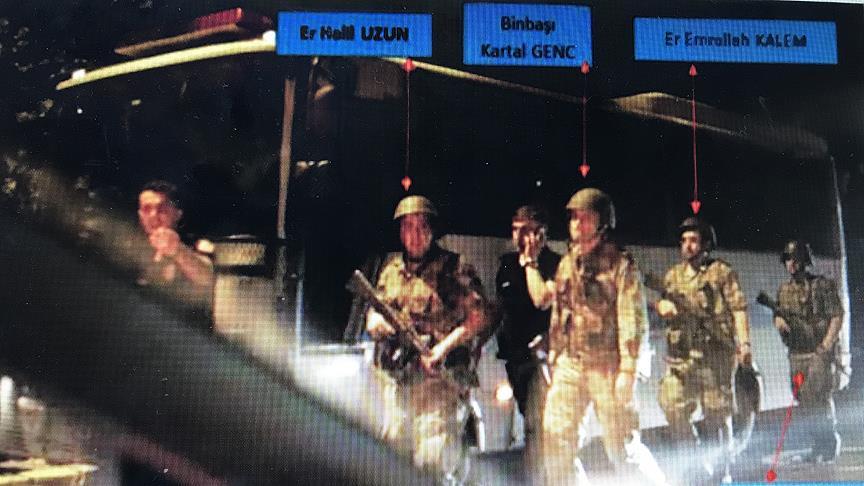
15 Temmuz Darbe Gecesi (Anadolu Ajansı)
The indicted suspects were charged with three aggravated life sentences each for attempting to abolish the constitutional order, the Grand National Assembly of Türkiye, and the Government of the Republic of Türkiye. Additionally, they were sought to be punished separately for charges of intentional homicide, intentional injury, deprivation of liberty, and property damage. This legal process established the primary grounds for the closure of Kuleli Askerî Lisesi under Presidential Decree No. 669.【22】
As part of the restructuring efforts following the 15 July coup attempt, it was decided to close military schools due to concerns over infiltration by FETÖ members. Kuleli Askerî Lisesi, with a 171-year history, was officially closed by Presidential Decree No. 669 published in the Official Gazette on 31 July 2016.
The school’s students were transferred to civilian schools, and its historic campus was incorporated into the newly established National Defense University. Today, the barracks building houses the National Defense University’s foreign language preparatory classes and various administrative units.【23】
"Büyük İstanbul Tarihi." Accessed June 9, 2026. https://istanbultarihi.ist/346-suvari-kislasindan-kuleli-askeri-lisesine
Anadolu Ajansı. "15 Temmuz Çengelköy ve Kuleli iddianamesi hazırlandı." Accessed June 9, 2026. https://aa.com.tr/tr/15-temmuz-darbe-girisimi/15-temmuz-cengelkoy-ve-kuleli-iddianamesi-hazirlandi/981219
Anadolu Ajansı. "Bombalar patlayınca askerler sevinç çığlıkları atıyordu." Accessed June 9, 2026. https://aa.com.tr/tr/15-temmuz-darbe-girisimi/bombalar-patlayinca-askerler-sevinc%CC%A7-c%CC%A7ig%CC%86liklari-atiyordu/981357
Anadolu Ajansı. "Darbe ihaneti 171 yıllık Kuleli'nin sonu oldu." Accessed June 9, 2026. https://www.aa.com.tr/tr/15-temmuz-darbe-girisimi/darbe-ihaneti-171-yillik-kulelinin-sonu-oldu/621677
Anadolu Ajansı. "Kuleli Askeri Lisesi davası görülmeye başlandı." Accessed June 9, 2026. https://www.aa.com.tr/tr/15-temmuz-darbe-girisimi/kuleli-askeri-lisesi-davasi-gorulmeye-baslandi/1120717
Anadolu Ajansı. "Kuleli'de FETÖ bağlantılı öğrenci sayısı 5 yılda giderek artmış." Accessed June 9, 2026. https://www.aa.com.tr/tr/15-temmuz-darbe-girisimi/kulelide-feto-baglantili-ogrenci-sayisi-5-yilda-giderek-artmis/982751
Mızrakçı, Muhammed. Kuleli Askerî Lisesinin Türk Eğitim Tarihindeki Yeri ve Uygulanan Eğitim Programları (İlk Yüzyıl 1945–1945). Master's thesis, Marmara Üniversitesi, 2017. https://katalog.marmara.edu.tr/veriler/yordambt/cokluortam/3D/F34B7840-EDCE-4D48-B60A-1E46001E72E8.pdf
National Defense University. "Kuleli Yerleşkesi, Preparatory Class Students Are Being Sent to War Schools." YouTube. Accessed June 9, 2026. https://youtu.be/5C1HrLCJLGw?si=I8sfdwhrgxMXIYuf
Türkmen, Zekeriya. "SÜVARİ KIŞLASI’NDAN KULELİ ASKERÎ"
Çürük, Cenap. "Kuleli Askerî Lisesi." *TDV İslâm Ansiklopedisi*. Accessed June 8, 2026. https://islamansiklopedisi.org.tr/kuleli-askeri-lisesi
Üsküdar Belediyesi. "Kuleli Askeri High School." Accessed June 9, 2026. https://www.uskudar.bel.tr/tr/main/pages/kuleli-askeri-lisesi/37
Üçer, Sırrı. "KULELİ ASKERİ LİSESİ TARİHÇESİ." Türk Kültürü Aylık Dergi, no. 70, 1968. https://makale.isam.org.tr/server/api/core/bitstreams/862e6eae-4a08-4cdc-ba13-c35e6f85b8b7/content
[1]
Üsküdar Belediyesi. "Kuleli Askeri Lisesi." Access Date 9 June 2026. https://www.uskudar.bel.tr/tr/main/pages/kuleli-askeri-lisesi/37
[2]
Mızrakçı, Muhammed. The Place of Kuleli Askerî Lisesi in Turkish Educational History and the Applied Education Programs (First Century 1845–1945). Master’s Thesis, Marmara University, 2017. p.36. https://katalog.marmara.edu.tr/veriler/yordambt/cokluortam/3D/F34B7840-EDCE-4D48-B60A-1E46001E72E8.pdf
[3]
Çürük, Cenap. "Kuleli Askerî Lisesi." TDV İslâm Ansiklopedisi. Accessed 8 June 2026. https://islamansiklopedisi.org.tr/kuleli-askeri-lisesi
[4]
Üsküdar Belediyesi. "Kuleli Askeri Lisesi." Access Date 9 June 2026. https://www.uskudar.bel.tr/tr/main/pages/kuleli-askeri-lisesi/37
[5]
Üçer, Sırrı. "KULELi ASKERI LİSESt TARİHÇESİ." Türk Kültürü Aylık Dergi, Issue 70, 1968. p.83 https://makale.isam.org.tr/server/api/core/bitstreams/862e6eae-4a08-4cdc-ba13-c35e6f85b8b7/content
[6]
Türkmen, Zekeriya. "From Süvari Kışlası to Kuleli Askerî Lisesi." Büyük İstanbul Tarihi. Access Date 9 June 2026. https://istanbultarihi.ist/346-suvari-kislasindan-kuleli-askeri-lisesine
[7]
Mızrakçı, Muhammed. Kuleli Askerî Lisesinin Türk Eğitim Tarihindeki Yeri ve Uygulanan Eğitim Programları (İlk Yüzyıl 1845–1945). Master’s Thesis, Marmara University, 2017. p.26. https://katalog.marmara.edu.tr/veriler/yordambt/cokluortam/3D/F34B7840-EDCE-4D48-B60A-1E46001E72E8.pdf
[8]
Mızrakçı, Muhammed. Kuleli Askerî Lisesinin Türk Eğitim Tarihindeki Yeri ve Uygulanan Eğitim Programları (İlk Yüzyıl 1845–1945). Master’s Thesis, Marmara University, 2017. p.36. https://katalog.marmara.edu.tr/veriler/yordambt/cokluortam/3D/F34B7840-EDCE-4D48-B60A-1E46001E72E8.pdf
[9]
Mızrakçı, Muhammed. Kuleli Askerî Lisesinin Türk Eğitim Tarihindeki Yeri ve Uygulanan Eğitim Programları (İlk Yüzyıl 1845–1945). Master’s Thesis, Marmara University, 2017. p.52. https://katalog.marmara.edu.tr/veriler/yordambt/cokluortam/3D/F34B7840-EDCE-4D48-B60A-1E46001E72E8.pdf
[10]
Türkmen, Zekeriya. "From Süvari Kışlası to Kuleli Askerî Lisesi." Büyük İstanbul Tarihi. Access Date 9 June 2026. https://istanbultarihi.ist/346-suvari-kislasindan-kuleli-askeri-lisesine
[11]
Üçer, Sırrı. "KULELi ASKERI LİSESt TARİHÇESİ." Türk Kültürü Aylık Dergi, Issue 70, 1968. p.83 https://makale.isam.org.tr/server/api/core/bitstreams/862e6eae-4a08-4cdc-ba13-c35e6f85b8b7/content
[12]
Anadolu Ajansı. "'Kuleli'de FETÖ bağlantılı öğrenci sayısı 5 yılda giderek artmış' Access Date 9 June 2026. https://www.aa.com.tr/tr/15-temmuz-darbe-girisimi/kulelide-feto-baglantili-ogrenci-sayisi-5-yilda-giderek-artmis/982751
[13]
Çürük, Cenap. "Kuleli Askerî Lisesi." TDV İslâm Ansiklopedisi. Accessed 8 June 2026. https://islamansiklopedisi.org.tr/kuleli-askeri-lisesi
[14]
Mızrakçı, Muhammed. Kuleli Askerî Lisesinin Türk Eğitim Tarihindeki Yeri ve Uygulanan Eğitim Programları (İlk Yüzyıl 1845–1945). Master’s Thesis, Marmara University, 2017. p.104. https://katalog.marmara.edu.tr/veriler/yordambt/cokluortam/3D/F34B7840-EDCE-4D48-B60A-1E46001E72E8.pdf
[15]
Mızrakçı, Muhammed. Kuleli Askerî Lisesinin Türk Eğitim Tarihindeki Yeri ve Uygulanan Eğitim Programları (İlk Yüzyıl 1845–1945). Master’s Thesis, Marmara University, 2017. p.69–70. https://katalog.marmara.edu.tr/veriler/yordambt/cokluortam/3D/F34B7840-EDCE-4D48-B60A-1E46001E72E8.pdf
[16]
Mızrakçı, Muhammed. Kuleli Askerî Lisesinin Türk Eğitim Tarihindeki Yeri ve Uygulanan Eğitim Programları (İlk Yüzyıl 1845–1945). Master’s Thesis, Marmara University, 2017. p.73–74. https://katalog.marmara.edu.tr/veriler/yordambt/cokluortam/3D/F34B7840-EDCE-4D48-B60A-1E46001E72E8.pdf
[17]
Mızrakçı, Muhammed. Kuleli Askerî Lisesinin Türk Eğitim Tarihindeki Yeri ve Uygulanan Eğitim Programları (İlk Yüzyıl 1845–1945). Master’s Thesis, Marmara University, 2017. p.99. https://katalog.marmara.edu.tr/veriler/yordambt/cokluortam/3D/F34B7840-EDCE-4D48-B60A-1E46001E72E8.pdf
[18]
Anadolu Ajansı. "Kuleli Askeri Lisesi trial has begun." Access Date 9 June 2026. https://www.aa.com.tr/tr/15-temmuz-darbe-girisimi/kuleli-askeri-lisesi-davasi-gorulmeye-baslandi/1120717
[19]
Anadolu Ajansı. "15 July Çengelköy and Kuleli indictment prepared." Access Date 9 June 2026. https://aa.com.tr/tr/15-temmuz-darbe-girisimi/15-temmuz-cengelkoy-ve-kuleli-iddianamesi-hazirlandi/981219
[20]
Anadolu Ajansı. "Kuleli Askeri Lisesi trial has begun." Access Date 9 June 2026.
[21]
Anadolu Ajansı. "Kuleli'de FETÖ bağlantılı öğrenci sayısı 5 yılda giderek artmış." Access Date 9 June 2026. https://www.aa.com.tr/tr/15-temmuz-darbe-girisimi/kulelide-feto-baglantili-ogrenci-sayisi-5-yilda-giderek-artmis/982751
[22]
Anadolu Ajansı. "15 July Çengelköy and Kuleli indictment prepared." Access Date 9 June 2026. https://aa.com.tr/tr/15-temmuz-darbe-girisimi/15-temmuz-cengelkoy-ve-kuleli-iddianamesi-hazirlandi/981219
[23]
Anadolu Ajansı. "The betrayal of the coup ended the 171-year history of Kuleli." Access Date 9 June 2026. https://www.aa.com.tr/tr/15-temmuz-darbe-girisimi/darbe-ihaneti-171-yillik-kulelinin-sonu-oldu/621677


Founder / Founding Institution | It was established by the Meclis-i Muvakkat, planned under the will of Sultan Abdülmecid, in Bab-ı Ali | ||||||||
|---|---|---|---|---|---|---|---|---|---|
Website | The historical campus has been transferred to the National Defense University The institution has no current website because it was closed by Presidential Decree No. 669 dated 31 July 2016 | ||||||||
Boarding Status | Throughout its history, the institution has provided boarding education | ||||||||
Location | Istanbul / Üsküdar (between the neighborhoods of Çengelköy and Vaniköy) | ||||||||
School Type | Military secondary education institution | ||||||||
Year of Establishment | 21 September 1845 | ||||||||
School Name | Kuleli Military High School | ||||||||
Previous Names of the School | Dersaadet Askerî İdadisi Kuleli High School Mekteb-i Fünun-u İdadiye | ||||||||
Period of Establishment | Sultan Abdülmecid Era | ||||||||
Date of Closure | 31 July 2016 | ||||||||
Reason for Closure | Presidential Decree No. 669 | ||||||||
Current Status | National Defense University campus | ||||||||
Period of Operation | 171 years (1845–2016) | ||||||||
No Discussion Added Yet
Start discussion for "Kuleli Military High School" article
History
Institutional Structure and Affiliation
Educational Structure
Student Admission
Physical Structure and Campus
Administration and Staff
Student Profile
Social, Cultural and Sports Activities
Projects and International Activities
Coup Attempt and Activities on Campus
15 July Aftermath: The 1,318-Page Indictment
Institutional Closure and Current Status