This article was automatically translated from the original Turkish version.
For years, I have never stopped asking myself this question: Why does truth hurt so much? Or, more accurately: Why is speaking the truth considered madness? Hüseyin Nihal Atsız’s 1941 work Dalkavuklar Gecesi is a masterpiece that does not merely pose these questions but shouts their answer. This work is not merely a literary novel; it is an account settled by a child of the nation.
Dalkavuklar Gecesi appears to unfold in a kingdom called Hattuşaş, yet every line carries an imprint of us, every character reflects us. It points not only to the past but also to the present and the future. While Atsız portrays the figures infected by the spirit of sycophancy that has overtaken the state, the nation, and intellectual life, he simultaneously reveals that a nation’s enemy does not come only from outside.
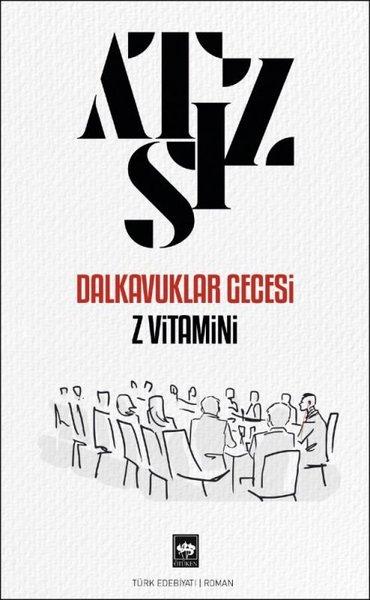
Hüseyin Nihal Atsız Dalkavuklar Gecesi Book Cover
The mysterious queen of the palace, Hantilyas, is the conscience of the novel. She never laughs, never entertains, never speaks. For she is the symbol of silence in the face of falsehood and resistance to deceit. Her emergence amid laughter after drinking poison is like a slap that opens the people’s eyes. She etches into our minds the question: “Are the dead more alive than the living, or are the living more dead?” Today, in our own geography, there are countless women, men, and ideas that know the truth but are silenced. Yet we must never forget that truth will one day laugh—indeed, even in the darkest chambers.
The poisoned drink that has stood for centuries in the palace chamber represents something else that has been consumed for centuries: sycophancy. Those who taste it do not delight in the poison but in the laughter it provokes. For this liquid is a kind of opium—it lulls people to sleep, makes them laugh, and distances them from reality. Is this not still true today? How many people stand upright on the “pleasurable poison” of status, money, and fame… What they consume is not poison but sycophancy itself.
The philosopher İlânasam and the poet İrdas are the finest representatives of the false intellectual archetype. These figures pretend to be educated but know nothing; they think not of the people but only of themselves. Such types are still very much present in today’s Türkiye. This is the age of those who live not by knowledge but by flattery. Atsız saw this clearly in 1941 and did not spare his pen.
Subbiluliyuma is a so-called mighty king; Tutaşil is a bureaucrat who worships power. Both represent the decay at the top of society. They believe themselves courageous for drinking the poison, yet in truth they remain trapped in the shadow of sycophancy. Atsız warns through these characters: “Those who believe themselves kings are as dangerous as sycophants.”
Dalkavuklar Gecesi is as relevant today as it was when it was written. For while systems change, the character of the sycophant does not. Atsız asks each of us in this novel: “Do you know what you are consuming? Is it truth or lie? Courage or fear?”
This book is not merely a novel; it is a call to awakening for a nation. The night of honesty, not sycophancy, must dawn—and those who will carry this night into daylight are those who walk unwearyingly in pursuit of truth.
Atsız, Buğra. "Sonsöz." Dalkavuklar Gecesi, 8–9. Münih, March 16, 1992.
Atsız, Hüseyin Nihal. Dalkavuklar Gecesi. İstanbul: Ötüken Neşriyat, 1941.
Atsız, Yağmur. "Önsöz." Dalkavuklar Gecesi, 5–7. Köln, February 6, 1992.
The Woman Who Never Laughed: The Symbol of Truth
It Is Not Poison, It Is Pleasure: The Taste of Sycophancy
Intellectual or Agent?: The Faces of İlânasam and İrdas
Cowardice Masked as Power: Subbiluliyuma and Tutaşil
A Message to the Present: Sycophants Are Always Among Us