


This article was automatically translated from the original Turkish version.
Nocardiosis
Mode of Transmission | By respiratory or skin route | ||||||||
|---|---|---|---|---|---|---|---|---|---|
Agent | Nocardia species | ||||||||
Nocardiosis is a rare infectious disease caused by aerobic, gram-positive, partially acid-fast bacteria of the genus Nocardia. These bacteria are commonly found in soil and organic materials and typically enter the human body through the respiratory tract or skin wounds. Nocardiosis is a systemic infection that can lead to severe complications, especially in individuals with compromised immunity. Disease can affect various organ systems including the lungs, skin and central nervous system like and may be fatal if left untreated.
The causative agents of nocardiosis, Nocardia species, are bacteria widely present in soil and decaying plant material. These bacteria enter the body primarily through inhalation in dusty environments or via open skin wounds. Infections occur more frequently in individuals with weakened immune systems. Conditions such as HIV/AIDS, organ transplant recipients, long-term corticosteroid use and diabetes are risk factors for nocardiosis.
Nocardia asteroides is the most common species causing infection in humans. Other species such as Nocardia brasiliensis and Nocardia farcinica have also been associated with clinical infections. Nocardiosis is a disease that can occur worldwide but is more prevalent in tropical and subtropical regions.
Nocardiosis can present with different clinical manifestations depending on the site of infection. The most common form is pulmonary nocardiosis. In this form, patients exhibit symptoms such as cough, sputum production, chest pain, breath and fire. Lung infection can, over time, spread to lung abscesses and even to other organs such as brain.
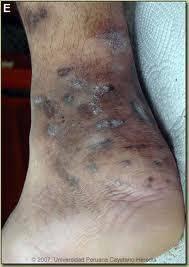
Dermal nocardiosis is typically a localized infection caused by bacteria that colonize the skin following trauma. Painful nodules, ulcers and apse may develop. In systemic nocardiosis, the infection spreads via the bloodstream to affect organs such as the brain, kidneys and bones. Brain abscess is one of the most serious complications of nocardiosis and can cause neurological symptoms.
The diagnosis of nocardiosis is established based on clinical findings and laboratory tests. Microbiological examination is considered the gold standard for diagnosis. The presence of Nocardia species in samples such as sputum, bronchoalveolar lavage fluid or skin lesions supports the diagnosis. Gram staining and modified acid-fast staining are methods used to identify Nocardia bacteria.
Molecular diagnosis techniques, particularly PCR (Polymerase Chain Reaction) and sequencing analysis, enable definitive identification of Nocardia species. Imaging techniques are crucial for evaluating involvement of the lungs and brain. Computed tomography (CT) and magnetic resonance imaging (MRI) are used to determine the extent of infection.
The treatment of nocardiosis requires prolonged antibiotic therapy. Since Nocardia species exhibit natural resistance to many antibiotics, treatment is usually administered in combination. Sulfonamides, particularly trimethoprim-sulfamethoxazole (TMP-SMX), are first-line step drugs for nocardiosis. Other antibiotics such as amikacin, imipenem and ceftriaxone may also be added to the treatment regimen.
The duration of treatment varies depending on the severity and extent of infection. In pulmonary nocardiosis, treatment typically lasts 6–12 moon, but in complications such as brain abscess, this duration may be longer. In patients with immunodeficiency, controlling the underlying disease is also an essential important of treatment.
Brown-Elliott, Barbara A., Richard J. Wallace Jr., and John M. Musser. Clinical and Pathogenic Microbiology. 4th ed., Mosby, 2015.
Mandell, Gerald L., John E. Bennett, and Raphael Dolin. Mandell, Douglas, and Bennett's Principles and Practice of Infectious Diseases. 9th ed., Elsevier, 2019.
Murray, Patrick R., Ken S. Rosenthal, and Michael A. Pfaller. Medical Microbiology. 8th ed., Elsevier, 2020.

Nocardiosis
Mode of Transmission | By respiratory or skin route | ||||||||
|---|---|---|---|---|---|---|---|---|---|
Agent | Nocardia species | ||||||||
Etiology and Epidemiology of Nocardiosis
Clinical Features and Symptoms
Diagnostic Methods
Treatment Approaches