


This article was automatically translated from the original Turkish version.
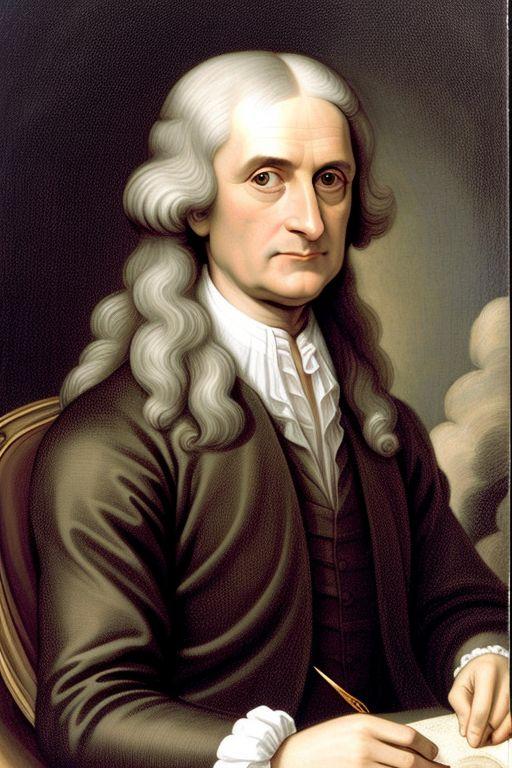
Isaac Newton, while laying the foundations of modern physics, formulated three revolutionary laws concerning the nature of motion and forces. These laws not only established the framework of classical mechanics but also provided a profound understanding of how the universe operates. Although Newton’s laws of motion appear simple and intuitive, they represented a major historical revolution.
class=\
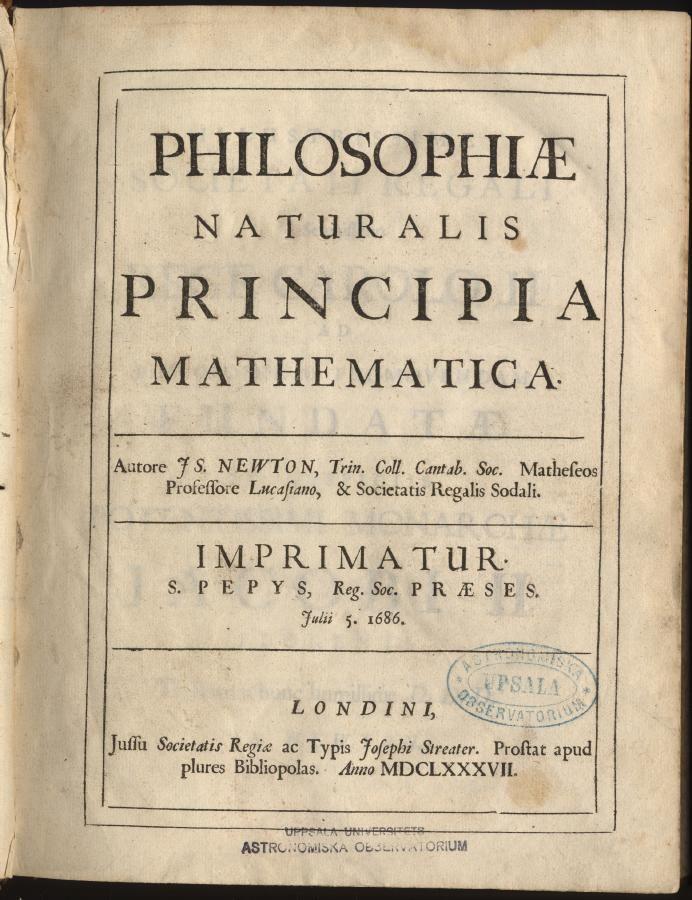
In the 17th century, Newton revolutionized the world of science by outlining the fundamental principles of motion in his 1687 work, Principia Mathematica. Until then, investigations into the nature of motion and forces had led philosophers to propose various speculative theories. Newton, however, introduced a more mathematical and empirical approach, establishing clear and universal laws governing the universe. In particular, when explaining the nature of motion, he departed from earlier thinkers by asserting that all objects inherently resist changes to their state of motion—inertia—and that any change in motion occurs only when a force is applied.
class=\
Newton’s first law of motion, also known as the law of inertia, states that an object will remain at rest or continue moving in a straight line at a constant velocity unless acted upon by an external force. In other words, without an external force, an object’s state of motion will not change. This law builds on earlier observations by Galileo and Descartes but was systematically formulated by Newton. Although this law is now widely known, prior to Newton, most thinkers believed that motion was a natural tendency of objects. Newton’s revolutionary insight was that constant motion can only persist in the absence of external forces.
The law of inertia can be illustrated with many everyday examples. For instance, when an airplane in flight adjusts its engine thrust, its motion is directly affected. Similarly, when a rocket is launched, the thrust force propels it forward and maintains its motion. However, external forces such as atmospheric friction can slow it down.
Newton’s second law of motion states that the acceleration of an object is directly proportional to the net force acting on it and inversely proportional to its mass. This law can be expressed mathematically as:
F = m · a
Here, F represents force, m represents the mass of the object, and a represents acceleration. According to this law, as the force applied to an object increases, so does its acceleration. However, if the object’s mass is large, the acceleration will be smaller. This relationship holds a central place in classical mechanics and is used to explain a wide range of physical phenomena. Newton’s second law helps us understand how forces cause changes in motion.
For example, consider an airplane. The thrust force applied to the aircraft increases its speed and causes acceleration. If the airplane is moving at a constant velocity, the forces acting on it are balanced. When these forces change, the acceleration changes as well, resulting in an increase or decrease in the airplane’s speed.
Newton’s third law of motion can be summarized as: “For every action, there is an equal and opposite reaction.” This law states that forces always occur in pairs: when one object exerts a force on another, the second object simultaneously exerts an equal and opposite force on the first.
This law appears in countless examples in daily life and scientific experiments. For instance, when a football is kicked, a force is applied to the ball, causing it to move. At the same time, the ball exerts an equal and opposite force on the foot. Another example is the operation of a jet engine: the exhaust gases expelled backward push the engine forward, because as the gases are pushed backward, the engine simultaneously pushes the gases forward with an equal and opposite force.
This law plays a critical role in understanding force interactions throughout the universe. In particular, gravitational forces between planets and electromagnetic interactions are also governed by this principle.
Newton’s laws of motion form the cornerstone of classical mechanics and played a pivotal role in the development of modern physics. These laws are not only valid in the macroscopic world but also applicable across a vast range of phenomena, from subatomic particles to interplanetary motion. Newton’s second law laid the groundwork for more advanced physical principles such as the conservation of momentum and energy.
In particular, Newton’s discovery that the law of universal gravitation governs all masses revolutionized astronomy and astrophysics. Using Kepler’s laws to describe planetary motion, Newton determined why planetary orbits are elliptical and established that gravitational force is universal. This understanding laid the foundation for modern cosmology.
Newton’s laws of motion hold a vital place not only in classical mechanics but also in modern physics. These laws established fundamental principles governing the operation of the universe and have guided scientists for centuries. Newton’s laws are still actively used today in engineering, astronomy, and physics, representing universal principles that help us comprehend the cosmos.
The profound insight provided by these laws did not merely explain the physical world; it also enabled the advancement of science. Newton’s work marked a crucial turning point in the evolution of scientific thought and laid the foundations of modern physics.
Lecture Notes, (Lecture 5: Newton’s Laws of Motion, Particle Dynamics I), https://physics.gantep.edu.tr
Newton’s Laws of Motion, Green Research Center, grc.nasa.gov
Sutter, (2023.03.19), What are Newton's laws of motion?, space.com

No Discussion Added Yet
Start discussion for "Newton's Laws of Motion" article
Newton’s Laws of Motion and Their Historical Development
Newton’s First Law: Inertia
Newton’s Second Law: Force and Acceleration
Newton’s Third Law: Action and Reaction
The Impact of Newton’s Laws on Modern Physics
Conclusion