


This article was automatically translated from the original Turkish version.
+1 More
National Geographic
Full Name | National Geographic Society | ||||||||
|---|---|---|---|---|---|---|---|---|---|
Organization Type | Non-profit foundation | ||||||||
Media Company | National Geographic Partners: (LLC – limited liability company) | ||||||||
Founding Date | January 27, 1888 | ||||||||
Founder | Gardiner Greene Hubbard 31 scientists, explorers, and businesspeople Alexander Graham Bell | ||||||||
Headquarters | Washington, D.C., USA | ||||||||
CEO (Society) | Dr. Jill Tiefenthaler (since 2020) | ||||||||
President (Society) | Jean Case (Chair of the Board) | ||||||||
Ownership (Partners) | 73%: The Walt Disney Company 27%: National Geographic Society | ||||||||
Constituent Organizations | National Geographic Magazine National Geographic Awards National Geographic Digital Media National Geographic Maps National Geographic Expeditions National Geographic Learning Nat Geo Music Nat Geo People Nat Geo Wild National Geographic Channel National Geographic Traveler National Geographic Kids | ||||||||
National Geographic, science, exploration and media fields, operates as a brand with both nonprofit and commercial structures. Within its organizational framework, there is a nonprofit foundation called National Geographic Society and a for-profit company, National Geographic Partners, LLC, which produces media, publishing and digital content. Through this dual structure, National Geographic conducts research, education and public benefit projects while also producing diverse content through magazines, television, documentaries and digital platforms. Founded in 1888, the organization has evolved from a purely scientific institution into a media-focused entity.
National Geographic is an organization that produces publications and documentary content on topics such as geography, archaeology, natural history, space and anthropology. It also functions as a foundation that finances research in these areas and organizes various educational programs.

National Geographic Logo (Source: National Geographic)
Form: One of the core visual elements of the National Geographic logo is a simple yellow rectangle frame.
Meaning: This frame is interpreted as symbolizing a window. This symbol is understood as a perspective on the world, nature, humanity and the universe, and is associated with concepts of exploration, observation and documentation.
Yellow, as a color associated with the sun, is linked to themes such as knowledge, light and life. It is also identified with concepts such as curiosity, exploration and energy. In color psychology, yellow is defined as an attention-grabbing color, yet its soft tone is noted to serve as a non-aggressive stimulant.
The typeface used in the logo exhibits a simple and modern visual structure. A sans-serif typeface has been chosen to achieve a contemporary and scientific appearance. The text is typically rendered in black, conveying professionalism and a neutral presentation.
The National Geographic logo has been designed to carry multiple conceptual meanings beyond its simple visual structure. The yellow rectangular frame at the center of the logo is said to represent the brand’s connection to themes of nature, science, culture and exploration. This symbol is interpreted as a viewing window that enables the viewer to access different geographies and realities without physically leaving their place. It is also associated with acts of observation, research and access to knowledge.
The use of yellow carries a conceptual context beyond aesthetic preference. Various interpretations highlight its connection to concepts such as access to knowledge, enlightenment and the energy of life. The yellow frame is one of the visual elements long used by National Geographic, particularly on magazine covers.
The typographic section of the logo is constructed with a minimalist typeface. This typographic style is regarded as an element reflecting the brand’s contemporary, scientific and institutional character. The choice of black is associated with qualities such as professionalism and universality.
When evaluated together in its visual and functional aspects, the logo serves as a corporate identity tool aligned with the brand’s overall communication strategy.
National Geographic Society (NGS) was founded on 27 January 1888 in Washington, D.C., by a group of 33 individuals aiming to spread geographical knowledge. Among the founders were lawyer Gardiner Greene Hubbard and inventor Alexander Graham Bell. Hubbard served as the organization’s first president, and Bell assumed the presidency in 1897.
The founding purpose was to make geographical knowledge accessible to the public, support scientific research, finance exploration expeditions and share the resulting information with the public.
“National Geographic Society” represents the nonprofit structure of the organization engaged in science, education and exploration, while the term “National Geographic” refers to its public-facing media presence (e.g., magazine, television, documentary content). These two structures operate together but are legally and functionally distinct:
National Geographic consists of the union of two distinct entities: a nonprofit foundation (NGS) and a commercial organization conducting media and publishing activities (NG Partners).
27 January 1888: National Geographic Society (NGS) was established in Washington, D.C.
October 1888: National Geographic Magazine was first published. Initially focused on scientific and text-based content.
1905: The first color cover photograph was published in the magazine (Hubbard Glacier, Alaska).
1964: The first television documentary, Americans on Everest, aired on CBS.
1997–2001: National Geographic Channel was launched and began international broadcasts in 2001.
2007: Digital content production was accelerated; interactive content and a digital archive were introduced via the website.
2015: National Geographic Partners was established. Ownership structure:
2019: The Walt Disney Company acquired 21st Century Fox, gaining a 73% stake and majority control of National Geographic Partners.
2020: Jill Tiefenthaler began serving as CEO of National Geographic Society.
2023–2025: Digital broadcasting activities continued on the Disney+ platform with productions such as Limitless, Secrets of the Elephants, Welcome to Earth and Genius: MLK/X.
National Geographic Society’s most renowned publication is the National Geographic magazine, published since 1888. The magazine offers content on geography, nature, science, history and culture. It is published in over 30 languages across more than 100 countries.
National Geographic Magazine was first published in October 1888. Early issues focused on scientific content; later editions incorporated photography and graphic design. The magazine is structured to appeal to diverse audiences through visual materials and accessible language. Its content covers geography, natural history, scientific developments, cultural studies and history.
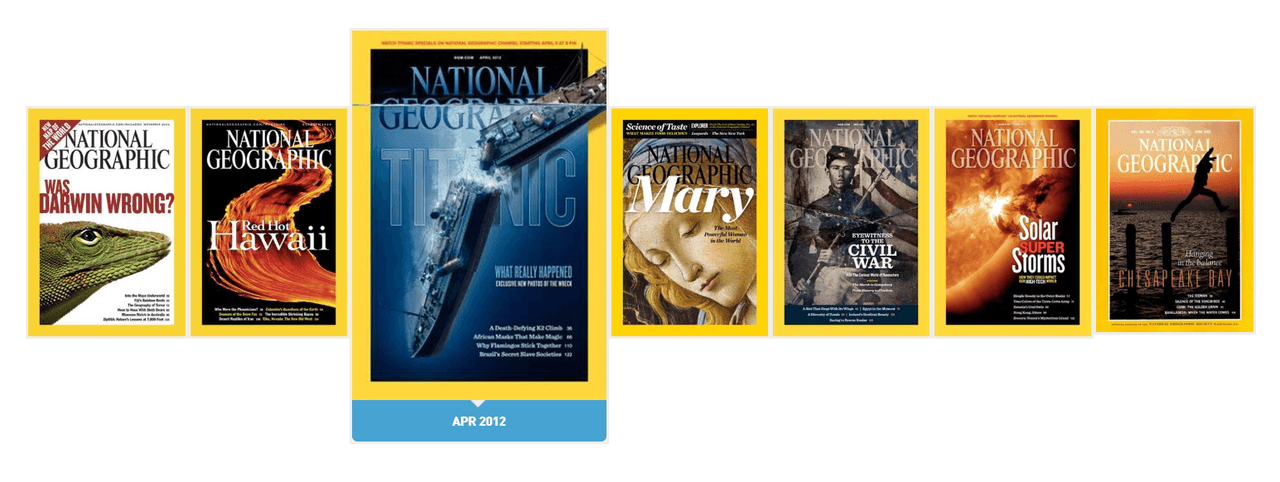
National Geographic Magazine Archive (Source: Archive)
Through channels such as National Geographic Channel, Nat Geo WILD and Nat Geo People, documentaries and programs on nature, science, history and culture are broadcast to international audiences.
The organization also produces various content in the digital media space. Documentaries are broadcast through television channels such as National Geographic Channel, Nat Geo WILD and Nat Geo People.
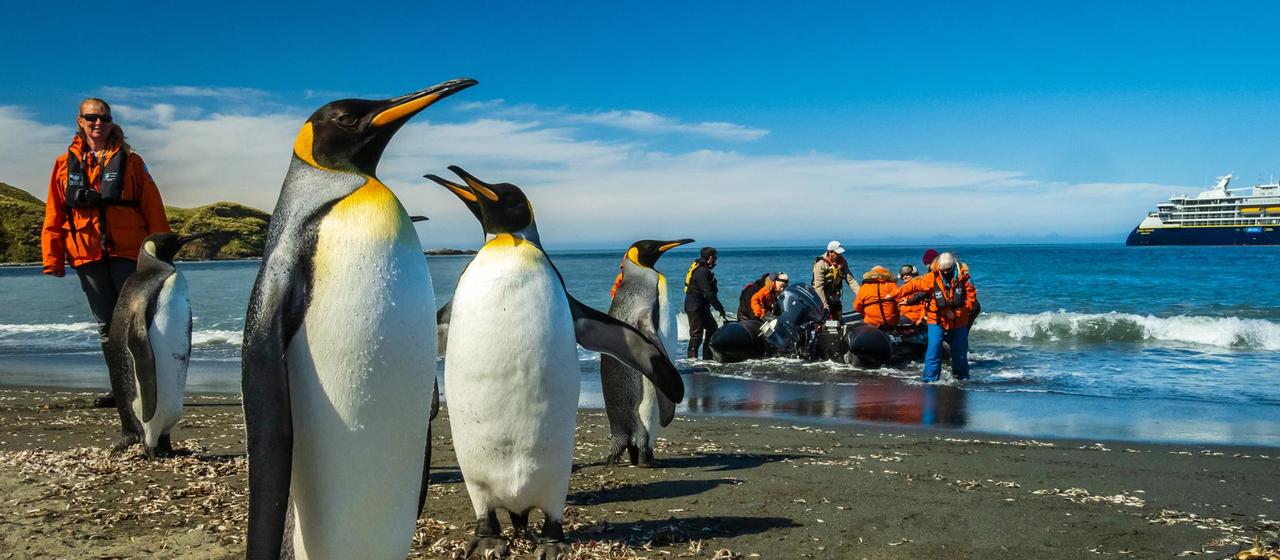
NatGeo, Antarctica Expedition Cruises (Source: National Geographic)
Documentaries address various scientific and environmental themes. In a documentary on Antarctica, scientific research and natural environmental conditions on the continent are examined in detail. Antarctica has long been a subject of scientific research due to its climate structure, ecological characteristics and geological composition. Ongoing studies contribute to understanding climate change, sea level fluctuations and paleoecological processes.
Some notable documentaries produced include:
These productions explore nature observations, animal behavior, environmental issues and scientific discoveries.
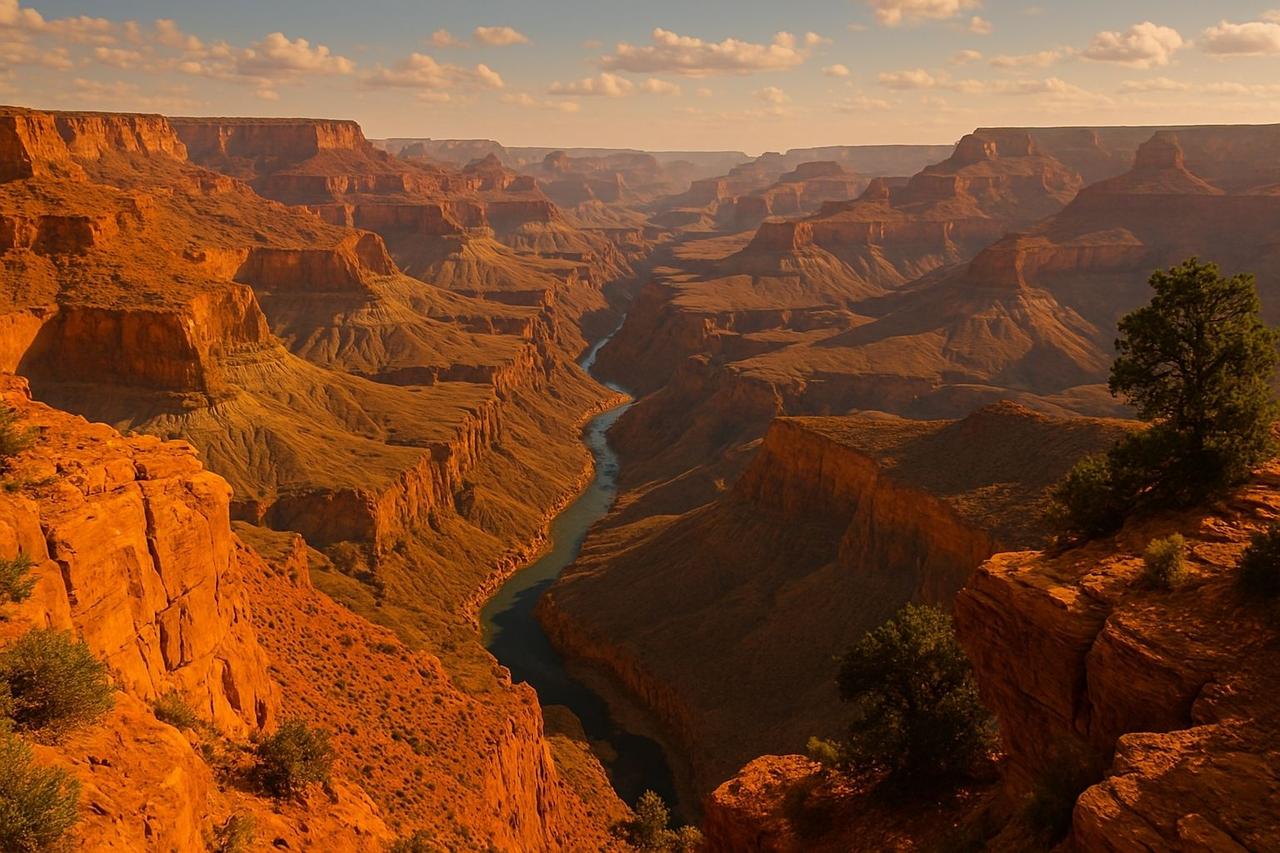
Grand Canyon, NatGeo, (Generated by AI)
The Grand Canyon, located in the state of Arizona in the United States, was formed by erosion from the Colorado River. Its geological structure and geomorphological processes have made it a subject of numerous documentary projects.
National Geographic’s first television documentary was broadcast on 1964 via the CBS (Columbia Broadcasting System) network.
This broadcast marked National Geographic’s first content production in television media. Subsequently, regular documentary series under the title National Geographic Specials began, with content later appearing on other networks such as PBS, NBC and ABC.
National Geographic Society operates to support scientific research, contribute to education and raise environmental awareness.
In 2015, following an agreement with 21st Century Fox, National Geographic’s media content production was consolidated under the joint venture National Geographic Partners. In 2019, The Walt Disney Company acquired the majority of 21st Century Fox, gaining a 73% stake in National Geographic Partners. Research and educational activities, however, remain under the independent control of National Geographic Society.
National Geographic Society (NGS) administers various grant programs to support scientific research and educational projects. Since 1890, financial support has been provided to over 14,000 researchers, educators, storytellers and explorers. Supported projects cover topics such as oceans, land ecosystems, wildlife, human history, cultural studies, planetary health and space science.
Additionally, NGS administers the Fulbright–National Geographic Award program in collaboration with the Fulbright Program, offering selected researchers additional resources and support.
NGS supports projects aimed at documenting and preserving cultural diversity and the natural environment. Under the Photo Ark project, the documentation of endangered species is a primary goal. The Out of Eden Walk project involves long-term fieldwork on human migration routes and cultural interactions.
Cultural studies include archaeological excavations, ethnographic research and initiatives to preserve cultural heritage.
NGS plans to open a new museum named “Museum of Exploration” in Washington, D.C., in 2026. The facility will occupy approximately 100,000 square meters and will feature exhibitions on scientific research and exploration, supported by interactive digital technologies such as virtual and augmented reality. Workshops, science camps and educational events for young participants are also planned. This initiative is designed as an application to make educational and scientific content publicly accessible.
Note: National Geographic is used to describe media and publishing activities, while National Geographic Society refers to the foundation responsible for its scientific, research and educational functions. These two concepts represent different functional areas under the same organizational umbrella.
Established in Washington, D.C., on 27 January 1888, the National Geographic Society is a nonprofit foundation. Its core activities include scientific exploration, research, environmental conservation and education. Within this scope, it provides grants, funding and field opportunities to scientists, researchers and educators. The foundation also expands academic support mechanisms through collaboration with the Fulbright Program. It serves as the core structure shaping the scientific and ethical approach of the National Geographic brand.
National Geographic Magazine began publication in October 1888 with its first issue. The magazine focuses on geography, nature, science, history and cultural topics. Its content typically features articles based on long-term fieldwork alongside visual elements. The magazine is translated into multiple languages and distributed in many countries. Originally published by the Society, today it is printed under the umbrella of the commercial entity National Geographic Partners.
National Geographic Channel is a television network established in 2001. The channel features documentary content focused on natural sciences, wildlife, space exploration, history and social issues. Notable productions include “Free Solo”, “The Rescue”, “Genius” and “Welcome to Earth”. Following The Walt Disney Company’s acquisition of 21st Century Fox in 2019, the channel’s media content became part of Disney’s portfolio.
Initially a partnership between National Geographic Society and Fox
As of 2019, incorporated into The Walt Disney Company
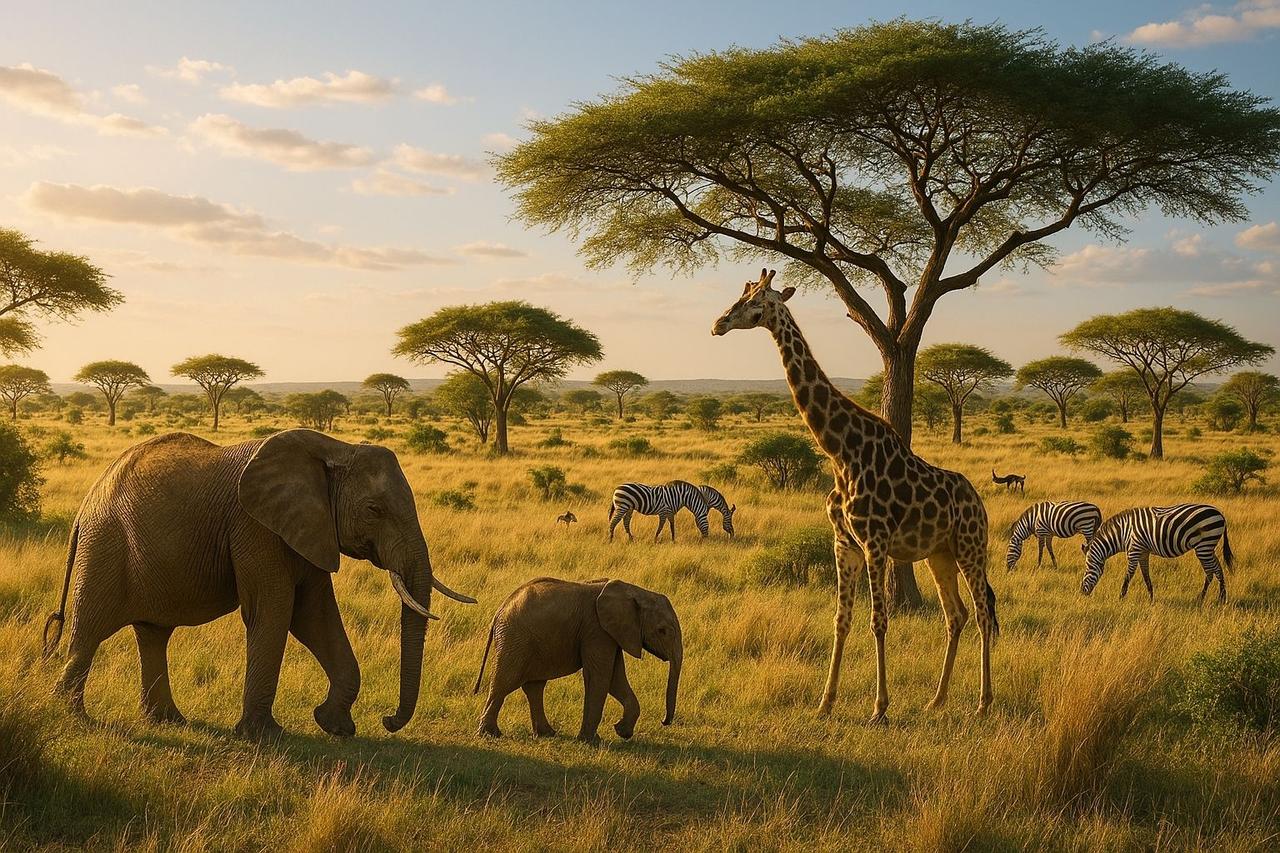
Natural Life Park, Africa, NatGeo, (Generated by AI)
The channel is the division of National Geographic responsible for television broadcasting. Its content features visual materials on natural areas, marine ecosystems and geographic formations.
National Geographic Partners was established in 2015 as a partnership between National Geographic Society and 21st Century Fox. This entity manages the media activities of the National Geographic brand, consolidating revenue from magazine publishing, television broadcasting, digital platforms, film production, book publishing and advertising. In 2019, The Walt Disney Company acquired Fox’s stake, gaining a 73% share. The Society retains its 27% stake in the partnership.
This is the company managing National Geographic’s media operations.
National Geographic Awards is an award program recognizing individuals and projects that excel in science, environment, storytelling and exploration. In addition, magazine and media content have won international awards and been evaluated across various platforms. The award program is administered by National Geographic Society.
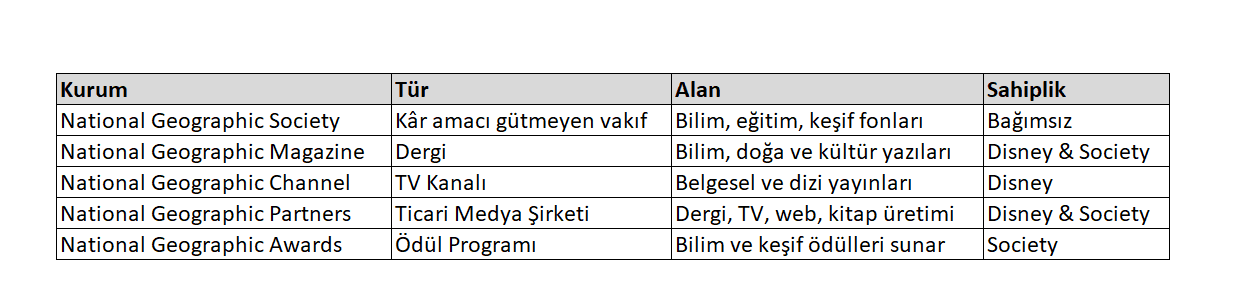
National Geographic Structure Summary Table
Other official brands and initiatives operating under the National Geographic name include:
National Geographic Kids is a sub-brand offering science, nature, history and exploration content for children. Publications include children’s magazines, books, interactive digital content, educational games and video materials. Content is also used in schools in an educational and curriculum-aligned manner.
National Geographic Traveler is a publication and media platform offering content on travel, nature, culture and exploration. Publications cover destinations worldwide, local experiences and travel recommendations. Visual storytelling through photography is also an integral part of the content.
Nat Geo Wild is a television channel focused directly on wildlife and animal behavior. The channel broadcasts documentaries developed with scientific consultation on predators, natural life cycles and species conservation.
Nat Geo People is a television channel focused on cultures, traditions and human stories from different geographic regions. Content emphasizes visual storytelling of individual lifestyles and social practices.
Nat Geo Music is a media initiative focused on world music and musical cultures. Content includes documentaries, interviews and programs introducing different music genres.
National Geographic Learning produces educational materials focused especially on language learning and environment/geography-related topics. It offers various content such as textbooks, digital platforms and teacher resources.
National Geographic Expeditions is a travel organization offering guided trips and research-focused journeys. Tours are conducted with expert guides and researchers.
National Geographic Maps is a unit that produces maps, atlases and geographic guides. This unit develops cartographic products in both print and digital formats.
These brands and initiatives operate across different fields under the National Geographic umbrella, sustaining the organization’s functions in science, education and media through various platforms.
National Geographic is a multifaceted organization active in media, scientific research, education, environment and cultural documentation. The research and education-focused structure of National Geographic Society and the media production and distribution capacity of National Geographic Partners enable the organization to function effectively across diverse domains. Activities span publishing, television, digital media, education, travel organization, cartography and content for children.
Fulbright U.S. Student Program. "Fulbright–National Geographic Award." Accessed April 10, 2025.https://us.fulbrightonline.org/applicants/types-of-awards/fulbright-national-geographic-award-program.
History.com Editors. “National Geographic Society Is Incorporated.” Accessed April 10, 2025.https://www.history.com/this-day-in-history/national-geographic-society-founded.
Howard, Brian Clark. “National Geographic Wins National Magazine Awards.” *National Geographic*, February 3, 2015. Accessed April 10, 2025.https://www.nationalgeographic.com/culture/article/150202-national-magazine-awards-wins.
National Geographic Society. "Our Story." National Geographic Society. Accessed April 10, 2025.https://www.nationalgeographic.org/society/our-story/.
National Geographic. "Antarctica Expedition Cruise Trips." Accessed April 13, 2025.https://www.nationalgeographic.com/expeditions/trip-search/antarctica-expedition-cruise-trips/.
National Geographic. "Education Resource Library." National Geographic Education. Accessed April 10, 2025.https://education.nationalgeographic.org.
National Geographic. "Nat Geo Kids." National Geographic Kids. Accessed April 10, 2025.https://kids.nationalgeographic.com.
National Geographic. "National Geographic Archive." Accessed April 13, 2025.https://archive.nationalgeographic.com/landing.
National Geographic. "National Geographic Traveler." Accessed April 10, 2025.https://www.nationalgeographic.com/travel.
National Geographic. "National Geographic." Accessed April 13, 2025.https://www.nationalgeographic.com/.
National Geographic. "New Memoir Tells the Inside Story of National Geographic’s Founding Family." Accessed April 10, 2025.https://www.nationalgeographic.com/culture/article/memoir-tells-the-story-of-national-geographics-founding-family.
National Geographic. “Explore the World with National Geographic Expeditions.” Accessed April 10, 2025.https://www.nationalgeographic.com/expeditions.
Newman, Cathy. “New Memoir Tells the Inside Story of National Geographic’s Founding Family.” *National Geographic*, September 22, 2016. Accessed April 10, 2025.https://www.nationalgeographic.com/culture/article/memoir-tells-the-story-of-national-geographics-founding-family.
WIRED. “Jan. 27, 1888: National Geographic Society Gets Going.” Accessed April 10, 2025.https://www.wired.com/2010/01/0127national-geographic-society-founded.
WIRED. “Penguins, Peaks and Penny-Farthings: National Geographic Covers, 1959–2000.” WIRED, January 27, 2010. Accessed April 10, 2025.https://www.wired.com/2010/01/national-geographic-covers-gallery/.

National Geographic
Full Name | National Geographic Society | ||||||||
|---|---|---|---|---|---|---|---|---|---|
Organization Type | Non-profit foundation | ||||||||
Media Company | National Geographic Partners: (LLC – limited liability company) | ||||||||
Founding Date | January 27, 1888 | ||||||||
Founder | Gardiner Greene Hubbard 31 scientists, explorers, and businesspeople Alexander Graham Bell | ||||||||
Headquarters | Washington, D.C., USA | ||||||||
CEO (Society) | Dr. Jill Tiefenthaler (since 2020) | ||||||||
President (Society) | Jean Case (Chair of the Board) | ||||||||
Ownership (Partners) | 73%: The Walt Disney Company 27%: National Geographic Society | ||||||||
Constituent Organizations | National Geographic Magazine National Geographic Awards National Geographic Digital Media National Geographic Maps National Geographic Expeditions National Geographic Learning Nat Geo Music Nat Geo People Nat Geo Wild National Geographic Channel National Geographic Traveler National Geographic Kids | ||||||||
No Discussion Added Yet
Start discussion for "National Geographic" article
Definition
Logo Meaning and Symbolism
Yellow Rectangular Frame
“National Geographic” Typeface
Logo Design Philosophy
Founding and History
Chronological History
Corporate Structure and Management
Publications and Media Content
National Geographic Magazine
Other Publications
Television Channels
Media and Documentaries:
National Geographic’s First Documentary Broadcast
Mission and Areas of Activity
Research and Exploration
Education
Publishing and Media
Visual Content Production
Environment and Nature Conservation
Culture and Anthropology
Corporate Development and Partnerships
Education and Research Support
Cultural and Environmental Impact
Future Initiatives
Which Sectors Does It Collaborate With?
Academic Institutions
Media and Publishing
Civil Society Organizations (CSOs)
Technology Companies
Government Agencies and International Organizations
Brands and Entities Within National Geographic
National Geographic Society (Actual Organization / Core Structure)
National Geographic Magazine (Magazine)
National Geographic Channel (Television Channel)
National Geographic Partners (Commercial Partnership / Media Company)
National Geographic Awards (Award Program)
Summary of Structure:
National Geographic Kids
National Geographic Traveler
Nat Geo Wild
Nat Geo People
Nat Geo Music
National Geographic Learning
National Geographic Expeditions
National Geographic Maps
Additional Information – Useful Facts