


This article was automatically translated from the original Turkish version.
+1 More
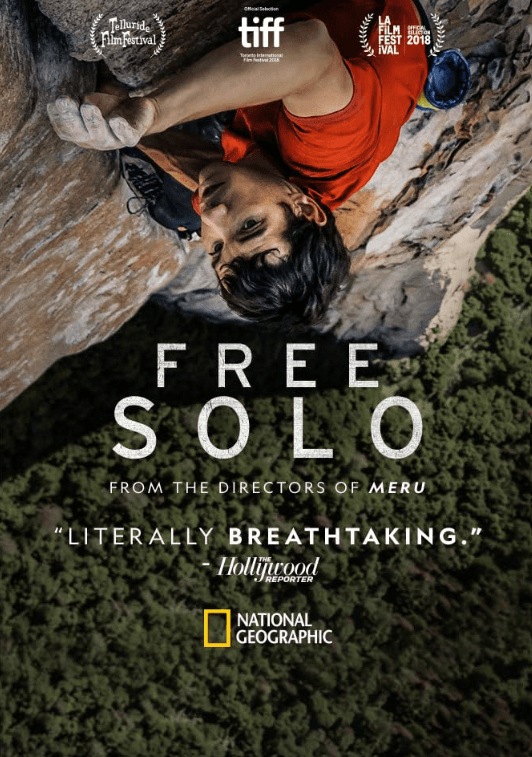
Free Solo
Full Title of the Documentary | Free Solo | ||||||||
|---|---|---|---|---|---|---|---|---|---|
Year of Publication | 2018 | ||||||||
Director | Jimmy Chin Elizabeth Chai Vasarhelyi | ||||||||
Production Organization | National Geographic Documentary Films, Little Monster Films, Itinerant Media | ||||||||
Main Subject | Free solo climb of the Freerider route on El Capitan wall in Yosemite National Park without ropes or protective equipment | ||||||||
Main Character / Athlete | Alex Honnold (Climber) | ||||||||
Climbed Route | El Capitan – Freerider route (Approximately 900 meters) | ||||||||
Technical Difficulty Rating | 5.12d/5.13a, 33 rope lengths | ||||||||
Climbing Duration | 3 hours 56 minutes | ||||||||
Climbing Date | 3 June 2017 | ||||||||
Preparation Duration | Approximately 1.5 years of systematic training | ||||||||
Previous Unsuccessful Attempt | November 2016 | ||||||||
Main Cinematographer of the Documentary | Jimmy Chin | ||||||||
Photographers / Documentary Team | Jimmy Chin Clair Popkin (camera) Cheyne Lempe Mikey Schaefer Renan Ozturk | ||||||||
Music of the Documentary | Marco Beltrami Brandon Roberts | ||||||||
Editor / Editing | Bob Eisenhardt | ||||||||
Publisher | National Geographic Documentary Films | ||||||||
Award Received | 91st Academy Awards (2019) – Best Documentary Feature Film (Best Documentary Feature) BAFTA Film Awards (2019) – Best Documentary Emmy Awards (2019) – 7 awards in 7 categories | ||||||||
Screening Duration | 100 minutes | ||||||||
IMDb Rating (As of 2025) | 8.1 / 10 | ||||||||
Name of the Vine in the Documentary | Freerider (El Capitan southwest face) | ||||||||
Geographical Location | Yosemite National Park California USA | ||||||||
Broadcast Platform | Disney+ Amazon Prime Apple TV National Geographic Channel | ||||||||
Free Solo is a feature-length documentary film directed by Jimmy Chin and Elizabeth Chai Vasarhelyi in 2018, documenting the free solo climb of rock climber Alex Honnold up the El Capitan granite wall in Yosemite National Park without ropes or safety equipment. Produced by National Geographic Documentary Films, the film chronicles the physical, psychological, and logistical aspects of Honnold’s ascent of the approximately 900-meter Freerider route on June 3, 2017, completed in 3 hours and 56 minutes.
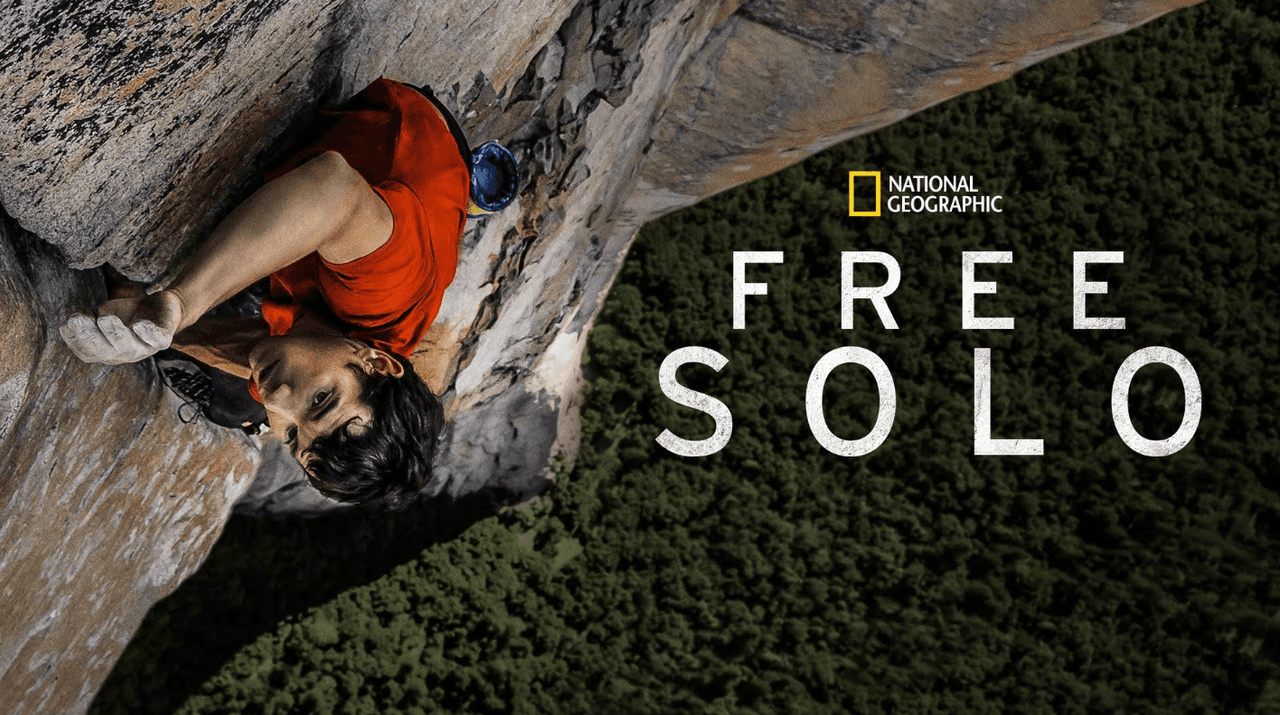
Alex Honnold in Free Solo (IMDb)
The production was awarded the Academy Award for Best Documentary Feature at the 2019 Oscars and has received numerous international accolades including BAFTA and Emmy Awards. The documentary explores themes such as climbing sport, human limits, risk management, and mental preparation through academic, athletic, and visual storytelling, and is regarded as a landmark work in cinematic technique and documentary methodology.
Free Solo - Trailer (National Geographic)
The climb was recorded by National Geographic and comprehensively documented in the 2018 film Free Solo. The film won the Academy Award (Oscar) for Best Documentary in 2019. Honnold’s preparation and ascent have been evaluated on various scientific and cultural platforms. The documentary has presented the physical and psychological dimensions of this climbing style to a broad audience.
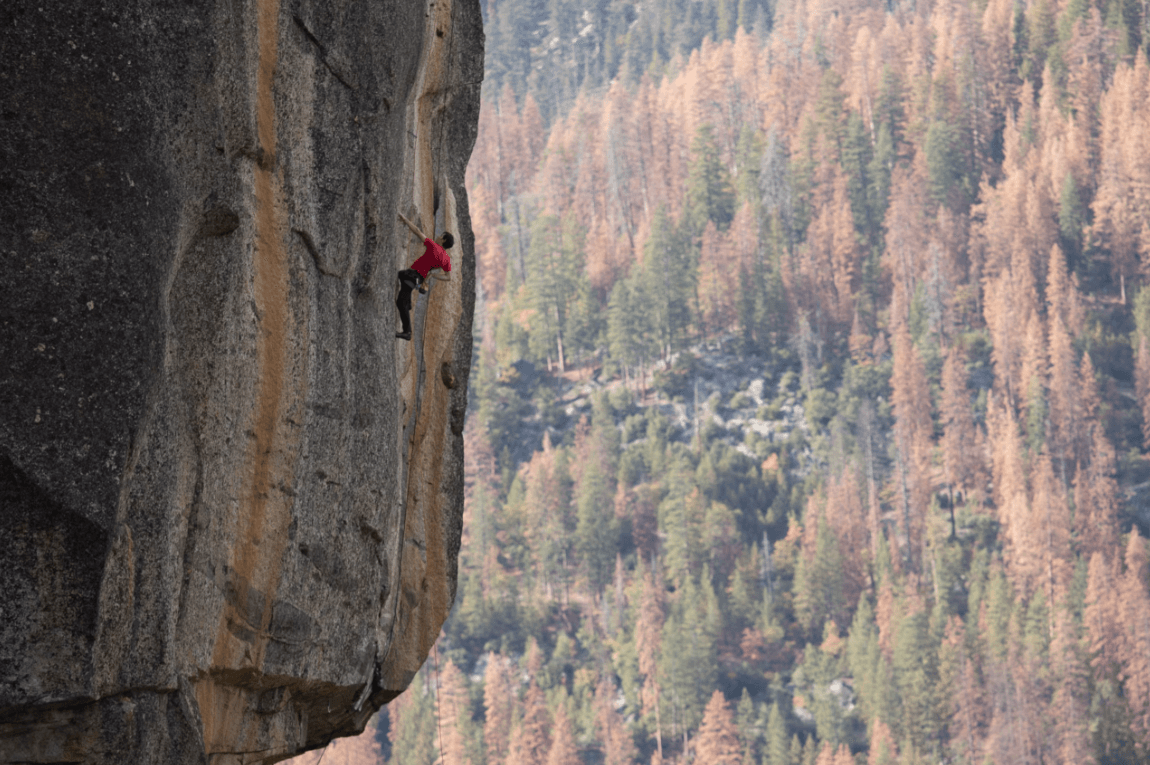
Alex Honnold, Yosemite, (National Geographic)
Free solo climbing is the practice of ascending a rock face alone without any ropes, safety harnesses, or protective gear. It is considered the most dangerous form of climbing because even the smallest mistake or fall can result in serious injury or death. Although free solo climbing is praised as the “purest” form of climbing, it is also extremely hazardous, and only a very small number of elite climbers have succeeded in this discipline.
Free soloing on long rock faces hundreds of meters high demands not only exceptional physical ability but also superior mental resilience and the capacity to control fear. Climbers like Honnold meticulously study and memorize routes in advance and prepare their bodies and minds through years of training. Nevertheless, due to the inherent lethal risks of free solo climbing, many regard this form of climbing as an endeavor with “no room for error.”
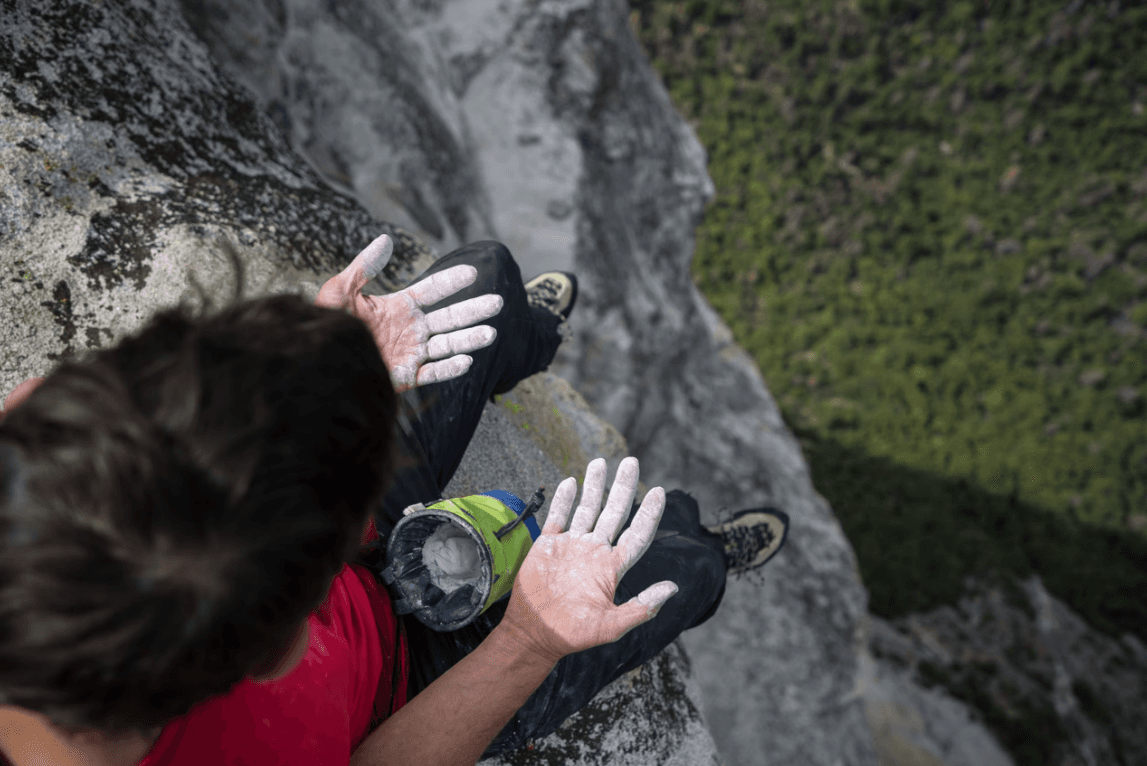
Free Solo (Free Climbing), (National Geographic)
Alex Honnold (born 1985) is an American rock climber internationally renowned for his free solo climbing endeavors. Honnold demonstrated exceptional talent in rock climbing from a young age and quickly rose to become one of the world’s leading free climbers, gaining widespread attention particularly through his free solo ascents from the late 2000s onward. While Honnold has also achieved success in traditional roped climbing, it is his free solo performances that have brought him fame.
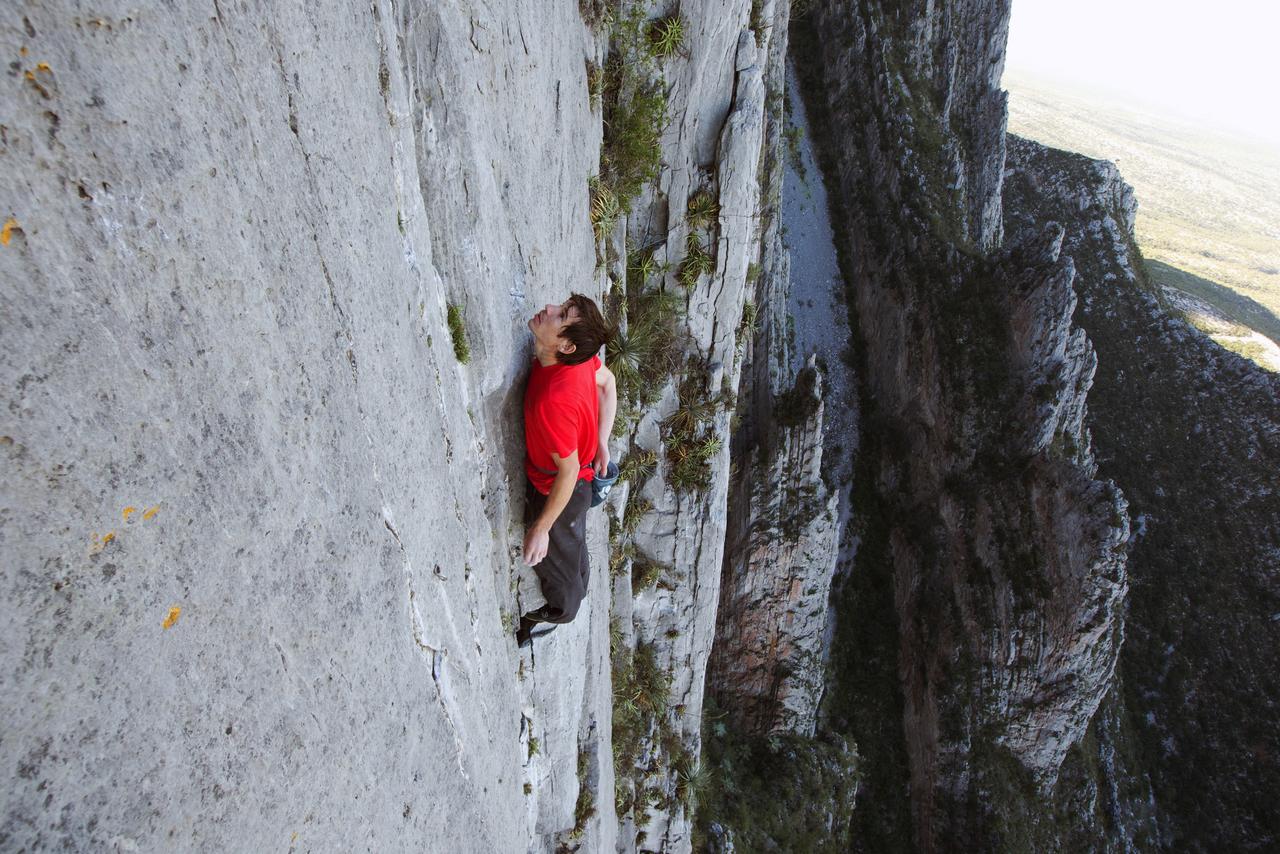
El Sendero Luminoso, Mexico (
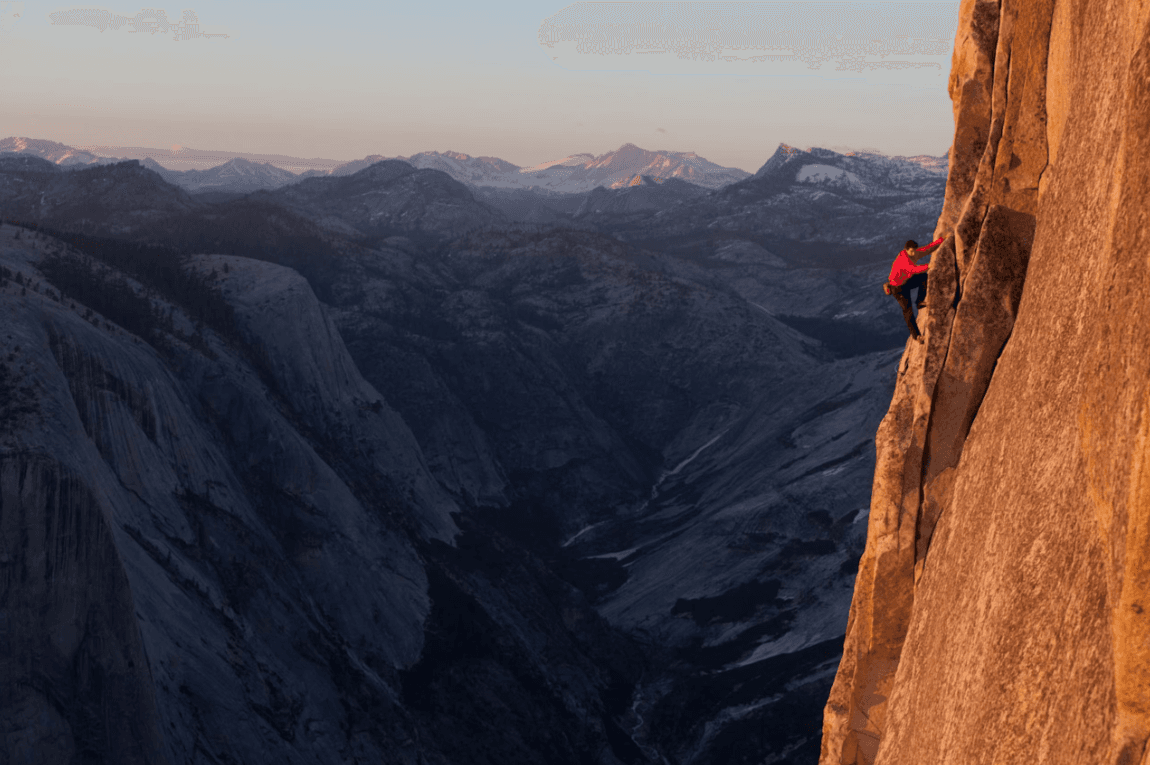
Alex Honnold (National Geographic)
Chronological list of Honnold’s notable free solo achievements:
Honnold’s achievements on this list have raised the standard for free solo climbing significantly. While free solos of shorter routes rated 5.12 or lower were known before him, Honnold distinguished himself by consistently completing solos on routes of high difficulty and great length.
The approximate path of the 900-meter Freerider route on El Capitan’s southwest face is shown with a red line, with key transition points numbered.
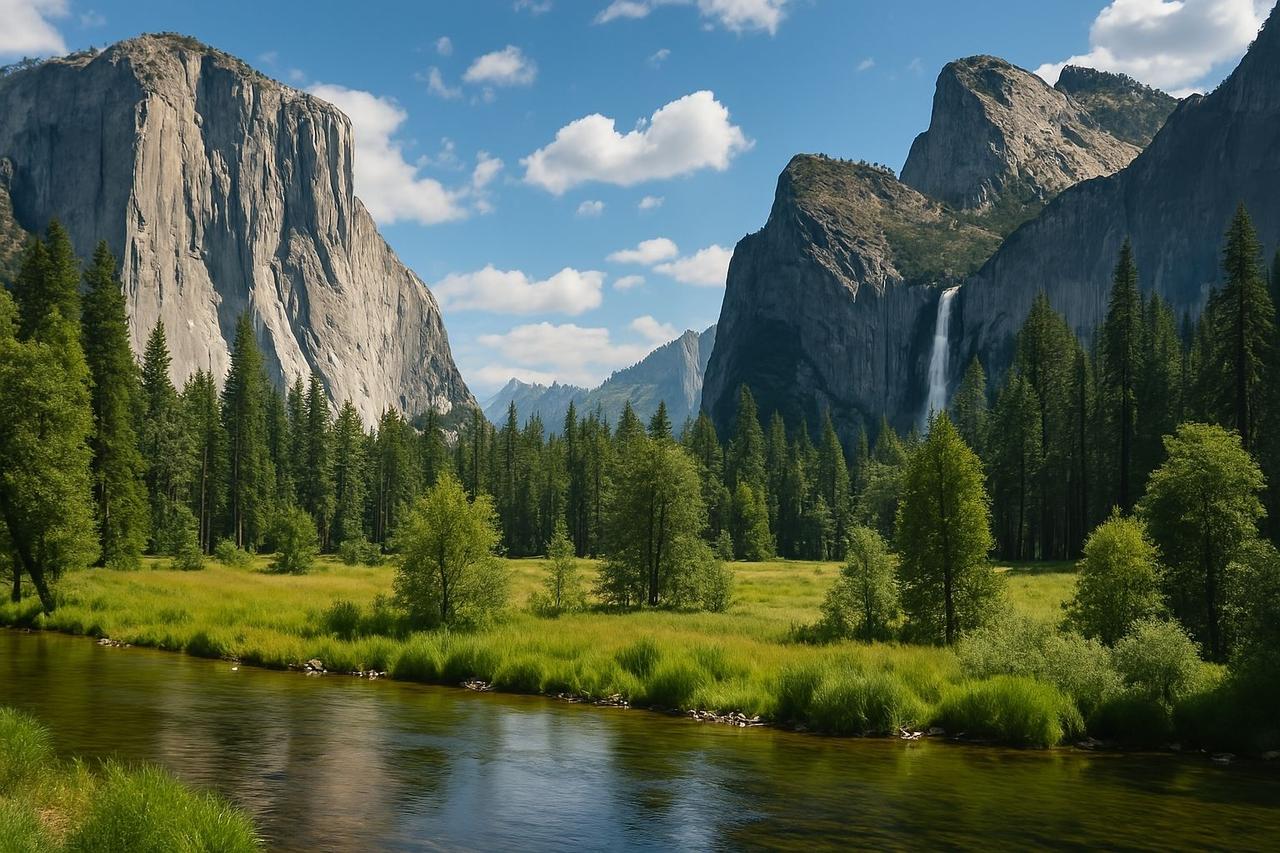
Yosemite National Park (Generated by artificial intelligence.)
Freerider is one of the most famous and challenging free climbing routes on El Capitan in Yosemite National Park. It was first free climbed in 1995 by Alexander Huber using variations of the 1961 classic Salathé Wall route. The Freerider route consists of approximately 33 rope lengths and has a difficulty rating of 5.12d/5.13a according to the traditional Yosemite grading system.
This means the most difficult moves on the route are at the 5.13a level (approximately 7c+/8a in the French grading system). The most critical section of the Freerider route is the short rock passage known as the “Boulder Problem,” located at the 23rd rope length near the summit; this section contains an extremely technical sequence of moves rated at approximately 5.13a. Additionally, the route includes physically demanding crack and chimney sections such as Enduro Corner (5.12d) and Monster Offwidth, friction-dominated surfaces with almost no handholds like Freeblast Slab, and delicate traverses.
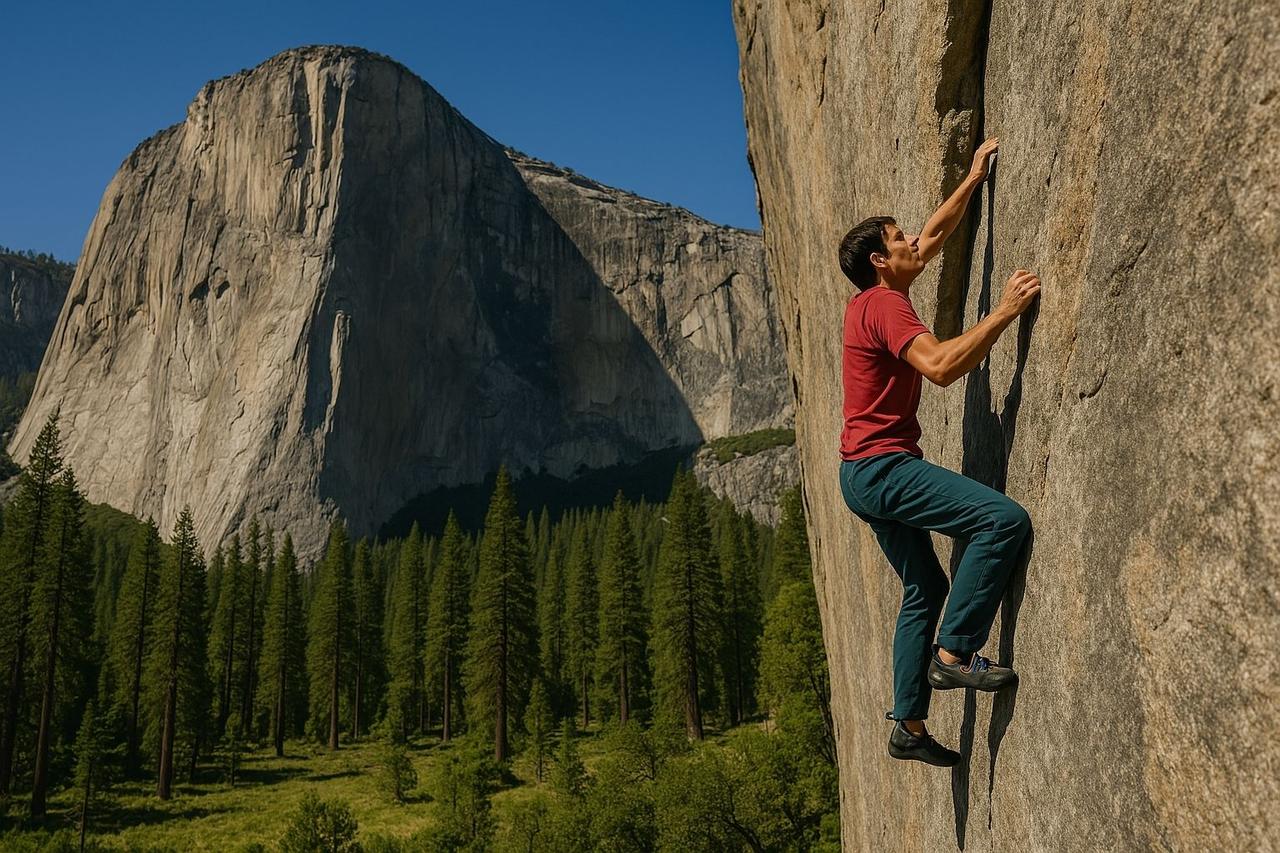
Alex Honnold, Yosemite, (Generated by artificial intelligence.)
Freerider is a long big wall route that tests a climber’s finger strength, footwork, arm power, balance, flexibility, and endurance. Some sections of the route have so few natural holds that the climber must ascend using a technique called “smearing,” pressing the climbing shoe against the rock surface as if walking on glass.
Alex Honnold had nurtured the idea of free soloing El Capitan for years and entered an intensive preparation period between 2016 and 2017 to realize this goal. He described this endeavor as “an eight-year dream and a one-and-a-half-year practical preparation.”
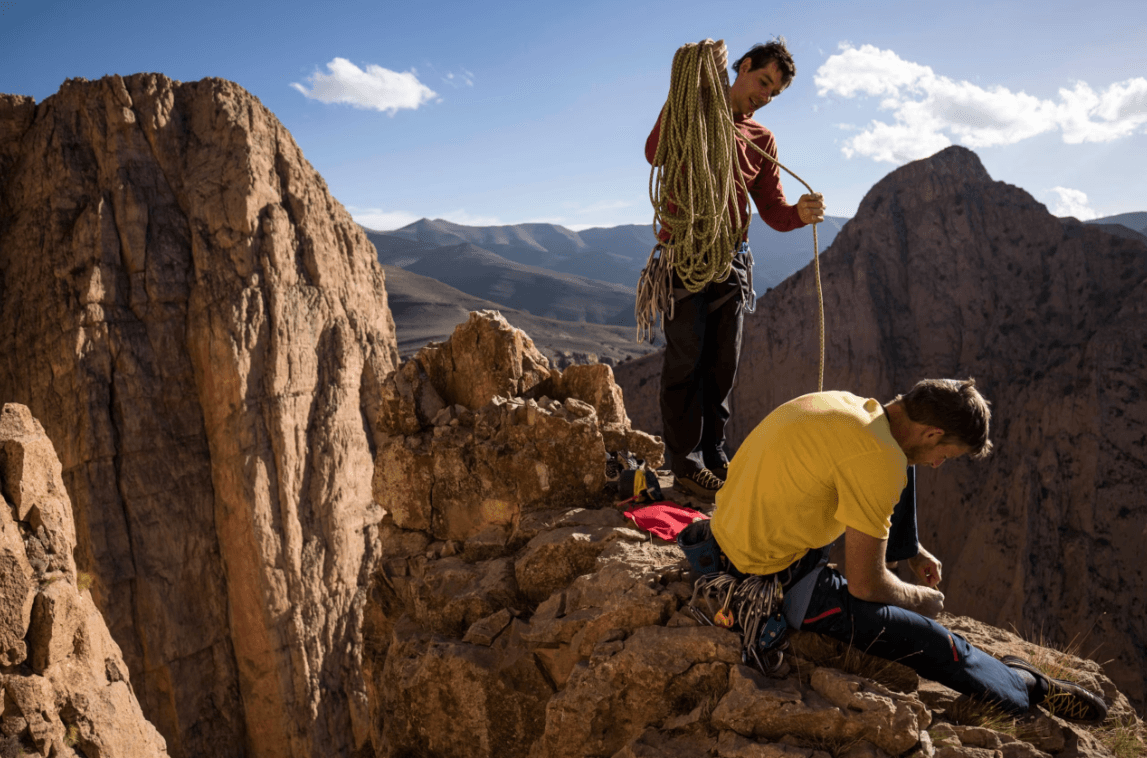
Free Solo (2008), (National Geographic)
During his preparation, Honnold repeatedly climbed the route with ropes, memorizing every move, exploring alternative variations for risky sections, and planning minor route modifications when necessary. For instance, he identified safer alternative lines to bypass moves he found insecure, deviating slightly from the original route. He noted that because free soloing requires no ropes, such small deviations were possible and, in a sense, “liberating.”
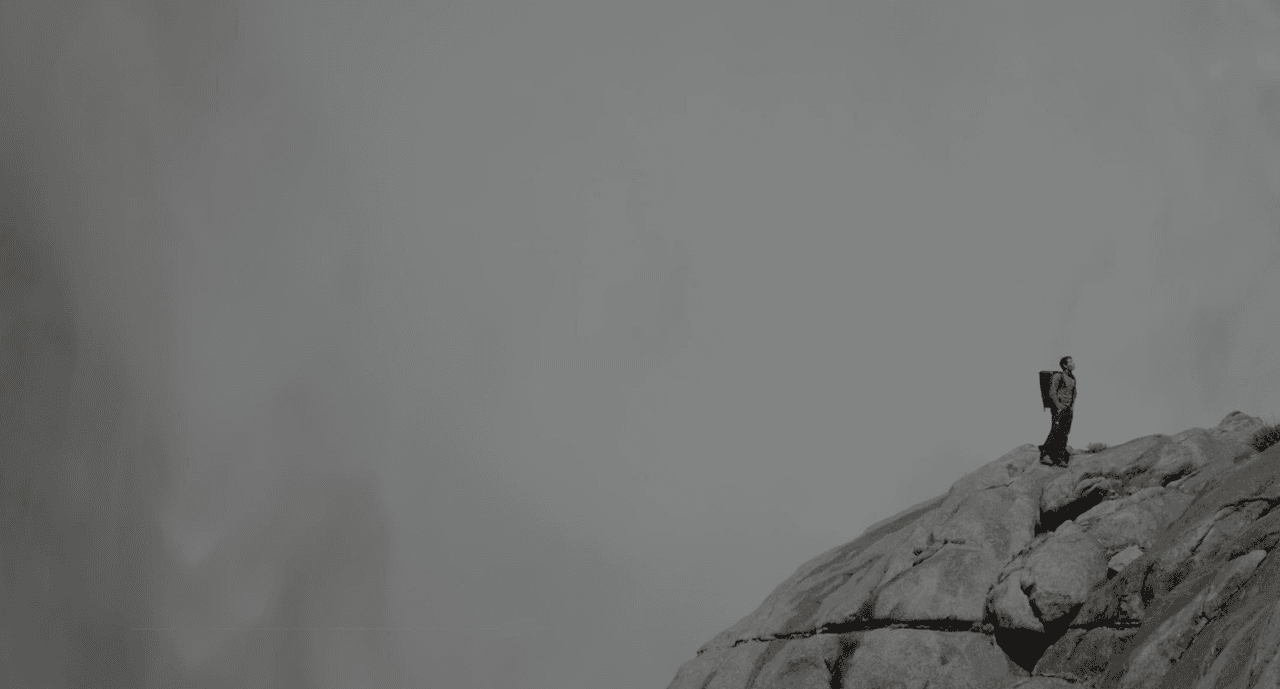
Alex Honnold, (IMDB)
In the fall of 2016, Honnold attempted a trial run but concluded his preparations were incomplete and abandoned the attempt. In November 2016, due to colder weather and an injury to his foot, he cut short an early solo attempt on the Freerider route, unable to feel confident on the “Freeblast” slab section in the lower part of the route.
When Honnold returned to Yosemite in spring 2017, he first explored other routes on El Capitan with Canadian climber Sonnie Trotter, then refocused entirely on Freerider. He conducted roped training to find alternative passages through sections he deemed dangerous; for example, he discovered a different climbing line on Heart Ledges that bypassed a delicate slab move, reducing its difficulty from 5.11c to 5.10c.
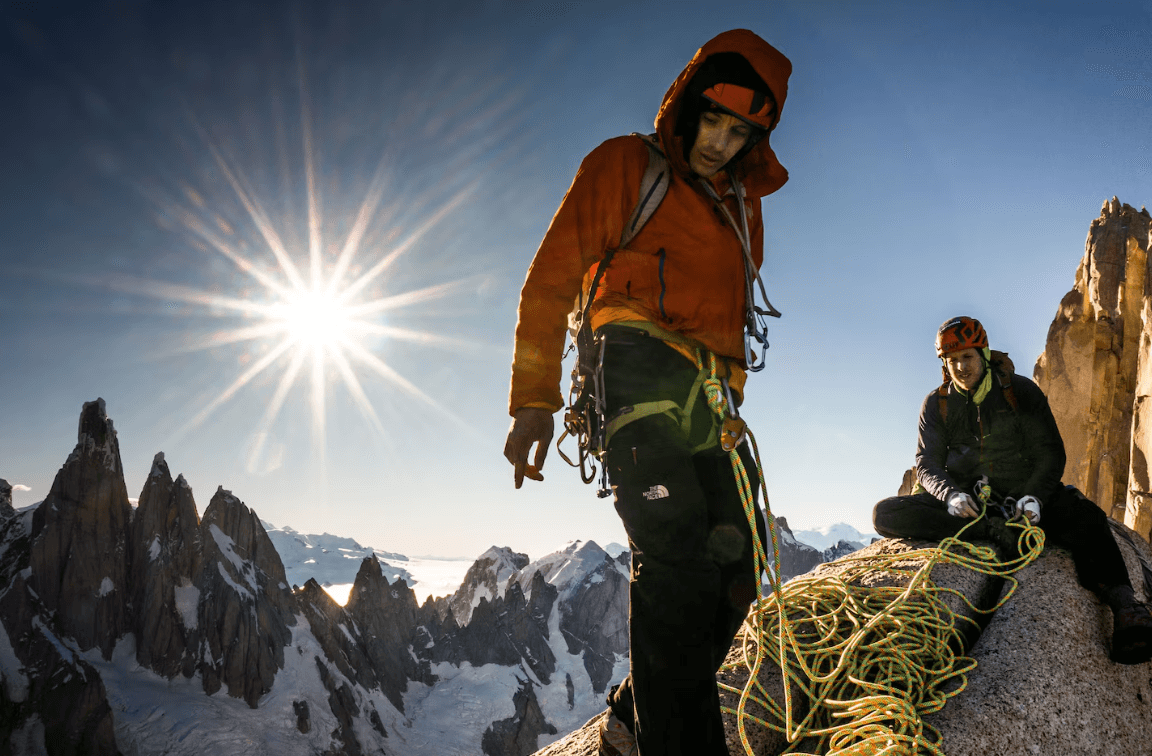
Alex Honnold Preparation Process (National Geographic)
By early June 2017, Honnold’s preparations had reached their peak. With meticulous attention to detail, he rehearsed every critical move on the route multiple times, internalizing them, documented all progress in a training journal, and prioritized finger strength and endurance training to reach peak physical condition. A few days before the climb, he and close friend and renowned climber Tommy Caldwell completed a speed ascent of Freerider with ropes, finishing the route in 5.5 hours and breaking their own speed records.
Caldwell emphasized Honnold’s peak condition during this rehearsal, saying, “Alex was on fire—I had never seen him climb that well.” As a final preparation, Honnold climbed to the summit a few days before the main attempt, then rappelled back down the route to check whether his chalk marks at critical points were still visible and whether recent rains had wet the rock surface. Fortunately, the rock was completely dry and the marks remained; all that remained was the mental task of resting and focusing before his historic climb.
On the morning of June 3, 2017, American climber Alex Honnold, known for his free solo ascents, decided to climb the famous granite face of El Capitan without any safety ropes or climbing partner. Early that morning, after waking up in his minibus at a campsite in Yosemite National Park, he ate breakfast—oatmeal and fruit—then walked to the base of El Capitan.
Honnold prepared for the climb with only a red T-shirt, shorts, climbing shoes, and a chalk bag attached to his waist; he carried no other technical equipment. He began climbing at 5:32 a.m. He aimed to pass the most difficult and technical section of the route, the “Boulder Problem,” before the sun reached the rock face, a strategic choice intended to avoid adverse effects from thermal expansion on the rock surface.
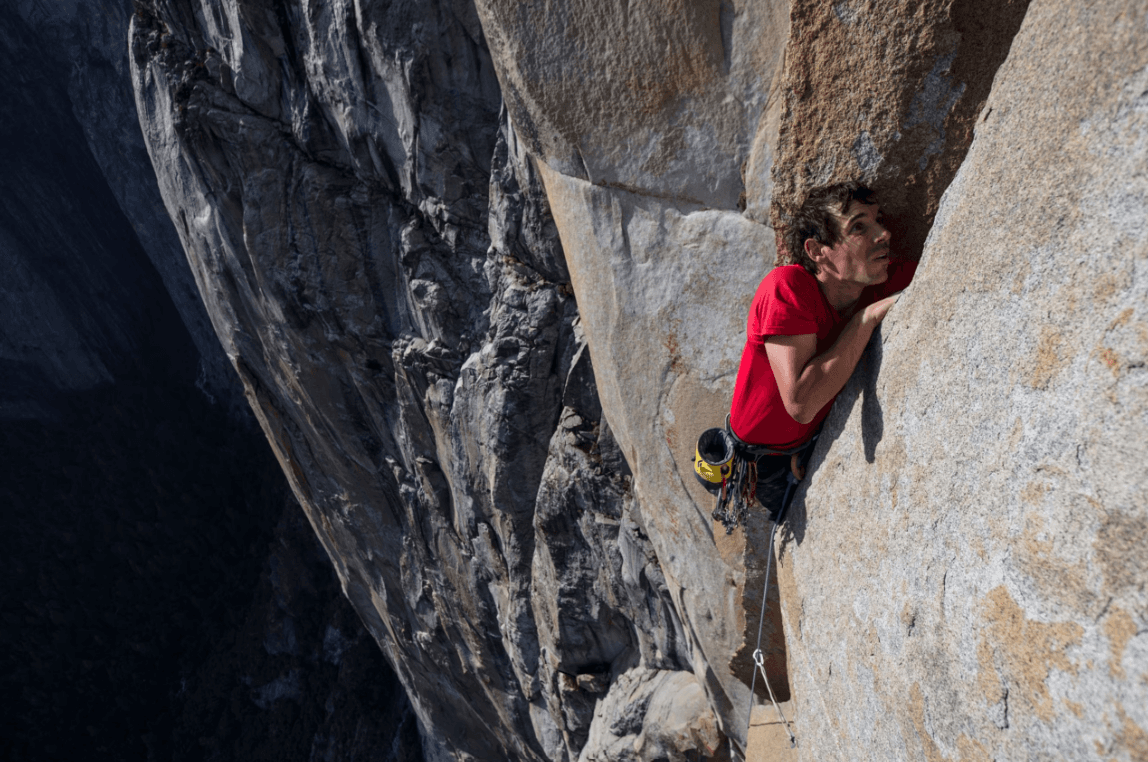
Alex Honnold (National Geographic)
Alex Honnold progressed without interruption along the pre-determined route during the first hundred meters of the climb. This section featured long crack sections of moderate technical difficulty and physically demanding passages such as the “Monster Offwidth.” Honnold has stated that to maintain mental control during such sections, he redirected his focus to mundane thoughts, thereby reducing emotional tension.
Although he was alone during the climb, spectators were present near the base and others observed from a distance. However, Honnold’s level of concentration remained unaffected by these external factors. According to his own account, at the moment he realized the climb was truly happening, he experienced an internal surge of joy, which he expressed with a brief smile. This demonstrates his ability to maintain psychological balance under extreme risk.
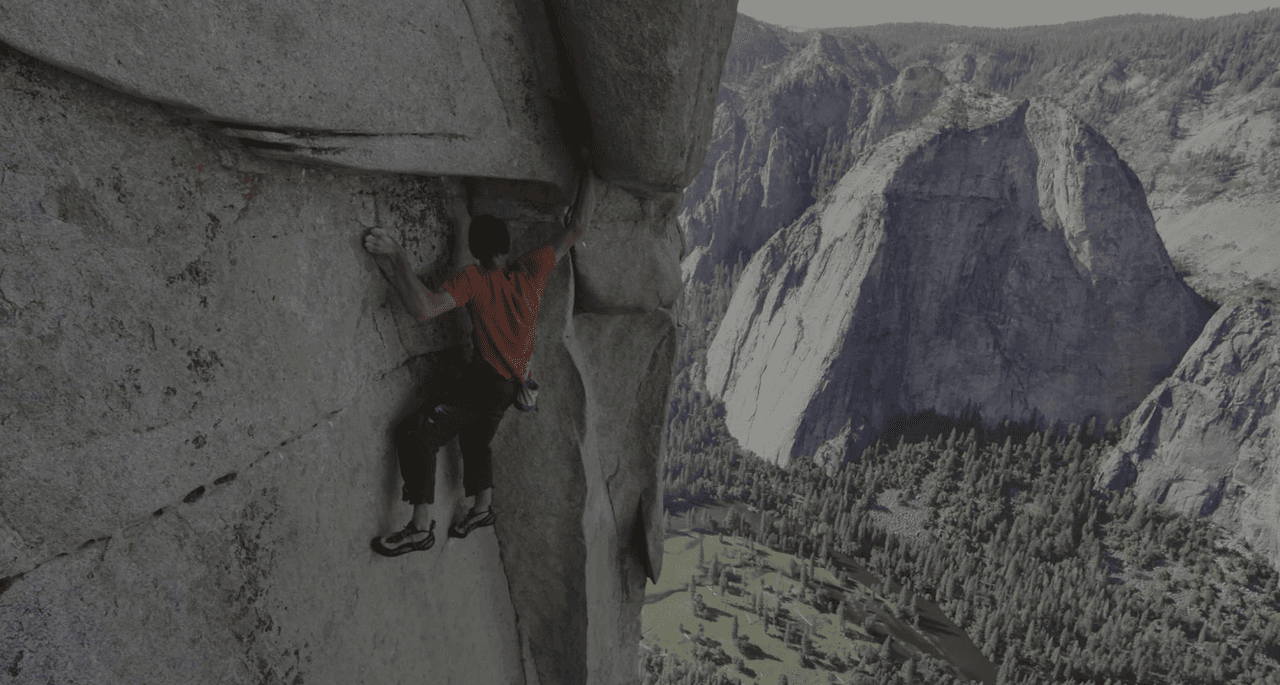
Free Solo (2018) Climbing Day, (Alex Honnold)
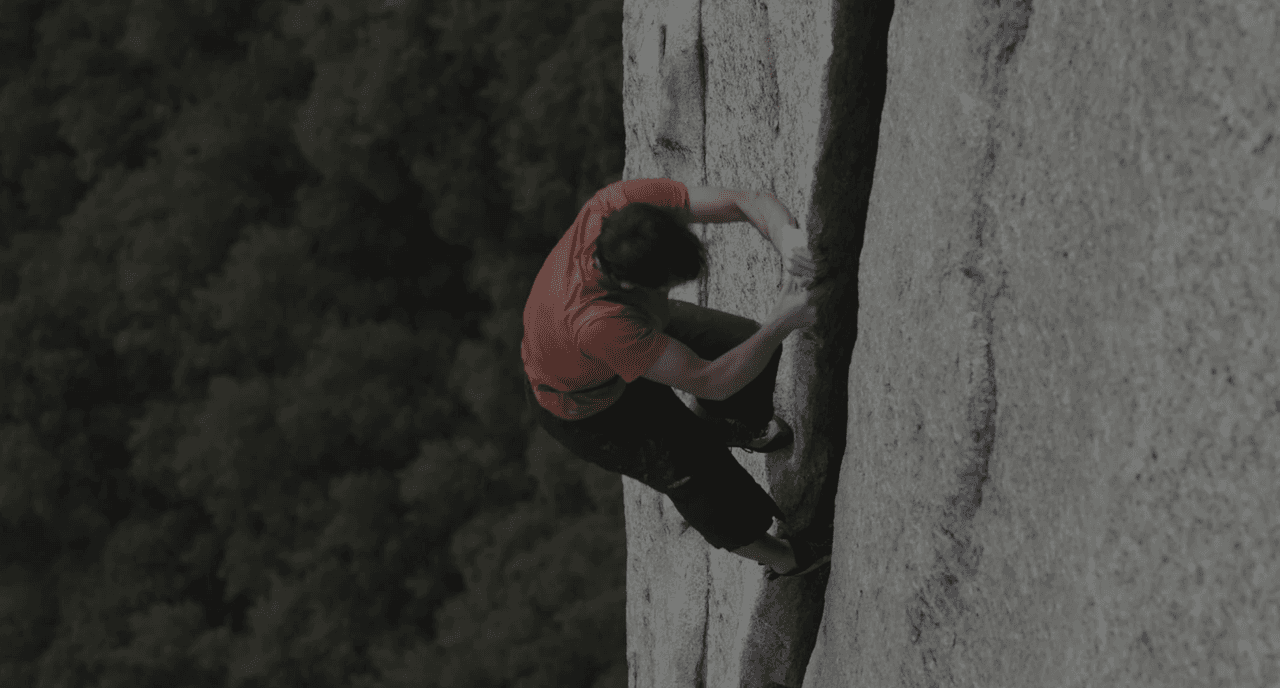
Free Solo (2018), (IMDB)
After successfully navigating the critical points in the lower and middle sections of the route as planned, Honnold reached the most difficult section: the Boulder Problem. This brief passage contained an extremely technical sequence requiring minimal holds and relying entirely on friction to support the climber’s entire body weight. At this point, Honnold executed a movement he had rehearsed countless times during practice: he placed one foot on a narrow edge and pushed sideways (some climbers describe it as a “karate kick”) while gripping small ledges with his hands to complete the most critical move. After overcoming this barrier, several challenging rope lengths remained, including the steep crack system known as “Enduro Corner,” but Honnold ascended them with steady control.
The difficulty decreased in the final sections; as Honnold neared the summit, he increased his pace and sprinted up the final flat slab sections. At 9:28 a.m., 3 hours and 56 minutes after he began, he reached the summit of El Capitan, becoming the first person in history to climb this massive rock wall alone and without ropes. The documentary crew and a few witnesses on site celebrated his achievement as he stepped safely onto the summit. The ascent had been recorded by the National Geographic team; even the cameramen descending from above struggled to keep pace with Honnold’s speed. After reaching the summit, Honnold described his emotions as, “I have realized the greatest dream of my life.”
Honnold’s free solo ascent of El Capitan generated widespread reaction both within the climbing community and in the general media. Global news agencies announced the event with headlines such as “He entered sports history by climbing one of the world’s largest monoliths without ropes.” The climbing magazine Alpinist described Honnold’s achievement as “undoubtedly the greatest free solo climb of all time,” emphasizing that he demonstrated “a level of mastery unprecedented in climbing history.” The American Alpine Journal responded to the event with a single word: “Speechless.”
Renowned climber Conrad Anker described Honnold with the words, “Respect. His life’s purpose has become reality,” while Honnold’s close partner Tommy Caldwell defined the climb as “one of the highest peaks of mental control ever achieved in any sport.” Although many in the climbing community regard Honnold as an idol, the event also sparked debate, as some observers expressed concern that publicizing such a dangerous practice might encourage others to take unnecessary risks.
Honnold’s achievement also attracted significant mainstream media attention. Publications such as The New York Times, NPR, and The Guardian featured him on their front pages. A year after the event, the documentary Free Solo, produced by National Geographic and focusing on Honnold’s preparation and ascent, premiered in September 2018. Directed by Jimmy Chin and Elizabeth Chai Vasarhelyi, the documentary aimed to intimately portray not only Honnold’s physical journey but also his psychological state, revealing the inner world of climbing. Free Solo won the Academy Award for Best Documentary Feature in 2019, becoming the first climbing film ever to achieve such success.
The documentary achieved unexpected box office success and introduced the sport of climbing to a broad audience unfamiliar with the discipline. In her Oscar acceptance speech, director Chai Vasarhelyi said, “This film is for anyone who believes in the impossible,” highlighting how Honnold’s feat of pushing human limits carried universal inspiration. Through the impact of the documentary and media coverage, Alex Honnold became a legend; his name is now known not only among climbing enthusiasts but also among the general public. In fact, in English, the verb “to honnold” has entered colloquial usage as a humorous term describing the act of standing unsafely at a great height.
This wave of international recognition brought Honnold numerous awards and honors. In 2018, the prestigious mountaineering award Piolet d’Or (Golden Ice Axe) jury awarded Honnold a special mention for his 2017 ascent, noting that the Freerider climb represented “an exceptionally rational and meticulously planned ascent,” and that Honnold had reached “a level of mastery likely unmatched in the history of rock climbing.” Also in 2018, the American Alpine Club presented Honnold with the Robert and Miriam Underhill Award for excellence across all disciplines of climbing.
The following are the major international awards won by the documentary Free Solo (2018). This list encompasses the most significant accolades the film received in cinema, documentary filmmaking, and technical categories:
• Best Documentary Feature
• Presented by: Academy of Motion Picture Arts and Sciences (AMPAS)
• Best Documentary
• Presented by: British Academy of Film and Television Arts (BAFTA)
• Outstanding Directing for a Documentary/Nonfiction Program
• Outstanding Cinematography for a Nonfiction Program
• Outstanding Creative Achievement in Interactive Media within an Unscripted Program
• Outstanding Picture Editing for a Nonfiction Program
• Outstanding Sound Mixing for a Nonfiction Program
• Outstanding Sound Editing for a Nonfiction Program
• Outstanding Music Composition for a Documentary Series or Special
• Best Sports Documentary
• Most Compelling Living Subject of a Documentary (Alex Honnold)
• Outstanding Directorial Achievement in Documentary (Jimmy Chin & Elizabeth Chai Vasarhelyi)
• Best Edited Documentary (Feature)
• Outstanding Achievement in Production
• People’s Choice Award – Documentary (Official Nominee)
These awards document the documentary’s international success in both cinematography and documentary storytelling.
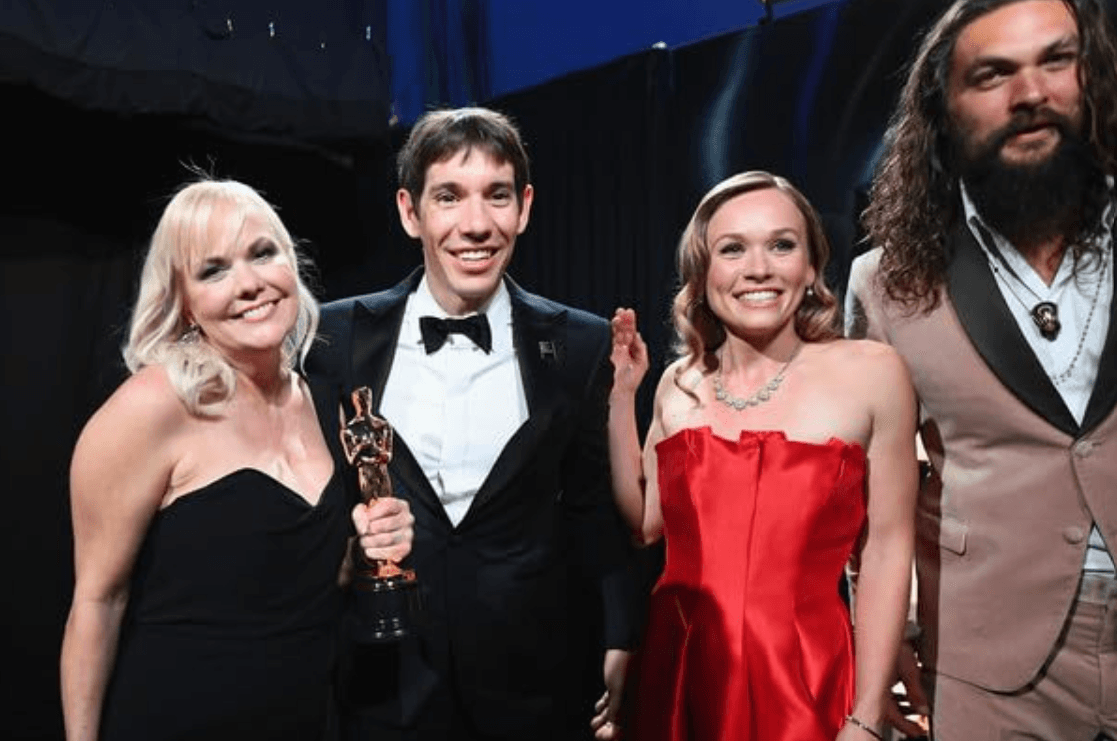
Jason Momoa, Sanni McCandless, Shannon Dill, and Alex Honnold at an event for Free Solo (2018), (Photo by Matt Petit)
Alex Honnold attributes the key to success in extremely risky disciplines like free solo climbing to the ability to manage fear. In interviews following his El Capitan solo, he emphasized that fear is natural in this style of climbing, but allowing fear to take over during the climb serves no purpose: “I am certainly aware of the danger, but feeling fear while on the wall does nothing to help my performance; therefore, I set it aside and focus on the task at hand.”
Honnold’s calmness has attracted the attention of scientists; brain imaging studies have revealed that the amygdala region, which is typically highly active in most people during moments of danger, shows unusually low reactivity in Honnold’s brain. Whether this trait is innate or the result of his two-decade-long climbing experience gradually raising his fear threshold remains scientifically undetermined. In his own words, over the years he has expanded his comfort zone, turning what once seemed “crazy” goals into achievable ones.
Honnold does not view free solo climbing as an impulsive or reckless risk, but rather as the pinnacle of a calculated strategy. Thanks to years of preparation, having made and mentally rehearsed thousands of micro-decisions in advance, he claims that during the actual climb he ascends with a “blank mind,” focusing solely on the movement of the moment.
This approach has been widely admired within the climbing community. His close friend Tommy Caldwell emphasized that what made Honnold’s success possible was not his incredible physical strength but his mental discipline and control of fear. Another renowned climber, Adam Ondra, stated that the courage and mental resilience required to free solo a route like Freerider are “harder than free climbing a 9a (5.14d) sport route.”
When explaining his perception of risk, Honnold stresses that although his climbs may appear lethal to outsiders, he systematically minimizes these risks through preparation. For example, he says, “Instead of worrying about the possibility of death, I do whatever is necessary to prevent it,” implying that the most important part of free solo climbing occurs during preparation. Indeed, Honnold describes entering a different state of consciousness during the climb—a mind focused entirely on the task, detached from emotion. In this sense, his philosophy has been compared to stoicism: controlling actions, not emotions.
Some neuroimaging studies on decision-making during free solo climbing have shown that Honnold’s amygdala responds with significantly lower reactivity to external stimuli compared to other individuals. This has been interpreted as evidence of the role of mental stability and reduced threat perception during free soloing. Whether this trait is innate or developed through prolonged exposure and training remains scientifically unresolved.
Alex Honnold’s free solo climbs have demonstrated the extent to which human limits—both physical and mental—can be stretched, redefining the concepts of risk and achievement in this field. His 2017 El Capitan ascent stands as the pinnacle of this journey in history.
Alex Honnold Official Website. "Gallery." Accessed April 19, 2025.https://www.alexhonnold.com/gallery/2p1dybiepl57q08n9jglbk228j9ts3.
Dogwoof Releasing. “Free Solo.” Dogwoof. Accessed April 20, 2025.https://releasing.dogwoof.com/freesolo.
Honnold Foundation. “About – Board Members.” Accessed April 20, 2025.https://www.honnoldfoundation.org/about#board-members.
IMDb. "Free Solo (2018) – Awards." IMDb. Accessed April 20, 2025.https://www.imdb.com/title/tt7775622/awards/.
IMDb. "Free Solo – Media." Accessed April 19, 2025.https://www.imdb.com/title/tt7775622/mediaindex/?ref_=mv_close.
National Geographic Documentary Films. “Free Solo Trailer (2019).” National Geographic. Date Published: 2019. Accessed April 20, 2025.https://films.nationalgeographic.com/free-solo-trailer-2019-evergreen.
National Geographic Documentary Films. “Free Solo.” National Geographic. Date Published: December 13, 2018. Accessed April 20, 2025.https://films.nationalgeographic.com/free-solo.
National Geographic Films. “Free Solo.” National Geographic. Accessed April 19, 2025.https://films.nationalgeographic.com/free-solo.
National Geographic. “Free Solo – Official Trailer.” YouTube video, 2:26. August 13, 2018. Accessed April 20, 2025.https://www.youtube.com/watch?v=urRVZ4SW7WU
National Geographic. “Photos: The Most Epic Climbs in History.” National Geographic. Accessed April 19, 2025.https://www.nationalgeographic.com/adventure/article/photos-most-epic-climbs.
Television Academy. "Free Solo." Emmys.com. Accessed April 20, 2025.https://www.emmys.com/shows/free-solo.

Free Solo
Full Title of the Documentary | Free Solo | ||||||||
|---|---|---|---|---|---|---|---|---|---|
Year of Publication | 2018 | ||||||||
Director | Jimmy Chin Elizabeth Chai Vasarhelyi | ||||||||
Production Organization | National Geographic Documentary Films, Little Monster Films, Itinerant Media | ||||||||
Main Subject | Free solo climb of the Freerider route on El Capitan wall in Yosemite National Park without ropes or protective equipment | ||||||||
Main Character / Athlete | Alex Honnold (Climber) | ||||||||
Climbed Route | El Capitan – Freerider route (Approximately 900 meters) | ||||||||
Technical Difficulty Rating | 5.12d/5.13a, 33 rope lengths | ||||||||
Climbing Duration | 3 hours 56 minutes | ||||||||
Climbing Date | 3 June 2017 | ||||||||
Preparation Duration | Approximately 1.5 years of systematic training | ||||||||
Previous Unsuccessful Attempt | November 2016 | ||||||||
Main Cinematographer of the Documentary | Jimmy Chin | ||||||||
Photographers / Documentary Team | Jimmy Chin Clair Popkin (camera) Cheyne Lempe Mikey Schaefer Renan Ozturk | ||||||||
Music of the Documentary | Marco Beltrami Brandon Roberts | ||||||||
Editor / Editing | Bob Eisenhardt | ||||||||
Publisher | National Geographic Documentary Films | ||||||||
Award Received | 91st Academy Awards (2019) – Best Documentary Feature Film (Best Documentary Feature) BAFTA Film Awards (2019) – Best Documentary Emmy Awards (2019) – 7 awards in 7 categories | ||||||||
Screening Duration | 100 minutes | ||||||||
IMDb Rating (As of 2025) | 8.1 / 10 | ||||||||
Name of the Vine in the Documentary | Freerider (El Capitan southwest face) | ||||||||
Geographical Location | Yosemite National Park California USA | ||||||||
Broadcast Platform | Disney+ Amazon Prime Apple TV National Geographic Channel | ||||||||
No Discussion Added Yet
Start discussion for "Free Solo (Documentary)" article
Documentary Reflections
Free Solo Climbing: Definition and Risks
Alex Honnold’s Climbing Career and Free Solo Achievements
The “Freerider” Climb on El Capitan (2017)
Route and Difficulty Grade
Preparation Process
The Ascent
Repercussions and the Documentary “Free Solo”
Key Figures in the Documentary
Alex Honnold
Jimmy Chin
Elizabeth Chai Vasarhelyi
Sanni McCandless
Tommy Caldwell
Mikey Schaefer
Renan Ozturk
Claire Popkin
Bob Eisenhardt
Marco Beltrami
Peter Bohler
Awards
91st Academy Awards (Oscars) – 2019
BAFTA Film Awards – 2019
Primetime Emmy Awards – 2019 (Total of 7 awards)
Critics’ Choice Documentary Awards – 2018
Directors Guild of America (DGA) Awards – 2019
American Cinema Editors (ACE) – Eddie Awards – 2019
Cinema Eye Honors – 2019
Toronto International Film Festival – 2018
Honnold’s Personal Philosophy and Perception of Risk
Physiological and Neurological Findings