


This article was automatically translated from the original Turkish version.
+1 More
Museum of Princes
Location | Amasya Hatuniye Neighborhood Yeşilırmak shoreline | ||||||||
|---|---|---|---|---|---|---|---|---|---|
Year of Establishment | 2008 | ||||||||
Building Structure | Yalıboyu Houses, 19th century | ||||||||
Exhibited Sculptures | 12 beeswax statues (7 on upper floors, 5 on lower floors) | ||||||||
Art | 14th–16th century Ottoman art | ||||||||
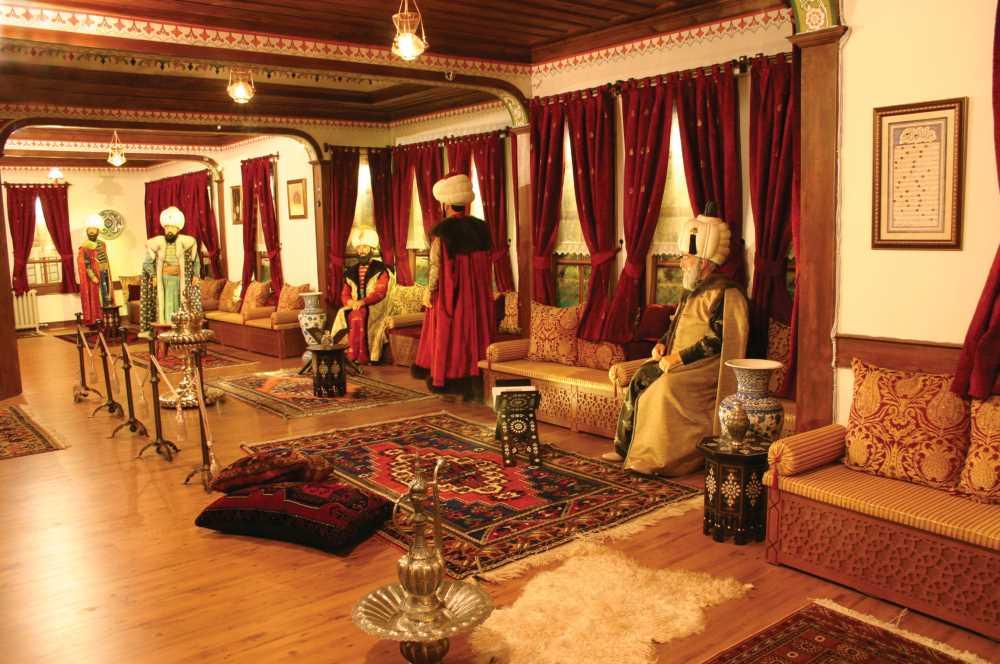
The Princes’ Museum is located in the Hatuniye Neighborhood of Amasya, built atop the old city walls along the banks of the Yeşilırmak River. The museum is housed in one of the Yalıboyu houses, constructed in the 1800s and demolished in 1986. It was reconstructed in 2007 according to its original design by the Amasya Governorate and opened to the public in 2008. The museum presents the princely heritage of the Ottoman Empire and its rulers during that period.
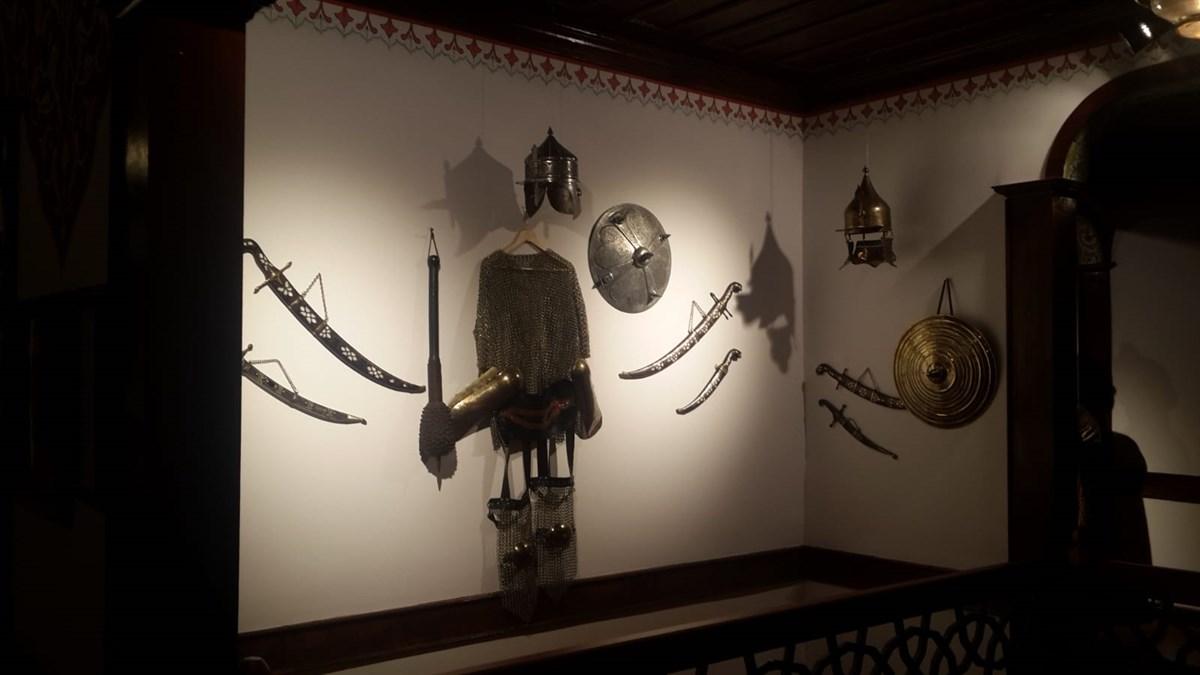
Princes’ Museum (T.C. Amasya İl Özel İdaresi)
The museum is housed in a two-story wooden building. On the ground floor, wax figures of princes who never ascended the Ottoman throne but served as provincial governors in Amasya are displayed. These figures represent important historical personalities such as Şehzade Mustafa and Şehzade Bayezid, sons of Kanuni Sultan Süleyman; Şehzade Ahmet and Şehzade Alaeddin, sons of II. Murat Han; and Şehzade Ahmet, son of II. Bayezid Han. On the upper floor, wax figures of Ottoman sultans who served as princes in Amasya before ascending the throne are exhibited. These include sultans such as Fatih Sultan Mehmet, Yıldırım Bayezid, II. Bayezid, and Çelebi Mehmet.
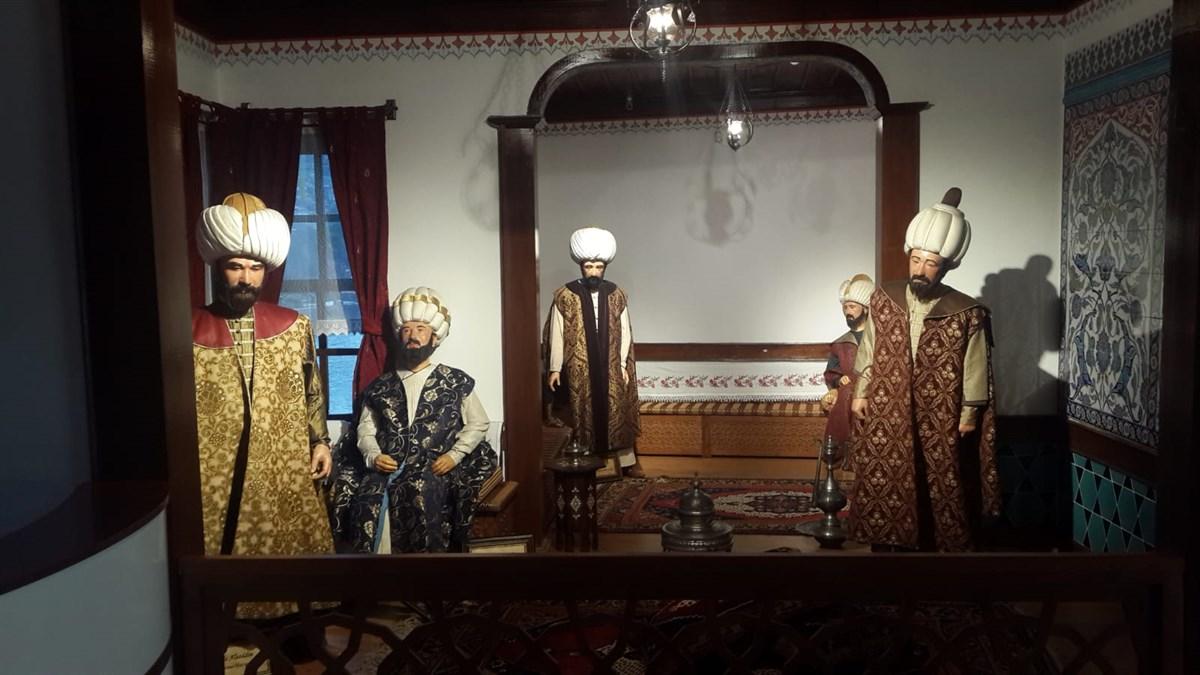
Princes’ Museum (T.C. Amasya İl Özel İdaresi)
The interior design of the museum incorporates numerous aesthetic elements reflecting Ottoman art of the period. Walls are adorned with original calligraphy and illumination examples characteristic of 14th and 16th century Ottoman artistic sensibilities. Ceilings are decorated with Rumi and Seljuk motifs, offering visitors a visual representation of the era’s aesthetic values. The museum’s carpets are handwoven wool pieces dyed with natural root dyes, exemplifying traditional Turkish carpet weaving. The museum is also embellished with ceramic panels. The panel on the ground floor consists of 150 tiles measuring 20x20 cm each, while the one on the upper floor comprises 160 tiles of the same dimensions. The motifs featured on these panels symbolize the cultural values of the Ottoman Empire.
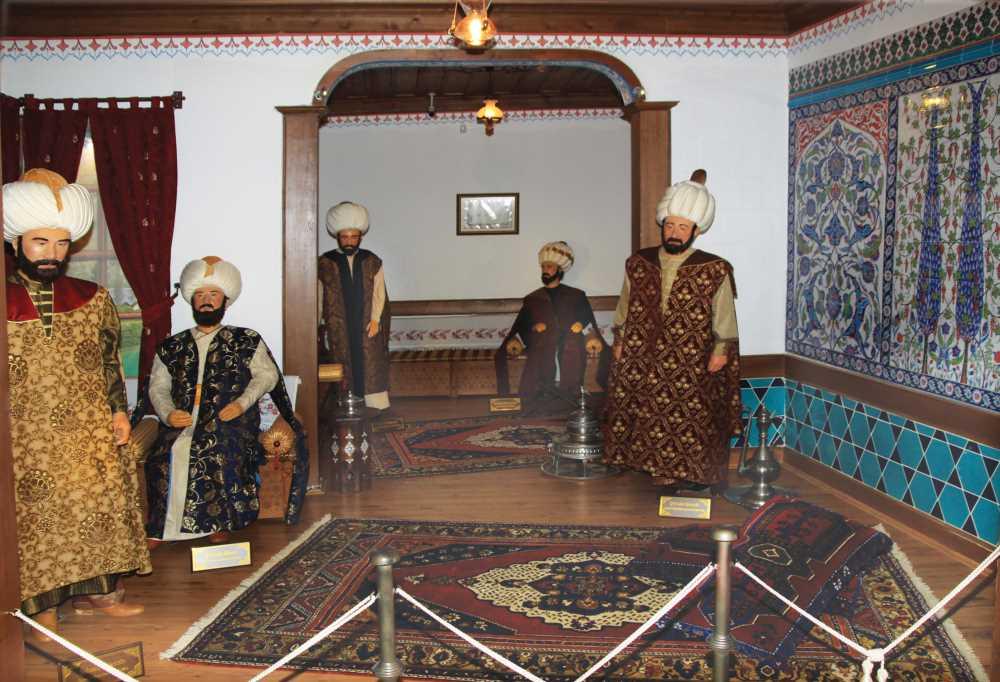
Princes’ Museum (Kültür Portalı)
The museum employs multimedia elements to provide visitors with an interactive experience. Each wax figure is accompanied by video films and audio animations offering historical information about the depicted figures. These systems enable visitors to gain deeper insights into the lives of Ottoman sultans and princes. The 30-minute video presentations include detailed descriptions of each figure and feature English-language narration. Additionally, visitors may take commemorative photographs with the museum’s figures.
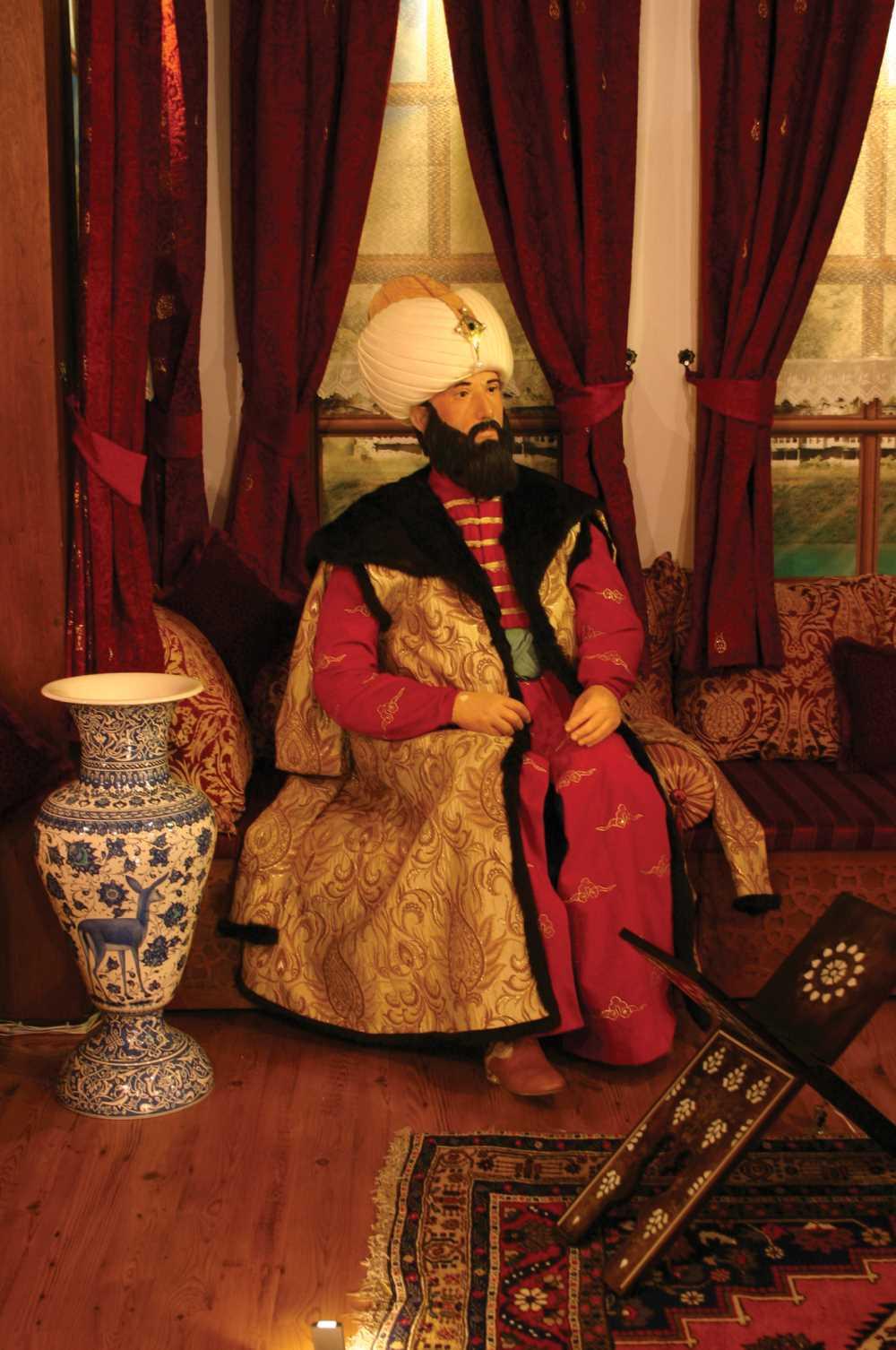
Princes’ Museum (Kültür Portalı)
The museum has undergone continuous maintenance and restoration over the years to preserve its historical integrity. The restoration carried out by the Amasya Provincial Special Administration faithfully recreated the museum’s original architecture and interior decoration. The ceilings, walls, and other details have been restored using traditional Ottoman artistic techniques, further emphasizing the historical character of the site. The most recent restoration has enhanced both the aesthetic and functional experience for visitors.
The Princes’ Museum is not only a historical site but also an educational resource. It offers comprehensive information on Ottoman history for those interested in the period. Through wax figures and multimedia presentations, visitors gain in-depth knowledge about the princes and sultans of the Ottoman Empire. Moreover, by showcasing examples of traditional Turkish handicrafts, the museum contributes to the preservation and promotion of these art forms.
The Princes’ Museum is situated near the center of Amasya and presents an extensive collection aimed at conveying the role of the princely period in Ottoman history. Located on the banks of the Yeşilırmak River, close to the historic Alçak Köprü, the museum holds a significant place in Amasya’s cultural tourism landscape.
The Princes’ Museum preserves the historical and cultural heritage of the Ottoman Empire through its wax figures of princes and sultans and period-appropriate artworks. It plays a vital role in fostering interest in traditional Turkish art and Ottoman culture. Visitors experience both historical and artistic dimensions of the past while acquiring knowledge about the princes and sultans of the Ottoman Empire.
T.C. Amasya Valiliği. "Şehzadeler Müzesi." Accessed May 6, 2025.
T.C. Amasya Özel İdare. "Şehzadeler Müzesi Yenilenen Yüzüyle Yerli ve Yabancı Turistlerin İlgi Odağı Olmaya Devam Ediyor." Accessed May 6, 2025.
T.C. Amasya İl Kültür ve Turizm Müdürlüğü. Şehzadeler Müzesi. Accessed May 6, 2025.
Türkiye Kültür Portal. "Special Princes Museum." Accessed May 5, 2025.

Museum of Princes
Location | Amasya Hatuniye Neighborhood Yeşilırmak shoreline | ||||||||
|---|---|---|---|---|---|---|---|---|---|
Year of Establishment | 2008 | ||||||||
Building Structure | Yalıboyu Houses, 19th century | ||||||||
Exhibited Sculptures | 12 beeswax statues (7 on upper floors, 5 on lower floors) | ||||||||
Art | 14th–16th century Ottoman art | ||||||||
Museum Structure and Layout
Art and Design
Digital and Multimedia Presentations
Restoration and Maintenance
Educational and Cultural Significance
Location and Visit