


This article was automatically translated from the original Turkish version.
+1 More
Musée d'Orsay
Full Name | Musée d'Orsay (Orsay Müzesi) | ||||||||
|---|---|---|---|---|---|---|---|---|---|
Location | Esplanade Valéry Giscard d'Estaing 75007 Paris | ||||||||
Opening Date | 1986-12-09 | ||||||||
Period Covered | 1848 – 1914 | ||||||||
Art Movements | Symbolism Art Nouveau Post-Impressionism (Post-İzlenimcilik) Impressionism (İzlenimcilik) Realism | ||||||||
Visit Information | Open every day except Mondays. (Hours may vary on official holidays.) | ||||||||
Architectural Style | Beaux-Arts | ||||||||
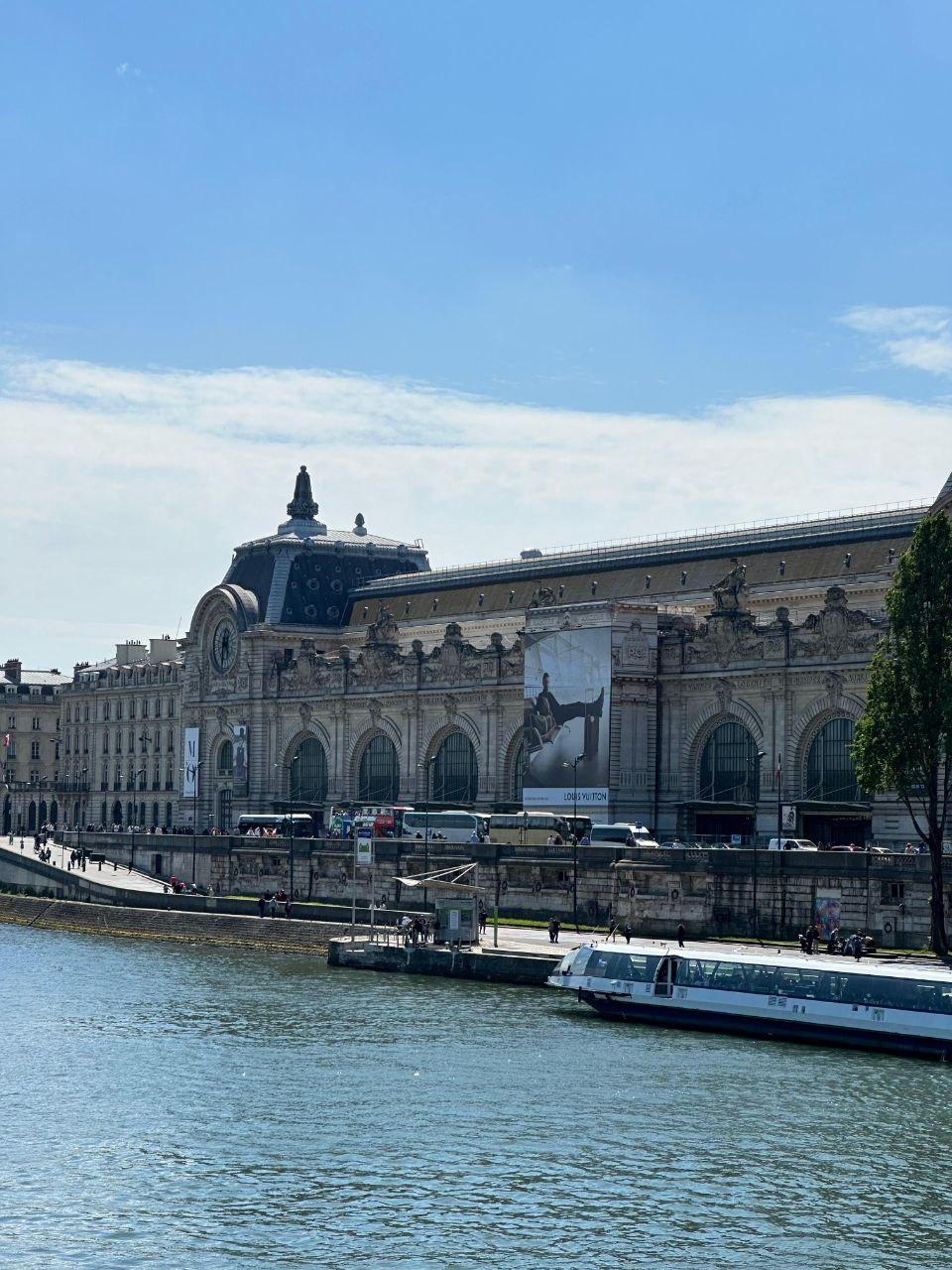
Musée d'Orsay(Musée d'Orsay) is a museum that displays a collection of artworks produced from the second half of the 19th century to the early 20th century. Located on the left bank of the Seine River in Paris, the capital of France, it faces the Louvre Museum. Opened in 1986 following the transformation of the former Gare d'Orsay railway station, the building serves as a testament to the diverse artistic movements of that era. Its collection includes works from artistic movements such as Realism, Impressionism, Post-Impressionism, Symbolism, and Art Nouveau. Through these works, the museum enables visitors to trace the aesthetic, cultural, and technical transformations between the late 19th century and the early 20th century.
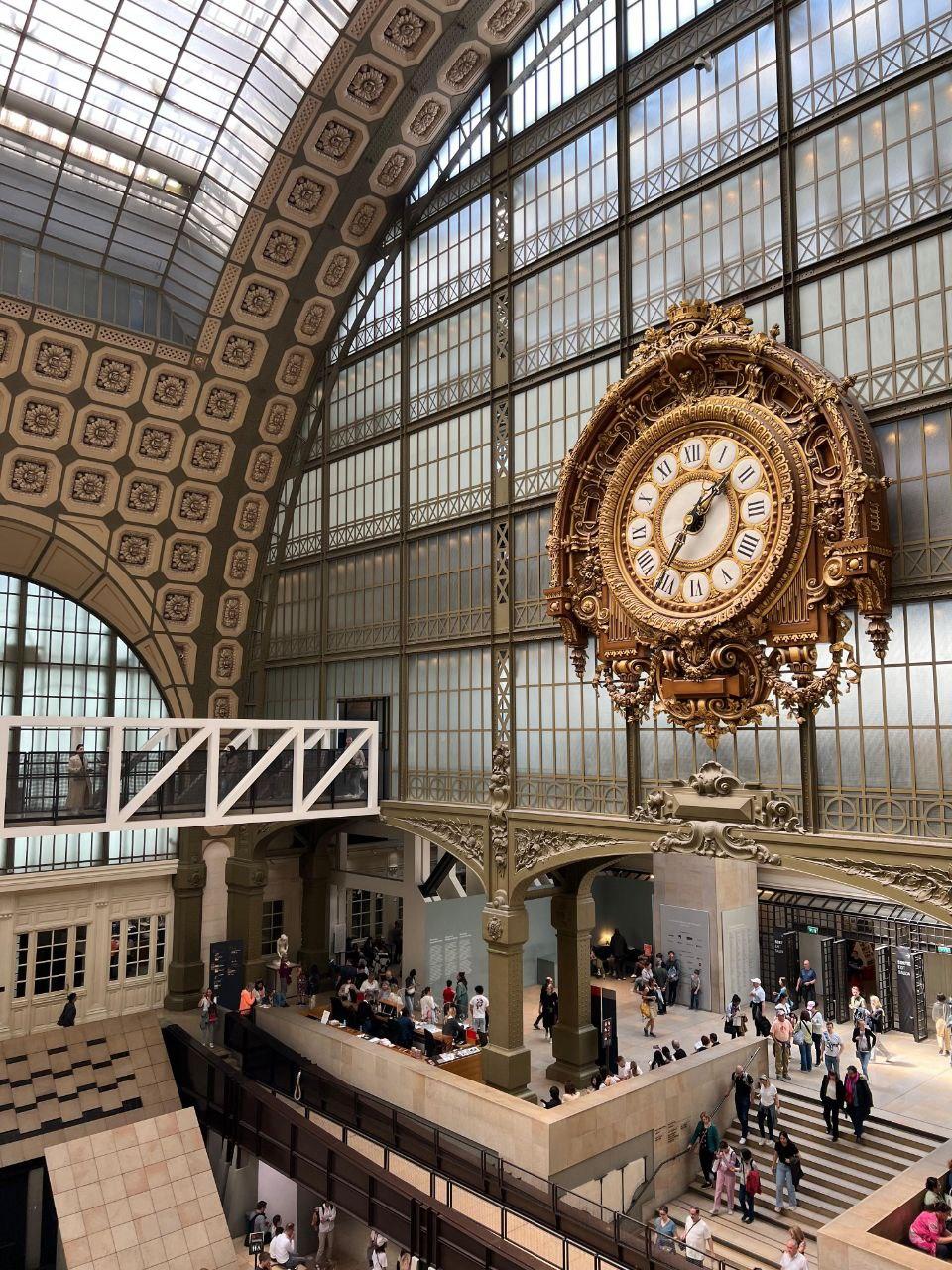
The Central Hall and Historical Clock Mechanism of the Musée d'Orsay, 2023 (Photograph: Sümeyye Yalçıner)
The building that houses the Musée d'Orsay was constructed at the request of the President of France for the 1900 Paris Universal Exhibition. Designed in the Beaux-Arts style, which epitomized the architectural tastes of the period, the structure was conceived by architect Victor Laloux and holds the distinction of being the first fully electric mainline railway station. Its 138-meter iron arched roof and large clock facades exemplify the engineering and aesthetic sensibilities of the early 20th century.
By 1939, the station had become inadequate for long-distance rail services. It was subsequently repurposed in various ways: as a postal center in the 1940s, a theater stage in the 1950s, and a location for film shoots in the 1960s. In the 1970s, plans to demolish the building were proposed but ultimately abandoned due to growing awareness of the need to preserve cultural heritage.
In 1977, the French Ministry of Culture decided to convert the building into an art museum. The transformation, led by Italian architect Gae Aulenti, was carried out between 1979 and 1986. Aulenti’s design adapted the interior to meet contemporary exhibition standards while carefully preserving the building’s original architectural features—particularly the large glass roofs, clocks, and iron structures. This approach aimed to achieve a balanced synthesis between architectural integrity and new functional requirements.
Opened in 1986, the museum presents a collection spanning artworks created between 1848 and 1914, offering a significant portion of French and European art history. It also fulfills a complementary role between the Louvre Museum and the Centre Pompidou by covering the artistic period between them. In this context, the Musée d'Orsay is not merely an art collection center but also serves as a model for the cultural reappropriation of a post-industrial structure.
Architecturally, the museum is a significant symbol of the Beaux-Arts style. This style, developed throughout the 19th century by France’s École des Beaux-Arts, extends academic architecture by combining classical antiquity’s principles of symmetry, proportion, and ornamentation with the new materials and techniques introduced by the Industrial Revolution. Beaux-Arts architecture emphasizes large-scale, monumental, and orderly planning, rich sculptural decoration, and the prominent use of classical elements such as arches, columns, and pediments on facades. In this architectural philosophy, functionality, engineering, and aesthetics are evaluated together. The building, designed by Victor Laloux, allows abundant natural light into the interior through its expansive steel-framed glass roof. This feature stands as a key indicator of advanced 19th-century engineering and the innovative use of glass and steel.
Under the leadership of architect Gae Aulenti, the transformation process preserved original architectural elements—such as the facades, large interior openings, and clocks—while reconfiguring the building to meet modern exhibition needs. The spacious, well-lit interior environments created ideal conditions for displaying artworks from 1848 to 1914. Beyond being an architectural monument, the building is regarded as a culturally balanced space that synthesizes industrial-era engineering with classical academic architecture.
The museum’s collection encompasses artworks produced between 1848 and 1914. This historical period encompasses various political regimes in France—including the Second Republic, the Second Empire, and the Third Republic—and witnessed significant cultural transformations. The museum’s permanent collection is classified into five main categories representing the artistic production of the era: painting, sculpture, decorative arts, photography, and architectural drawings. In addition, temporary exhibitions and collaborations focus on specific themes, artists, or periods.
The painting collection, the museum’s most extensive section, documents the major artistic movements that developed in Europe, particularly in France, between 1848 and 1914. It includes numerous masterpieces from Realism, Impressionism, Post-Impressionism, Symbolism, and Les Nabis.
Prominent artists: Gustave Courbet, Édouard Manet, Claude Monet, Edgar Degas, Pierre-Auguste Renoir, Paul Cézanne, Vincent van Gogh, Paul Gauguin, Henri Toulouse-Lautrec, Odilon Redon.
Key works:
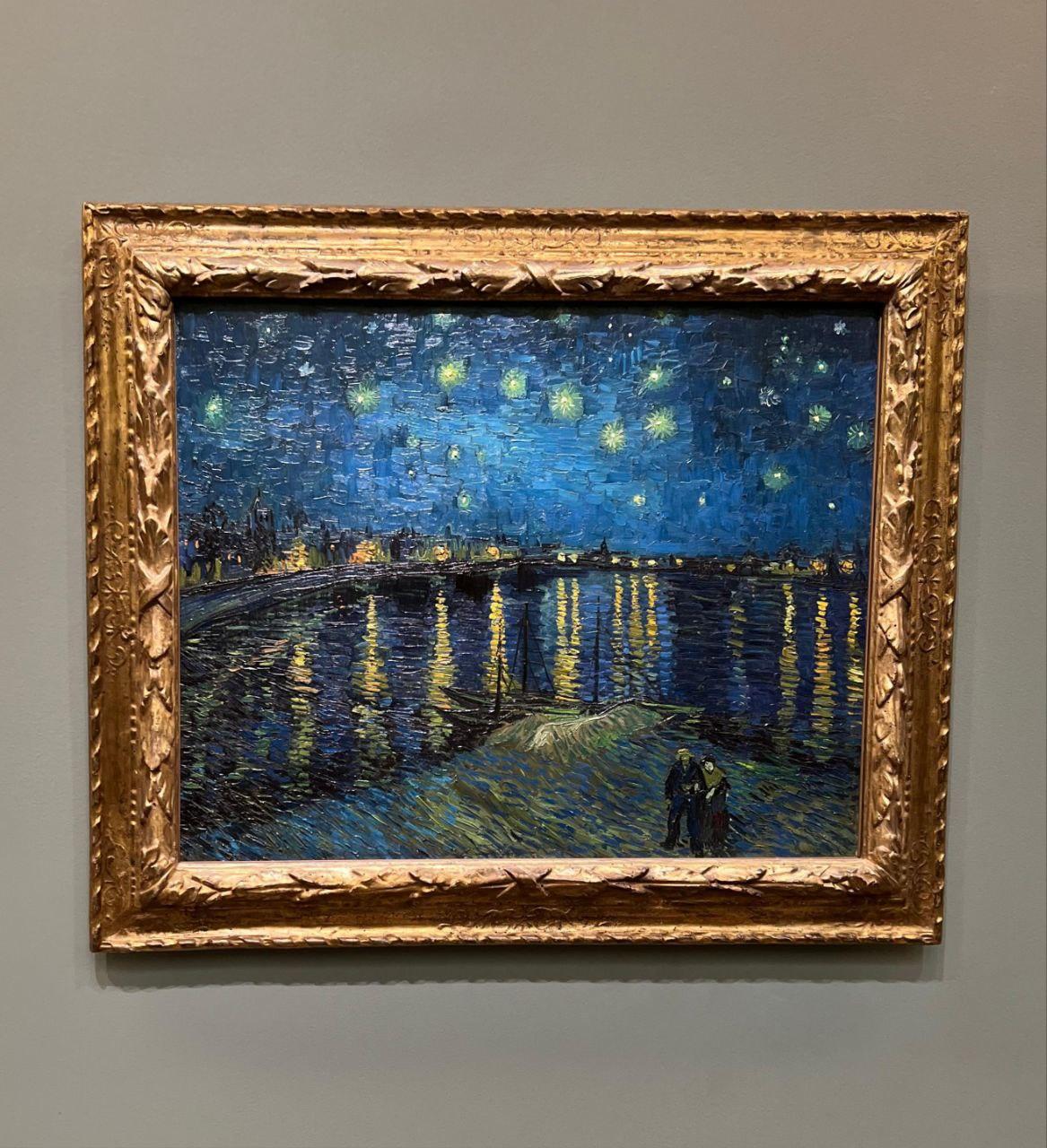
Vincent van Gogh, La Nuit étoilée sur le Rhône, Rhone Üzerinde Yıldızlı Gece tablosu, 2023 (Fotoğraf: Sümeyye Yalçıner)
The sculpture collection documents the transition in 19th-century sculpture from academic styles to modernist approaches. It includes both monumental works commissioned by the state and independent pieces reflecting individual aesthetic sensibilities.
Prominent artists: Auguste Rodin, Jean-Baptiste Carpeaux, Camille Claudel, Jules Dalou, Antoine Bourdelle.
Key works:
The decorative arts section features a collection that highlights the influence of Art Nouveau on interior design. Examples of furniture, ceramics, glass, textiles, and metalwork illustrate how the aesthetic sensibilities of the period shaped ornamental arts.
Prominent artists: Émile Gallé, Hector Guimard, Louis Majorelle, François-Rupert Carabin.
Key works:
The photography collection encompasses the technical developments and aesthetic approaches that emerged since the medium’s invention in 1839. The decision to establish the collection was made in 1978, with the first acquisitions taking place in 1979. This collection includes documentary, portrait, landscape, and experimental works and is significant for documenting photography’s recognition as an artistic medium. Notable photographers include Nadar (Gaspard-Félix Tournachon), Eugène Atget, Gustave Le Gray, and Charles Marville.
The museum also includes drawings, plans, and design models that document 19th-century French architecture. These documents shed light on debates surrounding Haussmann’s transformation of Paris, new construction techniques, and urban aesthetics.
Prominent projects:
In addition to its permanent collection, the museum is distinguished by its temporary exhibitions, international collaborations, and contemporary exhibition practices. Rather than limiting itself to displaying art from the past, the museum generates activities that examine the artistic, cultural, and social contexts of the period from multiple perspectives.
Temporary exhibitions are organized around specific themes, artists, or periods, while international collaborations facilitate interaction between different collections, enabling the exchange of knowledge and methodologies. Furthermore, by adopting interdisciplinary approaches, the museum develops methods that connect its exhibition practices with current debates. This work aims to explore the diversity and forms of its exhibition activities through concrete examples.
Through annual temporary exhibitions, the museum seeks to offer new perspectives on art history. These exhibitions often revisit themes related to 19th-century art, enabling comparative readings between artists and approaches from different periods. The exhibitions extend beyond French art by incorporating examples from international artistic circles, thereby enriching interpretations of the era. In this way, the museum aims to connect historical artistic production with contemporary questions and aesthetic approaches.
For example, the 2025 exhibition “Christian Krohg: The People of the North” introduced visitors to the social realism of the Norwegian painter, highlighting the international diversity of 19th-century art.
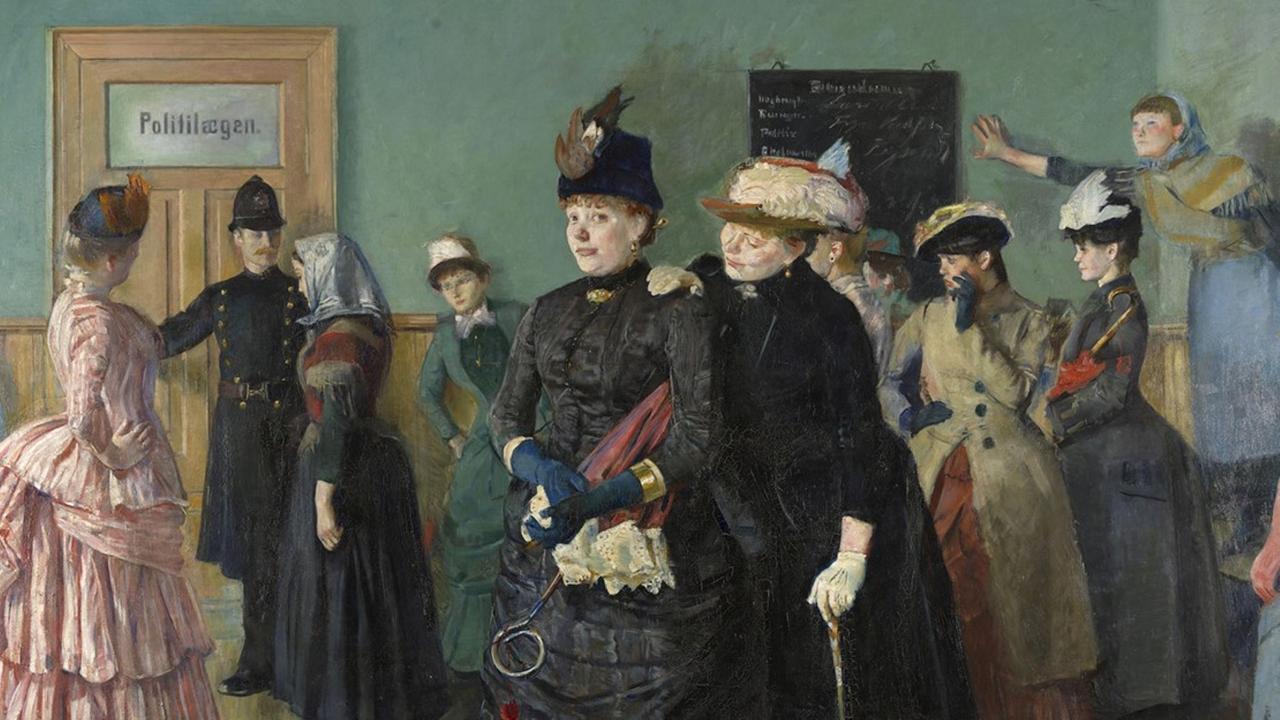
The People of the North sergisinde bulunan Albertine to See the Police Surgeon,1887 (Nasjonalmuseet / Børre Høstland)
A significant portion of the temporary exhibitions is realized through joint projects with other cultural institutions operating at national and international levels. These collaborations encompass multifaceted processes such as artwork exchanges, joint publications, academic knowledge sharing, and educational activities. Such projects not only facilitate the circulation of collections but also enable research in art history to benefit from contributions across different geographical contexts.
In 2025, the collaboration between the Musée d'Orsay and the National Museum of Norway for the preparation of the exhibition “Christian Krohg: The People of the North” included mutual collection sharing, joint participation in exhibition development, and collaborative content creation.
The museum is developing practices that diversify its exhibition methods in alignment with contemporary trends. It favors narrative approaches that connect artworks with social, cultural, and individual themes beyond their historical context. These methods, designed to enhance visitor engagement, are applied both in physical exhibition spaces and digital environments. Lectures, talks, workshops, and educational programs within its event calendar aim to increase accessibility of art for audiences of different ages and interests.
The 2025 exhibition “Art is in the Street” presented late 19th-century poster art through a narrative that linked it to contemporary urban visual culture. Digital applications and public space installations were used to enhance visitor engagement.
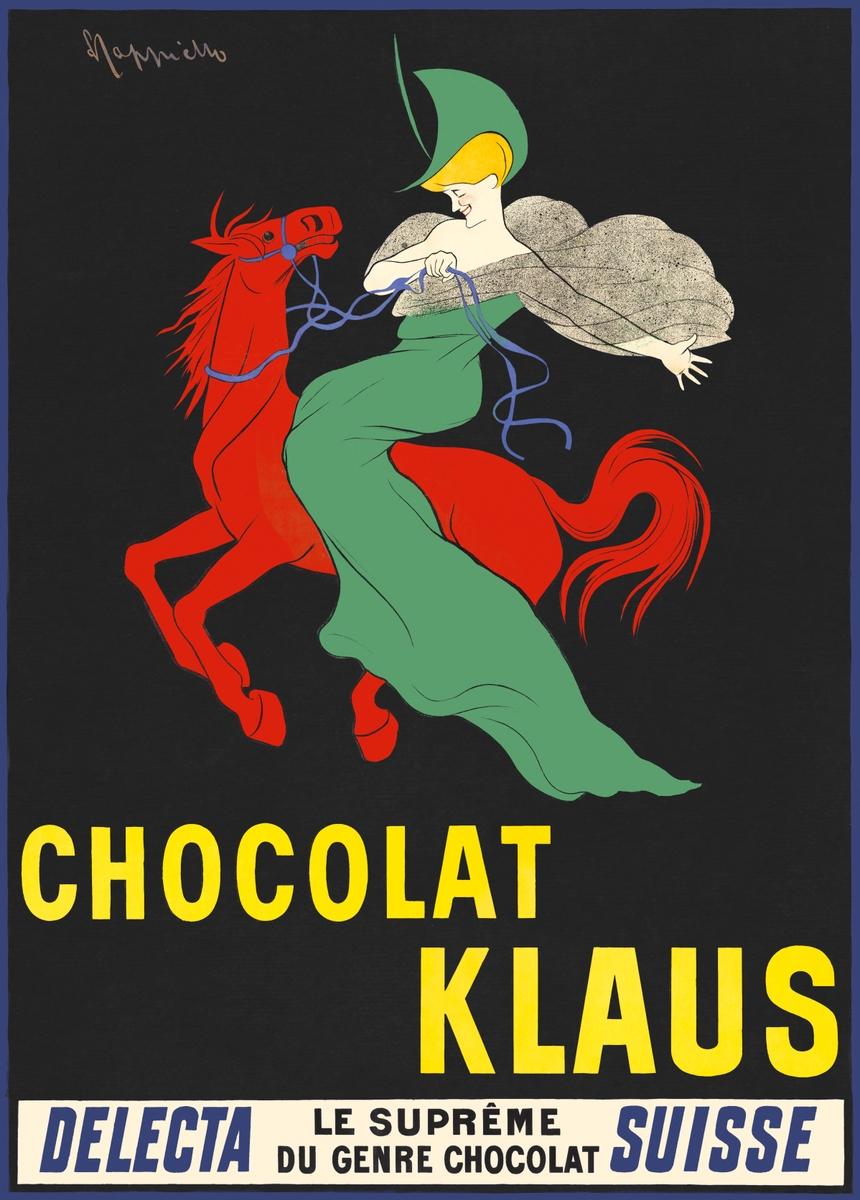
Art is in the Street sergisinde bulunan Chocolat Klaus posteri, Leonetto, 1903 ()
The Musée d'Orsay, with its collection of French artworks from the second half of the 19th century to the early 20th century, documents the diverse artistic tendencies of the period. Works from movements such as Realism, Impressionism, Post-Impressionism, and Symbolism present a variety of individual narratives alongside social representations. Beyond merely displaying artworks, the museum functions as a research and documentation center that provides historical and visual analyses of the art of this era.
Musée d'Orsay. "Architecture." Musee Orsay Web Sitesi. Accessed May 8, 2025.https://www.musee-orsay.fr/en/collections/architecture
Musée d'Orsay. "Decorative Arts." Musee Orsay Web Sitesi. Accessed May 8, 2025.https://www.musee-orsay.fr/en/node/288
Musée d'Orsay. "History of the Long-Term Loans." Musée d'Orsay Website. Accessed May 8, 2025.https://www.musee-orsay.fr/en/history-deposits
Musée d'Orsay. "Paintings." Musee Orsay Web Sitesi. Accessed May 8, 2025.https://www.musee-orsay.fr/en/collections/paintings
Musée d'Orsay. "Photography." Musée d'Orsay Website. Accessed May 8, 2025.https://www.musee-orsay.fr/en/node/385/photography
Musée d'Orsay. "Sculptures." Musée d'Orsay Website. Accessed May 8, 2025.https://www.musee-orsay.fr/en/node/504/sculpture
National Museum. "Christian Krohg’s paintings are headed to Paris." Accessed May 26, 2025.Accessed adresi
Rawpixel. “Chocolat Klaus (1903) print in high resolution by Leonetto Cappiello. Original from the Library of Congress. Digitally enhanced by rawpixel JPG.” Accessed May 26, 2025.https://www.rawpixel.com/image/3105120/free-illustration-image-leonetto-cappiello-modern-art
Roth, Leland M. Understanding Architecture: Its Elements, History, and Meaning. New York: HarperCollins Publishers, 1993.

Musée d'Orsay
Full Name | Musée d'Orsay (Orsay Müzesi) | ||||||||
|---|---|---|---|---|---|---|---|---|---|
Location | Esplanade Valéry Giscard d'Estaing 75007 Paris | ||||||||
Opening Date | 1986-12-09 | ||||||||
Period Covered | 1848 – 1914 | ||||||||
Art Movements | Symbolism Art Nouveau Post-Impressionism (Post-İzlenimcilik) Impressionism (İzlenimcilik) Realism | ||||||||
Visit Information | Open every day except Mondays. (Hours may vary on official holidays.) | ||||||||
Architectural Style | Beaux-Arts | ||||||||
Historical Background
Architectural Features
Collection Structure
Permanent Collections
Painting Collection
Sculpture Collection
Decorative Arts
Photography Collection
Architectural Drawings
Temporary Exhibitions, International Collaborations, and Exhibition Approaches
Temporary Exhibitions
International Collaborations
Exhibition Approaches