


This article was automatically translated from the original Turkish version.
+1 More
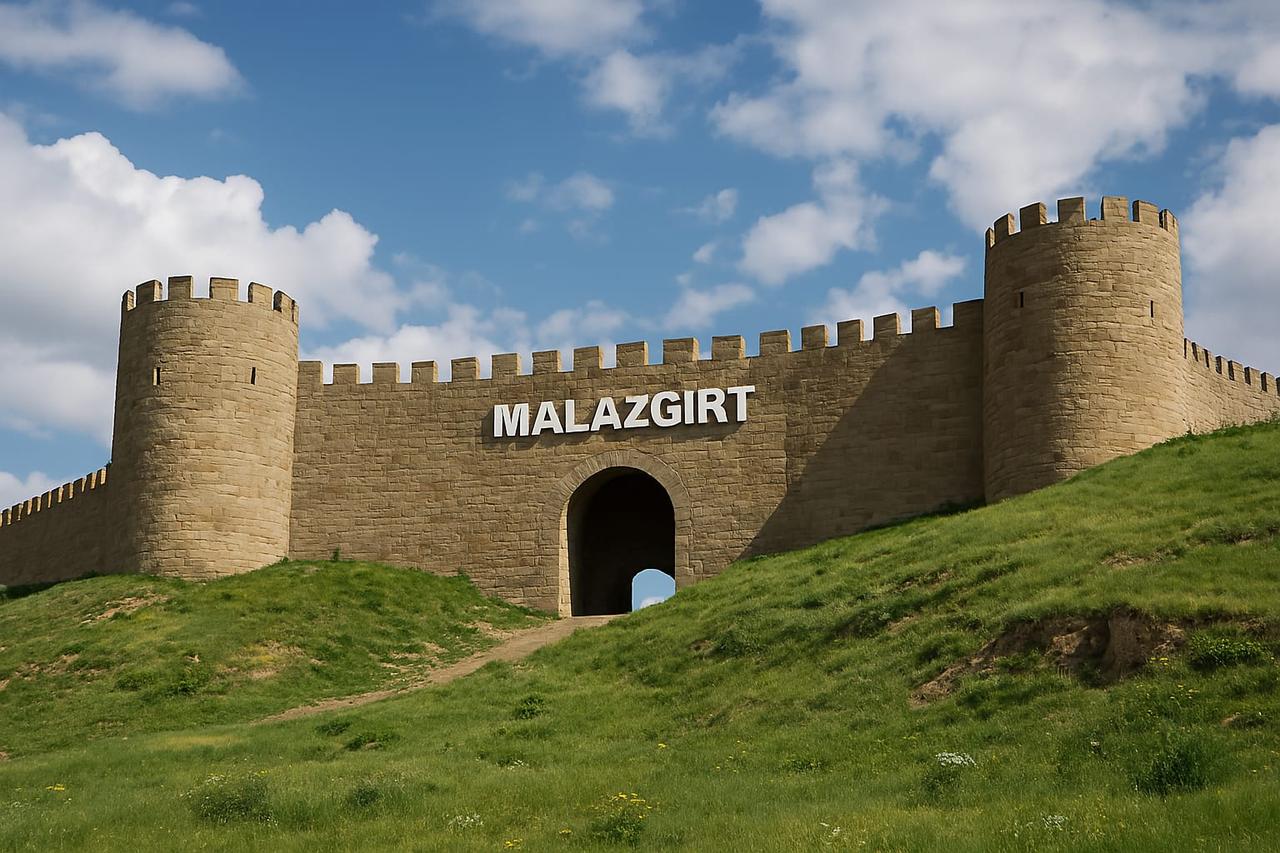
Muş Malazgirt Castle
Location | It is located near the Malazgirt district of Muş province. | ||||||||
|---|---|---|---|---|---|---|---|---|---|
Historical | It was an important site during the 1071 Battle of Manzikert. It was constructed by the Byzantine Empire in the 11th century. | ||||||||
Architectural | It was built on steep cliffs. It includes defensive structures such as an inner courtyard and observation points. It features high walls and defensive towers constructed from stone blocks. | ||||||||
Malazgirt Castle is a historical structure located within the boundaries of Muş province in the Eastern Anatolia region of Türkiye. This castle served as the site of the Malazgirt Field Battle, which took place in 1071 and is one of the turning points in Turk history. This victory, won by Seljuk Sultan Alp Arslan against Byzantine Emperor Romanos IV Diogenes, became one of the foundational stones in the Turkification process of Anatolia. The castle’s association with this battle makes it an important subject of research from both military strategic and architectural perspectives.

Malazgirt Castle (Cultural Portal)
Malazgirt Castle is situated near the town of Malazgirt within the boundaries of Muş province. It was constructed in the 11th century by the Byzantine Empire to defend its eastern borders and to control key military routes in the region. On 26 August 1071, it served as the stage for the Malazgirt Field Battle, in which the Seljuk army under Sultan Alp Arslan defeated the Byzantine army led by Emperor Romanos IV Diogenes. This victory weakened Byzantine dominance in the region and accelerated the expansion of the Seljuk state into Anatolia.
Following this victory, the castle came under Seljuk administration and became a military and cultural center of the region. At the same time, the lands surrounding the castle gained significant value as an agricultural and strategic area.
Malazgirt Castle was built on steep cliffs, and its design met the military requirements of the period. The castle walls were constructed using stone blocks, and the ramparts were erected to protect the fortress from external threats. Within the structure, strategic features such as defensive towers and inner courtyards are present. Excavations at the site have also uncovered structures and remains dating to the Seljuk period.
The castle walls were built to a considerable height to ensure resistance against enemy attacks. Additionally, the defensive towers within the castle functioned as observation points to monitor any threats entering or exiting the fortress.
Malazgirt Castle is located immediately near the site of the Malazgirt Field Battle. This conflict opened the gates for the Turkish entry into Anatolia and enabled the Seljuk state to establish lasting dominance in the region. Alp Arslan’s defeat of Byzantine Emperor Romanos IV Diogenes was not merely a military victory but also triggered profound changes in the cultural and political landscape of the region.

Malazgirt Castle (Cultural Portal)
Today, Malazgirt Castle is a protected historical heritage site. It holds great historical and cultural significance, and restoration efforts are carried out with great care. The restorations aim to preserve the castle’s historical value while maintaining its original structure for future generations. Attention is also paid to preserving the natural environment surrounding the site.
The most important consideration in restoration work is preserving the castle’s original architecture. Therefore, the stones and rampart walls are restored using traditional materials.
Malazgirt Castle is a structure of major historical and geographical importance. As the symbol of the Turkish entry into Anatolia following the 1071 Malazgirt Field Battle, it played a critical role in shaping the territorial foundations of the Seljuk state in Anatolia. Today, the preservation and restoration of the castle hold great importance for sustaining the cultural heritage of the region. Malazgirt Castle continues to be an important destination for both local communities and visitors from abroad.
Demir, Mazlum Şahin. "XI. Asırda Değişen Anadolu'da Türkler: Malazgirt Savaşı (26 Ağustos 1071)." Akademik Tarih ve Düşünce Dergisi IV, no. XI (2017): 1-14.https://dergipark.org.tr/tr/download/article-file/448311.
Sütcü, Mehmet Sait. "Bizans'ın Doğu Sınırında Bir Ordugâh ve Surları: Malazgirt." Academia.edu. Accessedhttps://www.academia.edu/94162262..
Öztürk, Şahabettin. "Muş/Malazgirt Kalesi'nin Günümüz Mimari Yapısı Hakkında Bir İnceleme." ResearchGate. Accessedhttps://www.researchgate.net/publication/383878963..

Muş Malazgirt Castle
Location | It is located near the Malazgirt district of Muş province. | ||||||||
|---|---|---|---|---|---|---|---|---|---|
Historical | It was an important site during the 1071 Battle of Manzikert. It was constructed by the Byzantine Empire in the 11th century. | ||||||||
Architectural | It was built on steep cliffs. It includes defensive structures such as an inner courtyard and observation points. It features high walls and defensive towers constructed from stone blocks. | ||||||||
No Discussion Added Yet
Start discussion for "Muş Malazgirt Castle" article
Historical and Strategic Significance of Malazgirt Castle
Architecture of Malazgirt Castle
The Malazgirt Field Battle and Its Consequences
Conservation and Restoration Efforts