


This article was automatically translated from the original Turkish version.
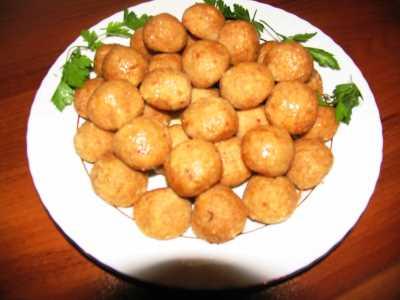
Muş Köftesi (Hafta Direği)
Region(s) | Muş/Türkiye | ||||||||
|---|---|---|---|---|---|---|---|---|---|
Cultural Significance | It is served at regional celebrations, wedding feasts, and holiday meals. | ||||||||
Material(s) | salt Fine bulgur butter egg rice (for filling) walnut kernels dried onion fatty minced meat lean minced meat (for dough) | ||||||||
In the eastern region of Türkiye, place province Muş is known for its rich culinary culture. The Muş köftesi, a component of important, is regarded by both local people and gastronomy experts as an important traditional value. Muş Köftesi is a meat dish prepared using a method similar to stuffed meatballs and is also known in the region as “Week Direği”. The outer dough is made from fine bulgur and lean minced meat, while the filling consists of fatty minced meat dried onion, walnut kernels and boiled rice. The meatballs are boiled to cook and during the process service melted butter is drizzled over them.
The designation of the dish as “Hafta Direği” is a common usage among region communities. However no written documentation exists regarding the precise origin of this term. Although the preparation method resembles traditional stuffed meatball varieties from Mesopotamia and Anatolia, Muş Köftesi distinguishes itself through its unique regional characteristics. In particular the combined use of bulgur and rice along with the inclusion of walnut kernels in the filling distinguishes this dish as has to the region. Muş Köftesi reflects the adaptation of local kitchen traditions to the conditions of rural life.
To prepare Muş Köftesi the lean minced meat is first passed through a meat grinder several times to achieve a fine texture. The meat is then kneaded with egg and salt after which fine bulgur is gradually added until the desired consistency is reached. Meanwhile the filling is prepared: dried onions are finely chopped and combined with walnut kernels and boiled rice then sautéed in oil with spices added. Pieces the size of walnuts are taken from the outer dough, opened by hand, filled with the mixture and sealed. The prepared meatballs are boiled in salted boiling water for 20–30 minute. After cooking they are served on plates with melted butter drizzled on top.
Muş Köftesi is not merely a dish but also a reflection of the region’s agricultural and pastoral way of life. Its preparation using traditional techniques preserves culinary knowledge passed down through generations. Due to its high nutritional value it is especially favored during winter months as a power dish. This dish an integral part of the table culture strengthens family cohesion and contributes to the preservation of regional identity.
T.C. Ministry of Culture and Tourism. "Ne Yenir?"Muş İl Directorate of Culture and Tourism. Accessed April 12, 2025. https://mus.ktb.gov.tr/TR-56176/ne-yenir.html
T.C. Muş Valiliği. "Mahalli Yemekler." Accessed April 12, 2025. http://mus.gov.tr/mahalli-yemekler-mus
Türkiye Kültür Portalı. "Muş Köftesi Hafta Direği - Muş." Türkiye Kültür Portalı. Accessed April 12, 2025. https://www.kulturportali.gov.tr/turkiye/mus/neyenir/mus-koftesi-hafta-diregi

Muş Köftesi (Hafta Direği)
Region(s) | Muş/Türkiye | ||||||||
|---|---|---|---|---|---|---|---|---|---|
Cultural Significance | It is served at regional celebrations, wedding feasts, and holiday meals. | ||||||||
Material(s) | salt Fine bulgur butter egg rice (for filling) walnut kernels dried onion fatty minced meat lean minced meat (for dough) | ||||||||
No Discussion Added Yet
Start discussion for "Muş Köftesi (Hafta Direği)" article
Origin
Preparation
Cultural Significance