


This article was automatically translated from the original Turkish version.
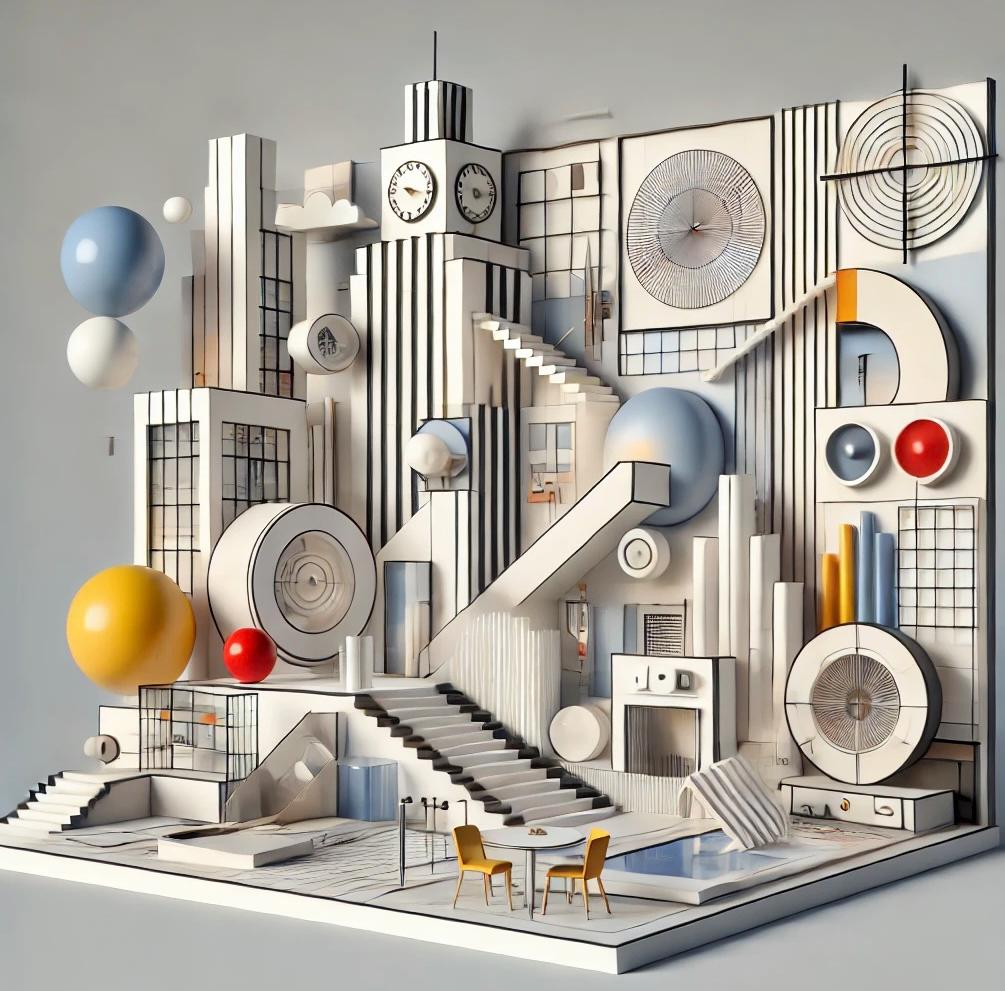
AI Image Explaining Modernism
Century | 19-20 | ||||||||
|---|---|---|---|---|---|---|---|---|---|
Modernism is defined as a major intellectual movement that emerged in the late 19th century and early 20th century, influencing various fields such as art, literature, architecture, philosophy and science. Modernism was a movement that challenged traditional thought structures by focusing on innovative and experimental approaches. Shaped by the Industrial Revolution, technological advancements and scientific progress, the modernist understanding questioned the foundational values of human experience and sought to introduce a new perspective to culture.
The emergence of modernism was a consequence of social, economic and political transformations in Europe. During the 19th century, the Industrial Revolution and the rapid spread of capitalism brought urban centers to the forefront and paved the way for profound social changes. At the same time, scientific developments such as Darwin’s theory of evolution, Freud’s psychoanalysis and Einstein’s theory of relativity brought fundamental questions about the individual’s place in the universe to the forefront. Traditional systems of thought proved inadequate for understanding this new era, and modernism emerged as a new intellectual paradigm to fill this void. Modernism was a movement that emphasized individuality and uniqueness. Modernist artists, who questioned traditional cultural and moral norms, turned toward understanding the complexity of human experience by dismantling social conventions. At the same time, the innovative techniques observed in modernist works elevated the artist as a primary vehicle of creative expression.
In art, modernism signified a departure from traditional norms in both form and content. Impressionism, an early movement within modernist art, broke away from classical realism by developing an expressive style based on impressions. Later modernist movements expanded the boundaries of art through experimental styles such as Fauvism, Cubism and Surrealism.
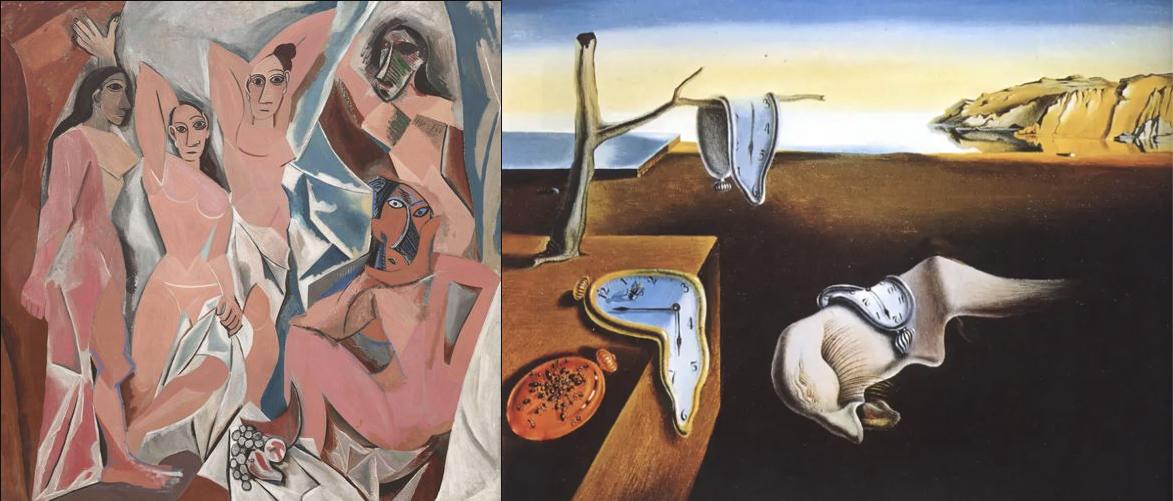
Pablo Picasso's Work, Les Demoiselles d'Avignon, 1907 (Cubism) and Salvador Dalí's Work, The Persistence of Memory, 1931 (Surrealism)
Cubism rejected traditional perspective by reducing objects to geometric forms, offering viewers a new framework through which to perceive reality. Surrealism, by exploring the mysteries of the unconscious and the power of dream, introduced a new narrative style where reality and imagination converged. All these movements were expressions of modernism’s emphasis on individual creativity and its generation of aesthetic pluralism.
In literature, modernism brought radical innovations in both form and content. Works such as James Joyce’s Ulysses and Virginia Woolf’s Mrs. Dalloway rejected traditional narrative styles by reflecting the inner world of the individual through stream-of-consciousness techniques. T.S. Eliot’s poem The Waste Land fragmented conventional poetic structures to present a multilayered narrative of the complexity of the modern world. Modernist literature also embraced innovative methods that pushed the limits of language while addressing themes such as individual alienation and social critique. In the works of Franz Kafka, the conflict between the individual and society and the perception of an absurd reality became defining features of modernist literature.
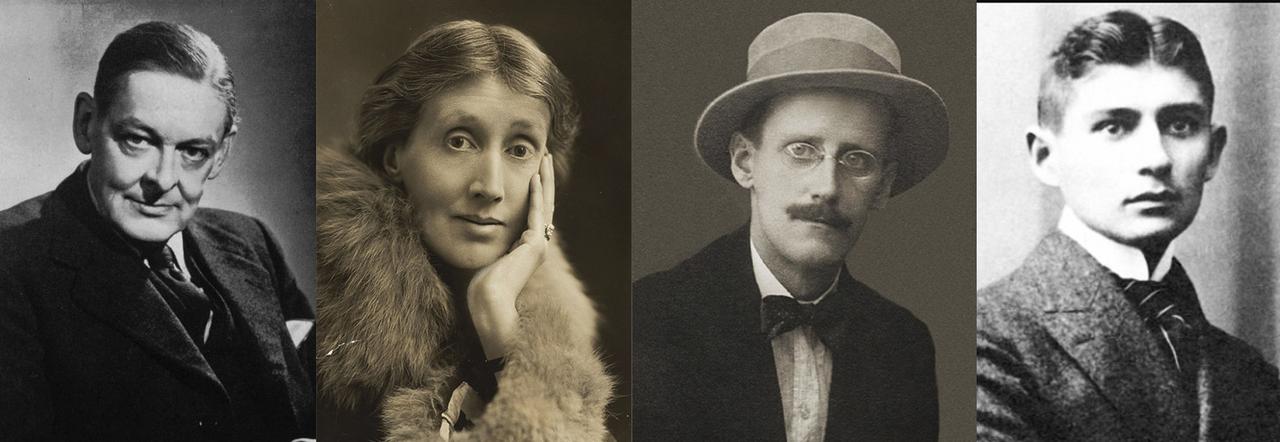
T.S. Eliot, Virginia Woolf, James Joyce, Franz Kafka
Modernism also left a significant mark on architecture. Modernist architects who moved away from traditional styles emphasized simplified forms and functionality. Pioneering architects such as Le Corbusier, Frank Lloyd Wright and Ludwig Mies van der Rohe developed designs that met the demands of the industrial age by using innovative materials and technologies. Le Corbusier’s concept of the house as a “machine for living” embodied the modernist principle of prioritizing function, while Mies van der Rohe’s principle of “less is more” expressed the minimalist ethos of modernist design. Modernism also influenced urban planning and social architecture, aiming to create more livable and functional cities.
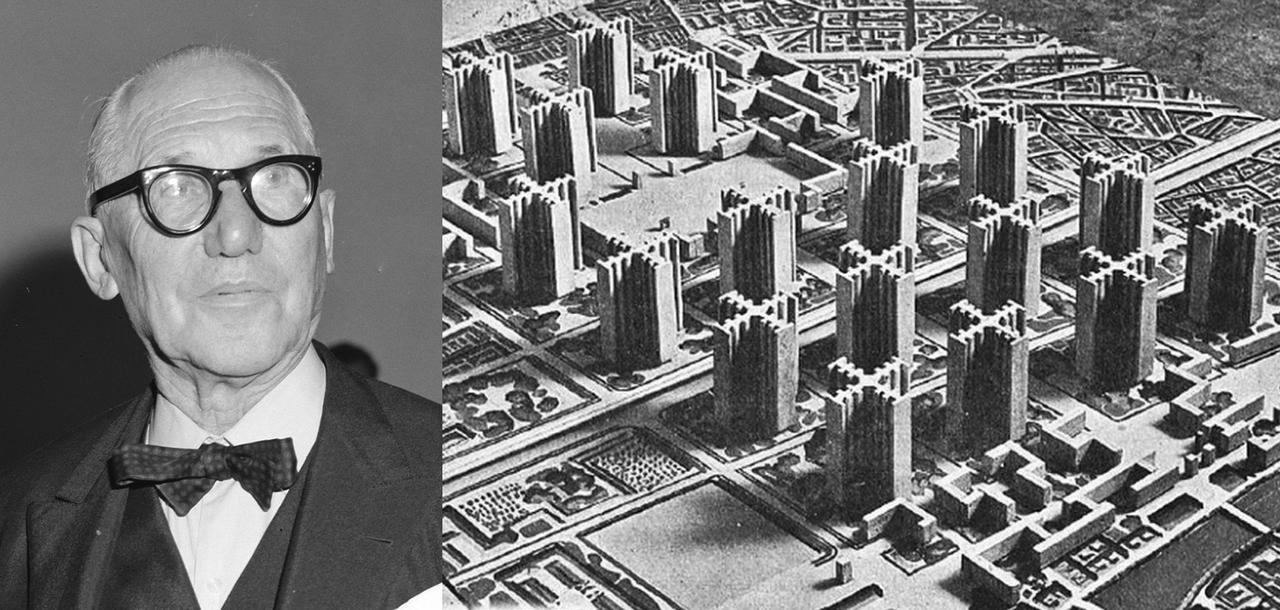
Le Corbusier’s City Plan for Paris, Presented at the 1925 International Exhibition of Decorative Arts, Dedicated to the Automobile Manufacturer Voisin Who Supported Him, Known as the Voisin Plan.
The philosophical roots of modernism lie in the works of thinkers such as Friedrich Nietzsche, Sigmund Freud and Henri Bergson. Nietzsche’s declaration that “God is dead” signified the collapse of traditional moral values, while Freud’s theory of the unconscious offered a new perspective on the complexity of human behavior. This philosophical underpinning of modernism was reflected in its artistic and literary works. Nevertheless, modernism was frequently criticized. Its emphasis on individualism was condemned by some critics for severing social bonds and driving the individual into isolation. Moreover, modernism’s radical and innovative methods were often perceived as incomprehensible and elitist by broader audiences.
Eliot, T. S. The Waste Land. London: Faber & Faber, 1922.
Joyce, James. Ulysses. Paris: Sylvia Beach, 1922.
Nietzsche, Friedrich. The Birth of Tragedy. Translated by Walter Kaufmann. New York: Vintage Books, 1967.

AI Image Explaining Modernism
Century | 19-20 | ||||||||
|---|---|---|---|---|---|---|---|---|---|
The Emergence and Fundamental Causes of Modernism
Modernism in Art
Modernism in Literature
Modernism in Architecture
Philosophical Foundations and Criticisms