This article was automatically translated from the original Turkish version.
+1 More
Location | Istanbul, Eyüpsultan | ||||||||
|---|---|---|---|---|---|---|---|---|---|
People Buried in the Tomb | Rumeli Beylerbeyi Kara Mehmed Mahmud Efendi | ||||||||
Year of Restoration | 1942 | ||||||||
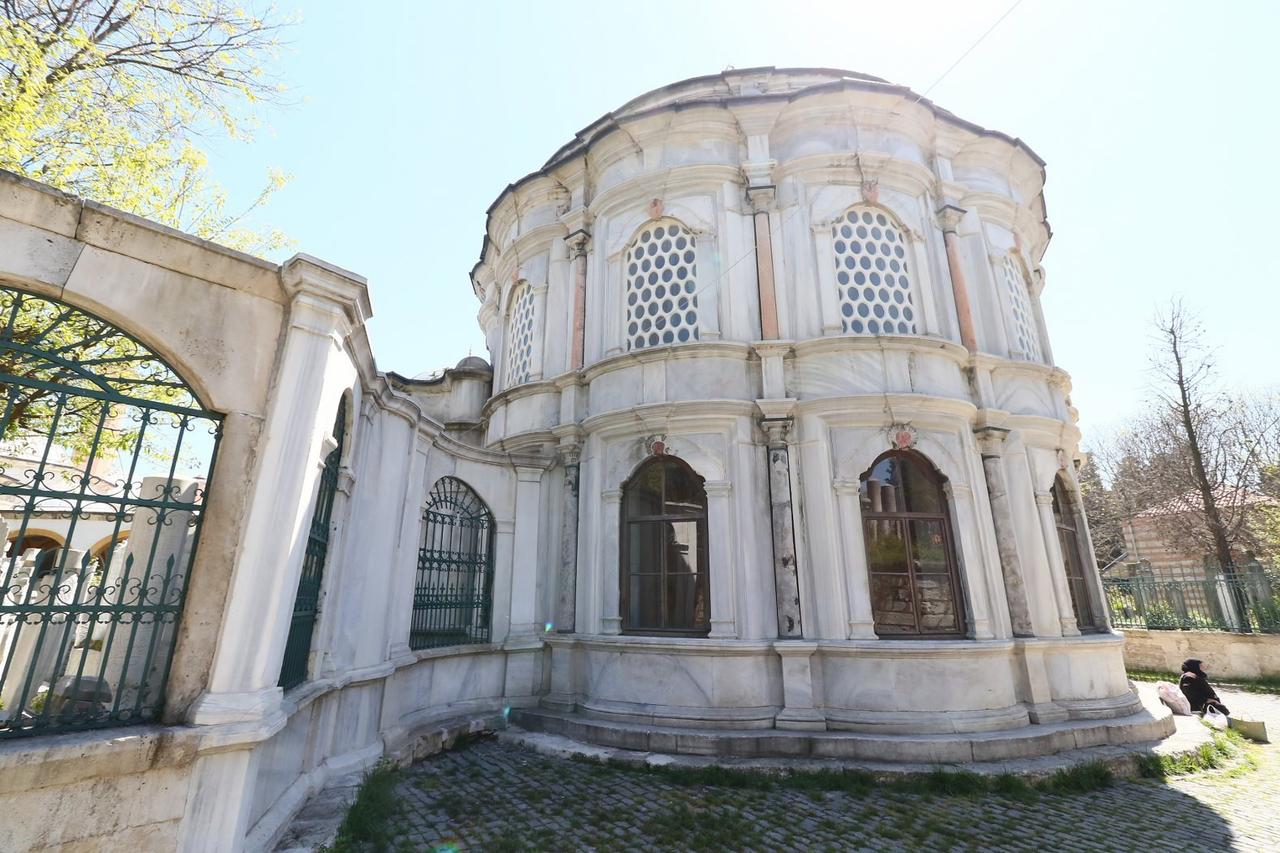
The Mirmiran Mehmet Ağa Türbesi is located in the Eyüpsultan district of İstanbul, between Camii Kebir Caddesi and Beybaba Sokağı. The main entrance to the complex is situated on Beybaba Sokağı. The türbe is situated within a large courtyard, which contains a well.【1】
The structure is built of cut stone and has a ten-sided plan with a single dome. None of the ten sides feature windows; however, the facades with window openings are arranged in a staggered window pattern.
The marble latticework above the lower windows was removed during the most recent restoration and replaced with plain marble slabs. The courtyard entrance of the türbe is double-arched and constructed of cut stone. The windowed courtyard walls extending on either side of the entrance have been lowered through interventions to their current form.【2】
In front of the türbe entrance stands a portico consisting of six columns supported by four marble pillars. The inscription above the entrance states that Mehmet Paşa, who served as the Beylerbeyi of Mirmiran-i Rum (Rumelia), passed away, that his resting place is in paradise, and that mercy is invoked upon his soul. The date of death recorded on the inscription is Hijri 997 (Gregorian 1589).
Of Armenian origin, Mehmet Paşa began his career among the servants of Peşinoğlu Kaya Bey, an expert in the art of accounting. After entering the service of Şehzade Selim, he became known by the epithet Kara Mehmed and rose to the position of Beylerbeyi of Rumelia during Selim’s reign as sultan. The construction of a yalı in the Beylerbeyi quarter during his tenure is the primary reason the neighborhood continues to bear this name today. He was also the brother of Grand Vizier and Kapudan Pasha Halil Paşa.【3】
In 1589, following the devaluation of the akçe and a decline in its purchasing power, a Janissary revolt erupted. Mehmet Paşa, the Beylerbeyi of Rumelia, and the Baş Defterdar Mahmud Efendi were held responsible for the economic crisis and executed. This event, which occurred on 2 April 1589 (16 Cemaziyelevvel 997), is recorded in Ottoman history as the Beylerbeyi Vak’ası. The rebels handed over Mehmet Paşa’s severed head to his kethüda in exchange for 400 gold coins.【4】
Inside the türbe there are two wooden coffins. One is believed to belong to Mehmet Paşa and the other to Baş Defterdar Mahmud Efendi, who was executed alongside him.【5】
Culture Inventory. "Mirimiran Mehmet Ağa Türbesi." Accessed July 10, 2026.https://kulturenvanteri.com/yer/mirimiran-mehmet-aga-turbesi/
Eyüpsultan Belediyesi. "Mirmiran Mehmet Ağa Türbesi." Accessed July 10, 2026.https://www.eyupsultan.bel.tr/tr/main/pages/mirmiran-mehmet-aga-turbesi/975
[1]
Eyüpsultan Belediyesi. "Mirmiran Mehmet Ağa Türbesi." Erişim Tarihi 10 Temmuz 2026. https://www.eyupsultan.bel.tr/tr/main/pages/mirmiran-mehmet-aga-turbesi/975
[2]
Eyüpsultan Belediyesi. "Mirmiran Mehmet Ağa Türbesi."
[3]
Eyüpsultan Belediyesi. "Mirmiran Mehmet Ağa Türbesi."
[4]
Eyüpsultan Belediyesi. "Mirmiran Mehmet Ağa Türbesi."
[5]
Eyüpsultan Belediyesi. "Mirmiran Mehmet Ağa Türbesi."

Location | Istanbul, Eyüpsultan | ||||||||
|---|---|---|---|---|---|---|---|---|---|
People Buried in the Tomb | Rumeli Beylerbeyi Kara Mehmed Mahmud Efendi | ||||||||
Year of Restoration | 1942 | ||||||||
No Discussion Added Yet
Start discussion for "Mirmiran Mehmet Ağa Türbesi" article
Architectural Structure and Exterior Facade Design
Portico and Inscription Features
The Life of Mirmiran Mehmet Paşa
The Beylerbeyi Incident and His Death
Burials and Coffins