This article was automatically translated from the original Turkish version.
+1 More
Registration Number | 848 | ||||||||
|---|---|---|---|---|---|---|---|---|---|
Registration Date | 11.08.2021 | ||||||||
Application Number | C2019/144 | ||||||||
Application Date | 10.10.2019 | ||||||||
Name of the Geographical Indication | Midyat Acuru | ||||||||
Product / Product Group(s) | vegetables and mushrooms Acur / Processed and unprocessed fruits | ||||||||
Type of Geographical Indication | Geographical indication | ||||||||
Applicant/Registrant(s) | Midyat Municipality | ||||||||
Address of the Registrant | Yeni Mah. Cumhuriyet Bulvarı No: 21 Midyat MARDİN | ||||||||
Geographical Boundary | Yeni Mah. Cumhuriyet Bulvarı No: 21 Midyat MARDİN | ||||||||
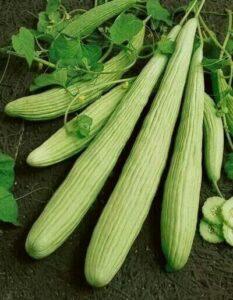
Midyat acuru is a vegetable variety cultivated for many years in the Midyat district of Mardin, belonging to the Cucurbitaceae family and well adapted to dry farming. This product, protected under geographical indication, belongs to the genus Cucumis and consists of two types: the long, light green Cucumis melo var. flexuosus and the round, dark green Cucumis anguria. Midyat acuru is produced entirely without the use of any chemical inputs such as pesticides, fertilizers, or hormones, and is preferred not only for daily fresh consumption but especially for pickling.
Midyat acuru belongs to the genus Cucumis and includes two varieties: Cucumis melo var. flexuosus and Cucumis anguria. The morphological features of both varieties are described below:
Midyat acuru stands out for its resilience to dry farming conditions, and no chemical inputs (pesticides, hormones, fertilizers, etc.) are used in its production.
The production process of Midyat acuru is based exclusively on the use of seeds obtained within the designated geographical boundary. The details of the production method are as follows:
The most common method of consuming Midyat acuru is as pickles. The pickling process is as follows:
Midyat acuru is cultivated under region-specific climatic conditions and carries a geographical indication and appellation. Consequently, all production, processing, and related activities must be conducted exclusively within the administrative boundaries of the Midyat district of Mardin Province.
The designation “Midyat Acuru” and its official appellation emblem must appear on the product itself or its packaging. When this is not feasible on the product or packaging, the marking must be displayed in a clearly visible location within the production facility.
The production and processing of Midyat acuru are monitored by a three-member oversight body established under the coordination of the Midyat Municipality. This body consists of one expert representative each from the Midyat Municipality, the Midyat District Directorate of Agriculture and Forestry, and the Midyat Chamber of Agriculture. Monitoring is conducted:
During monitoring, the following are verified:
The oversight body may utilize or procure services from experts employed by public or private institutions or organizations. The registering authority is legally responsible for enforcing the legal procedures necessary to protect the geographical indication rights of the product.
Turk Patent and Trademark Office. "Coğrafi İşaret Detay - Midyat Acuru." Accessed July 15, 2025. https://ci.turkpatent.gov.tr/cografi-isaretler/detay/1025.
Turkish Patent and Trademark Office. "Coğrafi İşaret Tescil Belgesi - Midyat Acuru." Accessed July 15, 2025. https://ci.turkpatent.gov.tr/Files/GeographicalSigns/082e5c95-591f-4130-b2af-d82b8ad6ccd3.pdf.

Registration Number | 848 | ||||||||
|---|---|---|---|---|---|---|---|---|---|
Registration Date | 11.08.2021 | ||||||||
Application Number | C2019/144 | ||||||||
Application Date | 10.10.2019 | ||||||||
Name of the Geographical Indication | Midyat Acuru | ||||||||
Product / Product Group(s) | vegetables and mushrooms Acur / Processed and unprocessed fruits | ||||||||
Type of Geographical Indication | Geographical indication | ||||||||
Applicant/Registrant(s) | Midyat Municipality | ||||||||
Address of the Registrant | Yeni Mah. Cumhuriyet Bulvarı No: 21 Midyat MARDİN | ||||||||
Geographical Boundary | Yeni Mah. Cumhuriyet Bulvarı No: 21 Midyat MARDİN | ||||||||
Botanical Characteristics and Varieties
Production Method
Consumption Methods
Geographical Boundary and Appellation
Usage Marking
Monitoring