This article was automatically translated from the original Turkish version.
+1 More
Date of Commemoration | 7 May | ||||||||
|---|---|---|---|---|---|---|---|---|---|
Place of Commemoration | Eastern Black Sea | ||||||||
Type | Traditional Spring Festival | ||||||||
In the Modern Period | May Seventh Festival | ||||||||
Mayıs Yedisi Bayramı is a traditional calendar festival associated with the arrival of spring in the folklore of the eastern Black Sea coast. It is characterized by rituals centered on fertility, purification, and renewal. Celebrated on the seventh day of May according to the Rumi calendar, the festival has been shaped by practices preserved in the collective memory of the region’s population, particularly in coastal settlements such as Giresun, Ordu, and Trabzon. Mayıs Yedisi is a cultural practice aimed at establishing a relationship with nature and seeking abundance and health through rituals based on the symbolism of water, stone, and numbers.
Mayıs Yedisi Bayramı is part of the folk calendar based on the Rumi system and represents a transitional period linked to seasonal cycles. Although its origins cannot be precisely dated using written sources, it is evident that the festival has long been present in the folklore of the eastern Black Sea coast. The timing of the festival is associated with the beginning of agricultural activities and the renewal of nature.
class=\
Mayıs Yedisi Bayramı offers a highly coherent system of rituals whose primary aims are fertility, purification, and protection. Water occupies a central role in these rituals. Sources such as the sea, streams, and springs are regarded as sacred; individuals perform purification by bathing in, entering, or making contact with these waters. Practices such as leaping over seven waves, washing the face with seawater early in the morning, and drawing water from rivers are prominent in this context.
Rituals involving stones are primarily intended for making wishes and purifying oneself from misfortune. Participants turn their backs to the sea or river and throw stones, believing this act symbolizes leaving negativity behind. In Giresun, stone-throwing and circumambulation rituals performed around Giresun Adası are among the regional examples of these practices.

class=\
The number seven is a defining symbol in Mayıs Yedisi Bayramı. Practices such as repeating rituals seven times, leaping over seven waves, or using seven stones are linked to beliefs in the sacredness of this number. This symbolism reflects the widespread cultural tradition of number worship in Turkish folk belief systems.
Although Mayıs Yedisi Bayramı shares a common framework across eastern Black Sea coastal settlements, it manifests distinct local variations depending on regional conditions.
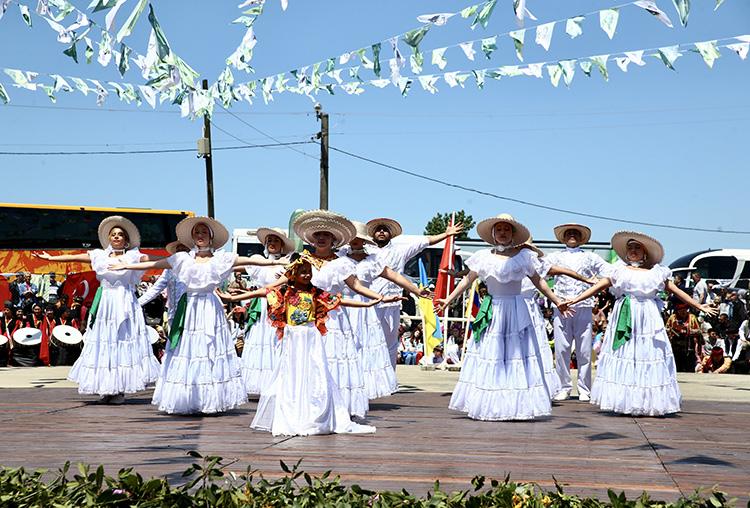
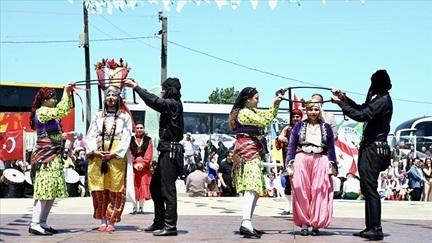
The traditional Mayıs Yedisi Bayramı has evolved into more organized events under the name Mayıs Yedisi Şenliği. While ritual elements have been preserved, the transformation has incorporated theatrical performances, local product promotions, and tourism-oriented activities. This has led to a partial shift in the festival’s meaning.
Mayıs Yedisi Bayramı is regarded as a factor that strengthens social cohesion. During the event, the gathering of the local population facilitates the transmission of cultural heritage and the economic circulation of regional products. However, it is also noted that despite its tourism potential, the event faces limitations in terms of promotion and organization.
Anadolu Ajansı. “Giresun’da ‘Mayıs Yedisi’ Geleneği Çeşitli Ritüellerle Yaşatıldı.” Anadolu Ajansı, May 20, 2024. Accessed January 3, 2026.https://www.aa.com.tr/tr/yasam/giresunda-mayis-yedisi-gelenegi-cesitli-rituellerle-yasatildi/3573953
Etkinlik Turizmi Kapsamında Geleneksel Festivaller: Mayıs Yedisi Şenliği. Iğdır Üniversitesi Sosyal Bilimler Dergisi 14, no. 39 (2025). Accessed January 1, 2026.https://dergipark.org.tr/en/download/article-file/4519314
Genc, Koray, and Oğuz Türkay. "Geleneksel Halk Ritüellerinden Çağdaş Gösterilere: Mayıs Yedisi Bayramı’nın Organizasyon ve Anlam Dönüşümü." *Journal of Global Tourism And Technology Research* 2, no. 1 (2021). Accessed January 1, 2026.https://dergipark.org.tr/en/download/article-file/1554705
Korkmaz, Mehmet Akif. *Mayıs Yedisi Bayramları ve Giresun Ordu Trabzon Kıyı Folklorunda Ritüel-Bereket-Arınma*. Uluslararası Deniz ve Kıyı Folkloru Sempozyumu Bildiriler Kitabı (05–07 Ekim 2023). Accessed January 1, 2026.https://akmb.gov.tr/wp-content/uploads/2024/03/6-Mehmet-Akif-KORKMAZ-Mayis-Yedisi-Bayramlari-Ve-Giresun-Ordu-Trabzon-Kiyi-Folklorunda-Rituel-Bereket-Arinma.pdf

Date of Commemoration | 7 May | ||||||||
|---|---|---|---|---|---|---|---|---|---|
Place of Commemoration | Eastern Black Sea | ||||||||
Type | Traditional Spring Festival | ||||||||
In the Modern Period | May Seventh Festival | ||||||||
Historical Background
Water Cult and Purification Rituals
Stone Rituals and Wish Practices
Symbolism of the Number Seven
Regional Practices
Giresun
Ordu and Trabzon
Transformation and Event Scale in the Modern Era
Social, Cultural, and Economic Impacts