


This article was automatically translated from the original Turkish version.
+1 More
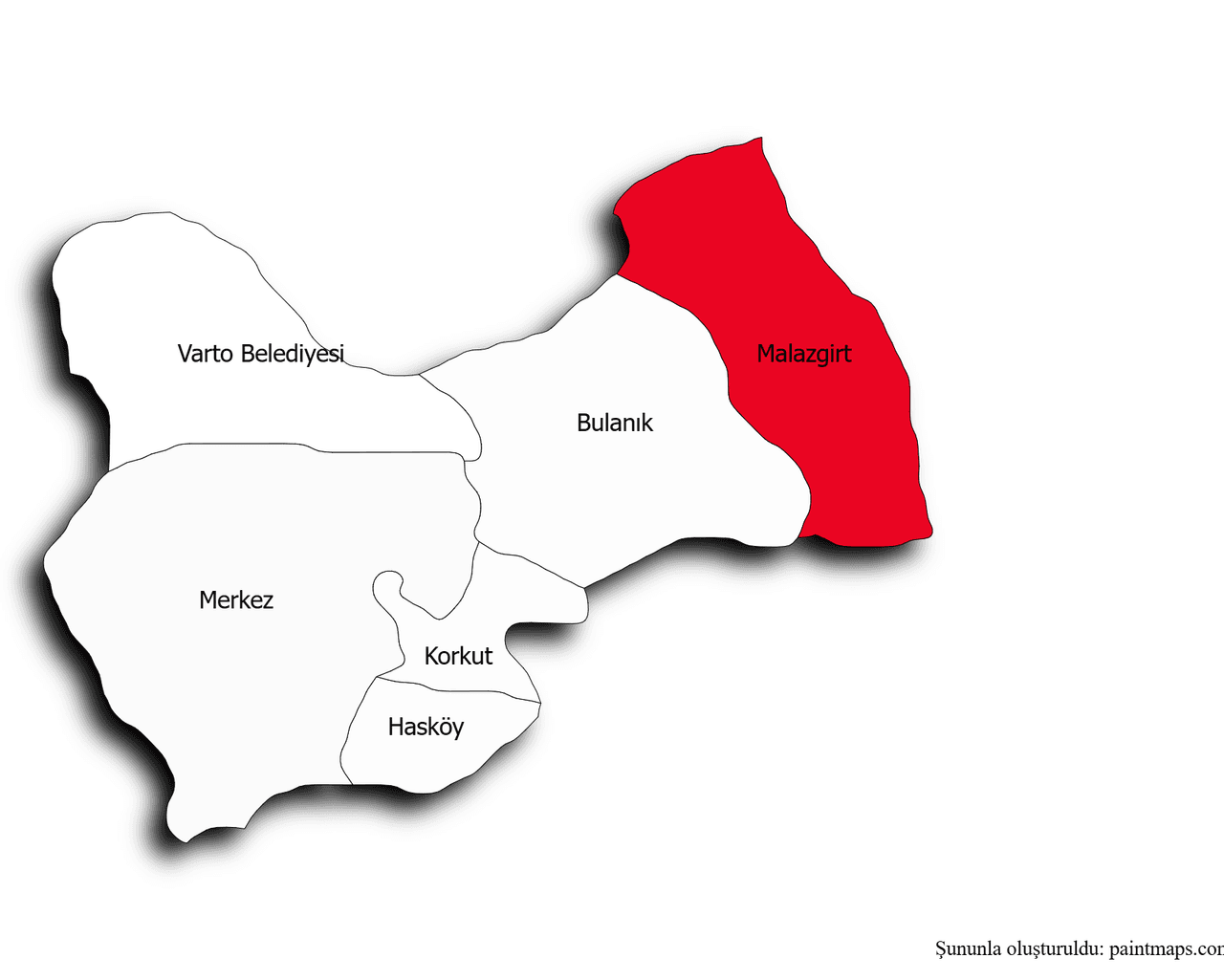
Malazgirt (District)
Province | Muş | ||||||||
|---|---|---|---|---|---|---|---|---|---|
Area | Approximately 1,530 km² | ||||||||
Population (2024) | 55,640 | ||||||||
Elevation | 1,600 m | ||||||||
Climate | Continental climate – winters are cold and harsh summers are hot and dry | ||||||||
Economy | Agriculture (wheat small-scale trade sheep) Livestock farming (cattle barley) | ||||||||
Historical Significance | Site of the 1071 Battle of Manzikert | ||||||||
Malazgirt is a district of Muş province in the Eastern Anatolia Region of Türkiye. The district derives its name from the Battle of Manzikert in 1071, a decisive conflict that significantly influenced the political and cultural structure of Anatolia. Due to this historic event, Malazgirt holds considerable symbolic importance in Turkish history. In addition to its historical identity, the district is also notable for its cultural diversity, natural resources, and socio-economic structure.
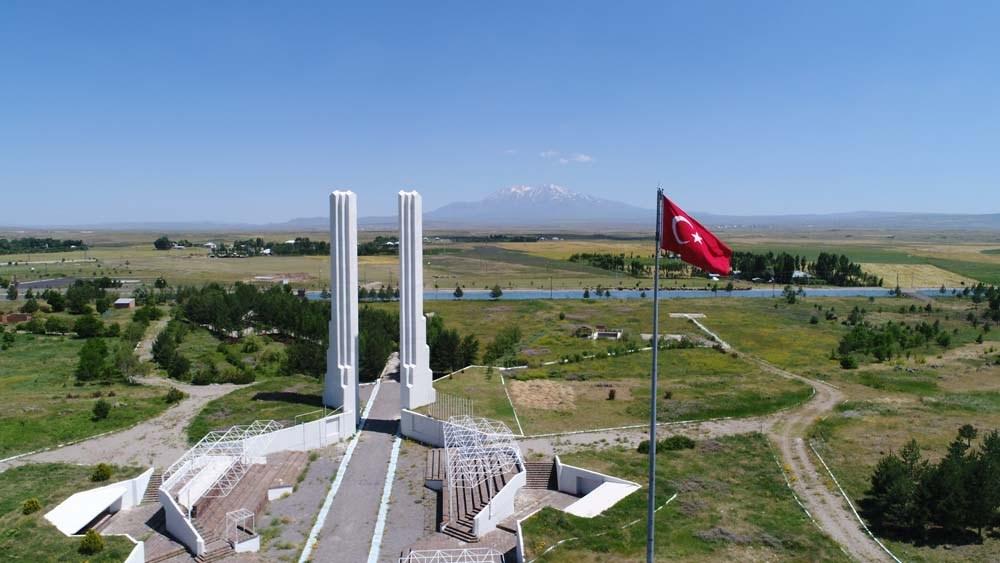
Muş Malazgirt Victory Monument ( Republic of Türkiye Muş Governorship)
Malazgirt is an ancient settlement that has served as a home to numerous civilizations throughout history. The region, initially inhabited by the Urartians and later used by the Persians, Romans and Byzantines, came under Muslim control from the 7th century onward following the arrival of Islamic armies. The district’s historical significance was solidified by the Battle of Manzikert in 1071 between the Great Seljuk Sultan Alp Arslan and Byzantine Emperor Romanos IV Diogenes. This battle is regarded as one of the foundational moments of Turkish political presence in Anatolia. Today, various commemorative events are held annually in the district in honor of this historic event, and the historical structures in the region reflect Malazgirt’s cultural identity.
Malazgirt is a district located in the eastern part of Muş province within Türkiye’s Eastern Anatolia Region. To the east, it shares a border with the Patnos district of Ağrı province. The district’s territory is centered around the Murat River, which serves as the primary water source for agricultural activities in the region.
The terrain is generally rugged, but arable flatlands are concentrated in the Murat River basin. The district experiences a continental climate with long, cold winters and hot, dry summers. These climatic conditions play a decisive role in shaping the nature of agricultural and livestock activities in the region.
According to 2024 data from the Turkish Statistical Institute (TÜİK), the population of Malazgirt district is 55,640. A significant portion of the population resides in rural areas and earns their livelihood through agriculture and livestock farming. The district is predominantly inhabited by Kurdish and Turkish communities, a demographic composition that reflects its multicultural social structure.
Analysis of the age distribution reveals a relatively high proportion of young people. This demographic structure has made education and employment key priorities for planning in the district.
The economy of Malazgirt district is largely based on agriculture and livestock farming. Field crops such as wheat, barley, lentils and chickpeas are widely cultivated. Livestock activities focus on both small and large animals, primarily cattle and sheep. The adoption of modern production techniques in agriculture and livestock remains limited, with most activities still conducted using traditional methods.
In recent years, local handicrafts and small-scale commercial enterprises have begun to develop, contributing modestly to economic diversification. The sustainability of livestock farming is supported by the extensive pasturelands found in the region. However, increased investment in modernization and infrastructure is needed to enhance productivity in the sector.
The number of primary and secondary educational institutions in Malazgirt is sufficient at the basic level, but higher education opportunities remain limited. The Malazgirt Vocational School is the only institution of higher education in the district and serves as the primary option for young people seeking tertiary education. Deficiencies in educational investment hinder the full realization of the region’s human capital potential.
Malazgirt district contains areas with significant potential for tourism due to its historical and natural features. The sites associated with the 1071 Battle of Manzikert and Malazgirt Castle are among the main attractions for historical tourism. Every August, the “Malazgirt Victory Events” attract numerous visitors to the district, helping to sustain historical awareness and contribute to the regional economy.
The Murat River and its surrounding highland meadows offer suitable natural environments for outdoor activities such as hiking, camping and mountaineering. To fully integrate these natural resources into tourism, increased infrastructure investment and improved promotion of nature-based tourism are required.
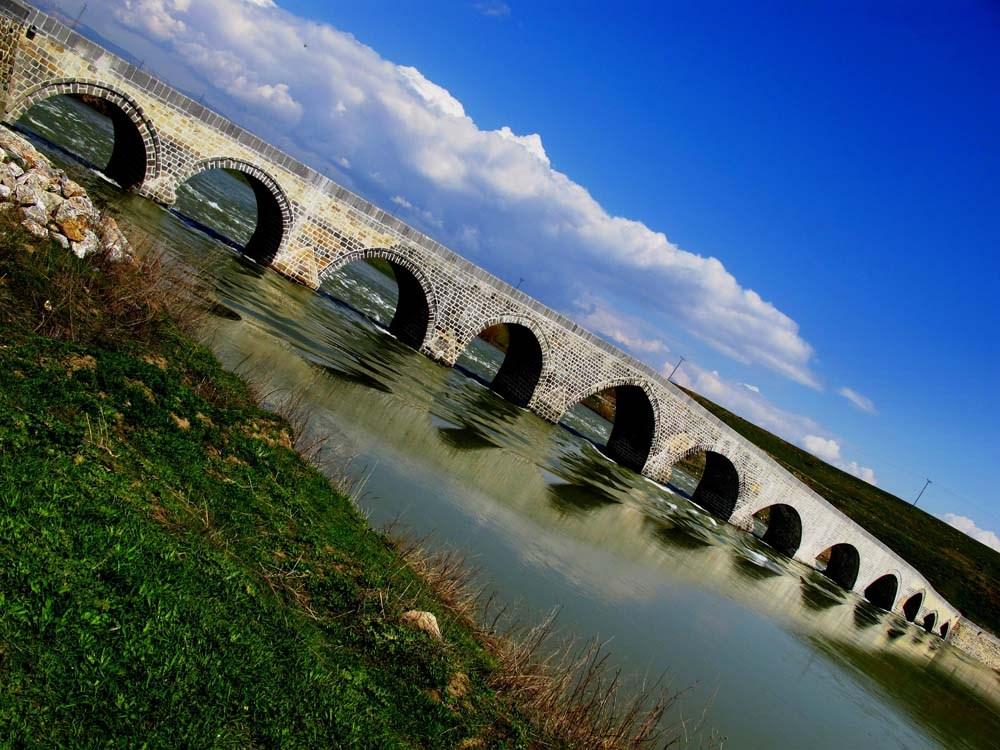
Muş Malazgirt Murat River and Murat Bridge ( Republic of Türkiye Muş Governorship)
Malazgirt is a settlement distinguished by its rich folk culture and traditional handicrafts. Carpet and kilim weaving are important forms of cultural production in the district, while regional music and folk dances constitute vital elements of its cultural heritage.
Malazgirt cuisine stands out for its local culinary variety, with traditional dishes such as içli köfte, keşkek and tandır bread being prominent examples. During Ramadan, holidays and social celebrations, cultural values are more visibly preserved, and these periods serve as important moments for strengthening social solidarity.
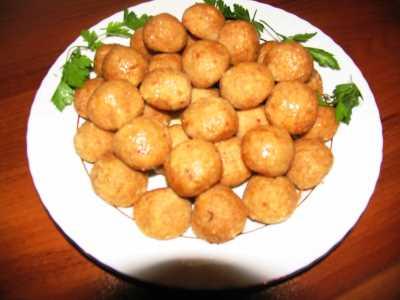
Muş İçli Köfte (Hafta Direği) Culture Portal
Malazgirt district possesses significant potential at both regional and national levels due to its historical heritage, geographical location and socio-economic structure. The historical identity conferred by the 1071 Battle of Manzikert remains one of the foundational elements for cultural and tourism development.
The sustainable evaluation of the district’s current potential depends on investments in sectors such as education, agriculture, livestock and tourism. In particular, the education and employment of the young population and the integration of cultural values into economic processes are key factors supporting local development. Preserving the district’s historical identity while achieving future-oriented growth requires planned, participatory and resource-based approaches.
Ay, Muhammed. “Malazgirt’in Sosyoekonomik ve Kültürel Yapısı.” International Journal of Social Humanities Sciences Research (JSHSR) 14, no. 82 (2024): 30–49. Accessed April 15, 2025.https://dergipark.org.tr/tr/download/article-file/3131830
Malazgirt Kaymakamlığı. "Coğrafya." Accessed April 15, 2025.http://www.malazgirt.gov.tr/cografya.
Malazgirt Kaymakamlığı. "Malazgirt İlçesi." Accessed April 15, 2025.http://www.malazgirt.gov.tr/malazgirt
Malazgirt Müftülüğü. “Müftülüğümüz.” Accessed April 15, 2025.https://mus.diyanet.gov.tr/malazgirt/Sayfalar/contentdetail.aspx?MenuCategory=Kurumsal2&ContentId=muftulugumuz.
Muş Valiliği. Malazgirt. Accessed April 15, 2025.http://www.mus.gov.tr/malazgirt
Muş Valiliği. Tarihi Murat Köprüsü. Accessed April 15, 2025.http://www.mus.gov.tr/tarihi-murat-koprusu
Paintmaps. "Muş Map Chart." Accessed April 15, 2025.https://paintmaps.com/map-charts/60c/Mus-map-chart.
T.C. Ministry of Culture and Tourism. Muş Köftesi (Hafta Direği). Türkiye Kültür Portalı. Accessed April 15, 2025.https://www.kulturportali.gov.tr/turkiye/mus/neyenir/mus-koftesi-hafta-diregi
T24. "Bilal Erdoğan: Malazgirt Etkinlikleri, Bölgede Turizm Potansiyeli Oluşturacak." Accessed April 15, 2025.https://t24.com.tr/haber/bilal-erdogan-malazgirt-etkinlikleri-bolgede-turizm-potansiyeli-olusturacak%2C674703.
Türkiye İstatistik Institute (TÜİK). "Adrese Dayalı Nüfus Kayıt Sistemi (ADNKS) Sonuçları, 2024." Ankara, 2024. Accessed April 15, 2025.https://tuik.gov.tr

Malazgirt (District)
Province | Muş | ||||||||
|---|---|---|---|---|---|---|---|---|---|
Area | Approximately 1,530 km² | ||||||||
Population (2024) | 55,640 | ||||||||
Elevation | 1,600 m | ||||||||
Climate | Continental climate – winters are cold and harsh summers are hot and dry | ||||||||
Economy | Agriculture (wheat small-scale trade sheep) Livestock farming (cattle barley) | ||||||||
Historical Significance | Site of the 1071 Battle of Manzikert | ||||||||
No Discussion Added Yet
Start discussion for "Malazgirt (District)" article
History
Geographical Location
Demographic Structure
Economic Structure
Tourism
Culture