This article was automatically translated from the original Turkish version.
International and internal migration movements are often viewed through the lens of displacement. Yet migration is a process that transforms not only those who leave but also those who remain. The most prominent effects of this transformation frequently emerge in children’s lives. Some children do not migrate, yet migration becomes directly embedded in their daily existence.
In this context, children referred to as left-behind children are those who are separated from one or both parents due to migration driven by economic political or security-related reasons. Although these children do not physically participate in the migration process they are among the most vulnerable groups to directly experience the social and psychological consequences of migration.
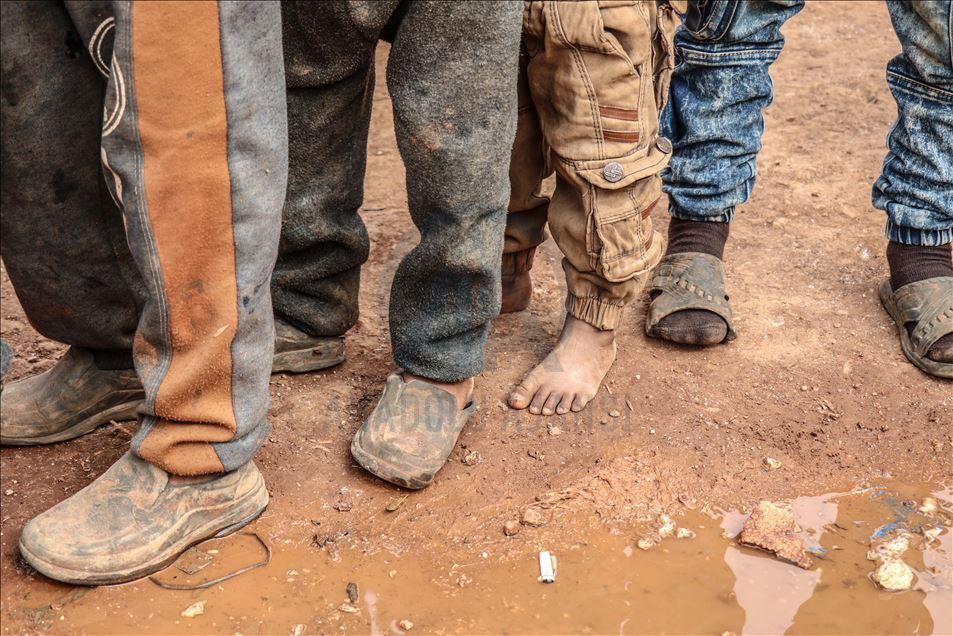
Left-behind children phenomenon (Anadolu Ajansı)
The term left-behind children refers to children who continue to live in their place of origin while one or both parents have migrated. These children do not migrate themselves but directly confront the consequences of migration. Care arrangements change relationships with parents are maintained from a distance and roles within the family are reconfigured.
Parental migration is often motivated by the aim of securing better living conditions for the family. However the physical absence of a parent can disrupt the continuity of care relationships for children. Who the child lives with the caregiver’s capacity and the emotional support provided are among the key factors shaping the experience of being left behind.
Therefore left-behind children do not constitute a homogeneous group. Even under identical migration conditions children may develop different coping strategies depending on the duration of separation the quality of the caregiver and the availability of environmental support mechanisms. Thus this concept must be understood not as a homogenous category of victimhood but as an analytical framework for grasping the diverse impacts of migration on childhood.
Family separation resulting from parental migration is one of the fundamental disruptions affecting childhood experience. For a child the family is not merely a physical unit but a space where trust continuity and a sense of belonging are established. The fragmentation of this space leads to significant changes in both the child’s daily life and emotional world.
Children whose one or both parents have migrated often must adapt to new living arrangements in which caregiving responsibilities are transferred to other family members. Yet this new arrangement is not always stable or sufficiently supportive from the child’s perspective. The age economic circumstances emotional capacity of the caregiver and the quality of the relationship with the child are primary factors determining how this process is experienced.
Family separation is not a one-time event for the child. As separation endures it ceases to be a temporary condition and becomes the child’s new normal. Childhood thus begins to be shaped less by continuity and more by uncertainty and the constant effort to adapt.
Childhood is a critical stage during which emotional regulation skills self-perception and the foundations of social relationships are formed. The experience of separation caused by parental migration permeates all these domains of development. Left-behind children must cope not only with longing for their parents but also with the erosion of their sense of safety.
Anxiety withdrawal emotional instability low self-esteem and difficulties in social relationships are more commonly observed in these children. Prolonged separations can particularly undermine a child’s perception of the world as predictable and safe. Yet it is crucial to emphasize that these effects do not manifest uniformly across all children. The child’s age the duration of separation the quality of the relationship with the caregiver and the availability of environmental support mechanisms are the key factors determining psychosocial adaptation.
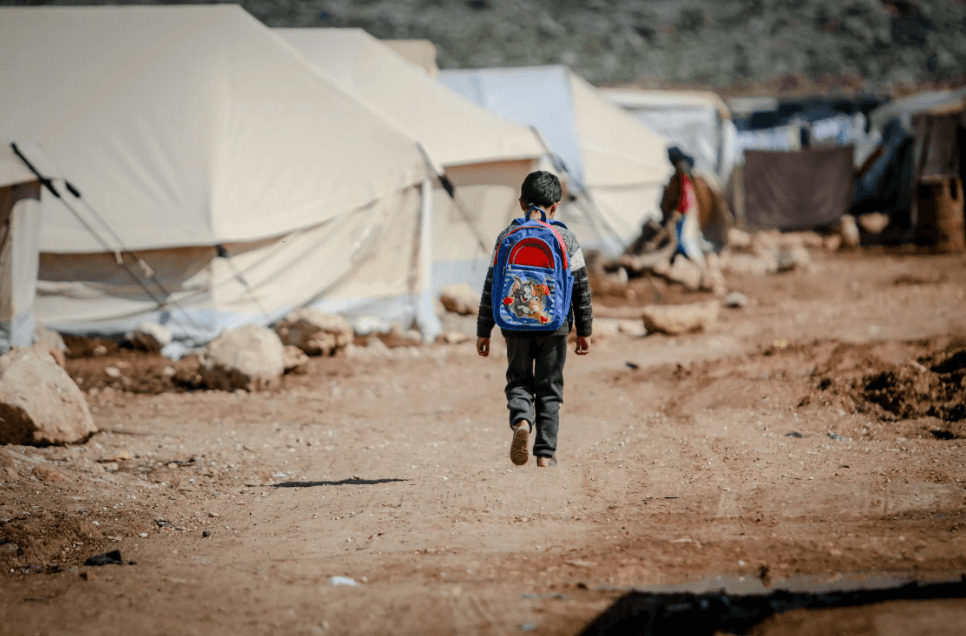
Left-behind children phenomenon (pexels)
Education serves both as a point of stability and a critical vulnerability for left-behind children. While increased financial resources resulting from parental migration may improve access to educational materials and services for some children education cannot be sustained solely through material means.
The absence of a parent can negatively affect a child’s motivation attendance and academic continuity. Reduced home support weakening of the link between school and family and emotional instability are key factors influencing educational performance. This situation becomes especially pronounced during adolescence.
Conversely a supportive caregiving environment and the protective role of the school can mitigate these negative effects. This demonstrates that under appropriate conditions education can serve as a healing space for left-behind children.
The risks faced by left-behind children are not limited to the emotional dimension. The weakening of family supervision and the reduction of adult guidance can also generate behavioral vulnerabilities. Especially in contexts marked by economic hardship the likelihood of child labor school dropout and engagement in risky behaviors increases.
These risks are linked not to individual child characteristics but to the social and structural conditions in which children live. In environments lacking adequate support mechanisms children may be forced to assume adult responsibilities at an early age a situation that can lay the foundation for long-term mental health problems.
The impact of parental migration on children is neither unidirectional nor inevitable. The emotional support provided by the caregiver the continuity of communication with the parent and the meaning the family assigns to the migration process are among the most important protective factors shaping the child’s level of adaptation.
Regular communication inclusion of the child in the process and the presence of safe spaces for expressing emotions can significantly alleviate the negative effects of separation. This also demonstrates that left-behind children are not merely vulnerable but can develop resilience under appropriate conditions.
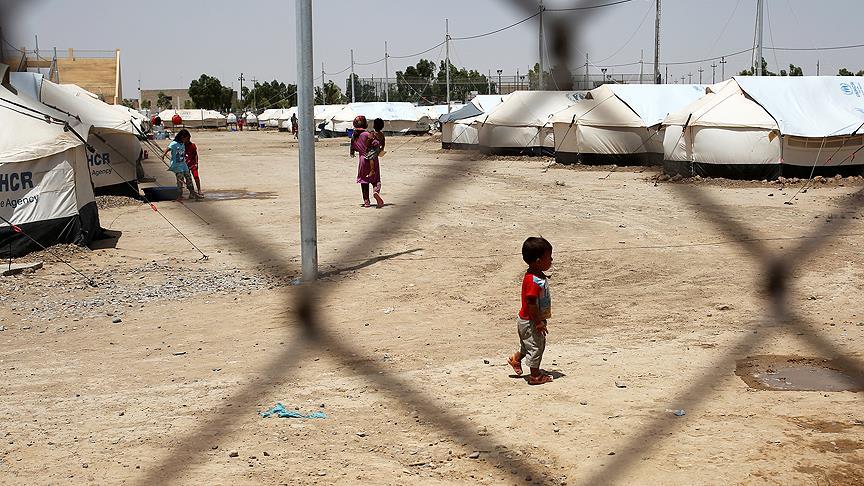
Left-behind children phenomenon (Anadolu Ajansı)
Left-behind children are among the least visible yet longest-lasting carriers of migration’s impacts. While migration is often evaluated in terms of economic opportunities and new life prospects for children this process can mean prolonged separation uncertainty and a constant struggle to adapt. Therefore the impact of migration on children is understood not through the act of movement itself but through what is left behind.
When the experience of left-behind children is treated as a secondary or incidental outcome of migration the vulnerabilities that arise remain invisible. Yet being left behind is not a temporary condition during childhood; for many it becomes an integral part of the normal flow of life. This reality shapes children’s emotional social and academic development over the long term.
For this reason the issue of left-behind children cannot be explained solely as a matter of individual family choices. The experience of these children must be placed at the center of migration policies social support mechanisms and child-centered approaches as a structural concern. Any assessment of migration that overlooks left-behind children is incomplete. Therefore making visible the realities of these children is also a social responsibility we must uphold.
Anadolu Ajansı. “Irak’ta Operasyonlardan Dolayı Her Gün Bin 850 Kişi Yerinden Ediliyor.” *AA Haber*, November 14, 2016. Accessed January 17, 2026.https://www.aa.com.tr/tr/dunya/irakta-operasyonlardan-dolayi-her-gun-bin-850-kisi-yerinden-ediliyor/685343
Anadolu Ajansı. “İdlib’deki Göç En Fazla Çocukları Etkiliyor.” *AA Foto Galeri*, March 2, 2020. Accessed January 17, 2026.https://www.aa.com.tr/tr/pg/foto-galeri/idlibdeki-goc-en-fazla-cocuklari-etkiliyor
Höckel, Lisa Sofie; Santos Silva, Manuel, and Stöhr, Tobias. “Can Parental Migration Reduce Petty Corruption in Education?” *The World Bank Economic Review* 32, no. 1 (2018): 109–126. Accessed January 17, 2026. Accessedhttps://documents1.worldbank.org/curated/en/770571568145613949/pdf/Can-Parental-Migration-Reduce-Petty-Corruption-in-Education.pdf
Pexels. "Yürümek – genç küçük oğlan" Ahmed Akacha. Accessed January 17, 2026. Accessedhttps://www.pexels.com/tr-tr/fotograf/yurumek-genc-kucuk-oglan-7004509/
Özdemir, Aysel and Budak, Funda. “Göçün Çocuk Ruh Sağlığı Üzerine Etkileri.” *KADEM Kadın Araştırmaları Dergisi* 3, no. 2 (December 2017): 212–223. Accessed January 17, 2026. Accessedhttps://dergipark.org.tr/tr/download/article-file/792754
Conceptual Framework: Who Are Left-Behind Children?
Migration Family Separation and the Transformation of Childhood Experience
Impacts on Psychosocial Development
Falling Behind in Education
Behavioral Risks and Invisible Vulnerabilities
Family Communication and Protective Factors
The Silent Carriers of Migration