This article was automatically translated from the original Turkish version.
+1 More
Blue Copper (Polyommatus icarus)
Family | Lycaenidae (Blues/Copper Butterflies) | ||||||||
|---|---|---|---|---|---|---|---|---|---|
Habitat | Pastures (Cosmopolitan) Grasslands | ||||||||
Scientific Name(s) | Polyommatus icarus (Rottemburg 1775) | ||||||||
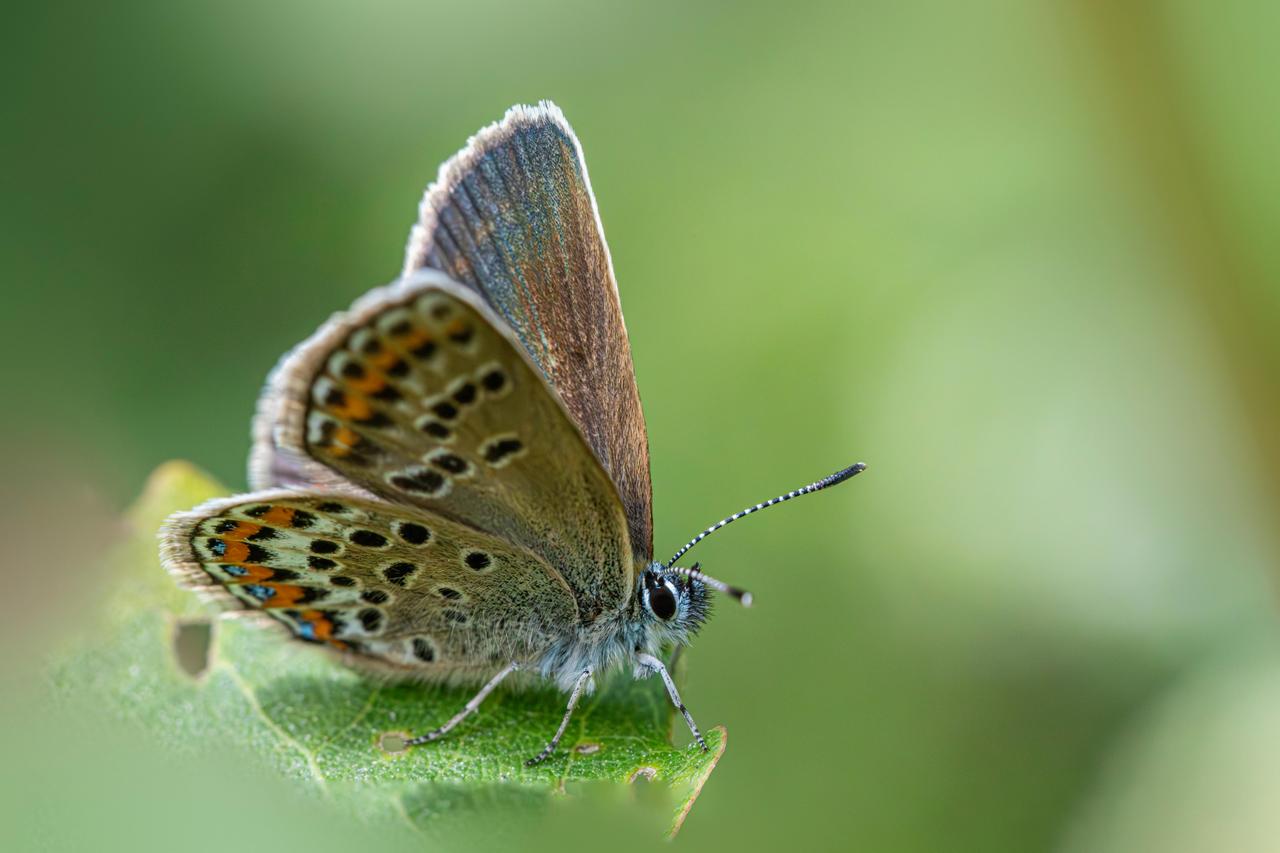
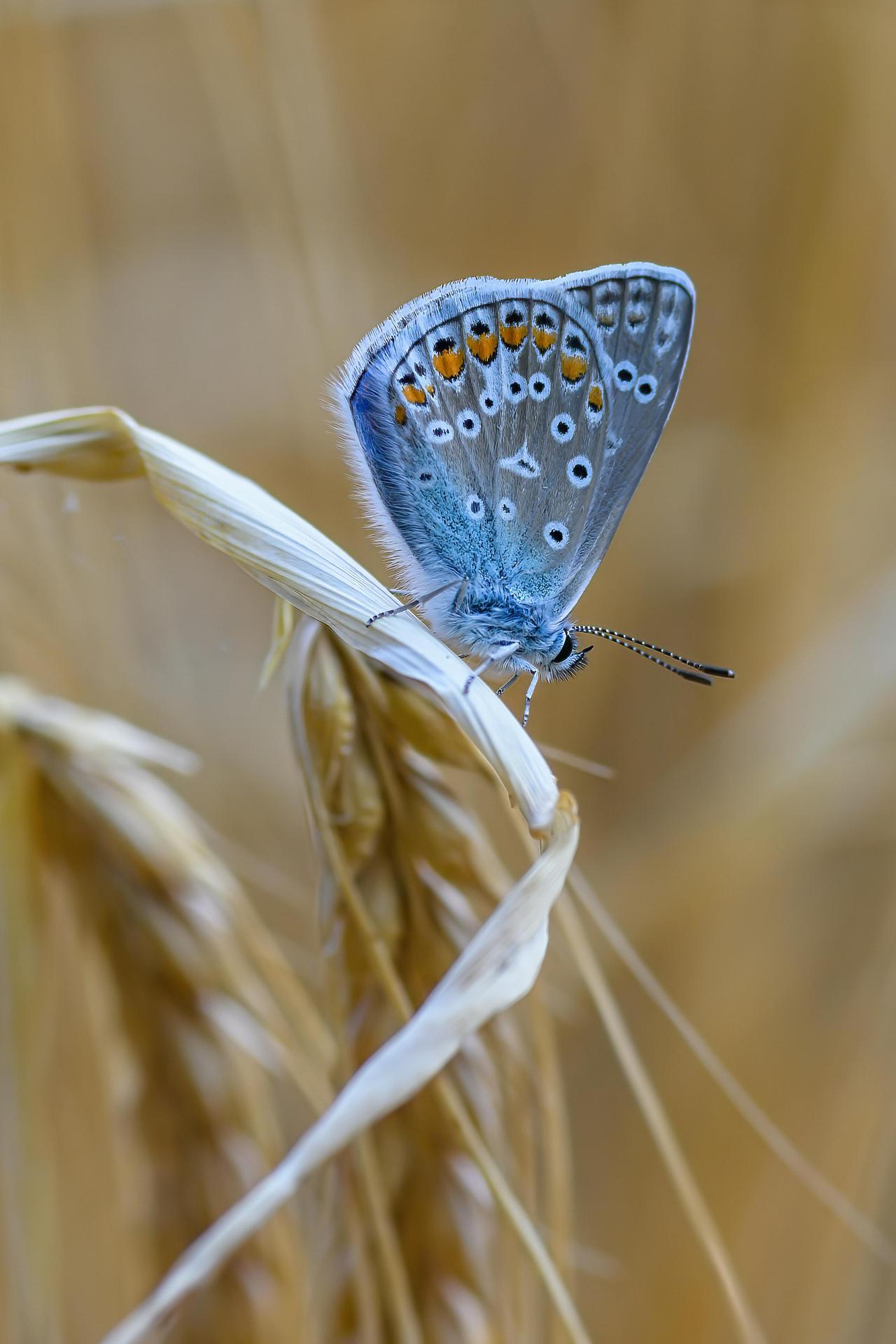
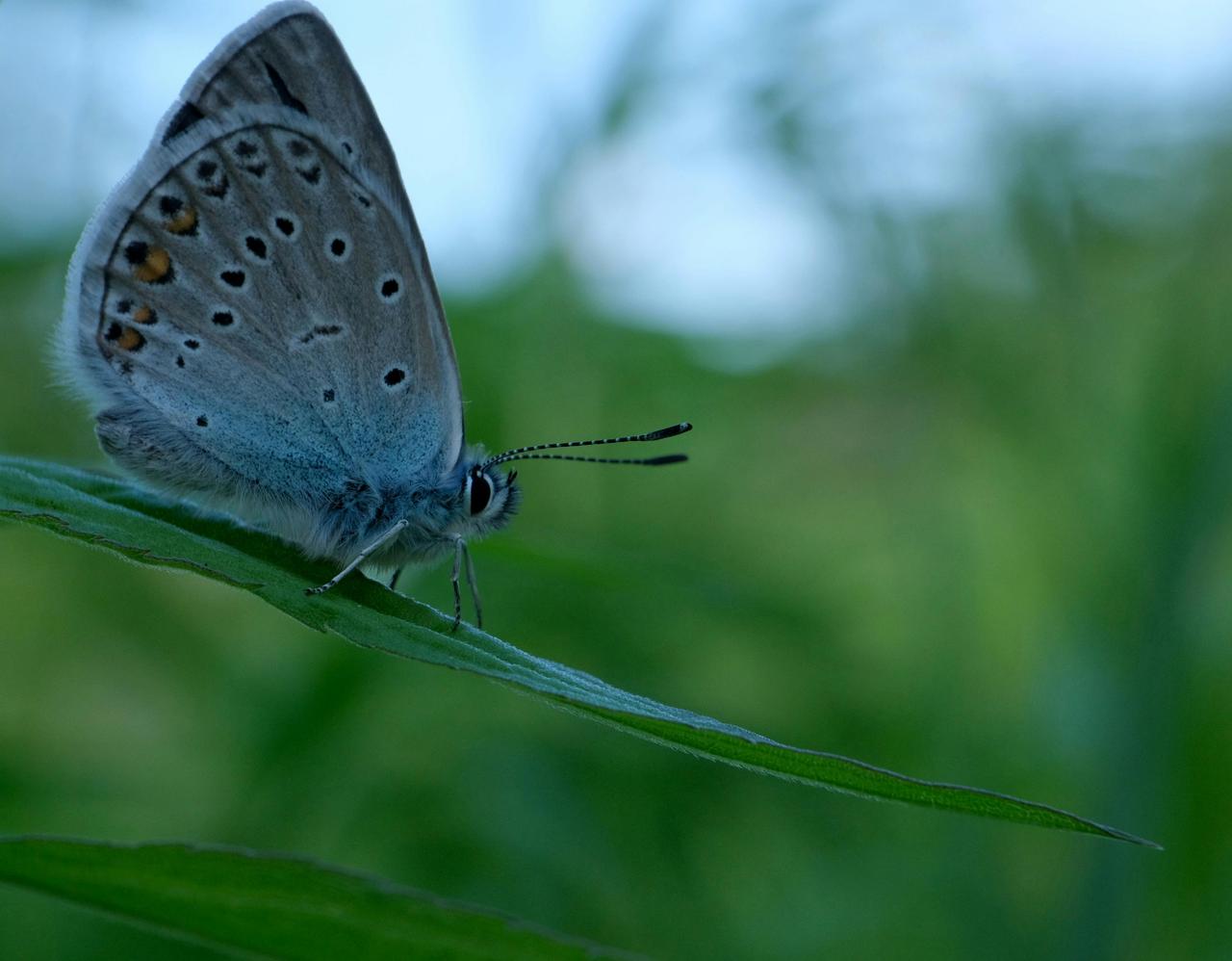
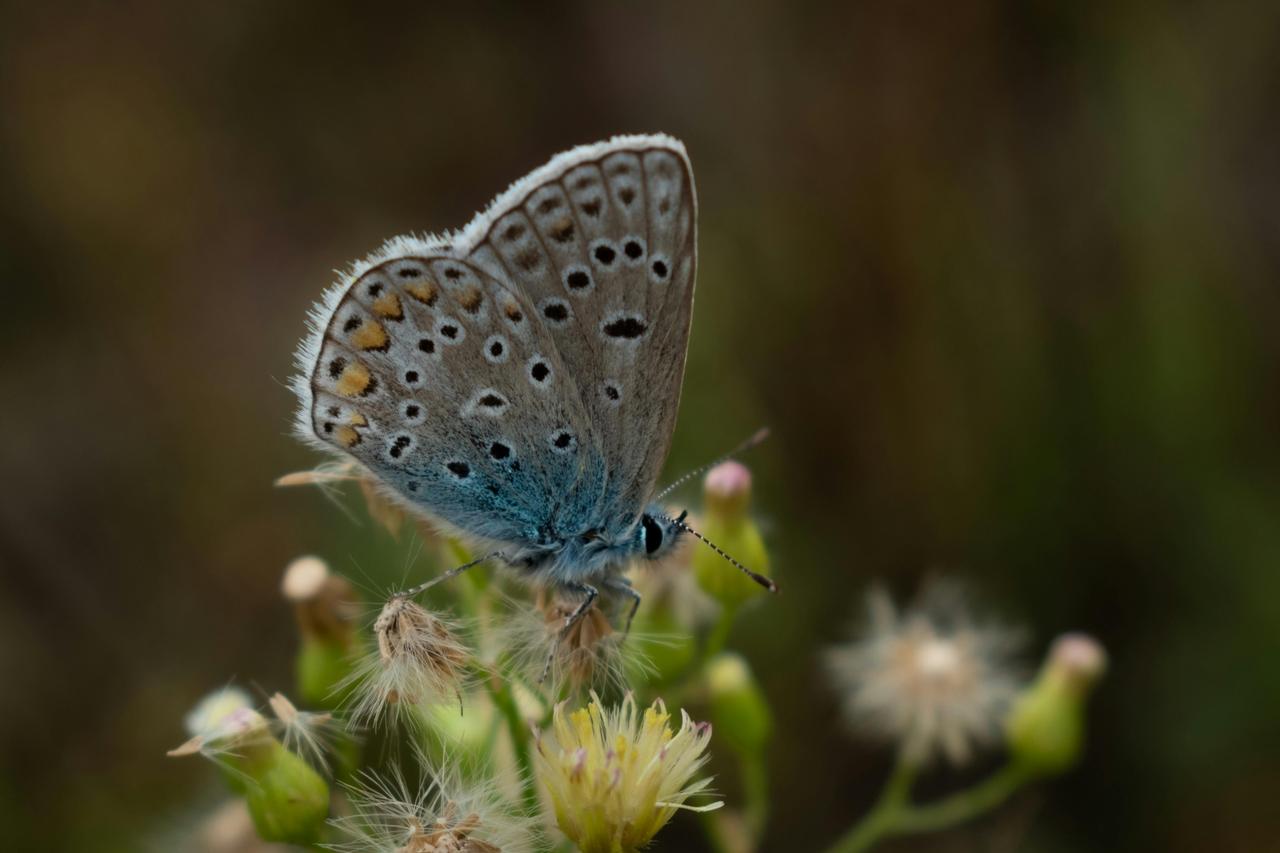
Underside of Wings | Black spots and orange crescent-shaped markings on gray-brown background | ||||||||
Sexual Dimorphism | Male: Bright violet-blue; thin black margin line; Female: Brown with orange spots | ||||||||
Wingspan | 28 – 35 mm | ||||||||
Common Blue (Polyommatus icarus) (Rottemburg, 1775) is one of the most widespread day-flying butterfly species in the Palearctic biogeographic region and belongs to the family Lycaenidae. Taxonomically placed within the subfamily Polyommatinae, this species exhibits a broad distribution across Europe, North Africa, and temperate regions of Asia. Males are distinguished by their bright lilac-blue upper wings, while females typically have brown wing surfaces with orange-spotted edges.
Common Blue (Polyommatus icarus)
The population structure of the species across Europe has been shaped by post-glacial recolonization movements. Molecular genetic data reveal high levels of gene flow across the continent and the absence of sharp genetic barriers between geographic regions.
Common Blue (Polyommatus icarus)
Studies conducted on central and southeastern European populations confirm the species’ high mobility between habitats.
The complete mitochondrial genome of the species provides a foundational resource for understanding evolutionary processes and genetic diversity within the Lycaenidae family. Additionally, taxonomic revisions of the genus Polyommatus in Türkiye have clarified regional variations and morphological differences within the species.
Female Polyommatus icarus individuals base their oviposition decisions not only on the quality of host plants for larval feeding but also on the availability of nectar sources for adult nutrition. Neural constraints in information processing require females to simultaneously optimize both feeding and oviposition needs.
Common Blue (Polyommatus icarus)
Laboratory experiments have shown that females prefer to lay eggs on flowering Lotus corniculatus plants over non-flowering ones. Behavioral observations indicate that oviposition typically occurs immediately after nectar feeding. This demonstrates that nectar availability is a critical parameter in the species’ reproductive strategies and habitat selection.
The larvae of the species rely primarily on host plants from the Fabaceae (legume) family during their development. Lotus corniculatus, Trifolium species, and Medicago species serve as primary food sources.
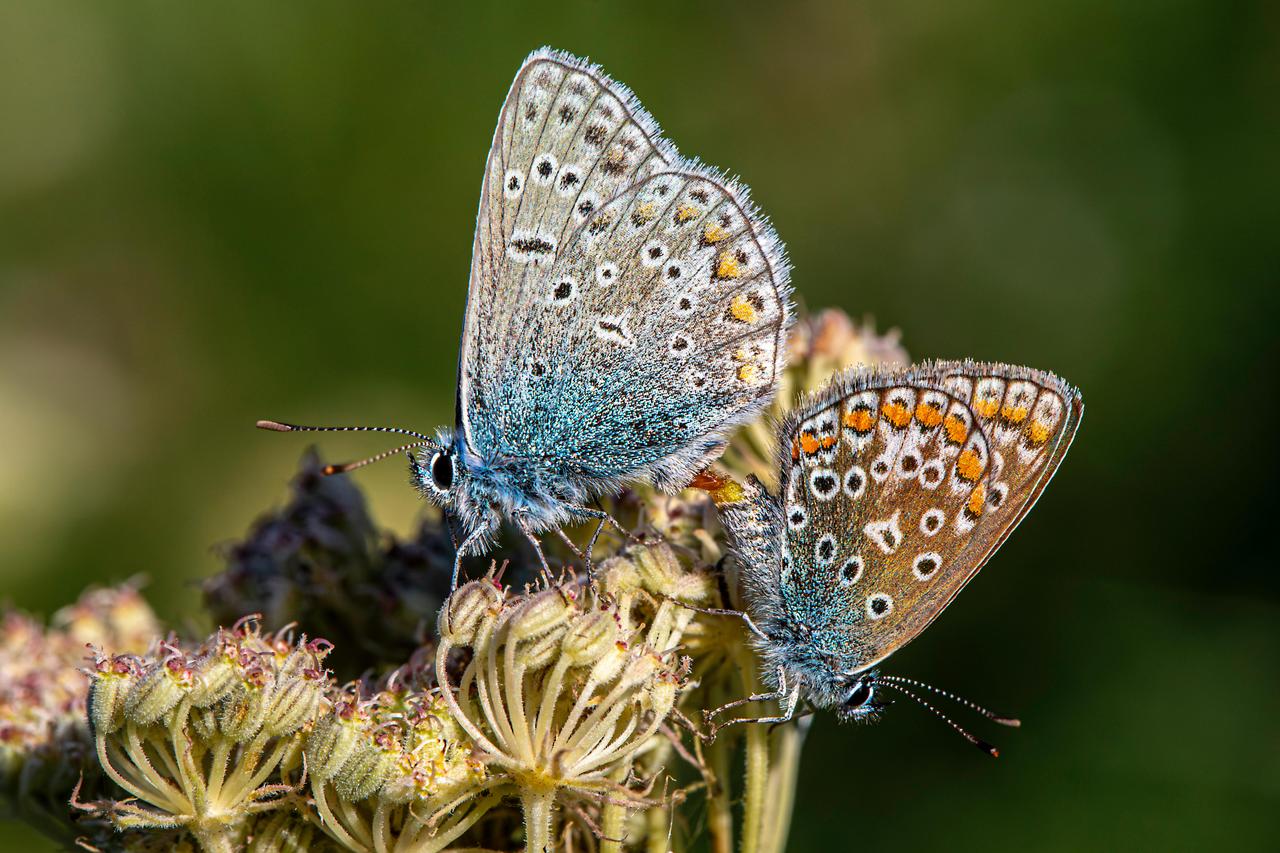
Common Blue (Polyommatus icarus)
Variations in diet quality directly influence larval growth rate, pupal weight, and adult wing size. Larvae fed diets high in protein and nitrogen exhibit shortened development times and achieve higher body mass.
Polyommatus icarus larvae engage in an optional (facultative) symbiotic relationship with ants. Larvae secrete a fluid rich in amino acids and sugars through dorsal nectar organs, receiving protection in return.
In exchange for this nutritional reward, ants protect the larvae from parasitoid attacks. The quality of the larval diet determines the composition of the secreted nectar and thus the intensity of ant attraction.
Coutsis, John G., and Nikos Ghavalas. "Notes on Polyommatus icarus (Rottemburg, 1775) in Greece and the description of a new Polyommatus Latreille, 1804 from northern Greece (Lepidoptera: Lycaenidae)." Accessed February 9, 2026. http://www.phegea.org/Phegea/1995/Phegea23-3_145-156.pdf
Dincă, Vlad, Leonardo Dapporto, and Roger Vila. "A combined genetic-morphometric analysis unravels the complex biogeographical history of *Polyommatus icarus* and *Polyommatus celina* Common Blue butterflies." Accessed February 9, 2026. https://onlinelibrary.wiley.com/doi/abs/10.1111/j.1365-294X.2011.05223.x
Fiedler, Konrad and Bert Hölldobler. "Ants and *Polyommatus icarus* immatures (Lycaenidae) — sex-related developmental benefits and costs of ant attendance." Accessed February 9, 2026. https://link.springer.com/article/10.1007/BF00650318
Janz, Niklas, Anders Bergström, and Anna Sjögren. "The role of nectar sources for oviposition decisions of the common blue butterfly *Polyommatus icarus*." Accessed February 9, 2026. https://nsojournals.onlinelibrary.wiley.com/doi/abs/10.1111/j.0030-1299.2005.13817.x
Kertész, Krisztián, Gábor Piszter, Zsolt Bálint, and László P. Biró. "Biogeographical patterns in the structural blue of male *Polyommatus icarus* butterflies." Accessed February 9, 2026. https://www.nature.com/articles/s41598-019-38827-w
León-Cortés, Jorge L., Matthew J. R. Cowley, and Chris D. Thomas. "Detecting decline in a formerly widespread species: how common is the common blue butterfly Polyommatus icarus?" Accessed February 9, 2026. https://nsojournals.onlinelibrary.wiley.com/doi/abs/10.1111/j.1600-0587.1999.tb00513.x
Nygren, Georg H., Anders Bergström, and Sören Nylin. "Latitudinal body size clines in the butterfly *Polyommatus icarus* are shaped by gene-environment interactions." Accessed February 9, 2026. https://academic.oup.com/jinsectscience/article/8/1/47/899703
Schmitt, Thomas, Andreas Giessl, and Alfred Seitz. "Did *Polyommatus icarus* (Lepidoptera: Lycaenidae) have distinct glacial refugia in southern Europe? Evidence from population genetics." Accessed February 9, 2026. https://academic.oup.com/biolinnean/article-abstract/80/3/529/2639916

Blue Copper (Polyommatus icarus)
Family | Lycaenidae (Blues/Copper Butterflies) | ||||||||
|---|---|---|---|---|---|---|---|---|---|
Habitat | Pastures (Cosmopolitan) Grasslands | ||||||||
Scientific Name(s) | Polyommatus icarus (Rottemburg 1775) | ||||||||
Underside of Wings | Black spots and orange crescent-shaped markings on gray-brown background | ||||||||
Sexual Dimorphism | Male: Bright violet-blue; thin black margin line; Female: Brown with orange spots | ||||||||
Wingspan | 28 – 35 mm | ||||||||
No Discussion Added Yet
Start discussion for "Large Blue (Polyommatus icarus)" article
Genetic Structure and Taxonomic Studies
Phylogeography and Genomic Information
Oviposition Decisions and the Role of Nectar Sources
Nectar and Host Plant Association
Feeding Ecology and Larval Development
Physiological Effects of Diet
Myrmecophily and Symbiotic Relationships
Defense and Ant Interactions