


This article was automatically translated from the original Turkish version.
+1 More
Formation | Subterranean water erosion of rock (karstic) | ||||||||
|---|---|---|---|---|---|---|---|---|---|
Features | Stalactites and stalagmites, wide galleries | ||||||||
Significance | Natural beauty, tourism and exploration area | ||||||||
Type | Natural limestone cave | ||||||||
Location | Muş | ||||||||
Name | Kunav Cave | ||||||||
Usage | Visit and nature tourism | ||||||||
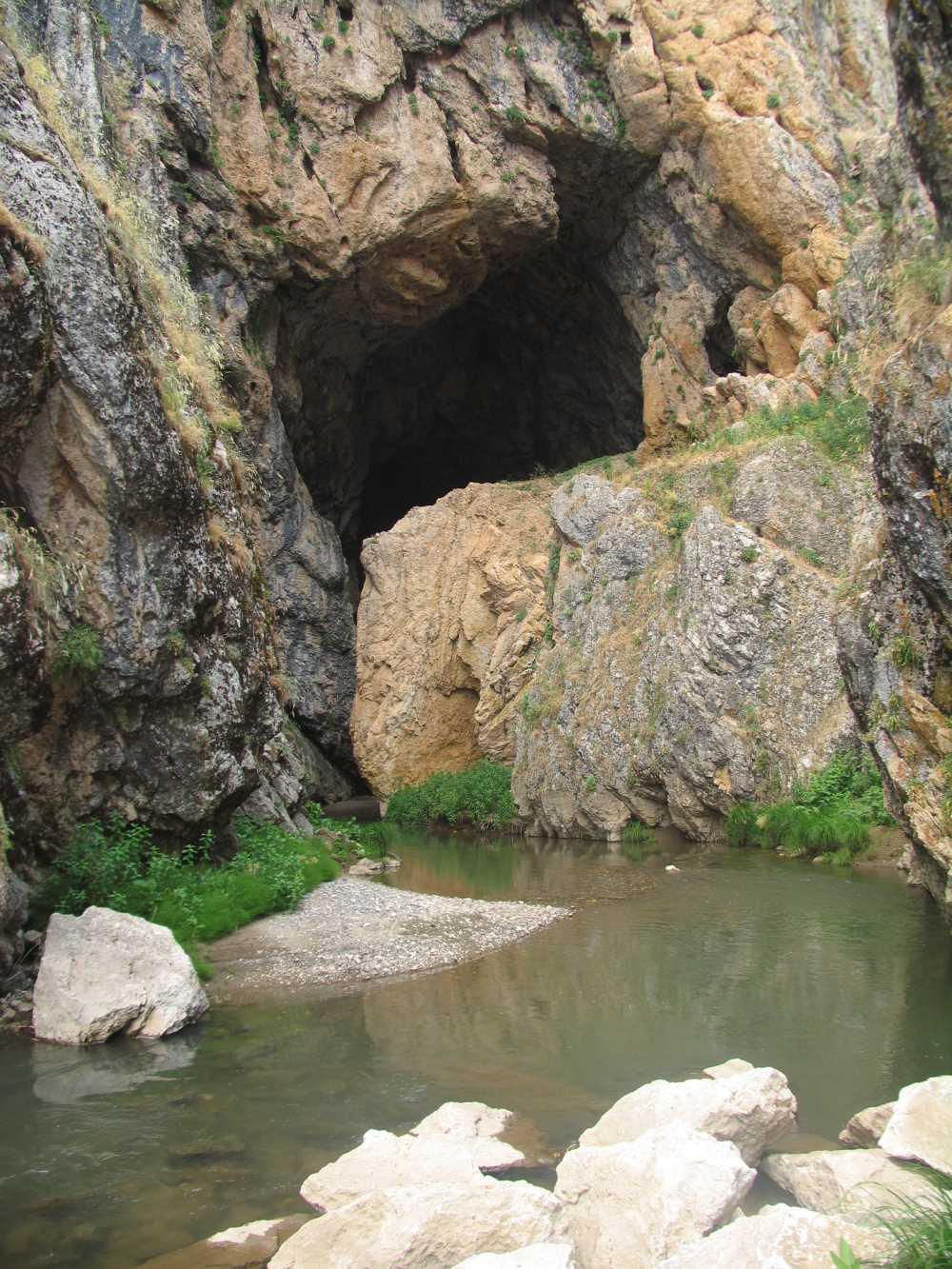
Kunav Cave is a natural formation located within the boundaries of the Varto district of Muş province in Türkiye’s Eastern Anatolia Region. It is situated near Kayadelen village, approximately 60 kilometers from the center of Muş province and 12 kilometers from the center of Varto district.【1】 The cave’s entrance is located within a deep canyon.
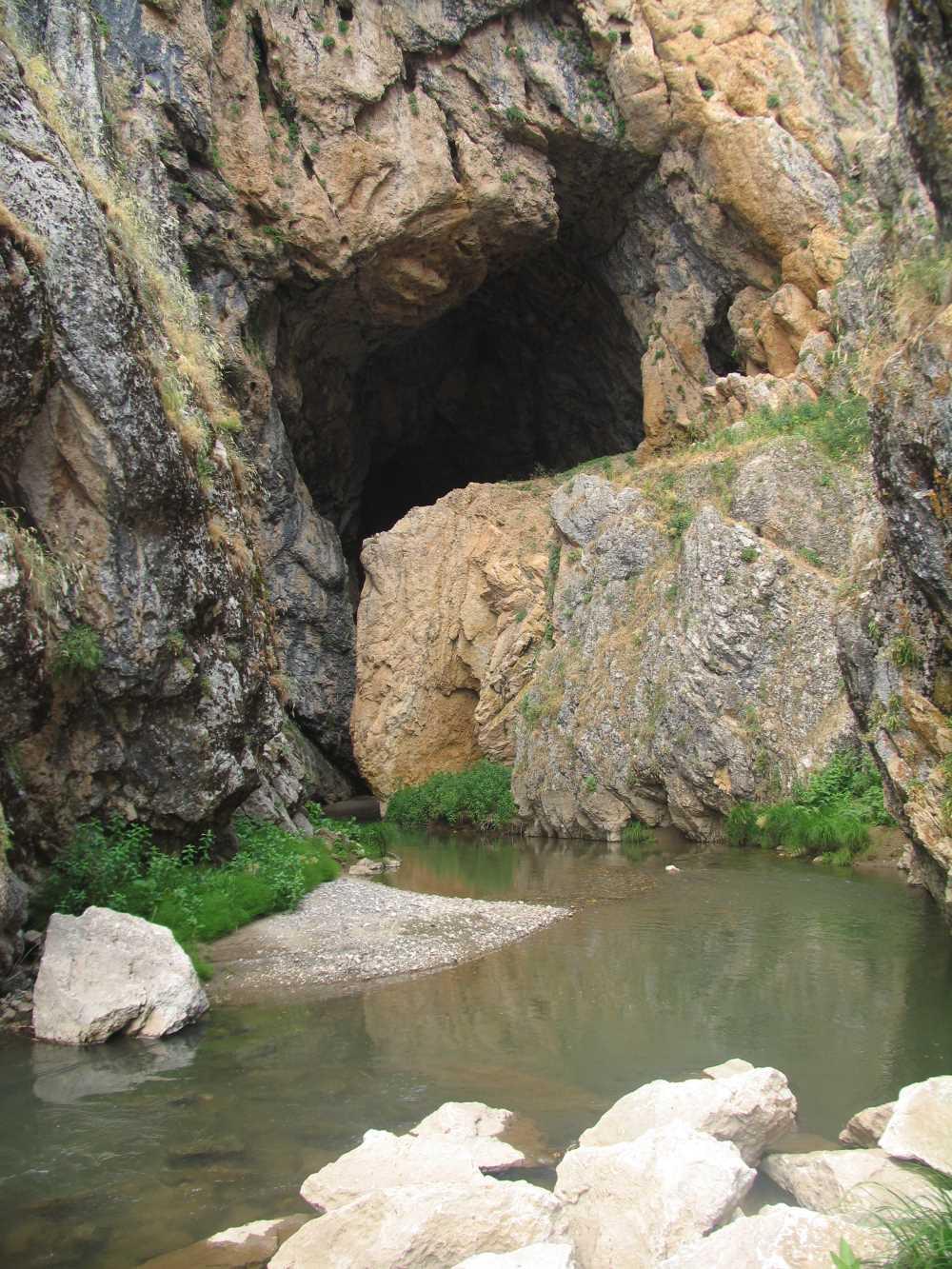
Kunav Mağarası (Kültür Portalı)
Kunav Cave is one of the rare cave types not commonly found in the Eastern Anatolian geography. Its geological structure is shaped primarily by volcanic formations and rock types. The total identified length of the cave is three kilometers and it consists of a two-level system.【2】 The interior space of the cave is notably spacious, with ceiling heights reaching up to 35 meters in certain areas.【3】
Various speleological formations are observed within the cave, including natural tunnels, natural bridges, stalactites, and travertines. The cave features a complex internal structure divided into numerous chambers and branches, with two major halls and several galleries identified to date. Due to its extensive and intricate layout, the full extent of the cave has not yet been completely explored.
Kunav Cave possesses an active hydrological system. A river-sized water flow runs through the lower level of the two-tier cave system.【4】 Along with the deep canyon at the cave’s entrance, there is also a karst-hydrological structure where water emerges at the surface, known geographically as a “duden.”
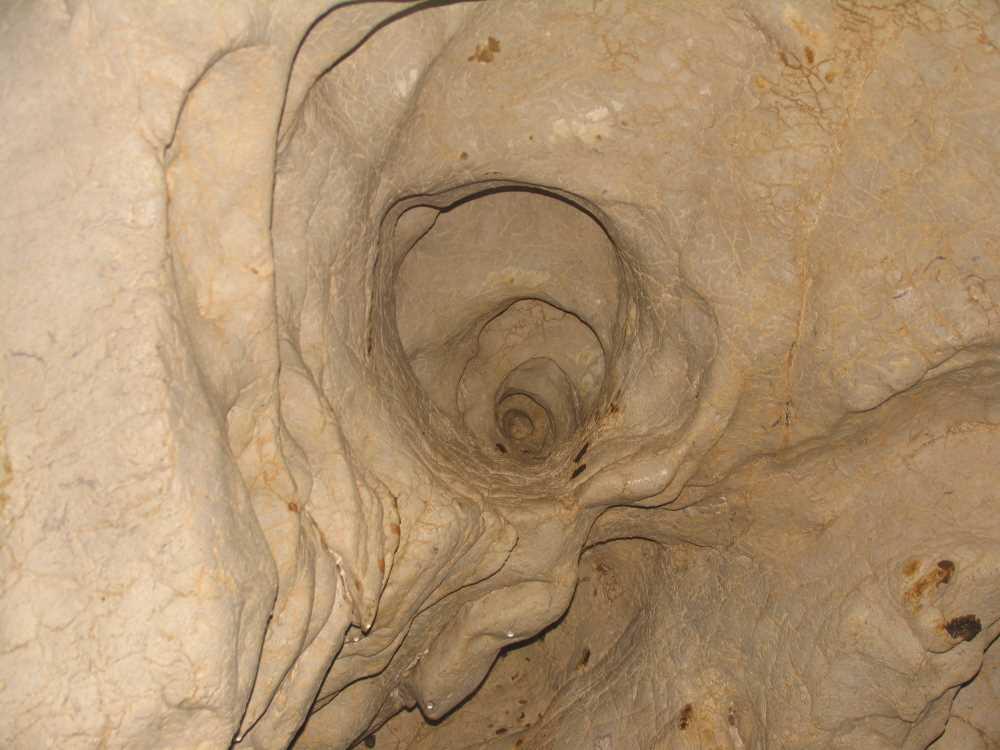
Kunav Mağarası (Kültür Portalı)
Physical evidence from the cave indicates that the area was used for human activity during historical periods. Investigations have revealed traces suggesting that the cave was inhabited during prehistoric times.【5】
Following security operations conducted by local authorities that cleared the area of terrorist elements, Kunav Cave has been opened to visitors.【6】 Today, it is visited by nature enthusiasts as part of nature tourism.【7】 Scientists and local officials emphasize that due to its geological and hydrological features, the cave should be legally protected as a natural heritage site. They also aim to develop appropriate infrastructure and promotional initiatives to integrate it into professional tourism.【8】
[1]
T.C. Kültür ve Turizm Bakanlığı, “Kunav Mağarası,” Kültür Portalı, son güncelleme: 12 Mart 2025, erişim tarihi: 9 Haziran 2026, https://www.kulturportali.gov.tr/turkiye/mus/gezilecekyer/kunav-magrasi
[2]
“Kunav Mağarası Doğa Tutkunlarını Ağırlıyor,” TRT Haber, 14 Ağustos 2018, erişim tarihi: 9 Haziran 2026, https://www.trthaber.com/foto-galeri/kunav-magarasi-doga-tutkunlarini-agirliyor/19184.html
[3]
T.C. Kültür ve Turizm Bakanlığı, “Kunav Mağarası,” Kültür Portalı, son güncelleme: 12 Mart 2025, erişim tarihi: 9 Haziran 2026, https://www.kulturportali.gov.tr/turkiye/mus/gezilecekyer/kunav-magrasi
[4]
“Kunav Mağarası Doğa Tutkunlarını Ağırlıyor,” TRT Haber, 14 Ağustos 2018, erişim tarihi: 9 Haziran 2026,
https://www.trthaber.com/foto-galeri/kunav-magarasi-doga-tutkunlarini-agirliyor/19184.html
[5]
T.C. Kültür ve Turizm Bakanlığı, “Kunav Mağarası,” Kültür Portalı, son güncelleme: 12 Mart 2025, erişim tarihi: 9 Haziran 2026, https://www.kulturportali.gov.tr/turkiye/mus/gezilecekyer/kunav-magrasi
[6]
“Kunav Mağarası Doğa Tutkunlarını Ağırlıyor,” Anadolu Ajansı, 14 Ağustos 2018, erişim tarihi: 9 Haziran 2026, https://www.aa.com.tr/tr/turkiye/kunav-magarasi-doga-tutkunlarini-agirliyor-/1230678
[7]
“Kunav Mağarası Doğa Tutkunlarını Ağırlıyor,” TRT Haber, 14 Ağustos 2018, erişim tarihi: 9 Haziran 2026, https://www.trthaber.com/foto-galeri/kunav-magarasi-doga-tutkunlarini-agirliyor/19184.html
[8]
“Kunav Mağarası Doğa Tutkunlarını Ağırlıyor,” Anadolu Ajansı, 14 Ağustos 2018, erişim tarihi: 9 Haziran 2026, https://www.aa.com.tr/tr/turkiye/kunav-magarasi-doga-tutkunlarini-agirliyor-/1230678

Formation | Subterranean water erosion of rock (karstic) | ||||||||
|---|---|---|---|---|---|---|---|---|---|
Features | Stalactites and stalagmites, wide galleries | ||||||||
Significance | Natural beauty, tourism and exploration area | ||||||||
Type | Natural limestone cave | ||||||||
Location | Muş | ||||||||
Name | Kunav Cave | ||||||||
Usage | Visit and nature tourism | ||||||||
Geomorphological and Physical Characteristics
Hydrological Structure
Historical and Archaeological Status
Tourism Potential and Conservation Status