


This article was automatically translated from the original Turkish version.
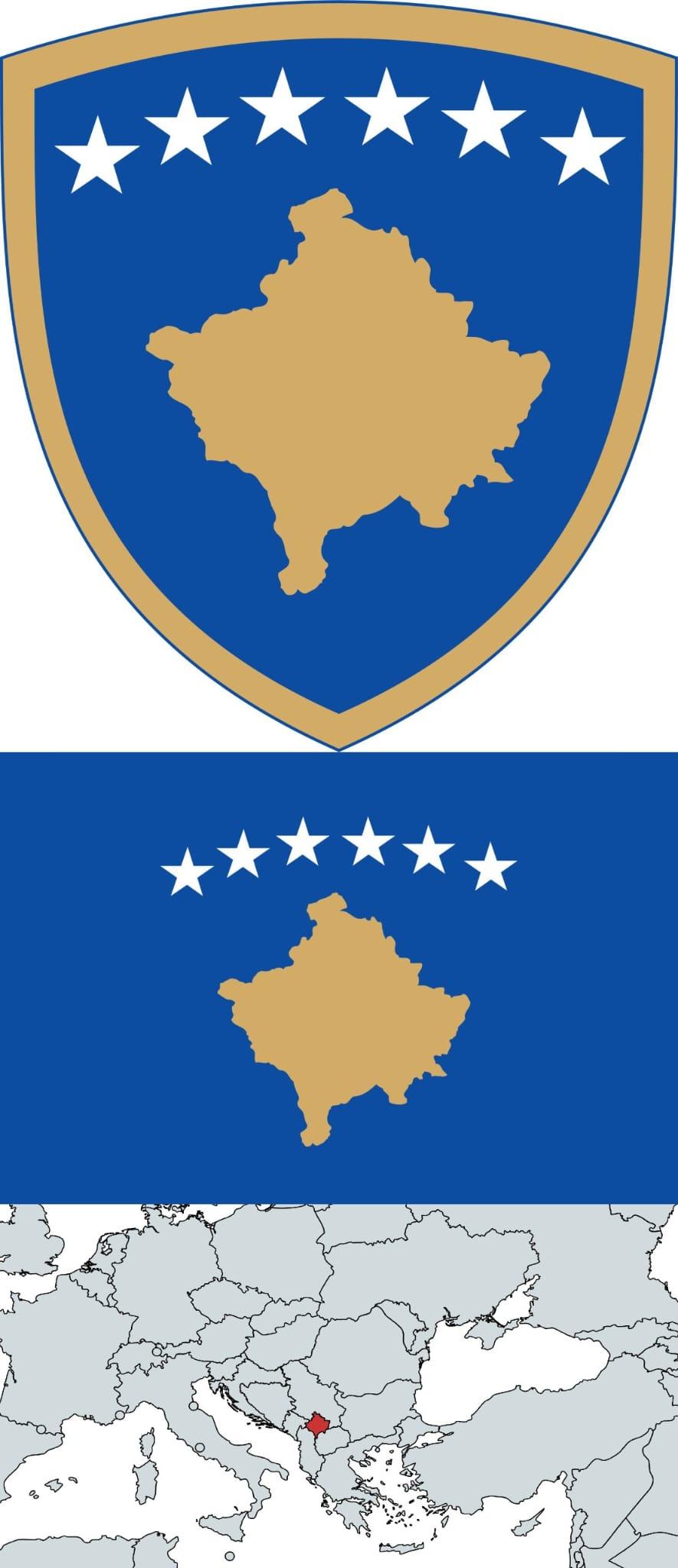
Republic of Kosovo
Kosovo
Bordering Countries | Montenegro North Macedonia Albania Serbia | ||||||||
|---|---|---|---|---|---|---|---|---|---|
Common Languages | Turkish Romani Bosnian | ||||||||
Ethnic Groups | Serb Bosniak Turk Roman Ashkali Egyptian Gorani Albanian | ||||||||
Head of State | Albulena Haxhiu (acting) | ||||||||
Area | 10,905 km² | ||||||||
Time Zone | UTC+1 (Central European Time - CET); UTC+2 during daylight saving time | ||||||||
Population (2024) | 1,585,566 | ||||||||
GDP (Nominal) (2025) | 14.05 Billion US Dollars | ||||||||
GDP (PPP) (2025) | 8,960 US Dollars | ||||||||
Telephone Area Code | +383 | ||||||||
Religion | Islam (%93.49) Orthodox (%2.31) Catholic (%1.75) | ||||||||
Official Language | Albanian and Serbian | ||||||||
Official Name | Republic of Kosovo | ||||||||
Capital | Pristina | ||||||||
Climate | Continental climate | ||||||||
Currency | Euro | ||||||||
Form of Government | Republic | ||||||||
Kosovo, officially the Republic of Kosovo, is a landlocked country located in the Balkan Peninsula. It has a total area of 10,905 square kilometers. Its capital is Pristina, and its official languages are Albanian and Serbian.【1】 Kosovo unilaterally declared its independence on 17 February 2008 following the crises during the dissolution of the Socialist Federal Republic of Yugoslavia and a period of administration by the United Nations. With a young population of 1,585,566, the country has experienced urbanization rates that have surpassed rural populations, with approximately 92 percent of the population being Albanians and, in terms of religion, 93.49 percent being Muslims.【2】
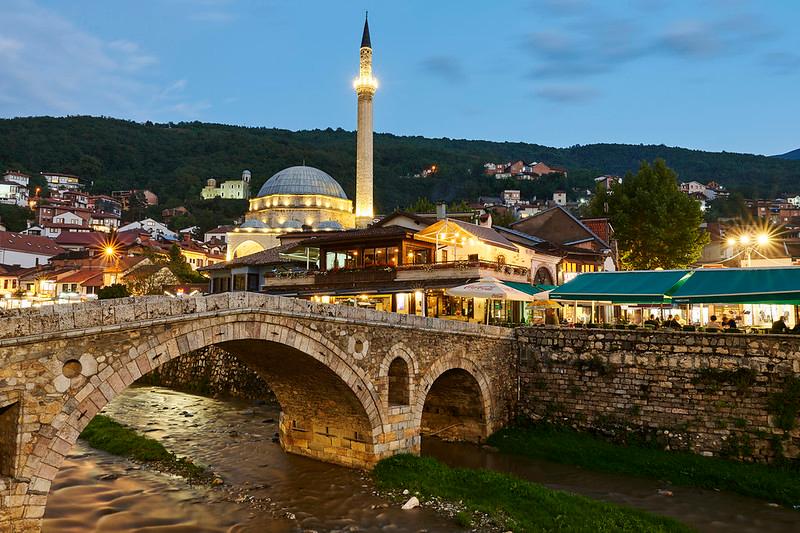
Prizren, Kosova (Flickr)
The economy exhibits a consumption model heavily dependent on external inputs and is financed primarily by a large trade deficit and substantial remittances from the diaspora abroad. The state’s defense and security capacity is generally provided by NATO and the United States due to historical tensions with Serbia and the fact that Kosovo’s army is still in its formation phase.【3】
The state symbols of the Republic of Kosovo were established as an institutional and legal reflection of the state-building process that began with the declaration of independence on 17 February 2008. The design of these symbols adopted an inclusive, neutral language that respects the country’s multi-ethnic social fabric and avoids implying the dominance of any ethnic or religious group. This approach is a fundamental strategy for constructing the identity of the independent state on the basis of citizenship.
The state flag of Kosovo consists of a dark blue background with a golden silhouette of the map of Kosovo and six white stars arranged in an arc above the silhouette. The six stars on the flag symbolize the main ethnic communities living within Kosovo’s borders (Albanians, Serbs, Turks, Bosniaks, Roma, Ashkali and Egyptians), emphasizing the country’s multicultural character.【5】 The state coat of arms incorporates the same iconographic elements: a golden map in a shield shape with six white stars, used as an institutional symbol representing the state’s official seal and authority.
Kosovo’s National Anthem (National Anthems Channel)
Kosovo’s national anthem is a wordless composition titled “Europe”, composed by Mendi Mengjiqi. The choice of a wordless anthem is directly linked to promoting inclusivity within the multicultural society, avoiding tensions arising from language or ethnic affiliations, and aligning with the goal of integration into European and Atlantic institutions. These symbols are recognized as diplomatic and administrative decisions reflecting the state’s desire to build a modern, democratic and neutral identity.【6】
Kosovo’s recent history has been shaped by political developments, ethnic conflicts and international interventions that accelerated during the dissolution of Yugoslavia. In the 1990s, rising demands for independence, clashes between Serbian authorities and Kosovar Albanians, NATO intervention and United Nations administration formed the key stages leading to the declaration of independence in 2008.【7】
In antiquity, the territory of present-day Kosovo is believed to have formed a strategic crossroads between the Adriatic Sea and the Danube River basins, where the Kingdom of Dardania was established in the 4th century BCE.【8】 The Dardanians, among the ancient inhabitants of the region, are mentioned in classical sources as one of the significant groups; some theories link them with the Illyrians and Thracians as ancestors of the Albanians.【9】 In the 1st century CE, Dardania came under Roman control and remained within the boundaries of the Eastern Roman Empire after the division of the Roman Empire in 395. At the beginning of the Middle Ages, Alans, Huns, Visigoths and Bulgars dominated the Kosovo plain.【11】
Intensifying Slavic incursions from the 6th century caused the region to gradually lose its ancient Illyrian-Dardanian character and enter a new demographic phase.【12】 During this period, the area also witnessed the expansion of Albanians from the west, and from the late 12th century onward, it came under lasting Serbian rule through the conquests of the Nemanjić dynasty, fully entering the administration of the Serbian Kingdom by 1216.
During the reign of King Milutin, Kosovo became not only the political but also the religious and cultural center of the Serbian Empire. Religious buildings and monasteries constructed during this period strengthened the region’s administrative structure, and cities such as Prizren and Pristina gained strategic importance for the empire.【13】 However, this political expansion did not eliminate the region’s ethnic diversity; local Albanian elements and Slavic communities continued to exist within a feudal structure. By the end of the 14th century, the First Battle of Kosovo in 1389, in which a Balkan coalition faced the Ottoman army, became the most decisive turning point in the region’s medieval history, weakening Serbian hegemony and paving the way for the gradual transition of the region under Ottoman administration.【14】
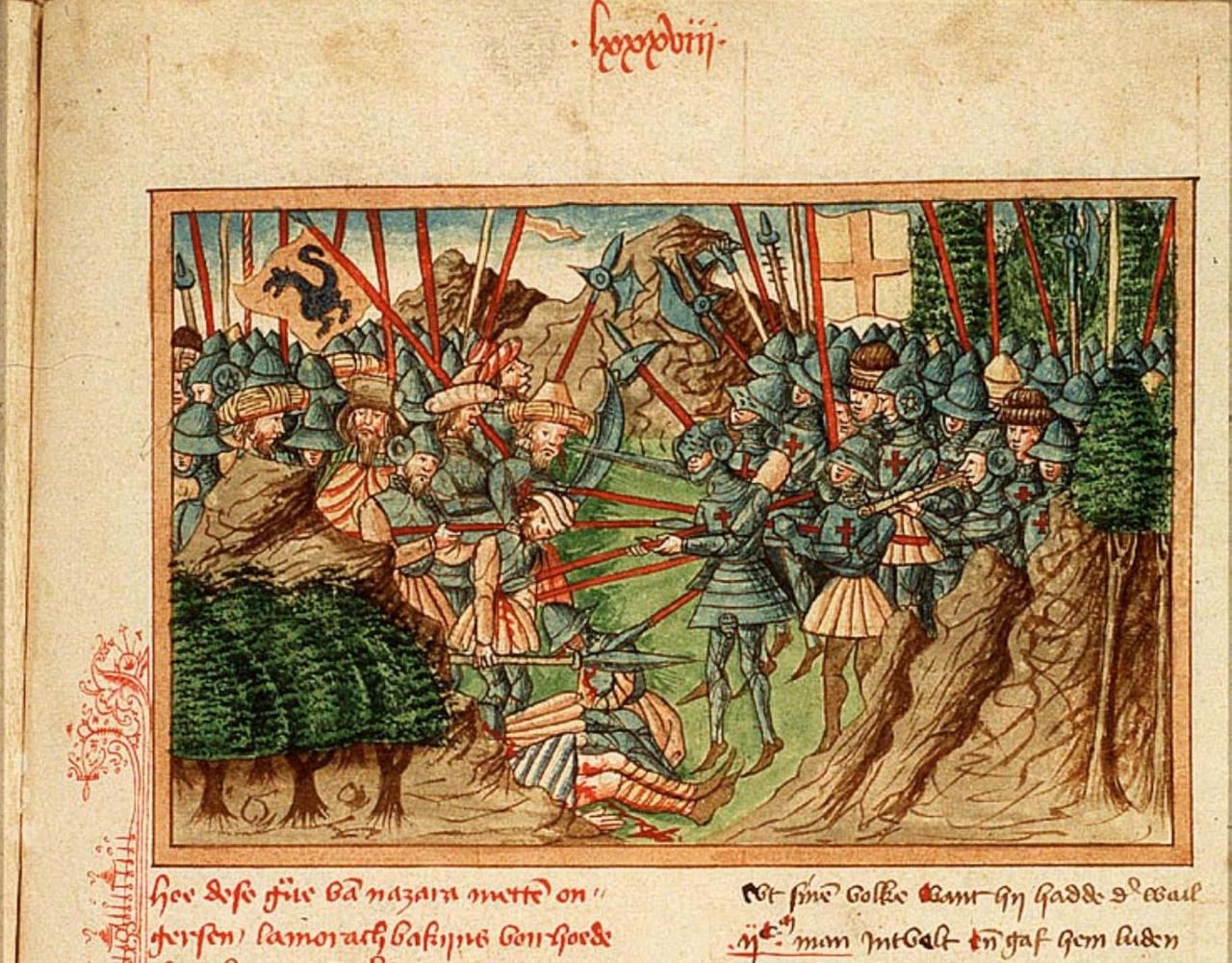
Representative image depicting the confrontation between Ottoman Sultan Murad I and Prince Lazar of Serbia at the Battle of Kosovo (History Today)
After the First Battle of Kosovo, Ottoman dominance in the region was solidified with the failure of the Crusader armies’ attempts to challenge Turkish presence in the Balkans at the Second Battle of Kosovo in 1448.【15】
From 1458 onward, Kosovo acquired an administrative status within the Rumelia Eyalet and entered a prolonged period of Ottoman rule lasting until 1913. During this time, settlements such as Pristina, Prizren and Mitrovica were reshaped as both administrative and commercial centers. Under Ottoman rule, the region entered a long period of stability; architectural works built through waqf endowments and the spread of Islam transformed the region’s socio-cultural fabric.
In the last quarter of the 19th century, the administrative structure of the region became more centralized and distinct with the establishment of the Kosovo Vilayet as an independent administrative unit under Ottoman reforms. However, this development, due to the region’s strategic location—both as a hub of rich mineral deposits and along the railway line connecting Central Europe to the Aegean—led to increased political ambitions and interventions by neighboring Balkan states, particularly through the Mitrovica district.【16】
In the late 19th and early 20th centuries, as the Ottoman Empire’s dominance in the Balkans weakened, political ambitions by neighboring states intensified in the region. During this period, the League of Prizren, established in 1878, became one of the most important turning points in the Albanian national movement and the region’s political aspirations.【17】 The Balkan Wars resulted in the region’s departure from Ottoman rule and its incorporation into the Kingdom of Serbia.
After World War I, Kosovo was administered as part of the Kingdom of Serbs, Croats and Slovenes, and later as part of the Kingdom of Yugoslavia. During both World Wars, Kosovo remained at the center of geopolitical competition and border changes, leading to radical shifts in its administrative status.
In 1945, Kosovo gained the status of an autonomous region within Socialist Yugoslavia, subordinate to Serbia; by 1968, this status was expanded and the region’s name was changed to the “Socialist Autonomous Province of Kosovo”. The region’s geopolitical position became a point of intersection for differing approaches by historical and strategic actors such as Serbia, Albania and Turkey. Although Kosovo gained broad autonomy under the 1974 Yugoslav Constitution, the suspension of this autonomy by Slobodan Milošević’s administration in the late 1980s heightened tensions in the region. By the end of the 1990s, this tension escalated into war, triggered by the following key events that paved the way for NATO intervention:
During the 1990s, as Yugoslavia disintegrated, ethnic and political tensions in Kosovo intensified, with violent confrontations escalating between Serbian authorities and Kosovar Albanians. Particularly as a result of Yugoslav security operations, a serious humanitarian crisis emerged with massive civilian displacement. These developments prompted the international community to become more actively involved in the Kosovo issue. After diplomatic efforts, including the Rambouillet talks, failed to resolve the crisis, NATO launched an air campaign against the Federal Republic of Yugoslavia on 24 March 1999.
During the approximately 78-day operation, military targets were bombed to pressure the Yugoslav administration into withdrawal. NATO’s intervention, conducted without explicit military authorization from the United Nations Security Council, sparked debate under international law.
In June 1999, following the Yugoslav forces’ agreement to withdraw from Kosovo, hostilities ended. Subsequently, under United Nations Security Council Resolution 1244, Kosovo was placed under temporary UN administration. During the same period, NATO-led Kosovo Force (KFOR) troops were deployed to the region to ensure security. NATO’s intervention became one of the defining developments in shaping Kosovo’s subsequent political status.【19】
After a nine-year period of interim administration under the United Nations (UN), and following the failure of status negotiations with Serbia, Kosovo unilaterally declared its independence on 17 February 2008. This declaration was made within the framework of the “Comprehensive Proposal for the Kosovo Status Settlement” prepared by Martti Ahtisaari, aiming to constitutionally guarantee a democratic, secular and multi-ethnic state structure.
Following the declaration of independence, Kosovo was rapidly recognized by Turkey, the United States and numerous European Union (EU) member states. By the end of 2008, Kosovo’s independence was formally recognized by 52 UN member states. Turkey recognized Kosovo on the very next day after its declaration (18 February 2008), viewing it as a critical step for stability in the Balkans. Indeed, the extraordinary local elections held in 2023 in the municipalities of northern Kosovo heightened security concerns and political tensions in the region due to low voter turnout, boycotts and disputes over municipal authority.
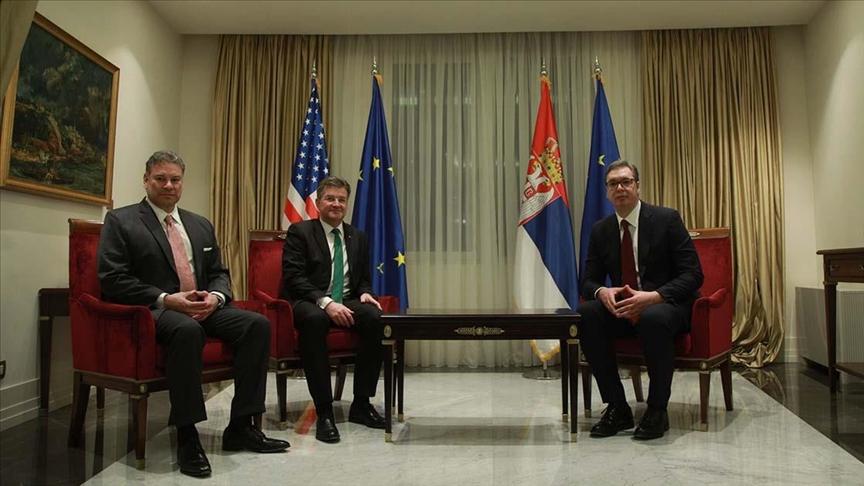
Sırbistan Cumhurbaşkanı Aleksandar Vucic, ABD Batı Balkanlar Özel Temsilcisi Gabriel Escobar ve AB Belgrad-Priştine Diyaloğu Özel Temsilcisi Miroslav Lajcak Görüşmesi 2022 (Anadolu Ajansı)
However, objections from countries such as Serbia and Russia, and the continued technical validity of UN Security Council Resolution 1244, still limit Kosovo’s progress in international integration processes such as UN membership. Kosovo’s post-independence political and administrative structure has been built on the principles of the rule of law and constitutional oversight mechanisms. One of the most critical elements of this structure is the Constitutional Court, which not only resolves legal disputes but also plays a central role in safeguarding Kosovo’s democratic identity and minority rights.
Kosovo is a landlocked country located in the center of the Balkan Peninsula in Southeastern Europe. Its geographical structure is based on a complex topography of high mountain ranges interspersed with fertile valleys. Due to its historical and geopolitical position at the heart of Balkan transit routes, the region holds strategic importance. The diversity of landforms, climatic transitions and richness of underground resources define the country’s physical geography.
Kosovo, with an area of approximately 10,887 km², is situated in the central-southern part of the Balkan Peninsula. Geographically, it borders Serbia to the north, Serbia and partially North Macedonia to the east, Albania to the southwest and Montenegro to the northwest. The country’s strategic location stems from its role as a bridge between the Adriatic Sea basin and the interior of the Balkans.
Kosovo’s surface features consist largely of high mountainous areas and the wide basins between them.
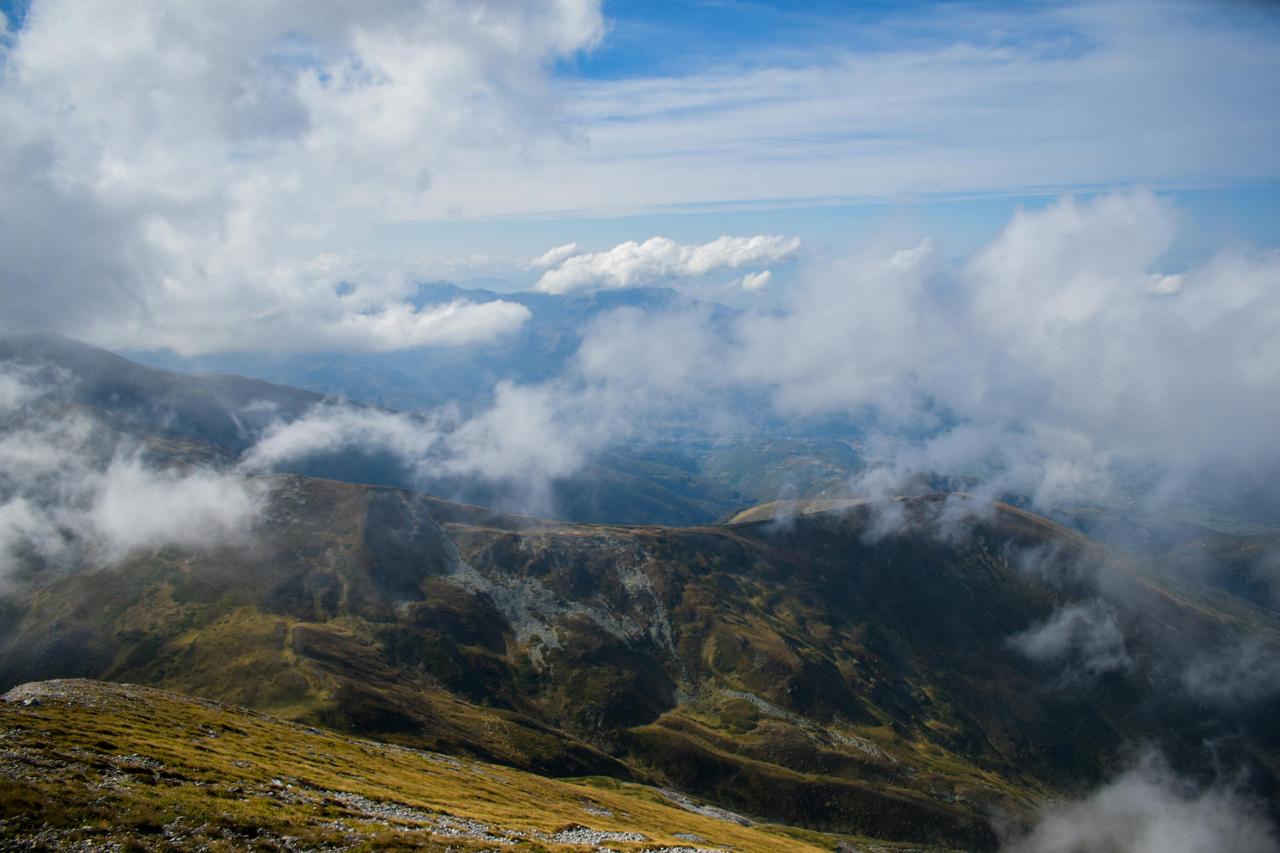
Şar Dağları (Pexels)
Mountainous regions cover much of the country’s terrain. Along the southern and southwestern borders lie the Albanian Alps (Prokletije) and the Šar (Shar) Mountains. In the northern and northeastern sections, the Kopaonik Mountains rise. These mountain ranges form a natural barrier that separates Kosovo from surrounding regions.
Between the mountain masses lie two main basins: the Kosovo Plain (in the east) and the Metohija/Dukagjini Plain (in the west). These plains constitute the most suitable areas for agriculture and settlement in the country.
The country’s hydrological structure is shaped by rivers fed by mountain sources. Major rivers include the Ibar, Sitnica and Ak Drin (White Drin). These rivers are of critical importance for local agriculture and energy potential.
Due to its geographical location and elevation differences, Kosovo has transitional climate characteristics. Generally, a continental climate prevails, with cold, snowy winters and hot, dry summers. However, in the deep valleys of the south and southwest, the moderating effects of the Mediterranean climate are felt. As elevation increases, temperatures decrease and annual precipitation rises.
The vegetation is rich and varies according to this climatic diversity. Lowland areas and valley floors are dominated by grasslands and cultivated agricultural land, while mid- and high-altitude mountain slopes are covered with oak, beech and pine forests.
Despite its small area, Kosovo is rich in underground resources. The most important underground resource is lignite coal; its reserves are sufficient to meet a large portion of the country’s energy needs. In addition, historically significant mining areas such as the Trepča complex and its surroundings are notable for deposits of lead, zinc, silver and bauxite. The exploitation of these deposits has played a fundamental role in the country’s industrial history.
Kosovo’s energy production is largely based on thermal power plants. The Kosovo A and Kosovo B thermal power plants constitute the main source of the country’s electricity. The transportation infrastructure is being developed as part of efforts to improve regional trade and transport corridors in the Balkans【20】
The country is confronting environmental challenges such as air pollution as a result of rapid industrialization and outdated energy technologies. The environmental impact of coal-fired power plants is being managed in line with sustainable development goals. Additionally, natural disasters such as floods, droughts and landslides, linked to climate change, are part of the country’s environmental risk profile. These risks serve as parameters for water resource management and soil conservation strategies.
The Kosovo economy has undergone a “dual transition” since 1999, simultaneously recovering from the destruction of war and shifting from a centrally planned economy to a market economy. This process was shaped under international protectorate administration and is grounded in institutional capacity building and the establishment of free market mechanisms. The national economy exhibits a structurally import-dependent consumption model and focuses on institutional reforms and foreign investment to establish a sustainable development path.【21】
Since independence, the Kosovo economy has continued its transition to free-market conditions and exhibits a macroeconomic structure heavily reliant on external financial flows. Although the economy is characterized by structural challenges such as low production capacity and high import dependency, overall stability is maintained through coordinated fiscal policies with international institutions. The country’s key economic indicators are as follows:【22】
Although Kosovo’s geographical structure provides suitable areas for agricultural activities, the sector faces productivity challenges. Agricultural production is largely carried out by small family farms. Staple crops such as maize, wheat and potatoes dominate production, while fruit and vegetable cultivation also plays a role in the rural economy. Key structural constraints include fragmented landholdings, lack of modern irrigation systems and insufficient use of agricultural technologies. These limitations constrain agriculture’s capacity to substitute for imports.
The industrial sector is largely focused on energy production based on the country’s rich lignite reserves. While the energy sector is critical for industrial activities, aging infrastructure and lack of investment limit diversification in industrial production. Mining is another key sector with export potential. However, the manufacturing industry’s share in overall economic growth remains lower than that of the services sector.【23】
The services sector is the largest component of the Kosovo economy and contributes the most to GDP. The financial system has developed under the dominance of foreign-owned banks. Credit mechanisms serve as the primary tool for financing private sector investments. However, increasing financial depth and reducing the cost of access to finance for businesses remain key structural challenges for economic growth.
Kosovo’s trade structure indicates a structural trade deficit. Imports significantly exceed exports, primarily due to reliance on foreign sources for intermediate and final consumer goods. Export baskets are limited to low-value-added products such as metallic minerals and processed agricultural goods. Trade partners are primarily EU member states, due to geographic proximity, especially in Central Europe and the Balkans. The main goal of trade policy is to implement structural reforms to promote exports and reduce the trade deficit.
Foreign direct investment (FDI) holds a strategic position in Kosovo’s development goals. Legislative reforms and reduction of bureaucratic barriers are aimed at improving the investment climate. However, the most important parameters for investors are the predictability of the judicial system, protection of property rights and infrastructure improvement. The government’s efforts to enhance institutional capacity aim to improve rankings in ease-of-doing-business indices.【24】
Kosovo’s political and administrative structure underwent a fundamental transformation following the 1999 crisis, under the United Nations Security Council Resolution 1244, which established the United Nations Interim Administration Mission in Kosovo (UNMIK). During this period, UN Special Representatives (SRSG), appointed by the UN Secretary-General and endowed with broad powers, served as the highest authority responsible for civil administration.
The Special Representatives exercised legislative and executive powers during the transition, playing a central role in maintaining public order, building democratic institutions and establishing local administrative capacity. The Office of the UN Special Representative represented the international community’s civil and political guidance in the region, with reserve powers to review decisions of local institutions and enact direct legal regulations. In March 2007, the “Comprehensive Proposal for the Kosovo Status Settlement” laid the foundation for Kosovo’s post-independence constitutional structure.【25】
Following the declaration of independence on 17 February 2008, Kosovo transitioned to a multi-party parliamentary republic. After independence, the powers of the UN Special Representatives were gradually reduced as sovereignty was transferred to local authorities; however, international oversight elements continued to monitor the alignment of the administrative structure with democratic standards for some time.【26】
Kosovo’s constitutional order is based on a structure grounded in fundamental human rights, the rule of law and democratic principles. The constitutional system adopted after independence requires all state organs to exercise their powers within the framework of laws. The legal system’s foundation consists of constitutional documents developed during the independence process and supported by the international community, which define the state’s sovereign boundaries. Harmonizing legislation with European Union acquis and international legal standards has become a central component of administrative reforms and legislative processes.
Kosovo is governed as a parliamentary republic based on the principle of separation of powers. The governance system features a hierarchical structure that distributes authority between central government institutions and local administrative units. The executive branch, the government, is responsible for policy formulation, while the legislative branch assumes oversight and lawmaking responsibilities. The political system includes mechanisms designed to ensure democratic participation by various ethnic and social groups.
Legislative authority in the country rests with the Kosovo Assembly, whose members are directly elected by the people. The legislative process is conducted under the technical preparation of ministries and oversight by the Prime Minister’s Office of Legal Affairs, with fiscal discipline and legal compliance serving as key criteria. The executive branch, the government, is responsible for the administrative functioning of the state and coordination among ministries. Government decisions and draft legislation are reviewed by relevant parliamentary committees.【27】 The judiciary, maintaining its independence, holds the authority to review the constitutionality of laws and uphold the rule of law. These checks and balances have been strengthened by the oversight powers of parliamentary committees over administrative activities.
Kosovo’s administrative structure is designed to coordinate services delivered at central and local levels. The primary goal of the administrative system is to simplify bureaucratic processes and reduce administrative burdens. However, within the context of public administration reforms, structural challenges occasionally arise in achieving inter-institutional coordination and harmonizing legislation. In particular, the participation of ministries in legislative processes and the relationship between local administrations and central government constitute key agenda items for the country’s administrative efficiency policies.【28】
Political parties occupy a central position in Kosovo’s political life, serving as primary actors in shaping public policy and organizing democratic participation. The organizational structures of parties directly influence internal democratic processes and interactions with the social base. Kosovo’s political culture has been shaped by historical processes and political socialization dynamics, which affect party grassroots organization and voter behavior. The management styles and strategies of political parties are recognized as significant determinants in the country’s democratic maturation process.【29】
"10 years of Belgrade-Pristina Dialogue." European External Action Service (EEAS). Accessed April 26, 2026.
"Belgrade-Pristina Dialogue." European External Action Service (EEAS). Accessed April 26, 2026.
"Belgrade-Pristina Dialogue: Agreement on the path to normalisation between Kosovo and Serbia." European External Action Service (EEAS). Accessed April 26, 2026.
"Belgrade-Pristina Dialogue: Time to take responsibility and move towards the EU." European External Action Service (EEAS). Accessed April 26, 2026.
"Europe Map." MapChart. Accessed April 23, 2026.
"Görüş: Türkiye, Kosova Barış Gücünü devralıyor." Anadolu Ajansı. Accessed April 26, 2026.
"II. Kosova Savaşı: Balkanlar'da Türk Hakimiyetinin Perçinlenmesi." gdh.digital. Accessed May 5, 2026.https://gdh.digital/haber/ll-kosova-savasi-vx2b4lrh70o
"Kosova AB its EU membership application," TRT Haber. Accessed May 12, 2026.https://www.trthaber.com/haber/dunya/kosova-abye-uyelik-basvurusunu-imzaladi-730736.html
"Kosova Savaşları," TDV İslâm Ansiklopedisi, Accessed July 15, 2026,https://islamansiklopedisi.org.tr/kosova-savaslari.
"Kosovo Logo." Seeklogo. Accessed April 23, 2026.
"Kosovo Logo." Seeklogo. Accessed April 23, 2026.
"Kosovo Pristina Program Coordination Office." TİKA (Türk İşbirliği ve Koordinasyon Ajansı Başkanlığı). Accessed April 26, 2026.
"New security measures have been taken in northern Kosovo, where tensions have risen," Anadolu Ajansı. Accessed May 12, 2026.
"Results of the extraordinary local elections held in northern Kosovo were announced," *TRT Haber*. Accessed May 12, 2026.https://www.trthaber.com/haber/dunya/kosovanin-kuzeyinde-yapilan-olaganustu-yerel-secimlerin-sonuclari-aciklandi-762814.html
"The Battle of Kossovo, 1389." History Today. Accessed May 5, 2026.
"Vision & Mission." Maarif Schools of Kosova. Accessed April 26, 2026.
"Çağdaş Sırp ve Dubrovnik Kayıtlarına Göre I. Kosova Savaşı." Istanbul University Press. Accessed May 5, 2026.https://iupress.istanbul.edu.tr/journal/jses/article/cagdas-sirp-ve-dubrovnik-kayitlarina-gore-i-kosova-savasi
Adem Dreshaj, Bedri Millaku, Sabiha Shala, Afrim Selimaj, and Halit Shabani, "Sources of Air Pollution, Environmental Impacts and Exploitation of Natural Resources in Kosovo," *CBU International Conference on Innovations in Science and Education* (Prague, Czech Republic: 2017), 1275-1280, Accessed April 19, 2026.
Aktepe, M. Münir and Muhammed Aruçi. "Kosova." *TDV İslâm Ansiklopedisi*, Volume 26, pp. 216-221. Ankara: Türkiye Diyanet Vakfı Yayınları, 2002. Accessed June 8, 2026.
Ayhan, Halis. "Arnavut ve Sırp Savları Bağlamında Kosova'nın Sahipliği Sorunu." Selçuk Üniversitesi Sosyal Bilimler Enstitüsü Dergisi, no. 23 (2010): p. 77.
Ayhan, Halis. "Kosova'nın Bağımsızlığı Sürecinde Uluslararası Güçlerin ve Türkiye'nin Tutumu," Avrasya Etüdleri 33, no. 1 (2008). Accessed May 13, 2026.
BBC. "Kosovo Profile." BBC News. Accessed April 20, 2026.
Bardakçı, Mehmet. "Kosova-Sırbistan Normalleşme Süreci ve Avrupa Birliği'nin Rolü." *Uluslararası İlişkiler Dergisi* (2025). Accessed May 12, 2026.https://dergipark.org.tr/tr/download/article-file/4856334
Birol, Nurettin. "19. Yüzyılın Sonlarında Kosova Vilayetinin Etnik, İdari, Siyasi ve Sosyal Durumu ve Vali Halil Rifat Paşa'nın Faaliyetleri." Akra Kültür Sanat ve Edebiyat Dergisi 10, no. 28 (2022). Accessed April 20, 2026.
Boussauw, Kobe. "Challenges, threats and opportunities in post-conflict urban development in Kosovo." Habitat International. Accessed April 19, 2026.
DEİK. "Kosova Bilgi Notu." Dış Ekonomik İlişkiler Kurulu. Accessed April 20, 2026.https://deik.org.tr/uploads/kosova-bilgi-notu-nisan-2025.pdf
Demirel, Nuri. *Kosova'nın Tarihi ve Sosyolojik Yapısı.* Konya: Eğitim Yayınevi, 2016. Accessed April 20, 2026.
Ekinci, Deniz. "Balkan Studies I: Geography Geostrategy." ResearchGate. Accessed April 19, 2026.
Europa Nostra (europanostra). "Dečani Monastery, KOSOVO." Digital image. Flickr. Accessed May 4, 2026.
European Committee of the Regions. "Kosovo." Division of Powers. Accessed May 5, 2026.https://portal.cor.europa.eu/divisionpowers/Pages/Kosovo.aspx.
Fandaj, Abdyl. "Kosova’nın devlet olma süreci ve Avrupa Birliği’nin rolü." Master's thesis, Bursa Uludağ Üniversitesi, 2018. ProQuest Dissertations & Theses, Accessed April 20, 2026.
Halili, R., and S. Kukovič. "Organizational and Structural Approaches on Administrative Simplification: The Case of Kosovo." *Administrative Sciences* 12, no. 1 (2022): 18. Accessed April 20, 2026.
Haziri, Behar. "The Impact of Political Socialization in Kosovo Political Culture." THESIS 8, no. 1 (2019). Accessed April 20, 2026.https://www.researchgate.net/publication/333809379_The_Impact_of_Political_Socialization_in_Kosovo_Political_Culture
IMF. "Kosova Madde IV Konsültasyon Raporu." 2025.https://www.imf.org/en/Countries/KOSAccessed May 5, 2026.
International Monetary Fund, Republic of Kosovo: 2024 Article IV Consultation and Third Reviews Under the Stand-By Arrangement and the Arrangement Under the Resilience and Sustainability Facility, IMF Country Report No. 24/364 (Washington, DC: International Monetary Fund, 2024), 34–35, 58.
Kabashi, Gazmend, Luan Kola, Skender Kabashi, and Fadil Ajredini. "Assessment of Climate Change Mitigation Potential of the Kosovo Energy and Transport Sector." International Journal of Computational and Experimental Science and Engineering. Accessed April 19, 2026.
Kabaş, Sunaj. "Şar Dağları Milli Parkı'nda (Kosova) Doğal Ortam İnsan İlişkileri." PhD thesis, 2022. Accessed April 19, 2026.
Kazaz, Adjera Alitoska and Sadi Uzunoğlu. "Kosova’da Doğrudan Yabancı Sermaye Yatırımları, Kurumsal Kalite ve Ekonomik Büyüme: VECM Analizi (2008-2024)." Accessed April 20, 2026.
Kazaz, Davut, Ahmet Atakişi, and Meltem Okur Dinçsoy. "Kosova’da Enerji Tüketimi, Ekonomik Büyüme ve Doğrudan Yabancı Yatırımlar Arasındaki Dinamik İlişki: ARDL Sınır Testi Yaklaşımı." Accessed April 19, 2026.https://dergipark.org.tr/en/download/article-file/5482451
Korporata Energjetike e Kosovës (KEK). "Termocentrali Kosova B." Accessed May 6, 2026.
Kosova Merkez Bankası (BQK). "Makroekonomik Gelişmeler Raporu." 2025. Accessed May 5, 2026.
Kosova İstatistik Agency (ASK), "Yıllık Ekonomik Rapor 2024," Accessed May 5, 2026.
Koçyiğit Türk, Müberra. "Sırbistan-Arnavutluk-Türkiye Bağlamında Kosova İçin Jeopolitikalar." ResearchGate. Accessed April 18, 2026.
Köseoğlu, Mehmet. "Komşu Balkan Devletlerinin Kosova Vilayeti Üzerindeki Emellerinin Mitroviça Kazasına Yansımaları." ResearchGate. Accessed April 18, 2026.
Levent, Z. (2013). Tarihi Süreçte Kosova. *Ankara Üniversitesi Türk İnkılâp Tarihi Enstitüsü Atatürk Yolu Dergisi*, (52). Accessed May 12, 2026.
Lika, Liridon, ed. *Kosovo and Albania: A Special Relationship*. London: Routledge, 2025. Accessed May 4, 2026.
Malcom, Noel. "Ottoman Kosovo 1458-1913." Academia.edu. Accessed May 5, 2026.https://www.academia.edu/64199091/Ottoman_Kosovo_1458_1913_
Mazreku, Rujdi. "Türkiye ile Kosova Arasındaki Ekonomik İşbirliğinin Değerlendirilmesi." Master's thesis. Accessed April 20, 2026.
Mazreku, Türker. "Dış Ticaretin Ekonomik Büyüme Üzerindeki Etkisi: Kosova Örneği." Master's thesis, 2017. Accessed April 20, 2026.https://www.proquest.com/openview/d3c2e408f5ed98e5eb090
Ministry of Foreign Affairs of the Republic of Türkiye. "Kosova Ekonomisi." Accessed April 20, 2026.
Nurduhan, Ahmet. 2022. "Vucic, ABD Batı Balkanlar ve AB Belgrad-Priştine Diyaloğu Özel Temsilcileriyle Görüştü." *Anadolu Ajansı*, February 2, 2022. Accessed June 8, 2026.https://www.aa.com.tr/tr/dunya/vucic-abd-bati-balkanlar-ve-ab-belgrad-pristine-diyalogu-ozel-temsilcileriyle-gorustu/2492395.
Oduncu, Tunahan. "1999 Kosova Krizi ve NATO'nun Kosova Müdahalesi." *Bucak İşletme Fakültesi Dergisi* 2, no. 1 (2019): 1-15. Accessed May 12, 2026.https://dergipark.org.tr/en/download/article-file/710300?utm_source=chatgpt.com
Pexels. "Drone Shot of Prishtina." Digital image. Pexels. Accessed May 4, 2026.
Pexels. "Peyzaj, manzara, doğa, sis." Accessed April 20, 2026.
Purova, Nehat. "Kosova’nın Nüfus Coğrafyası." Master's thesis, Ankara Üniversitesi, 2016. Accessed April 19, 2026.
Regional Science Inquiry. "The Determinants of Economic Growth in the Western Balkans." RSI Journal XV, no. 1 (2023): 75-86. Accessed April 20, 2026.https://www.rsijournal.eu/ARTICLES/June_2023/RSI_Jun_2023_XV_(1).pdf
Sancaktar, Caner. "Kosova'da Uluslararası Himaye Yönetimi." Istanbul: ResearchGate. Accessed April 20, 2026.
Sancaktar, Caner. “NATO’nun Kosova Müdahalesi: Emperyalist Müdahaleye Bir Örnek.” *Uluslararası Güvenlik Kongresi Bildirileri*, 445-450. Kocaeli, 2013. Accessed May 12, 2026.https://www.researchgate.net/publication/321109331_NATO'nun_Kosova_Mudahalesi
Sarı, İbrahim. "Kosova’nın Bağımsızlığının Uluslararası Sistem Bağlamında Değerlendirilmesi." Master's thesis, Dokuz Eylül Üniversitesi. Accessed May 13, 2026.https://www.proquest.com/openview/d75c16436fb77d8cabcd537aea303c5d/1?pq-origsite=gscholar&cbl=2026366&diss=y
SavunmaSanayiST. "Binlerce Türk Kamikaze İHA'sı Kosova'ya ulaştı". Accessed April 17, 2026.
Sylejmani, Dardan. "Maliye Politikalarının Ekonomik Kalkınma Üzerindeki Etkisi – Kosova Örneği." Accessed April 20, 2026.https://nek.istanbul.edu.tr/ekos/TEZ/53442.pdf
Taşar, M. Murat. "Kosova Arnavutlarının bağımsızlık mücadelesi." Ülke Dergisi, no. 33 (January 1999). Accessed May 11, 2026.https://d1wqtxts1xzle7.cloudfront.net/34376191/Kosova_Arnavutlarinin_bagimsizlik_mucadelesi-libre.pdf?1407298682=&response-content-disposition=inline%3B+filename%3DKosova_Arnavutlarinin_bagimsizlik_mucade.pdf&Expires=1778526082&Signature=MN6t6QGF8MIghed9lbcWqjdGCOkMKf7O6iLjpj1P3qDlS6U4HcKySS4Iqbmnh9yor0g~RMXT9jzIX3weBbsIjF4I6z4yKLMw5OyYcP9iV0JsJH4FEqjxz907VxTkhP8L-RIIiTNwJsNX-GDNKp1cqnVZX6RKcndmR8U31js199WNQAr8~XmztK19bNsGZj3w0w0jfkhbcC-SH6AEPlVOCdxqWczVQrkfd2cbPzVPGuvHrRnSR3Z~II7I2uFtTBvVcEUidOC78EBeJdDes47F0xrJMlXKd~thluDH2eFzMuzzDmnf11WSZnSRXN9w1JbPDQB-4K7CZ-bFZvFXv5i2Ag__&Key-Pair-Id=APKAJLOHF5GGSLRBV4ZA
Taşdemir, F. & Yürür, P. (1999). "Kosova Sorunu: Tarihi ve Hukuki Bir Değerlendirme". *Gazi Üniversitesi İ.İ.B.F. Dergisi*. Accessed May 12, 2026.https://dergipark.org.tr/tr/download/article-file/287995
Tutar, Selçuk. "Kosova’nın Turizm Coğrafyası." Master's thesis. Accessed April 19, 2026.https://www.proquest.com/openview/d28baf1dc3520603c73a8a8131475659/1?pq-origsite=gscholar&cbl=2026366&diss=y
Türbedar, Erhan. "Kosova'da Siyaset ve Coğrafya." 21. Yüzyıl Türkiye Enstitüsü. Accessed April 19, 2026.https://21yyte.org/assets/uploads/files/214-235%20Erhan.pdf
U.S. Department of State. “Kosovo.” Accessed May 13, 2026.https://2021-2025.state.gov/countries-areas/kosovo/.
Uğurlu, Mesut. "Kosova Efsanesi." Accessed May 11, 2026.
Wiley Online Library. "Developmental Economics in Transition Societies: The Case of Kosovo." *Journal of Development Economics*. Accessed April 20, 2026.https://onlinelibrary.wiley.com/doi/abs/10.1111/dech.12230
World Bank. "Kosova Ülke Ekonomik Muhtırası." 2024.https://www.worldbank.org/en/country/kosovoAccessed May 5, 2026.
Xhafçe, Zeqije. "Arnavutça Konuşma Dilinde Türkizmalar: Kosova Sözlü Tarihi Örneği." ResearchGate. Accessed April 18, 2026.
Yılmaz, Züleyha. "Türkiye Cumhuriyeti - Kosova Cumhuriyeti Diplomatik İlişkileri (2008-2016)." Master's thesis, Trakya Üniversitesi, 2019. Accessed May 4, 2026.
Zejnullahi, Veton. "Political Parties in Kosovo, Organizational Structure and Their Internal Democracy." *European Journal of Multidisciplinary Studies* 3, no. 1 (2016): 29–33. Accessed April 20, 2026.
arbaa. “Albanian Specialty, Flia”. Flickr. Accessed May 4, 2026.
sinava. "View of Prizren." Digital image. Flickr. Accessed May 4, 2026.
Özdağ, A. & Önal, T. (2017). "Kosova Sorunu ve Kosova'nın Bağımsızlık Süreci." Accessed May 12, 2026.https://www.researchgate.net/publication/320628438_Kosova_Sorunu_ve_Kosova'nin_Bagimsizlik_Sureci_KOSOVO_ISSUE_AND_KOSOVO'S_INDEPENDENCE_PROCESS
Şahin, Seçil. "Kosova’nın Bağımsızlık İlanının Uluslararası Adalet Divanı Kararı ve Self-Determinasyon İlkesi Çerçevesinde İncelenmesi," Ankara Barosu Dergisi 73, no. 1 (2015). Accessed May 13, 2026.
“Kosova: Savaşın ve NATO Müdahalesinin Ardından.” BBC Türkçe, March 24, 2024. Accessed May 12, 2026.https://www.bbc.com/turkce/articles/ce97q71g7gro
[1]
Store Norske Leksikon (SNL), "Kosovo." Erişim tarihi 17 Nisan 2026.https://snl.no/Kosovo
Türkiye Diyanet Vakfı. "Kosova." İslâm Ansiklopedisi. Erişim tarihi 17 Nisan 2026.https://islamansiklopedisi.org.tr/kosova
[2]
Kosovo Agency of Statistics (KAS), Population and Housing Census in Kosovo 2024 - First Final Results, Aralık 2024, 32,44,46. Erişim Tarihi 17 Nisan 2026.https://askapi.rks-gov.net/Custom/bffbac3c-f325-4b18-b0e3-755dcb4cccf0.pdf
[3]
Euronews. "Kosova Güvenlik Gücü'nün orduya dönüştürülmesi planına hangi ülkeler nasıl tepki veriyor?" Euronews, February 15, 2025.https://tr.euronews.com/2025/02/15/kosova-guvenlik-gucunun-orduya-donusturulmesi-planina-hangi-ulkeler-nasil-tepki-veriyor
[5]
Be In Kosovo. "Kosovo Flag and Anthem." Be In Kosovo. Erişim 20 Temmuz 2026. https://www.beinkosovo.com/kosovo-flag-and-national-anthem/
[6]
Be In Kosovo, "Kosovo Flag and Anthem."
[7]
Zeynel Levent, “Tarihî Süreçte Kosova”, Atatürk Yolu Dergisi, S. 51 (2013), s. 861–867. Erişim Tarihi : 15 Temmuz 2026.
[8]
M. Münir Aktepe ve Muhammed Aruçi, "Kosova," TDV İslâm Ansiklopedisi içinde (Ankara: TDV İslâm Araştırmaları Merkezi, 2002), 26:216-219, https://islamansiklopedisi.org.tr/kosova
[9]
Halis Ayhan, "Arnavut ve Sırp Savları Bağlamında Kosova'nın Sahipliği Sorunu", *Selçuk Üniversitesi Sosyal Bilimler Enstitüsü Dergisi*, no. 77 (2010): 77. Accessed July 15, 2026.
[11]
"Kosova", TDV İslâm Ansiklopedisi, c. 26 (Ankara: Türkiye Diyanet Vakfı, 2002), 221-222. Erişim Tarihi: 8 Haziran 2026.
[12]
Türkiye Diyanet Vakfı. "Kosova." İslâm Ansiklopedisi. Erişim tarihi 17 Nisan 2026. https://islamansiklopedisi.org.tr/kosova
[13]
Sullivan, Alice Isabella. "King Milutin of Serbia: A Medieval Patron of the Arts." Medievalists.net, 5 Kasım 2021. https://www.medievalists.net/2021/11/king-milutin-serbia-patron/
[14]
Taşar, M. Murat. "Kosova Arnavutlarının bağımsızlık mücadelesi." Ülke Dergisi, sayı 33 (Ocak 1999), Sayfa 1. Erişim Tarihi : 11 Mayıs 2026.
[15]
"Kosova Savaşları," TDV İslâm Ansiklopedisi, erişim tarihi 15 Temmuz 2026, https://islamansiklopedisi.org.tr/kosova-savaslari.
[16]
"Kosova." TDV İslâm Ansiklopedisi. c. 26, 219-223. Ankara: TDV Yayınları, 2002. Erişim Tarihi: 15 Temmuz 2026.
[17]
Özdağ, A. (2017). "Kosova Sorunu ve Kosova'nın Bağımsızlık Süreci". Akademik Bakış Dergisi, 556-574. Accessed July 15, 2026.
[18]
"Kosova," İslam Ansiklopedisi, erişim tarihi 5 Mayıs 2026, https://islamansiklopedisi.org.tr/kosova#2-osmanli-donemi-sonrasi
[19]
“Kosova: Savaşın ve NATO Müdahalesinin Ardından.” BBC Türkçe, 24 Mart 2024. Erişim 12 Mayıs 2026.
[20]
Adem Dreshaj, Bedri Millaku, Sabiha Shala, Afrim Selimaj ve Halit Shabani, "Sources of Air Pollution, Environmental Impacts and Exploitation of Natural Resources in Kosovo," CBU International Conference on Innovations in Science and Education (Prag, Çek Cumhuriyeti: 2017), 1275-1280, erişim tarihi: 19 Nisan 2026.https://www.researchgate.net/publication/320491788_SOURCES_OF_AIR_POLLUTION_ENVIRON
[21]
Regional Science Inquiry, "The Determinants of Economic Growth in the Western Balkans." RSI Journal XV, no. 1 (2023): 73-76.Erişim tarihi: 20 Nisan 2026.https://www.rsijournal.eu/ARTICLES/June_2023/RSI_Jun_2023_XV_(1).pdf
Wiley Online Library, "Developmental Economics in Transition Societies: The Case of Kosovo." Journal of Development Economics, Erişim tarihi: 20 Nisan 2026.https://onlinelibrary.wiley.com/doi/abs/10.1111/dech.12230
[22]
The Robert Schuman Foundation, "Country Sheet: Kosovo," The Robert Schuman Foundation, son güncelleme 9 Aralık 2025, https://www.robert-schuman.eu/en/our-information-files/kosovo
[23]
T.C. Dışişleri Bakanlığı, "Kosova Ekonomisi." T.C. Dışişleri Bakanlığı, Erişim tarihi: 20 Nisan 2026.https://www.mfa.gov.tr/kosova-ekonomisi.tr.mfa
[24]
Caner Sancaktar, "Kosova'da Uluslararası Himaye Yönetimi." Istanbul: ResearchGate, 63–68. Accessed April 20, 2026.
[25]
Albert Rohan, "Kosovo's path to independence," European Council on Foreign Relations, February 2, 2018.
[26]
Oduncu, Tunahan. "1999 Kosova Krizi ve NATO'nun Kosova Müdahalesi." MAKÜ-BİFD 2, no. 1 (2019): 12. Accessed May 6, 2026.
[27]
Halili, R., ve S. Kukovič, "Organizational and Structural Approaches on Administrative Simplification: The Case of Kosovo." Administrative Sciences 12, no. 1 (2022):18. 6-8. Erişim tarihi: 20 Nisan 2026.https://www.mdpi.com/2076-3387/12/1/18
[28]
Halili, R., ve S. Kukovič, "Organizational and Structural Approaches on Administrative Simplification: The Case of Kosovo." Administrative Sciences 12, no. 1 (2022):18. 4-8. Erişim tarihi: 20 Nisan 2026.https://www.mdpi.com/2076-3387/12/1/18
[29]
Veton Zejnullahi, "Political Parties in Kosovo, Organizational Structure and Their Internal Democracy." European Journal of Multidisciplinary Studies 3, no. 1 (2016): 29-33, Erişim tarihi: 20 Nisan 2026.https://www.researchgate.net/publication/318536703_Political_Parties_in_Kosovo_Organizational_Structure_and_Their_Internal_Democracy


Republic of Kosovo
Kosovo
Bordering Countries | Montenegro North Macedonia Albania Serbia | ||||||||
|---|---|---|---|---|---|---|---|---|---|
Common Languages | Turkish Romani Bosnian | ||||||||
Ethnic Groups | Serb Bosniak Turk Roman Ashkali Egyptian Gorani Albanian | ||||||||
Head of State | Albulena Haxhiu (acting) | ||||||||
Area | 10,905 km² | ||||||||
Time Zone | UTC+1 (Central European Time - CET); UTC+2 during daylight saving time | ||||||||
Population (2024) | 1,585,566 | ||||||||
GDP (Nominal) (2025) | 14.05 Billion US Dollars | ||||||||
GDP (PPP) (2025) | 8,960 US Dollars | ||||||||
Telephone Area Code | +383 | ||||||||
Religion | Islam (%93.49) Orthodox (%2.31) Catholic (%1.75) | ||||||||
Official Language | Albanian and Serbian | ||||||||
Official Name | Republic of Kosovo | ||||||||
Capital | Pristina | ||||||||
Climate | Continental climate | ||||||||
Currency | Euro | ||||||||
Form of Government | Republic | ||||||||
State Symbols
Flag and Coat of Arms
National Anthem
History
Ancient Period
Middle Ages
Early Modern Period
Modern Period
World War II and Aftermath
NATO Intervention
Declaration of Independence and the Present
Geography
Location
Landforms
Mountains
Plains and Valleys
Rivers and Lakes
Climate and Vegetation
Natural Resources
Energy and Transportation Infrastructure
Environmental Issues and Natural Disasters
Economy
Key Economic Indicators
Sectoral Distribution and Production Structure
Agriculture and Livestock
Industry and Energy
Services and Finance
Trade Balance
Investment Climate and Structural Reforms
Political and Administrative Structure
Legal System/Constitutional System
Governance System
Legislative, Executive and Judicial Powers
Administrative Structure
Political Parties and Current Political Structure