


This article was automatically translated from the original Turkish version.
+1 More
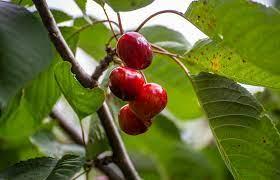
Keles Cherry
Registration Number | 1394 | ||||||||
|---|---|---|---|---|---|---|---|---|---|
Registration Date | 22.06.2023 | ||||||||
Application Number | C2022/000339 | ||||||||
Application Date | 10.10.2022 | ||||||||
Name of the Geographical Indication | Keles Kirazı | ||||||||
Product / Product Group | Cherry / Processed and Unprocessed Fruits and Vegetables and Mushrooms | ||||||||
Type of Geographical Indication | Place of Origin | ||||||||
Applicant / Registrant | Bursa Metropolitan Municipality | ||||||||
Address of the Registrant | Zafer Mah. Ankara Yolu Cad. Osmangazi BURSA | ||||||||
Geographical Boundary | Keles District, Bursa Province | ||||||||
Keles Cherry, a variety of cherry belonging to the species Prunus avium L. known as “0900 Ziraat,” is cultivated in the Keles district of Türkiye’s Bursa province. This cherry is characterized by its large, round or broad heart-shaped fruit with a red-hued skin, firm and juicy pink flesh, a sweet taste, and a balanced sugar-acid ratio. Keles cherry is harvested, stored, and marketed under suitable conditions shortly after picking to ensure freshness. This variety produces distinctive large, firm, juicy, sweet fruits with an extended shelf life due to the region’s unique climatic conditions (a transitional zone between temperate and continental climates), soil structure (slightly alkaline, sandy-loamy), and high elevation (600–1300 meters). Production relies on specific agricultural practices including certified rootstocks, appropriate grafting methods, controlled irrigation and fertilization, regular pruning, and hand harvesting. The product is offered to consumers either loose or in packaging, in compliance with relevant regulations, and is regularly monitored under the coordination of Bursa Metropolitan Municipality.
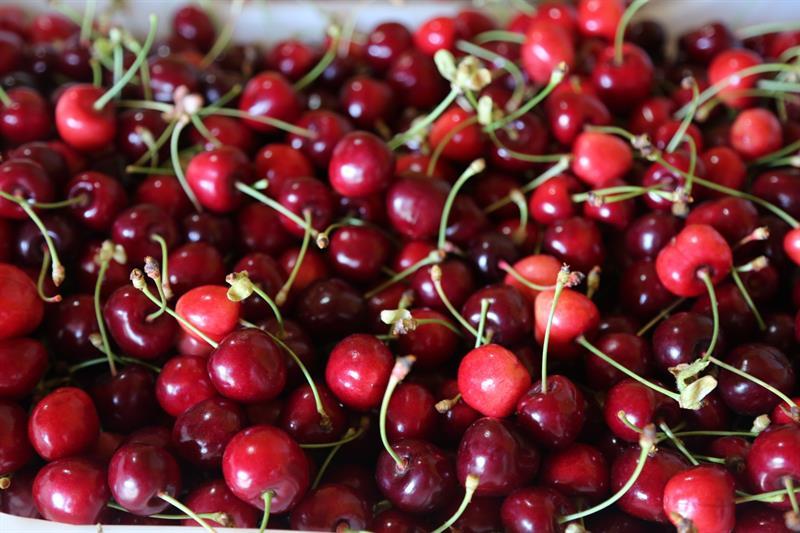
Keles Kirazı (Bursa İl Tarım ve Orman Müdürlüğü)
Although the Keles district is near the Sea of Marmara, its position relative to Uludağ and surrounding topography prevents maritime influences from reaching inland areas. As a result, the region experiences a transitional climate combining temperate and continental characteristics. Winters are cold and harsh, while spring remains rainy and mild until June. This climate supports the cherry tree’s chilling requirement and protects it from late spring frosts.
Additionally, the high diurnal temperature variation in the region reduces water loss during full growth and ripening, enhancing fruit firmness and extending shelf life. This helps prevent premature ripening and preserves the fruit’s flavor and sugar-acid balance. Low rainfall during the ripening period also minimizes fruit cracking.
Cherry orchards in Keles district are located at elevations between 600–1300 meters. This elevation range allows the harvest period to extend over approximately three months, from early June to August. High elevation also supports the trees’ moisture needs and contributes to fruit size. The region’s soil is generally slightly alkaline and sandy-loamy, a structure that aids water retention, maintains optimal soil temperature, and reduces the risk of agricultural frost damage.
Bursa Keles cherry is a large, broad heart-shaped fruit with a red skin, firm and juicy pink flesh, and pink-colored juice. The flesh is crisp and sweet. Flowering typically occurs in April. The harvest season spans from June to August.
Based on harvest period, growing conditions, and ripeness level, key characteristics include:
In Keles cherry production, vegetative propagation is carried out by grafting onto rootstocks. Rootstocks may be seedling or clonal. Grafting is typically performed between March and April using suitable techniques such as cleft grafting, bud grafting, whip grafting, or approach grafting. It is recommended that orchards include pollinator varieties; preferred options include Starks Gold, Lambert, Noble, Regina, Lapins, Bigarreau Gaucher, and Jubilee.
When selecting saplings, appropriate rootstock-scion combinations are determined, and certified saplings are prioritized. Rootstocks and grafting methods are chosen based on the soil and climatic conditions of the planting site. South-facing, lower-elevation areas are preferred. Planting generally begins after leaf fall in late autumn and continues until mid-April. Prior to planting, saplings are pruned and placed in the soil at the same depth from which they were removed from the grafting block. Planting can be done in autumn or, under suitable conditions, in spring. After planting, saplings must be watered thoroughly.
For orchard establishment, sites with high water retention capacity and well-drained subsoil are preferred. The region’s soils are predominantly sandy-loamy. The climate exhibits characteristics of a transitional zone between temperate and continental climates. Care must be taken to protect against late spring frosts during cultivation, and the benefits of high diurnal temperature variation in reducing fruit water loss should be considered.
Irrigation requirements are determined according to seasonal and climatic conditions. Drip irrigation is recommended.
Both organic manure and commercial fertilizers may be used in fertilization. Soil and leaf analyses are recommended prior to fertilization. The determined fertilizer quantity is applied within the tree’s canopy projection area without direct contact with the trunk or roots.
Pest control is carried out with attention to the bud break and flowering periods. Approved plant protection products in compliance with relevant regulations are used. Control activities are conducted in spring and autumn to improve soil aeration and manage weed growth.
Both winter and summer pruning are performed on Keles cherry trees. Modified leader or central leader systems are used. Pruning is repeated annually according to tree development. The central leader pruning system is preferred. Pruning begins after harvest and continues until December; however, it may be delayed if winter temperatures are excessively low. Tools must be disinfected between each tree. Diseased, weak, crowded, broken, or cracked branches are removed. Regular pruning is essential for fruit set, ease of harvest, adequate light penetration, air circulation, and overall orchard management efficiency.
Keles cherries are hand-harvested with their stems intact once they reach sufficient ripeness, displaying the characteristic red color and specified size. Care must be taken to avoid damaging branches during picking, and containers suitable for food contact and not excessively large must be used.
Harvested cherries are stored in dry, cool, clean, and odor-free environments. The product should be delivered to consumers immediately after harvest. For longer-term storage, cherries may be kept in cold storage facilities in appropriate crates or packaging. Overstacking must be avoided.
The product is marketed either loose or in appropriate packaging, with labeling information compliant with applicable regulations.
Ripe fruits are hand-picked with their stems when they achieve the desired color and flavor characteristics. Care is taken to avoid damage to branches during harvesting. Cherries are collected in containers suitable for food contact and not excessively large.
Storage occurs in dry, cool, clean, and odor-free environments. Products must be delivered to consumers without delay. For extended storage, cherries are kept in cold storage facilities in food-safe packaging. When marketed, the product is sold either loose or in packaging, with labeling information compliant with applicable regulations.
Monitoring is conducted by a monitoring board of at least three members coordinated by Bursa Metropolitan Municipality, including representatives from the Bursa Provincial Directorate of Agriculture and Forestry and the Keles Chamber of Agriculture. These inspections are carried out at least once annually; additional inspections may be conducted in response to complaints or specific needs. Inspection results are reported under Law No. 6769 on Industrial Property and submitted annually by Bursa Metropolitan Municipality to the Turkish Patent and Trademark Office.
The monitoring board oversees the proper use of the geographical indication for Keles cherry, including harvest, storage, preservation, and market supply processes, and verifies compliance with established production methods. Product analyses may be conducted when necessary. Any deficiencies or non-compliances identified during inspections are reported to the relevant individuals, institutions, or organizations, and corrective measures are required. The monitoring board may seek support or procure services from public or private institutions or experts in this field. Legal proceedings for the protection of product rights are managed by the registering authority.
Keles Kirazı (Yapay zeka ile oluşturulmuştur.)
T.C.Bursa İl Directorate of Agriculture and Forestry. “Keles’te Kiraz Hasadı Başladı.” Bursa Provincial Directorate of Agriculture and Forestry. Accessed May 28, 2025.https://bursa.tarimorman.gov.tr/Sayfalar/AlbumDetay.aspx?OgeId=10247
Turk Patent and Trademark Office. "Keles Kirazı Coğrafi İşaret Başvuru Belgesi (PDF)." Accessed May 26, 2025.https://ci.turkpatent.gov.tr/Files/GeographicalSigns/0f887d5c-c04d-4a20-91ed-16e76d2a616e.pdf
Turk Patent and Trademark Office. "Keles Kirazı Coğrafi İşaret Detayı." Accessed May 26, 2025.https://ci.turkpatent.gov.tr/cografi-isaretler/detay/7684

Keles Cherry
Registration Number | 1394 | ||||||||
|---|---|---|---|---|---|---|---|---|---|
Registration Date | 22.06.2023 | ||||||||
Application Number | C2022/000339 | ||||||||
Application Date | 10.10.2022 | ||||||||
Name of the Geographical Indication | Keles Kirazı | ||||||||
Product / Product Group | Cherry / Processed and Unprocessed Fruits and Vegetables and Mushrooms | ||||||||
Type of Geographical Indication | Place of Origin | ||||||||
Applicant / Registrant | Bursa Metropolitan Municipality | ||||||||
Address of the Registrant | Zafer Mah. Ankara Yolu Cad. Osmangazi BURSA | ||||||||
Geographical Boundary | Keles District, Bursa Province | ||||||||
Geographical Boundaries and Climatic Conditions
Product Characteristics
Production Method and Stages
Orchard Establishment and Sapling Planting
Soil and Climatic Conditions
Irrigation
Fertilization
Pest and Disease Control
Pruning
Harvest
Storage and Preservation
Market Supply
Harvest, Storage, and Market Supply
Monitoring and Protection