


This article was automatically translated from the original Turkish version.
+1 More
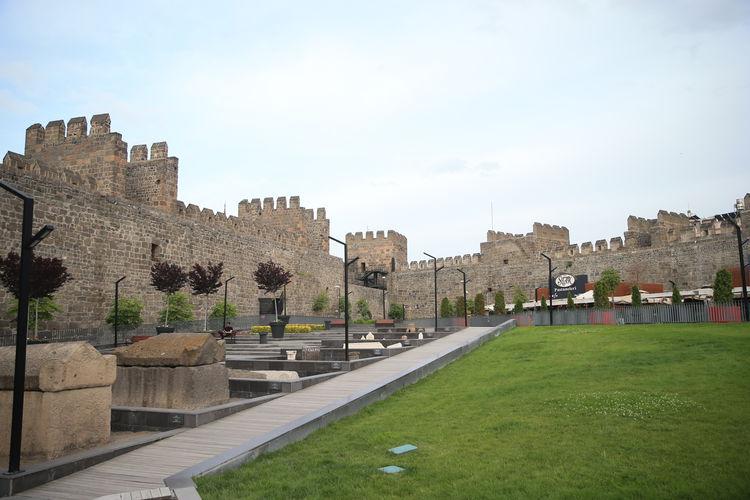
Kayseri Castle
Site | Kayseri / Türkiye | ||||||||
|---|---|---|---|---|---|---|---|---|---|
Construction Date(s) | 3rd century AD (Roman Period) | ||||||||
Units | Inner Castle and Outer Castle | ||||||||
Builder | Period of Roman Emperor Gordian III | ||||||||
Material | Stone Timber Lime | ||||||||
Architectural Periods | Roman, Byzantine, Seljuk, Dulkadiroğulları, Ottoman | ||||||||
Kayseri Kalesi is a significant military and architectural structure located in the center of Kayseri, in Türkiye’s Central Anatolia Region, bearing traces of many civilizations throughout history. The castle has been a decisive element in Kayseri’s historical development, both in terms of defense and urbanization.
The earliest known information about Kayseri Kalesi dates back to coins from the reign of Roman Emperor Gordian III in the 3rd century AD. In the 6th century, Byzantine Emperor Justinianus narrowed the city walls to make them more defensible. The city was captured in 647 by the Umayyad Caliph Muawiya but soon returned to Byzantine control. Turkish rule began in 1067 when Emir Afşin Bey took the city.
The castle and city were subsequently governed by the Danişmendids, Anatolian Seljuks, Eratnalılar, Kadı Burhaneddin Ahmed, Dulkadiroğulları, Karamanoğulları, and finally the Ottomans. The city was incorporated into Ottoman territory in 1398, briefly passed back to the Karamanoğulları after the Battle of Ankara in 1402, and ultimately came under permanent Ottoman control during the reign of Fatih Sultan Mehmed.
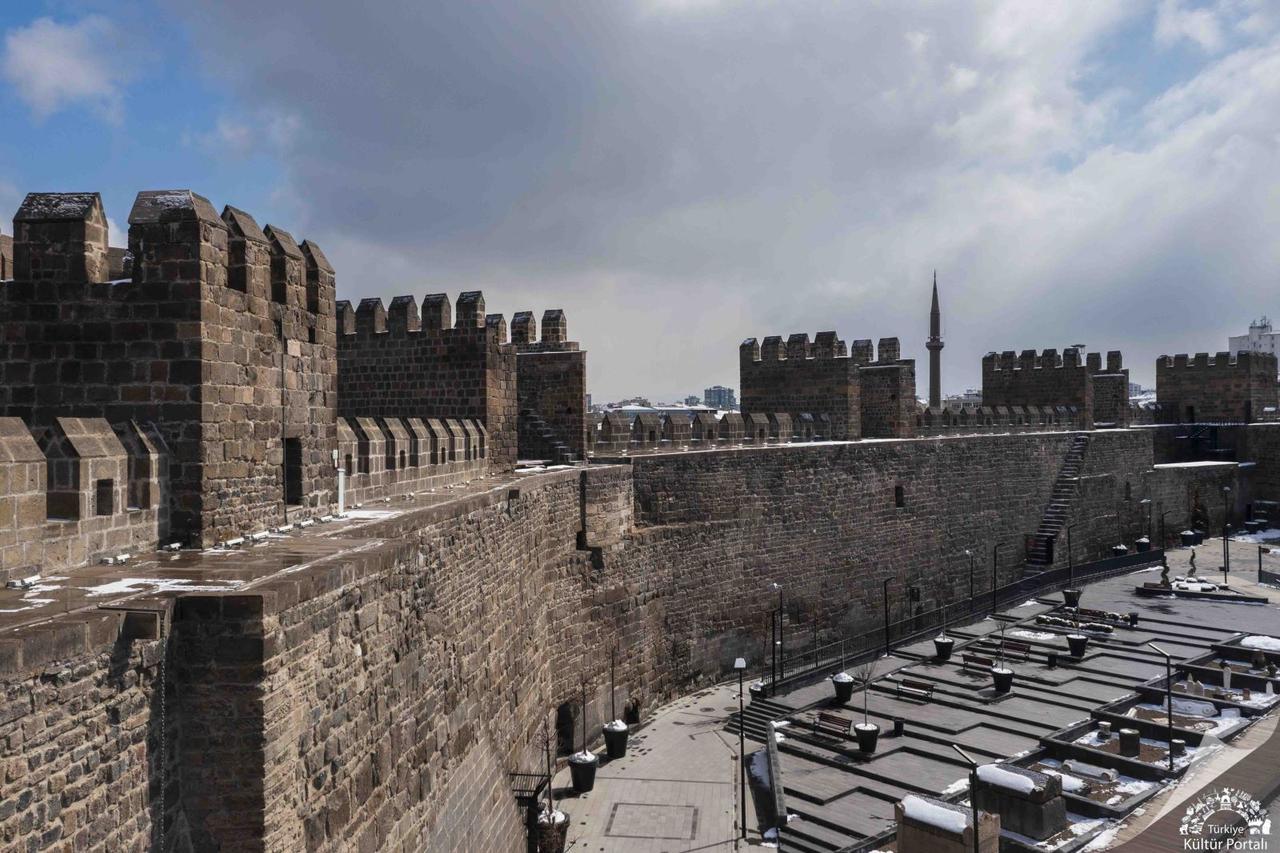
Kayseri Kalesi (Türkiye Kültür Portalı)
Kayseri Kalesi consists of two main sections: the Outer Castle and the Inner Castle. The Outer Castle is surrounded by walls reinforced with arches and vaults. It has several gates including Boyacı Kapı, Kiçi Kapı, Sivas Kapısı, Demir Kapı, and Yeni Kapı. Some of these gates were expanded during the Ottoman period, particularly under Sultan II. Selim. The Outer Castle walls were repaired during the reigns of Seljuk Sultans I. İzzeddin Keykavus and I. Alaeddin Keykubat.
The Inner Castle is situated along the northern edge of the Outer Castle and measures approximately 800 meters in length and 200 meters in width. It is strengthened by 18 rectangular towers and surrounded by walls three meters thick. Its two gates, located in the northeast and southwest, were supported by machicolations for defensive purposes. The mosque within the Inner Castle was built in 1465–66 by Karamanoğlu Pir Ahmed Bey at the request of Fatih Sultan Mehmed, and this mosque solidified the Ottoman identity of the structure.
The castle underwent numerous repairs in different periods. Restorations were carried out in 1224 by I. Alaeddin Keykubat, in 1411 by Dulkadiroğlu Hüsamî Hasan, in 1465 by Karamanoğlu Pir Ahmed Bey, and in 1507 and 1553 during the Ottoman period. Details of these repairs are recorded in inscriptions and restoration registers. During the Ottoman era, the castle served as a military garrison, arsenal, storage facility, place of worship, and prison.
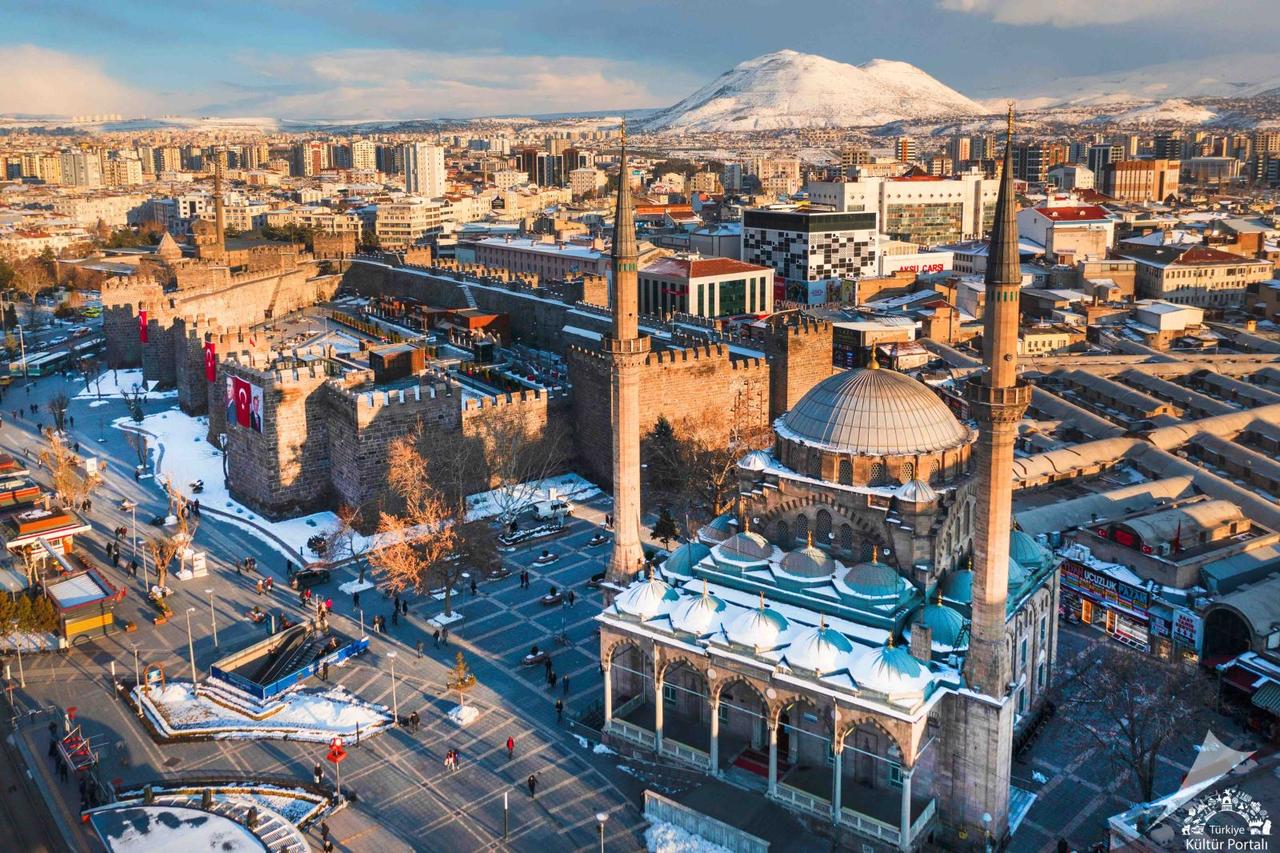
Kayseri Kalesi (Türkiye Kültür Portalı)
Today, the Inner Castle of Kayseri Kalesi remains standing in relatively good condition. A large portion of the Outer Castle walls has been destroyed or completely removed. For many years, the Inner Castle was used commercially, with irregular modern shops built inside.
As a result of recent restoration efforts, the Inner Castle has been reorganized as a cultural and tourist center, and the Kayseri Arkeoloji Müzesi began operations in this area in 2019. The museum displays approximately 2,000 artifacts representing numerous civilizations from the Neolithic period to the Ottoman era.
Anadolu Ajansı. “Kayseri Kalesindeki Müzede Binlerce Yıllık Eserler Sergileniyor.” Accessed May 10, 2025.https://www.aa.com.tr/tr/kultur/kayseri-kalesindeki-muzede-binlerce-yillik-eserler-sergileniyor/3228033
T.C. Kayseri Valiliği. "Kayseri Kalesi." Kayseri Valiliği Resmî Web Sitesi. Accessed May 10, 2025.http://www.kayseri.gov.tr/kayseri-kalesi
T.C. Kültür ve Turizm Bakanlığı. "Kayseri Kalesi ve Surları." Türkiye Kültür Portalı. Accessed May 10, 2025.https://kulturportali.gov.tr/turkiye/kayseri/gezilecekyer/kayseri-kalesi-ve-surlari
İnbaşı, Mehmet. "Kayseri Kalesi." OTAM: Osmanlı Tarihi Araştırma ve Uygulama Merkezi Dergisi 11, no. 11 (2000): 825–848. Accessed May 10, 2025.

Kayseri Castle
Site | Kayseri / Türkiye | ||||||||
|---|---|---|---|---|---|---|---|---|---|
Construction Date(s) | 3rd century AD (Roman Period) | ||||||||
Units | Inner Castle and Outer Castle | ||||||||
Builder | Period of Roman Emperor Gordian III | ||||||||
Material | Stone Timber Lime | ||||||||
Architectural Periods | Roman, Byzantine, Seljuk, Dulkadiroğulları, Ottoman | ||||||||
History
Architectural Features
Current Condition