This article was automatically translated from the original Turkish version.
+1 More
Name(s) | Kümbet Camii | ||||||||
|---|---|---|---|---|---|---|---|---|---|
Location | Kars Türkiye | ||||||||
Construction Date(s) | 932–937 (Bagratid Kingdom period) | ||||||||
Architectural Plan | Four-leaf clover plan, central dome | ||||||||
Material(s) | Regularly cut basalt stone | ||||||||
Conservation Status | Restored in 2007 | ||||||||
Cultural Significance | Armenian, Seljuk, Ottoman, Republican Period | ||||||||
Kümbet Camii is a multi-layered religious structure located in the city center of Kars, Türkiye, which has served over time as a church, mosque, and museum. Built between 932 and 937 CE during the reign of the Armenian Bagratid King Ashot I, the building is notable for having served different faiths across various historical periods. It stands as one of the most representative examples of multiculturalism in Türkiye, both in its architectural style and its historical transformations. The structure is regarded as one of the most significant historical monuments in the region due to its religious function and its place in cultural memory.
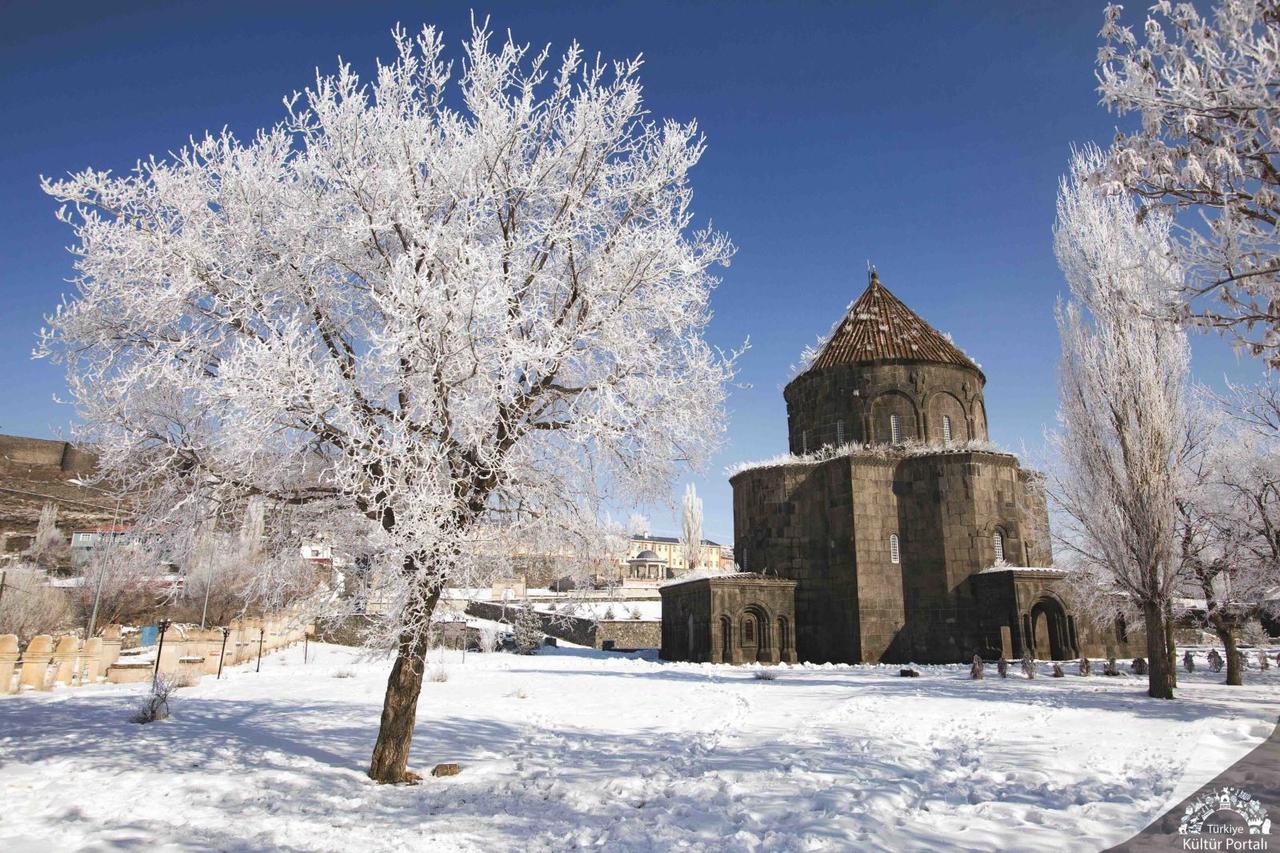
Kümbet Camii (Culture Portal)
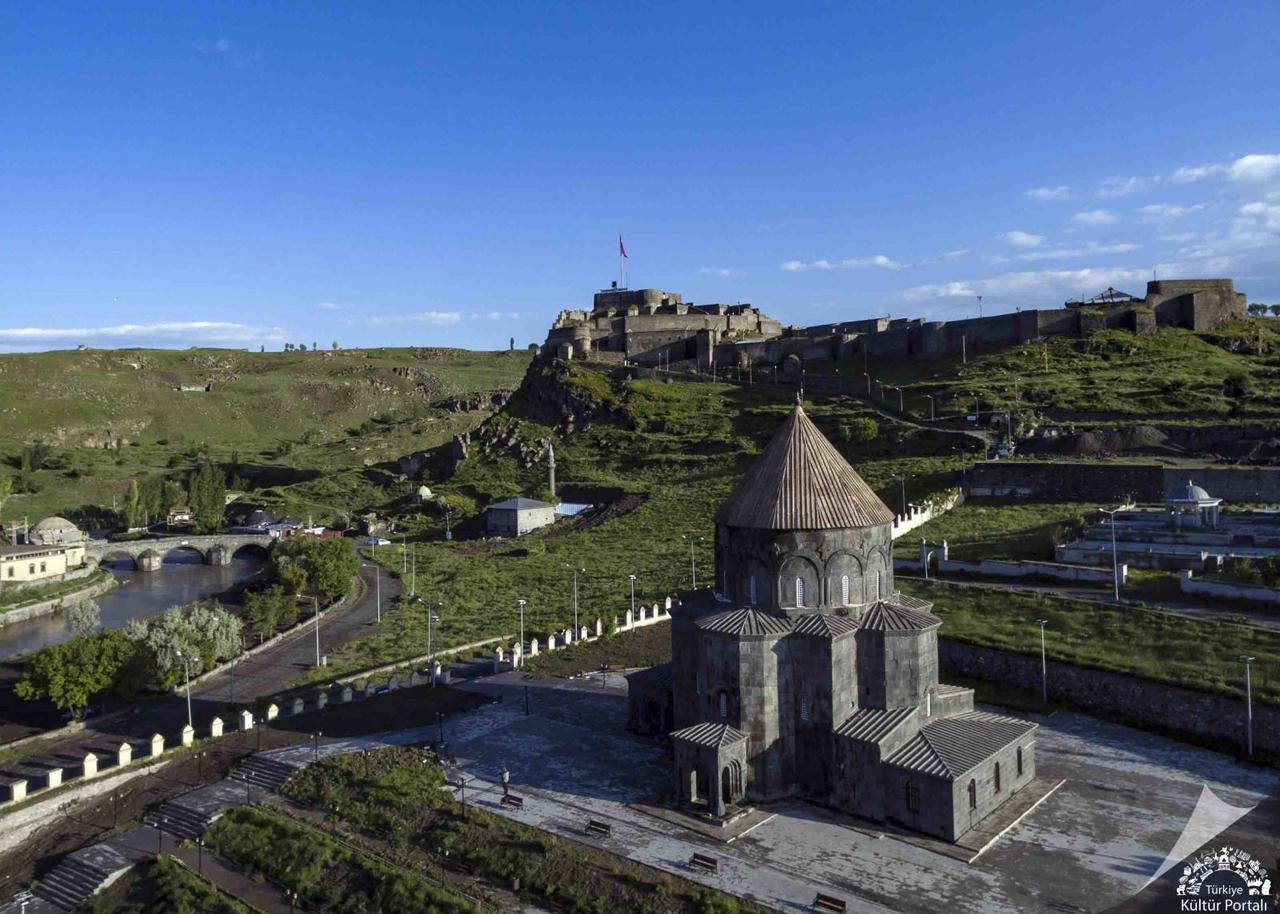
Kümbet Camii is situated at the southern foot of Kars Castle, within the Kaleiçi Neighborhood. Positioned immediately adjacent to the historic urban core, it lies in close proximity to other significant structures such as Evliya Camii. This location ensures the building’s integration into the urban fabric and its spatial harmony with the historic settlement. The area surrounding the mosque, with its basalt-paved courtyard and surrounding open-space arrangements, has become a visual focal point.
The structure was originally constructed between 932 and 937 CE by the Armenian Bagratid King Ashot I as the Church of the Twelve Apostles, in accordance with Christian Orthodox tradition. Following the Seljuk conquest of Kars in 1064, it was converted into a mosque. When Kars came under Ottoman rule in 1579, the building continued to function as a mosque. During the Russian occupation between 1877 and 1918, it was once again restored as a church. In the early Republican period, it was converted into a museum in 1964, and in 1993 it regained its status as a mosque under the name Kümbet Camii. This sequence of transformations underscores the building’s repeated changes in ownership and functional adaptation throughout history.
Kümbet Camii features a four-leaf clover plan. This layout is defined by outward-projecting apses on the east, west, north, and south sides, crowned by a central dome. The dome is supported internally by a system of four columns and arches. The structure was built using finely cut basalt stone. The facades feature semicircular arches, pilasters, and geometric patterns. Entrances are located on the west, north, and south facades. The drum of the dome contains relief sculptures depicting the Twelve Apostles, which are among the rare surviving examples of figural art from the church period.
Notable elements within the interior include the symmetry created by the central plan, the arch system supporting the dome, and the arrangement of the apses. The mihrab and minbar of the mosque are positioned on the eastern side, which originally housed the apse during the church period. In addition to the figural reliefs on the dome drum, symbolic motifs such as bulls, eagles, and angels appear in the squinches. The walls have generally been kept simple, though some decorative elements have been updated during various restoration phases. The interior benefits from balanced natural lighting provided by window openings.
The recurring transformations of the building—from church to mosque to museum and back to mosque—have generated not only physical but also sociocultural impacts. Beginning as a place of worship for the Armenian community, it became the center of Muslim religious life during the Seljuk and Ottoman periods. In the early years of the Republic, it was opened to the public as a museum, and since the 1990s it has once again functioned as a mosque. These changes demonstrate how the building has acquired new meanings and functions for different communities in each era. Today, it continues to serve both as a place of worship and as a cultural heritage site.
The building survived intact throughout the Republican period while serving as a museum. Upon its reopening as a mosque in 1993, it was brought under official protection. In 2007, a comprehensive restoration was carried out by the General Directorate of Foundations. During this intervention, the dome drum, stone walls, entrance doors, and interior structural elements were reinforced, preserving the original architectural fabric while restoring its functionality. Today, the structure is officially registered as a protected cultural asset by both the General Directorate of Foundations and the Ministry of Culture and Tourism.
Kümbet Camii represents a rare architectural continuity in Anatolia due to its layered history. While it retains typical features of Bagratid architecture, it also incorporates Seljuk and Ottoman architectural elements. As such, it holds significance not only in architectural terms but also as a documented record of historical, religious, and social transitions, making it an important subject in art historical and cultural studies. Its status as one of the symbolic structures of Kars’s urban identity ensures its enduring presence in the collective cultural memory.
Kültür ve Turizm Bakanlığı. "Kümbet Camii (On İki Havari Kilisesi) – Kars." Kültür Portalı. Accessed July 24, 2025.
Çavdırlı, Ceren Miral. "Kümbet Camii (On İki Havari Kilisesi)." Türkiye Turizm Ansiklopedisi. Accessed July 24, 2025.

Name(s) | Kümbet Camii | ||||||||
|---|---|---|---|---|---|---|---|---|---|
Location | Kars Türkiye | ||||||||
Construction Date(s) | 932–937 (Bagratid Kingdom period) | ||||||||
Architectural Plan | Four-leaf clover plan, central dome | ||||||||
Material(s) | Regularly cut basalt stone | ||||||||
Conservation Status | Restored in 2007 | ||||||||
Cultural Significance | Armenian, Seljuk, Ottoman, Republican Period | ||||||||
Location and Setting
Historical Development
Architectural Features
Interior Space and Decorations
Transformations and Social Functions
Conservation and Restoration
Cultural and Artistic Value