


This article was automatically translated from the original Turkish version.
+2 More
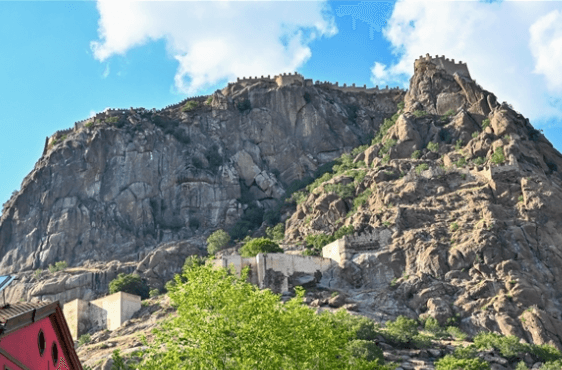
Karahisar Castle
Location | Afyonkarahisar Center | ||||||||
|---|---|---|---|---|---|---|---|---|---|
Elevation | 226 meters | ||||||||
First Construction Date | c. 1350 BCE – Hittite Period | ||||||||
Original Name | Hapanuva ("High Hill City") | ||||||||
Karahisar Kalesi is a historical structure built on a volcanic trachyte rock mass 226 meters high in the city center of Afyonkarahisar. Geographically located at the crossroads of Western Anatolia, this naturally fortified rock has served as a strategic base for numerous civilizations throughout history.
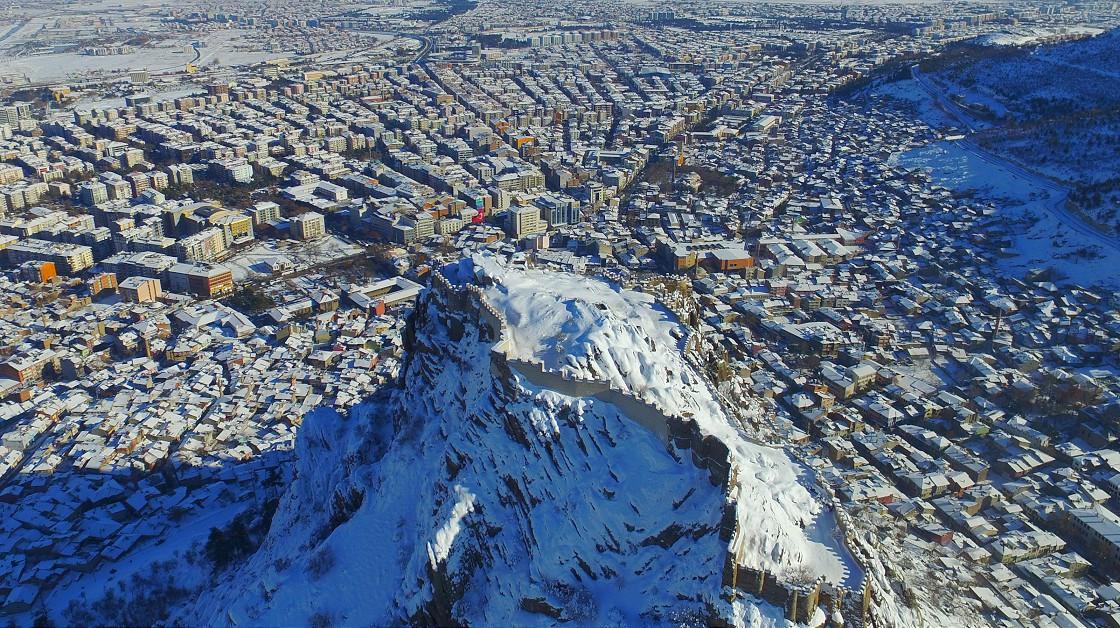
Kış Manzarasında Karahisar Kalesi (AA)
The history of the castle extends back to the 14th century BCE during the reign of the Hittite King Muršili II. In Hittite sources, the site is referred to as “Hapanuva” (City of the High Peak). Evidence from altars and worship remains on the summit indicates that during the Phrygian period it was used as a sacred area under the name “Akronion.” During the Roman and Byzantine periods, the castle was fortified with walls and known as “Akroenos.”
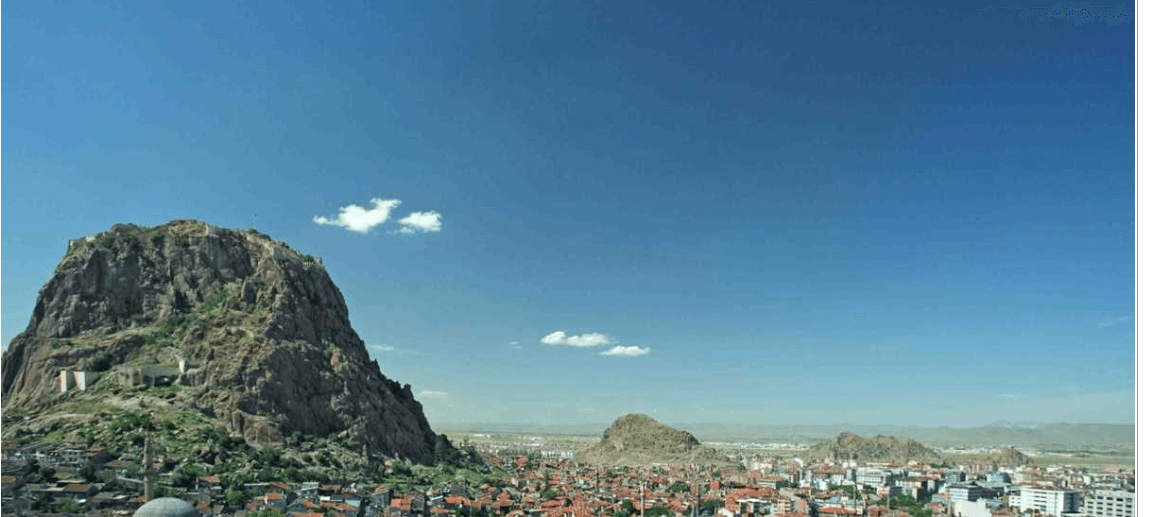
Karahisar kalesi (Kültür Portalı)
The castle came under Turkish control by the 12th century and underwent significant restoration during the reign of Sultan I. Alâeddin Keykubad of the Anatolian Seljuks. During this period, a palace mosque, water cisterns, food storage depots and armories were constructed within the castle, carried out by Bedreddin Gevhertaş appointed by the Sultan. The castle became a center for safeguarding state treasury and acquired the name “Karahisar-ı Devle” (Karahisar of the State). After the Seljuks, the castle became the center of the Sâhipataoğulları Beylik, and the name “Karahisar-ı Sahib” derived from it remained in use until the 20th century. In 1341, the Germiyanoğulları took control, followed by the Ottomans.
During the Ottoman period the castle served as a military base a treasury depot and at times as a prison. State officials such as Gedik Ahmet Paşa commissioned architectural works in Afyonkarahisar. In the Republican period the castle has been recognized as one of the symbols representing the citys identity. The name “Afyonkarahisar” is derived from the combination of “kale” (castle) and “afyon” (opium poppy) the plant cultivated in the region.
The castle consists of three sections: Lower Castle Middle Castle and Upper Castle. In the Upper Castle are found the Maiden Tower palace ruins armories and water cisterns. The stone staircases providing access to the castle have been recently restored. Today the castle is an important historical site visited by both local and international tourists.
Karahisar Kalesi (Keşif TV)
Karahisar Kalesi is known among the local population as a place for making wishes and is especially visited during Hıdırellez. Young women wishing to marry ascend the castle reciting traditional phrases to make their wishes. The castle has also been the subject of numerous legends folk tales and folk songs. Legends attributed to Battal Gazi and Hz. Ali continue to live vividly in the collective memory of the people.
Its location at a major land and rail junction has enhanced the strategic importance of both the city and the castle throughout history. During the Middle Ages the Seljuk and Ottoman administrations regarded this castle as a center of military and economic control.
Güçlü, Abdullah. “Anadolu’nun Kültür Hazinesi Afyonkarahisar.” Anadolu Ajansı. Accessed April 29, 2025.https://www.aa.com.tr/tr/pg/foto-galeri/anadolunun-kultur-hazinesi-afyonkarahisar/13#!
KARA, Demet. “12-14. Yüzyıllar Arasında Afyonkarahisar Kent Dokusunun Gelişimi.” *Sanat ve Tasarım Dergisi* 22 (2019): 47–62.https://dergipark.org.tr/en/download/article-file/609312Accessed May 10, 2025.
Keşif TV. *Afyonkarahisar Kalesi*. YouTube video, 12:53. Date Published: June 5, 2022. Accessed April 29, 2025.https://www.youtube.com/watch?v=aAh34Qq7GWo
Ministry of Culture and Tourism. "Karahisar Kalesi." *Kültür Portalı*. Accessed May 10, 2025.https://www.kulturportali.gov.tr/portal/karahisar-kalesi
Pekyaman, Asuman. “Turist Rehberlerinin Tur Cazibesini Artırmada Yararlanabilecekleri Bir Araç Olarak Efsaneler: Afyonkarahisar Efsaneleri Örneği.” *Uluslararası Sosyal Araştırmalar Dergisi* 15, no. 84 (2021): 142–156.https://dergipark.org.tr/en/download/article-file/3178950Accessed May 10, 2025.
T.C.Afyonkarahisar Belediyesi. "Afyonkarahisar –Afyon Kalesi." Accessed May 10, 2025.https://www.afyon.bel.tr/icerikdetay/3/2/afyonkarahisar--afyon-kalesi
T.C.Afyonkarahisar Valiliği. "Karahisar Kalesi." *Afyon'dayız*. Accessed May 10, 2025.https://www.afyondayiz.gov.tr/sayfa-karahisar-kalesi/
Tükelay, Canan. “Karahisar Kalesi Kış Güzelliğiyle Cezbediyor.” *Anadolu Ajansı*, January 28, 2020. Accessed April 29, 2025.https://www.aa.com.tr/tr/turkiye/karahisar-kalesi-kis-guzelligiyle-cezbediyor/1700829
ÖZDEMİR, Şuayip and Yusuf KARACA. “Kent Markası ve Marka İmajının Ölçümü: Afyonkarahisar Kenti İmajı Üzerine Bir Araştırma.” *Afyon Kocatepe Üniversitesi İ.İ.B.F. Dergisi* 11, no. 2 (2009): 113–120.https://dergipark.org.tr/en/download/article-file/18949(Accessed May 10, 2025).
Özdemir, Mehmet Ali, andİsmail KERVANKIRAN. “Turizm ve Turizmin Etkileri Konusunda Yerel Halkın Yaklaşımlarının Belirlenmesi: Afyonkarahisar Örneği.” *Marmara Coğrafya Dergisi* 24 (2011): 1–25.https://dergipark.org.tr/en/download/article-file/3251(Accessed May 10, 2025).

Karahisar Castle
Location | Afyonkarahisar Center | ||||||||
|---|---|---|---|---|---|---|---|---|---|
Elevation | 226 meters | ||||||||
First Construction Date | c. 1350 BCE – Hittite Period | ||||||||
Original Name | Hapanuva ("High Hill City") | ||||||||
Historical Development
Seljuk and Beylik Periods
Ottoman and Republican Periods
Architectural Features and Sections
Cultural and Oral History
Strategic Importance